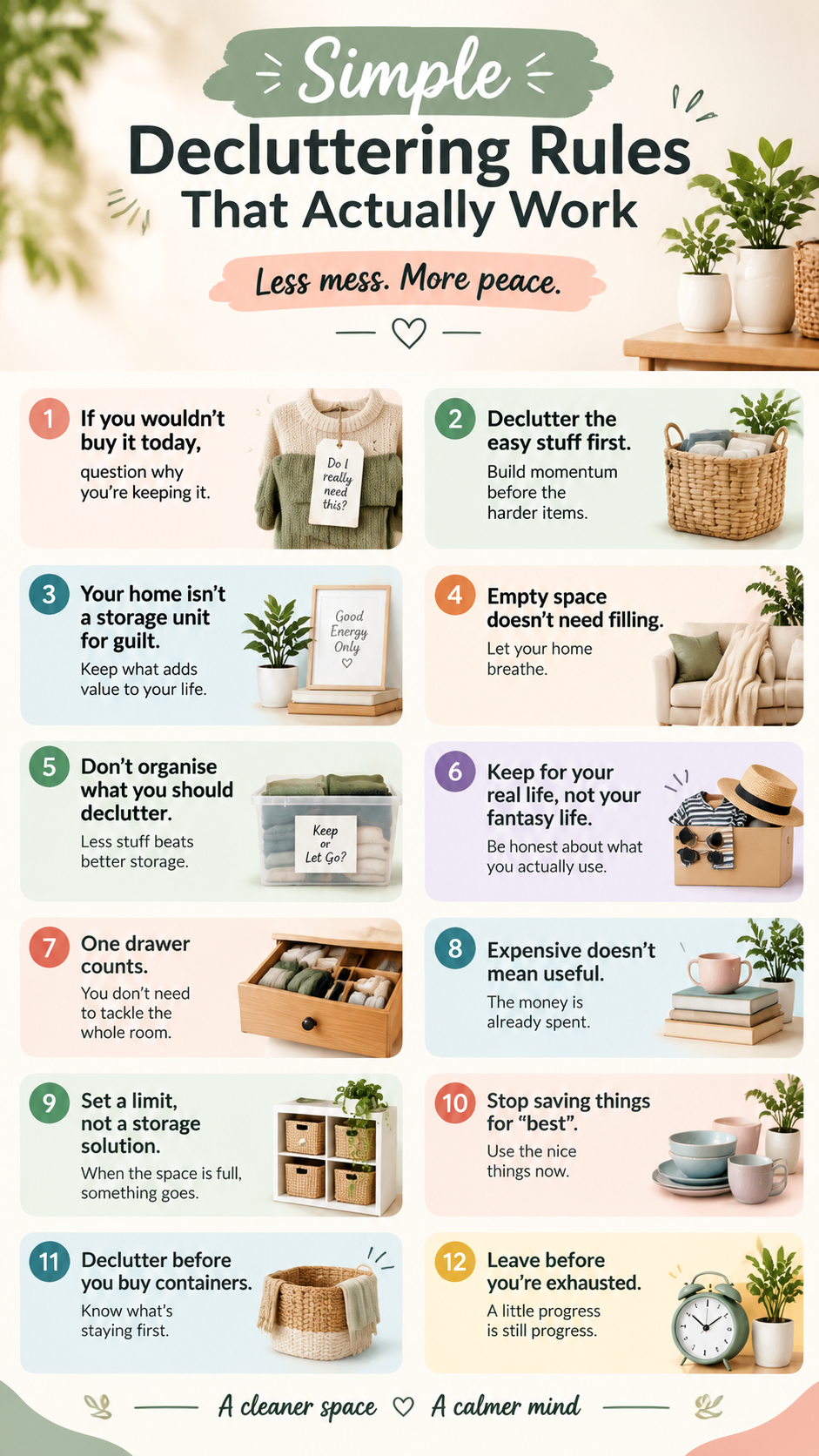
Lazy Decluttering Rules That Actually Work for a Clutter-Free Home
Creating a calm, organized home does not always require a weekend-long cleaning marathon or a complete lifestyle overhaul. Sometimes, the most effective changes come from small, realistic decluttering habits that fit naturally into everyday life. The simple principles behind lazy decluttering focus on making thoughtful decisions, reducing unnecessary belongings, and creating spaces that feel comfortable instead of overwhelming.
Many people struggle with clutter because they believe organizing means finding better storage solutions for everything they own. However, a peaceful home often begins with owning less, not storing more. By following practical decluttering rules, you can create a home that supports your current lifestyle while reducing stress and decision fatigue.
Key Takeaways
- Start decluttering with easy items before tackling emotional belongings.
- Your home should support your real life, not an imagined future version of yourself.
- Small decluttering sessions can create meaningful progress over time.
- Storage solutions work best after removing unnecessary items.
- Keeping only useful and meaningful belongings creates more breathing room.
The Simple Mindset Behind Effective Decluttering
Decluttering is not just about throwing things away. It is about creating a home environment that feels intentional, functional, and peaceful. The most successful decluttering routines focus on making small decisions consistently rather than waiting for motivation to appear.
The idea of “lazy decluttering” does not mean being careless. Instead, it means removing unnecessary complexity from the process. You do not need complicated systems, expensive organizers, or hours of free time. You need clear rules that make decisions easier.
When every item in your home has a purpose, your daily routines become smoother. You spend less time searching for things, cleaning around unused belongings, and managing clutter that no longer serves you.
Start With The Easy Wins First
One of the most helpful decluttering strategies is beginning with items that require little emotional energy. Starting with simple categories helps you build confidence and creates visible progress quickly.
Remove Items That Are Easy To Decide On
Look for belongings that are clearly no longer useful. Expired products, broken items, duplicates, unused packaging, and things you forgot you owned are great places to begin.
- Clear out one drawer instead of an entire room.
- Remove items that are damaged or incomplete.
- Donate things that no longer match your lifestyle.
- Recycle unnecessary papers and old materials.
Small victories create momentum. Once you see an organized drawer or a cleaner surface, continuing the process feels much easier.
Your Home Is Not A Storage Unit For Guilt
Many people keep belongings because they feel obligated to. Gifts, expensive purchases, and items connected to past versions of ourselves can be difficult to release. However, keeping something out of guilt does not make the item more meaningful.
Important: A meaningful home is created by the items you choose to keep, not by the number of things you manage to store. Allow your space to reflect your current needs and values.
A gift represents a moment of kindness, but the physical object does not always need to remain forever. If something no longer serves you, letting it go can create space for the things that truly matter today.
Keep Items For Your Real Life, Not Your Fantasy Life
A common reason clutter builds up is because we keep things for the person we hope to become. Maybe it is clothing for a lifestyle you do not have, equipment for hobbies you rarely practice, or supplies for projects that never happen.
Ask Honest Questions Before Keeping Something
Instead of asking, “Could I use this someday?” try asking more practical questions:
- Have I used this in the past year?
- Does this make my daily life easier?
- Would I buy this again today?
- Am I keeping this because I need it or because I feel guilty?
These questions help separate realistic needs from emotional clutter.
Why Buying More Storage Is Not Always The Answer
Beautiful baskets, containers, and organizers can make a home look tidy, but they cannot solve the problem of having too many belongings. Storage should support organization, not hide clutter.
Pro Tip: Declutter before purchasing new containers. Knowing exactly what stays will help you choose storage that actually improves your space instead of creating more places to collect unused items.
Expert Insight
The goal of decluttering is not a perfectly empty home. It is a home where everything has enough space, where cleaning feels easier, and where your surroundings support your everyday life.
Create Limits Instead Of Endless Storage
A helpful decluttering rule is setting physical limits. Instead of allowing belongings to expand endlessly, decide how much space each category deserves.
Examples Of Simple Limits
- One drawer for everyday accessories.
- One shelf for favorite books.
- One container for seasonal decorations.
- One closet section for frequently worn clothing.
When a space becomes full, it creates a natural reminder to review what you own. This prevents clutter from slowly taking over your home.
Stop Saving Your Best Things For Later
Many people save special dishes, beautiful clothing, candles, and other favorite items for an unknown future occasion. Meanwhile, everyday life passes by without enjoying the things we already love.
Using your favorite belongings creates a home that feels more personal and enjoyable. The purpose of beautiful items is not just to store them safely. It is to experience them.
Declutter Without Exhausting Yourself
Another important part of sustainable decluttering is knowing when to stop. Trying to transform your entire home in one day can lead to frustration and burnout.
Short sessions often create better long-term results. Spend ten or fifteen minutes clearing a small area, then continue when you have energy.
Simple Decluttering Routine
- Choose one small area.
- Remove obvious clutter first.
- Decide what stays, leaves, or needs a new home.
- Stop before the process becomes overwhelming.
- Celebrate progress instead of chasing perfection.
At A Glance: Simple Decluttering Rules
Quick Points
- Choose progress over perfection.
- Keep items that support your current lifestyle.
- Remove clutter before organizing.
- Create simple limits for belongings.
Conclusion: Build A Home That Gives You Space To Breathe
Decluttering does not need to feel overwhelming or complicated. The most effective approach is built on small decisions, honest reflection, and creating a home that matches your real life.
By following simple decluttering rules, you can reduce visual noise, improve your daily routines, and create more room for comfort and peace. A clutter-free home is not about having fewer things just for the sake of minimalism. It is about making space for what matters most.
Start with one drawer, one shelf, or one small corner. Every intentional choice brings you closer to a home that feels lighter and easier to enjoy.
Tags
Decluttering Ideas
Minimalist Home
Home Organization
Clutter Free Living
Simple Living
Organizing Tips