10 Simple Things We Need to Normalize for a More Intentional Life
Modern life often encourages us to chase more: more purchases, more convenience, more things, and more commitments. However, a simpler approach can bring more peace, financial freedom, and appreciation for what we already have. Small everyday choices, like cooking at home, using items until they are finished, borrowing free resources, and creating a comfortable space slowly, can transform the way we live.
The idea of normalizing simple habits is about finding value in ordinary moments. It is not about giving up everything you enjoy. Instead, it focuses on intentional living, mindful spending, and making thoughtful choices that support a calmer and more sustainable lifestyle.
Key Takeaways
- Simple habits can create a more organized and peaceful daily routine.
- Using what you already own helps reduce waste and save money.
- Home cooking and planning ahead can support healthier choices.
- Intentional spending creates more financial awareness.
- Slow living focuses on enjoying progress instead of chasing perfection.
Why Simple Living Habits Are Becoming More Popular
Simple living has gained attention because many people are looking for ways to reduce stress and create more meaningful routines. The goal is not to follow strict rules or completely change your lifestyle overnight. Instead, it is about recognizing the small decisions that make everyday life easier.
Driving a paid-off car, making grocery lists, brewing coffee at home, and cooking most meals at home are examples of practical habits that can support a more intentional lifestyle. These choices may seem ordinary, but together they can create a strong foundation for financial stability and personal well-being.
Important: A simpler lifestyle is not about having less for the sake of having less. It is about making room for the things that truly matter by being more aware of where your time, energy, and money go.
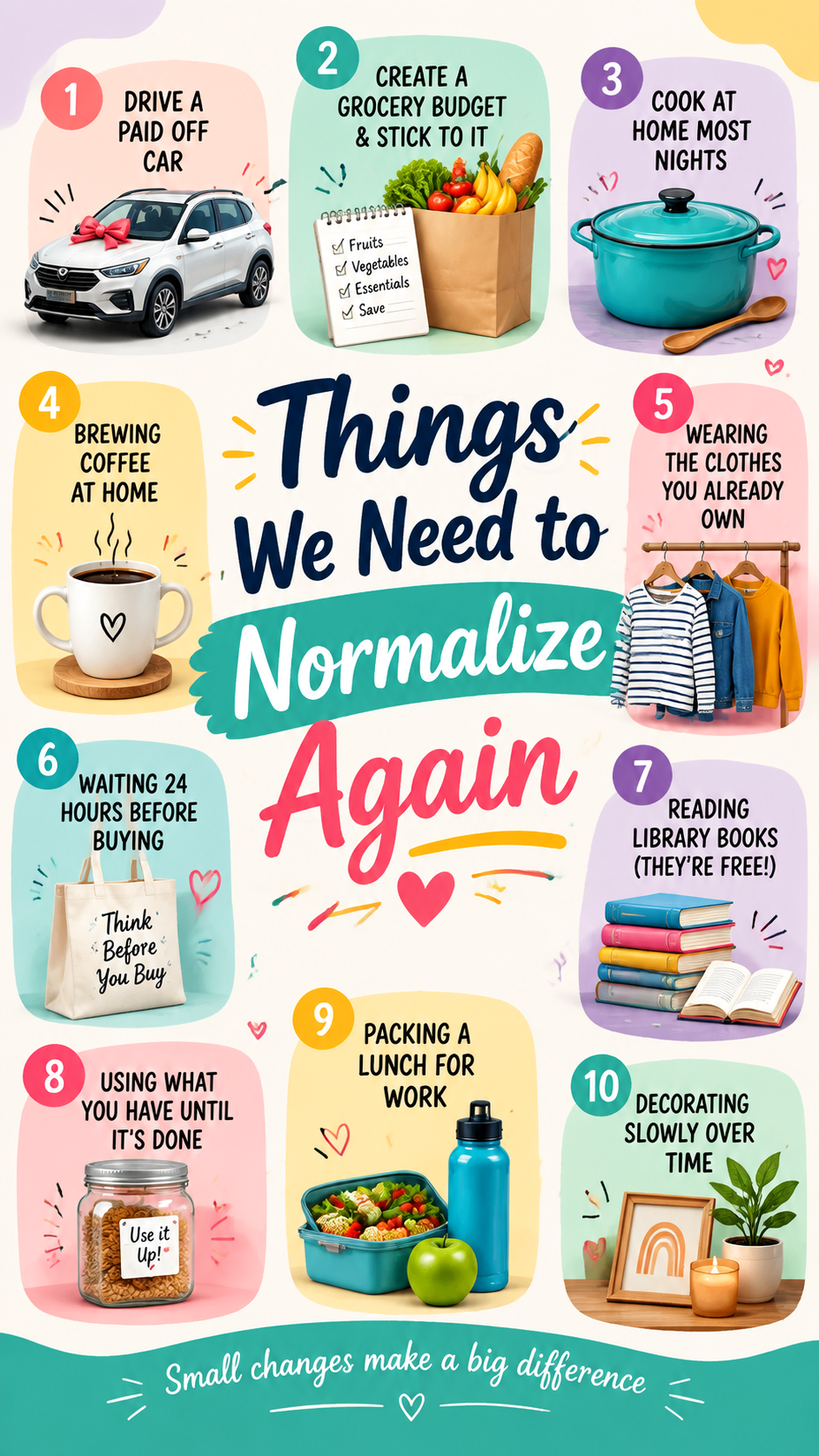
10 Everyday Things We Should Normalize Again
1. Driving a Paid-Off Car
There is a common belief that upgrading to a newer vehicle is always the next step, but keeping a reliable paid-off car can be a smart financial decision. Without a monthly car payment, money can be redirected toward savings, experiences, or other important goals.
A dependable vehicle that meets your needs is often more valuable than constantly chasing the latest model. Taking care of what you already own is a powerful example of practical living.
2. Making Grocery Lists and Following Them
Planning meals before shopping can make a major difference in both spending and food waste. A simple grocery list helps you stay focused, avoid unnecessary purchases, and create a smoother weekly routine.
Benefits of Meal Planning
- Reduces impulse buying.
- Makes cooking at home easier.
- Helps use ingredients more efficiently.
- Saves time during busy weeks.
3. Cooking at Home More Often
Home cooking is one of the simplest ways to create a healthier and more budget-friendly routine. Preparing meals yourself allows you to choose ingredients, control portions, and enjoy the process of creating something from scratch.
Cooking does not need to involve complicated recipes. Simple meals made with basic ingredients can become comforting traditions and everyday habits.
4. Brewing Coffee at Home
A daily coffee routine can be enjoyable without always buying it outside. Making coffee at home creates a small moment of calm while also reducing unnecessary spending over time.
Simple rituals, whether it is morning coffee, reading, or preparing meals, can add comfort and consistency to daily life.
5. Wearing the Clothes You Already Own
Fashion trends change quickly, but personal style does not need constant shopping. Rewearing favorite outfits, caring for clothing, and creating different combinations from existing pieces are practical forms of mindful living.
A smaller wardrobe filled with items you truly enjoy can make getting dressed easier and reduce clutter.
6. Waiting Before Making Purchases
Taking time before buying something new is a valuable habit. A waiting period allows you to decide whether the item is truly useful or simply a temporary desire.
This small pause can prevent unnecessary spending and encourage more thoughtful purchases.
7. Reading Library Books
Reading does not need to be an expensive hobby. Libraries provide access to thousands of books, allowing you to learn, relax, and explore new ideas without constantly purchasing new copies.
Choosing free or low-cost resources is a great reminder that meaningful experiences do not always require spending money.
8. Using What You Have Until It Is Done
Many items are replaced before they truly need to be. From household supplies to clothing and personal belongings, using things fully can reduce waste and encourage appreciation.
This habit supports a more sustainable lifestyle while helping you become more aware of your consumption patterns.
9. Packing Lunch for Work
Packing a lunch is a small habit that can create noticeable benefits. It can save money, encourage balanced meals, and make busy days feel more organized.
A prepared lunch also reduces the pressure of deciding what to eat during a hectic schedule.
10. Decorating Slowly Over Time
A comfortable home does not need to be created all at once. Slowly collecting meaningful pieces allows your space to reflect your personality and experiences.
Slow decorating encourages patience, creativity, and a deeper connection with your home.
Expert Insight
- Small repeated actions often create bigger results than occasional major changes.
- Intentional living helps you focus on value rather than constant consumption.
- A peaceful lifestyle is built through everyday choices.
How to Start Creating a More Intentional Lifestyle
You do not need to change everything at once. The best approach is to choose one or two habits that feel realistic and build from there. Small improvements are easier to maintain and can become natural parts of your routine.
- Choose one area where you want to simplify, such as food, spending, or organization.
- Create a small goal that fits your current lifestyle.
- Celebrate progress instead of expecting perfection.
- Continue adjusting your habits as your needs change.
At a Glance
- Choose mindful spending over impulse purchases.
- Appreciate and use what you already own.
- Create simple routines that bring comfort.
- Focus on progress through small daily habits.
Conclusion: Finding More Joy in Simple Things
Simple living is not about removing happiness from life. It is about discovering that many meaningful moments already exist in everyday routines. A homemade meal, a favorite outfit, a quiet morning coffee, or a thoughtfully decorated room can bring comfort without excess.
By normalizing these practical habits again, we can create lifestyles that feel more balanced, intentional, and connected. The smallest choices often have the biggest impact when they become part of our daily rhythm.
Tags
Simple Living
Intentional Lifestyle
Frugal Living
Mindful Habits
Home Organization
Slow Living
Budget Tips