Natural Detox Binders Guide Types, Benefits, and Daily Dosage Tips
Natural detox binders have become a popular topic in the wellness world, with products such as activated charcoal, bentonite clay, zeolite, chlorella, pectin, and psyllium husk often discussed for their different properties. From supplement routines to digestive health discussions, these substances attract attention from people looking for practical ways to support their well-being. However, understanding what each substance actually does, what the scientific evidence shows, and how to use supplements safely is essential before adding anything new to your routine.
Although natural binders are frequently promoted as tools for removing toxins, not all products work in the same way, and many popular detox claims are not supported by strong clinical evidence. Your body already has sophisticated systems for processing and eliminating waste, primarily through the liver, kidneys, digestive tract, and lungs. Learning about these systems can help you make more informed decisions about supplements without relying on misleading promises.
Key Takeaways
- Natural binders include activated charcoal, certain clays, zeolite, plant fibers, and other substances with different properties.
- Activated charcoal has specific medical uses, particularly in certain poisoning cases under professional supervision, but it is not a general-purpose detox supplement.
- Psyllium husk is a well-established source of soluble fiber that can support bowel regularity and may help lower LDL cholesterol.
- Evidence for using clay, zeolite, chlorella, cilantro, or fulvic and humic acids to remove toxins from the human body is limited or insufficient.
- There is no universally established daily dosage for a natural detox binder regimen.
- Supplement safety, product quality, medication interactions, and professional guidance matter more than following a generic dosage chart.
What Are Natural Detox Binders?
Natural detox binders are substances that may attach to certain compounds through adsorption, absorption, or other interactions. Depending on their composition, they may interact with substances in the digestive tract or influence how particular materials move through the intestines.
In wellness discussions, binders are often described as products that capture unwanted substances and help the body eliminate them through bowel movements. This description can be misleading because the ability to bind something in a laboratory does not automatically mean a supplement can remove clinically meaningful amounts of that substance from the human body.
Different binders also have different mechanisms. Activated charcoal has a porous structure that allows it to adsorb certain chemicals. Psyllium provides soluble fiber that absorbs water and forms a gel. Certain clay minerals can bind specific compounds under particular conditions, while algae contain nutrients and other substances that are being studied for various biological effects.
Important: A product marketed as a detox binder is not automatically proven to remove heavy metals, mold toxins, parasites, or environmental chemicals from the body. Laboratory binding results, traditional use, and marketing claims should not be confused with evidence of clinical benefit in humans.
1. Activated Charcoal: Uses, Benefits, and Safety
Activated charcoal is a highly porous form of carbon processed to create a large surface area. Its ability to adsorb certain substances has established medical applications, but those applications are more specific than many wellness advertisements suggest.
What Does Activated Charcoal Bind?
Activated charcoal can adsorb certain drugs and chemicals within the gastrointestinal tract. In emergency medicine, healthcare professionals may administer it in selected poisoning situations when the substance involved is suitable for charcoal treatment.
It does not bind every poison, and it is ineffective against some important substances, including alcohols, lithium, iron, and several other compounds. Its usefulness depends on the substance, timing, amount, and the person’s clinical condition.
How Much Activated Charcoal Should You Take?
There is no evidence-based daily activated charcoal dosage for general detoxification. Amounts used in medical poisoning management are determined by healthcare professionals and should not be copied as a routine supplement schedule.
Taking activated charcoal regularly without a clear medical reason may interfere with the absorption of prescription medications, over-the-counter medicines, and some nutrients. It can also cause constipation, nausea, vomiting, or, in severe cases, intestinal complications.
Safety tip: If poisoning is suspected, contact emergency services or a poison control service immediately. Do not attempt to treat a suspected poisoning with an at-home charcoal supplement unless a qualified professional specifically directs you to do so.
2. Bentonite Clay: What to Know Before Using It
Bentonite clay is a naturally occurring clay composed largely of smectite minerals, often including montmorillonite. It is used in several industrial, cosmetic, and commercial applications because of its ability to absorb water and interact with certain substances.
Does Bentonite Clay Remove Heavy Metals?
Some clay minerals can bind certain metals under specific laboratory conditions. However, this does not establish that drinking bentonite clay safely or effectively removes heavy metals from a person’s bloodstream or tissues.
Heavy metal exposure requires appropriate assessment and, when indicated, medical treatment based on the particular metal, exposure level, and symptoms. Using an unproven clay supplement can delay diagnosis and may introduce additional contaminants.
Is Bentonite Clay Safe to Consume?
Not every bentonite clay product is manufactured or tested for human consumption. Some products may contain lead, arsenic, or other contaminants, depending on their source and processing.
There is no established daily oral dosage for bentonite clay as a general detox supplement. Consuming it may cause constipation or interfere with the absorption of medicines and nutrients.
Before considering any orally consumed clay product, discuss the risks with a healthcare professional and verify that the product is appropriately tested for contaminants. Avoid assuming that a product is safe simply because it is described as natural, food-grade, or mineral-rich.
3. Zeolite: Understanding the Mineral Supplement
Zeolites are minerals with a porous crystalline structure. Clinoptilolite is one variety commonly used in commercial products and frequently promoted in alternative wellness settings.
Zeolites can exchange certain ions and interact with some substances under particular conditions. These properties have legitimate industrial applications, but they do not prove that oral zeolite supplements remove toxins throughout the human body.
Zeolite Dosage and Product Quality
There is no universally accepted daily dosage of zeolite for detoxification, and evidence supporting routine use for heavy metal removal or mold-related illness is insufficient. Products may differ in mineral composition, purity, particle size, and manufacturing quality.
Some products may contain unwanted metals or other contaminants. Oral zeolite may also affect the availability of certain substances in the digestive tract, and the full interaction profile of individual products may not be well established.
If you are considering a zeolite supplement, review the evidence for the specific product and discuss its use with a qualified healthcare professional, particularly if you take medication or have an existing medical condition.
4. Chlorella: Nutrients, Research, and Realistic Expectations
Chlorella is a type of freshwater green microalgae. It contains protein, fiber, pigments, and various micronutrients, although its nutritional composition varies by species and processing method.
Unlike activated charcoal, chlorella is primarily discussed as a nutritional supplement rather than an established medical adsorbent. Some preliminary research has examined whether chlorella supplementation affects the body’s handling of particular substances, including certain metals. However, the available evidence is not sufficient to recommend it as a reliable treatment for heavy metal poisoning or a general detox protocol.
How Much Chlorella Is Appropriate?
There is no established chlorella dosage for removing heavy metals. Products differ in concentration and composition, so a dosage advertised by one manufacturer cannot automatically be applied to another product.
Chlorella may cause digestive discomfort, nausea, diarrhea, or allergic reactions in some people. Some products contain vitamin K, which can interfere with warfarin management. Anyone taking warfarin or other important medications should consult a healthcare professional before using it.
Choose products with transparent ingredient information and independent quality testing. Treat chlorella as an optional nutritional supplement rather than a substitute for a balanced diet or medical care.
5. Cilantro: A Familiar Herb With Detox Claims
Cilantro, also known as coriander leaves, is a common culinary herb valued for its fresh flavor and aroma. It supplies small amounts of vitamins and other plant compounds when eaten as part of a varied diet.
In alternative wellness discussions, cilantro is sometimes promoted for binding heavy metals or helping remove toxins. However, evidence in humans is inadequate to establish that eating cilantro or taking concentrated cilantro products can reliably remove heavy metals from the body.
Should You Take Cilantro Supplements?
For most people, using cilantro as a food ingredient is a straightforward way to add flavor to meals. Concentrated extracts and supplements are different from ordinary culinary use, and their safety and effectiveness depend on the formulation.
There is no established cilantro dosage for heavy metal detoxification. If you suspect toxic exposure, seek appropriate testing and medical guidance rather than relying on herbs to treat it.
6. Pectin: A Plant Fiber Found in Apples and Pears
Pectin is a soluble fiber naturally present in fruits such as apples and pears. It is also widely used in food preparation as a thickening and gelling agent, especially in jams and preserves.
When consumed, pectin can interact with water and form a gel-like material in the digestive tract. Soluble fibers can influence digestion, stool characteristics, and cholesterol absorption, depending on the type of fiber and the amount consumed.
Can Pectin Remove Toxins?
Modified citrus pectin and other specialized formulations have been investigated for several possible health effects, including interactions with certain metals. However, the evidence is limited, and findings from a particular preparation should not be generalized to every pectin supplement.
Ordinary fruit consumption supports a healthy eating pattern, but pectin should not be presented as a proven treatment for parasites, biofilms, or heavy metal poisoning.
Practical Ways to Include Pectin
Eating whole fruits is a practical way to obtain pectin alongside water, vitamins, and other fibers. Apples and pears are useful options, particularly when eaten with their skins if tolerated and properly washed.
There is no universal pectin dosage for detoxification. Concentrated supplements may cause bloating, gas, or other digestive symptoms, and large amounts of fiber can influence the absorption of some medicines. Follow product instructions and ask a pharmacist about medication timing when needed.
7. Fulvic and Humic Acids: Evaluating the Evidence
Fulvic and humic acids are complex mixtures of organic compounds formed during the decomposition of plant and other organic matter. They occur naturally in soil, peat, and some water sources and are sold in certain dietary supplements.
These compounds are often promoted for mineral transport, digestive wellness, and detoxification. Some laboratory research examines their interactions with metals and other compounds, but convincing clinical evidence supporting oral fulvic or humic acid products as effective detox treatments is lacking.
Are Fulvic Acid Drops Safe?
Liquid drops and concentrated preparations vary substantially in composition and quality. Contamination is an important concern for products derived from soil-related materials, particularly when testing and manufacturing standards are unclear.
There is no established universal dosage for fulvic or humic acids as detox supplements. Avoid products making sweeping claims about removing toxins, treating disease, or correcting mineral deficiencies without reliable evidence.
Anyone considering these products should review the ingredients, seek independent testing information, and consult a healthcare professional before use, especially when taking medication or managing a chronic condition.
8. Psyllium Husk: A Better-Studied Option for Digestive Health
Psyllium husk is derived from the seeds of Plantago ovata. It contains soluble fiber that absorbs water and forms a gel, helping regulate stool consistency and support bowel regularity.
Unlike many products promoted for detoxification, psyllium has recognized uses in managing constipation and improving certain aspects of cholesterol levels. Its benefits depend on appropriate use, adequate fluid intake, and the person’s overall health.
How Psyllium Supports Regularity
Psyllium holds water in the intestines, helping produce softer, bulkier stools that may be easier to pass. It can also help some people manage mild constipation or improve stool consistency.
Soluble fiber can contribute to lowering LDL cholesterol when consumed regularly as part of an appropriate diet. However, psyllium does not work by removing every toxin from the body, and it is not a substitute for treatment of poisoning or other medical conditions.
How to Take Psyllium Husk Safely
Follow the directions on the specific product rather than relying on a generic tablespoon measurement. Different products may contain different amounts of psyllium per serving.
Mix psyllium with the amount of liquid specified on the label and drink it promptly. Never swallow dry psyllium powder, as it can swell and cause choking or an obstruction, especially when taken with insufficient fluid.
Increase fiber gradually to help reduce gas and bloating. Psyllium may affect the absorption of certain medicines, so ask a pharmacist how far apart to take it from your medication. People with swallowing difficulties, intestinal narrowing, or a history of bowel obstruction should seek medical advice before using it.
Practical takeaway: If your main goal is better bowel regularity, psyllium has a clearer evidence base than most supplements marketed as detox binders. Supporting digestive health with adequate fiber, fluids, movement, and a balanced diet is generally more useful than following an unproven multi-supplement detox plan.
Natural Detox Binder Dosage: What You Should Know
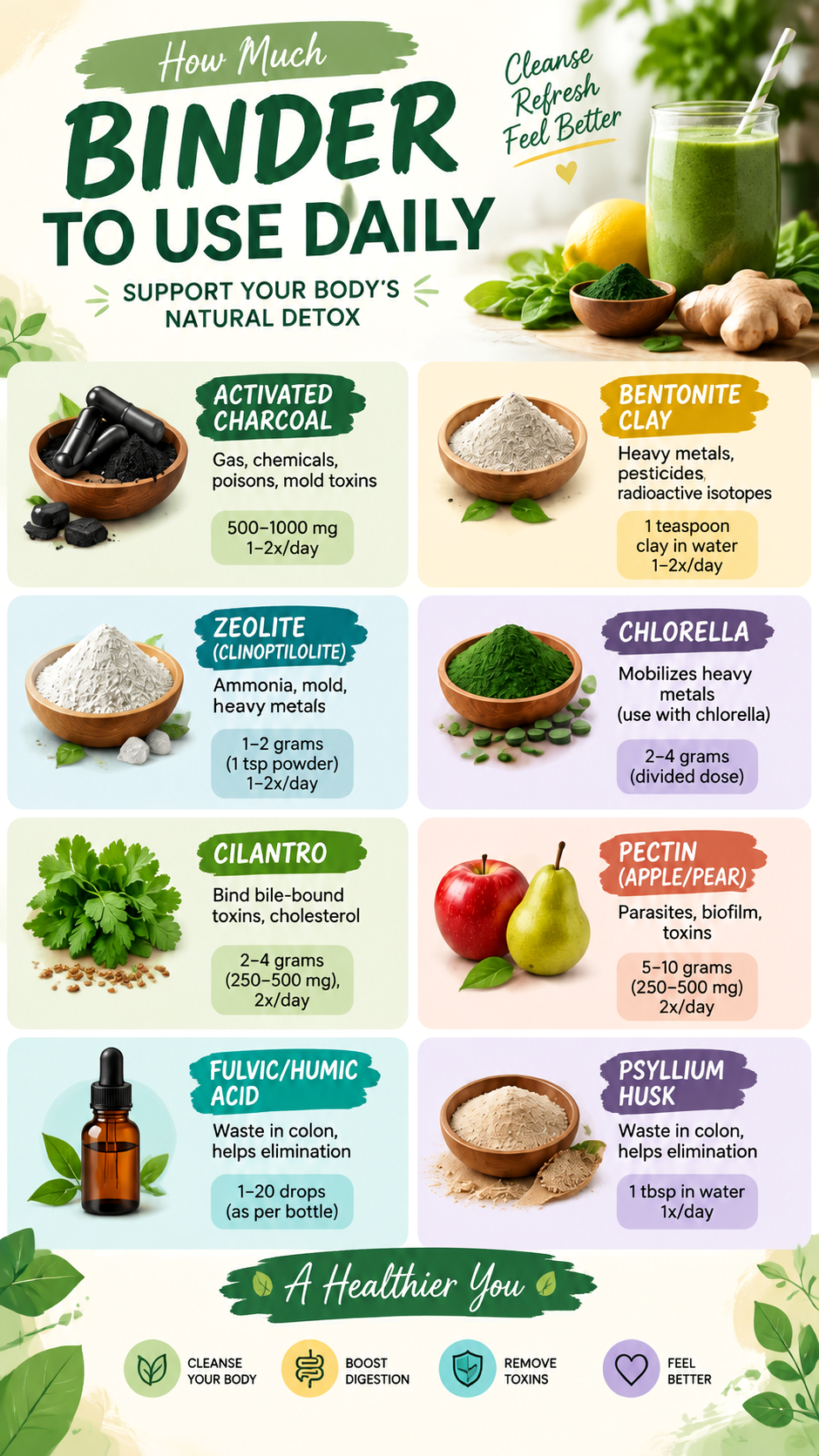
Dosage is one of the most important issues to consider when comparing natural binders. A generic chart may list quantities such as milligrams, grams, teaspoons, or drops, but these measurements do not establish that a dose is safe or effective.
The appropriate amount of a supplement depends on its composition, concentration, intended use, product quality, and the person’s health status. For several substances marketed as detox binders, a clinically established dosage for toxin removal does not exist.
Why Generic Dosage Charts Can Be Misleading
- Different formulations: Powders, capsules, liquids, and extracts may contain different concentrations of active ingredients.
- Limited clinical evidence: A dose promoted online may not have been evaluated in reliable human studies.
- Potential interactions: Some products can reduce the absorption of medicines or nutrients.
- Product contamination: Natural mineral products may contain unwanted metals or other impurities.
- Individual health differences: Age, pregnancy, medical conditions, and other medications can change the risk profile.
Pro Tip: Before taking a detox supplement, identify the specific health concern you want to address. Constipation, suspected heavy metal exposure, and a possible medication overdose require very different responses. Choosing a product before identifying the problem can waste money and delay appropriate care.
Can You Combine Multiple Detox Binders?
Some wellness routines combine activated charcoal, clay, zeolite, algae, herbs, and fiber in an attempt to target different substances at the same time. However, there is no strong evidence that combining several of these products creates a more effective general detoxification routine.
Using multiple supplements may increase the likelihood of constipation, digestive discomfort, medication interactions, or exposure to contaminants. It can also make it difficult to identify which product caused an adverse reaction.
Combining products does not guarantee that they will complement one another. A substance that adsorbs certain compounds in the digestive tract may also interfere with the absorption of medicines or other substances that your body needs.
A More Responsible Approach
- Define your goal, such as improving constipation or investigating a possible environmental exposure.
- Review whether a supplement has credible evidence for that specific purpose.
- Check the full ingredient list, potential contaminants, and quality-testing information.
- Ask a healthcare professional or pharmacist about medication interactions.
- Avoid starting several new supplements at once.
- Stop using a product and seek medical advice if you develop concerning symptoms.
Expert Insight: Your Body Already Has Detoxification Systems
The liver processes many chemicals, the kidneys filter waste from the blood, and the digestive tract helps eliminate waste through stool. Supporting these normal processes through appropriate medical care, balanced nutrition, adequate hydration, and healthy daily habits is more evidence-based than attempting to cleanse the body with a combination of unproven binders.
How to Support Your Body’s Natural Detoxification Processes
You do not need an elaborate detox supplement schedule to support your general health. Consistent habits can help maintain normal liver, kidney, and digestive function while reducing avoidable exposure to harmful substances.
Eat a Varied, Fiber-Rich Diet
Include vegetables, fruits, whole grains, legumes, nuts, and seeds according to your preferences and dietary needs. These foods provide fiber and essential nutrients that support normal digestion and overall health.
Apples, pears, and other plant foods can contribute to your fiber intake without requiring concentrated detox supplements. If you increase fiber significantly, do so gradually to reduce digestive discomfort.
Stay Adequately Hydrated
Water supports normal kidney function and helps prevent dehydration. Fluid requirements vary according to activity, climate, health, and other individual factors, so there is no single amount that everyone must drink.
People with medical conditions that require fluid restrictions should follow their healthcare professional’s advice rather than increasing water intake as part of a detox trend.
Move Regularly and Prioritize Sleep
Regular physical activity supports cardiovascular health, metabolic function, and general well-being. Consistent sleep also helps maintain normal physiological processes and supports a healthy daily routine.
Neither exercise nor sleep acts as a universal treatment for toxic exposure, but both are more firmly grounded in general health guidance than most commercial detox regimens.
Reduce Exposure to Environmental Hazards
Practical prevention is often more valuable than trying to remove contaminants after exposure. Follow food safety recommendations, use appropriate protective equipment when working with chemicals, and avoid disturbing materials that may contain hazardous substances without proper precautions.
If you believe you have been exposed to lead, mercury, pesticides, mold-related hazards, or another harmful substance, contact an appropriate healthcare professional or environmental health service. Testing and treatment should be based on the specific exposure rather than a generalized detox plan.
Who Should Be Especially Careful With Detox Supplements?
Although supplements may appear harmless because they are sold without a prescription, they can still cause adverse effects. Certain groups should be particularly cautious before using products marketed as binders.
- People taking prescription medication: Activated charcoal and some other products may interfere with drug absorption or treatment plans.
- People who are pregnant or breastfeeding: Safety data for many detox supplements are limited, and some products may contain contaminants.
- People with kidney or liver conditions: Supplement use should be discussed with the healthcare professional managing the condition.
- People with digestive disorders: Clay products and high amounts of fiber may worsen constipation or create additional complications in some circumstances.
- Children and older adults: Risks related to dehydration, swallowing difficulties, medication interactions, and dosing errors may be greater.
If you have persistent fatigue, digestive symptoms, headaches, or other unexplained problems, do not assume they are caused by toxins. Many conditions can produce similar symptoms, and an appropriate medical assessment is the best way to identify the cause.
Frequently Asked Questions About Natural Detox Binders
What Is the Best Natural Detox Binder?
There is no single best natural detox binder for general toxin removal. Activated charcoal has specific medical applications in selected poisoning cases, while psyllium has established uses for bowel regularity. Other products require more research before broad detox claims can be supported.
Can Detox Binders Remove Heavy Metals?
Some substances can bind particular metals under laboratory conditions, but that does not prove that oral supplements effectively remove heavy metals from human tissues. Suspected heavy metal exposure requires appropriate testing and professional guidance.
Should You Take Detox Binders Every Day?
Daily use is not necessary or evidence-based for general detoxification. Whether a supplement is appropriate depends on its intended purpose, the quality of supporting evidence, and your individual health needs.
Can Psyllium Husk Be Used Every Day?
Psyllium can be suitable for regular use by many adults when taken according to product directions with adequate fluid. However, individual medical conditions and medications may affect whether it is appropriate, so consult a healthcare professional if you are unsure.
Do You Need a Detox Supplement to Stay Healthy?
No. The body continuously processes and eliminates waste through normal physiological systems. A balanced diet, sufficient hydration, regular movement, good sleep, and appropriate medical care are sensible foundations for overall wellness.
Quick Points: Natural Detox Binders at a Glance
- Activated charcoal: Has specific medical uses but is not a routine daily detox treatment.
- Bentonite clay and zeolite: Have mineral-binding properties, but clinical detox benefits remain unproven and contamination is a concern.
- Chlorella and cilantro: May be used as foods or supplements, but evidence for heavy metal removal is insufficient.
- Pectin: Is a plant-derived soluble fiber, not a proven treatment for parasites or general toxin removal.
- Psyllium husk: Has better-established benefits for bowel regularity and may support healthy LDL cholesterol levels.
Conclusion: Make Informed Choices About Natural Detox Binders
Natural detox binders are a varied group of substances, ranging from activated charcoal and mineral clays to algae, plant fibers, and specialized organic compounds. Although these products are often presented together in wellness charts, they differ significantly in composition, purpose, evidence, and safety.
The most important step is to separate established uses from unsupported detoxification claims. Activated charcoal has a role in selected poisoning cases under medical supervision, and psyllium can support bowel regularity. By contrast, evidence that routine oral use of bentonite clay, zeolite, chlorella, cilantro, pectin supplements, or fulvic and humic acids can reliably remove toxins from the body remains limited or insufficient.
Rather than following a generic daily binder dosage chart, consider your specific health goal, review credible scientific evidence, and speak with a healthcare professional before starting a supplement. Avoid combining several products simply because they are marketed as complementary, and pay attention to medication interactions and product purity.
Most importantly, remember that effective wellness does not require an aggressive detox routine. A balanced diet, adequate hydration, regular physical activity, quality sleep, and sensible exposure prevention provide a practical foundation for supporting your body’s normal functions. When a genuine toxic exposure is suspected, professional assessment and appropriate treatment are far safer and more effective than an unproven supplement protocol.
Tags
Natural Detox Binders
Activated Charcoal
Bentonite Clay
Zeolite Supplements
Chlorella Benefits
Psyllium Husk
Supplement Safety
Digestive Wellness