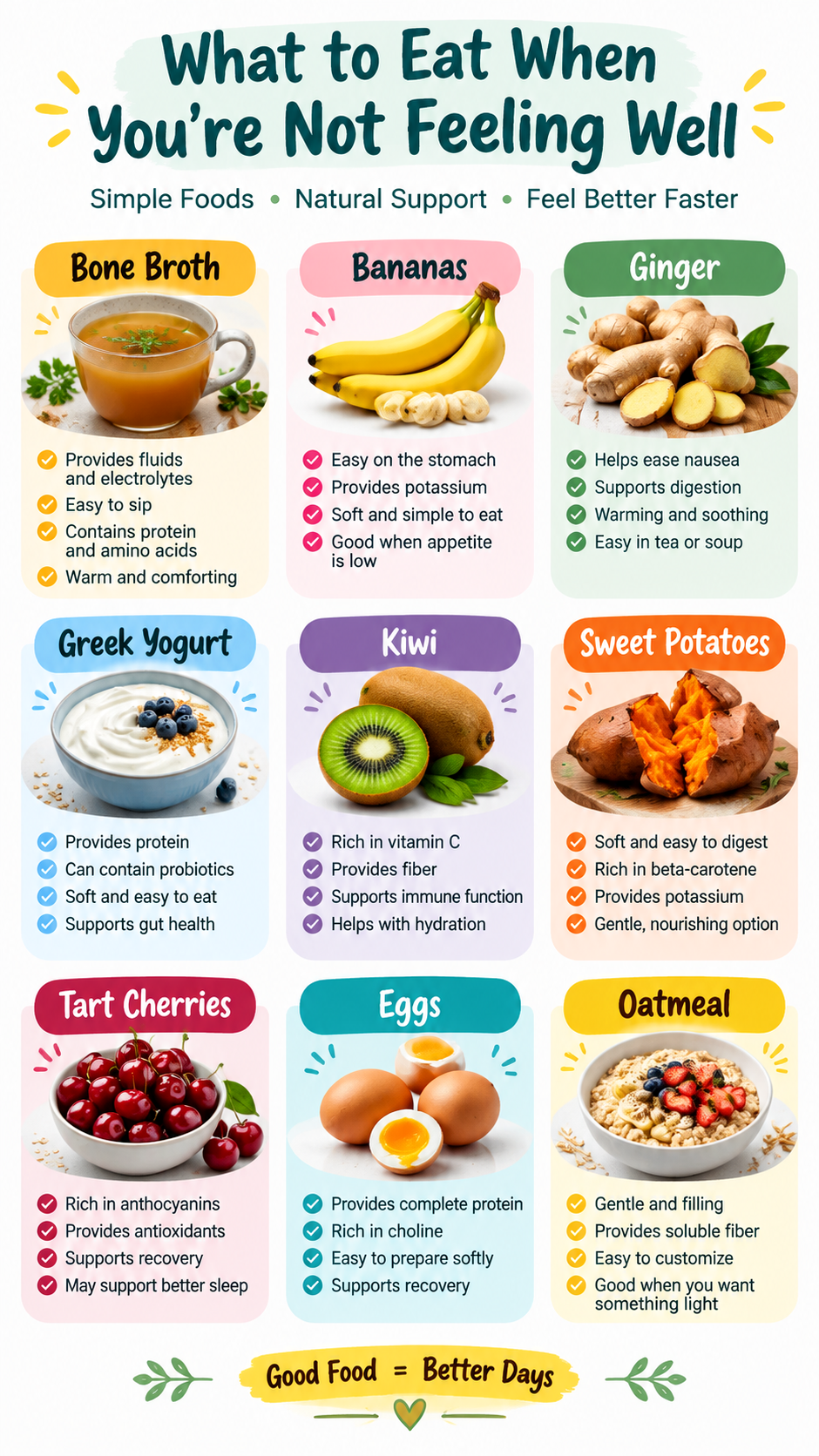
What to Eat When Youre Sick 9 Healing Foods to Soothe Your Stomach and Boost Recovery
When you are feeling under the weather, choosing the right foods can make everyday self-care a little easier. A reduced appetite, an unsettled stomach, nausea, or a sore throat can make even simple meals feel unappealing. Fortunately, you do not need complicated recipes or expensive ingredients to nourish yourself while you recover. Gentle, comforting foods such as bone broth, bananas, ginger, Greek yogurt, kiwi, sweet potatoes, tart cherries, eggs, and oatmeal can help provide fluids, protein, vitamins, and other nutrients your body needs.
The best foods to eat when you are sick depend on your symptoms, appetite, and personal tolerance. Some people prefer warm broth and soft oatmeal, while others find bananas, yogurt, or softly cooked eggs easier to manage. The goal is to stay hydrated, eat what feels comfortable, and give your body time to rest.
Key Takeaways
- Bone broth and other fluids can help maintain hydration when you are sick.
- Bananas, oatmeal, and sweet potatoes offer gentle options when your appetite is low.
- Ginger may help relieve some types of nausea, although results vary.
- Eggs and Greek yogurt provide protein to support normal body functions during recovery.
- Kiwi and tart cherries supply useful nutrients and plant compounds as part of a balanced diet.
- Small, frequent meals may feel more manageable than large portions.
1. Bone Broth: A Comforting Way to Get More Fluids
Bone broth is a popular choice when you are sick because it is warm, easy to sip, and simple to incorporate into a daily routine. Whether you prepare it at home or purchase it from a store, broth can offer a comforting alternative to plain water when you want something with more flavor.
Why Bone Broth Can Help
Maintaining hydration is especially important when you have a fever, are sweating more than usual, or are losing fluids through vomiting or diarrhea. Broth contributes fluid, and some varieties contain sodium, an electrolyte that helps regulate fluid balance. The amount of protein and other nutrients varies depending on how the broth is prepared.
Warm broth may also feel soothing when you have a scratchy throat or want a light meal without a heavy texture. You can drink it from a mug or use it as a base for a simple soup.
Easy Ways to Enjoy Bone Broth
- Sip a small cup between meals.
- Add soft-cooked rice or noodles for a more filling soup.
- Mix in tender vegetables when your appetite improves.
- Choose a lower-sodium option if you need to limit salt.
Bone broth is not a cure for an illness, and it does not automatically contain every nutrient your body needs. Think of it as one useful way to increase fluid intake and enjoy a warm, comforting food.
2. Bananas: An Easy Food When Your Appetite Is Low
Bananas are convenient, naturally soft, and easy to eat without much preparation. Their mild flavor makes them appealing when strong smells or rich foods are difficult to tolerate.
They provide carbohydrates for energy and potassium, an electrolyte involved in muscle function and fluid balance. Bananas also contain fiber, including pectin, which contributes to digestive health.
Are Bananas Good for an Upset Stomach?
For many people, a ripe banana is a comfortable option during mild digestive upset. Its soft texture is easy to chew, and it can be eaten plain without added fats or spices. However, tolerance varies, especially when symptoms are severe.
If you have diarrhea, bananas can be part of a varied, easy-to-tolerate diet, but they should not be your only source of nutrition. Replacing fluids and electrolytes is particularly important when diarrhea causes significant fluid loss.
Simple Banana Ideas
- Eat half a ripe banana when a full meal feels overwhelming.
- Mash banana into warm oatmeal.
- Blend banana with yogurt if dairy agrees with your stomach.
- Pair it with toast or crackers for a simple snack.
Start with a small serving and see how you feel. The best sick-day foods are those that provide nourishment without making your symptoms worse.
3. Ginger: A Traditional Choice for Nausea
Ginger has a long history of culinary and traditional use for digestive discomfort. Its warm, slightly spicy flavor makes it a popular ingredient in tea, soup, and other simple foods.
Research suggests ginger may help reduce certain types of nausea, including nausea associated with pregnancy. Evidence differs depending on the cause of the nausea, so ginger should not be considered a guaranteed treatment for every stomach problem.
How to Use Ginger When You Feel Unwell
Fresh ginger can be used in several gentle preparations. Thin slices steeped in hot water create a simple ginger infusion, while a small amount of grated ginger can add flavor to broth or soup.
- Wash and thinly slice a small piece of fresh ginger.
- Add the slices to hot water and allow them to steep for several minutes.
- Strain the drink if desired and let it cool to a comfortable temperature.
- Sip slowly, stopping if it worsens your discomfort.
You can also add ginger to homemade vegetable soup or warm water with a little lemon if citrus does not irritate your stomach.
Important: Concentrated ginger supplements are different from the small amounts commonly used in food. Ginger can cause heartburn or stomach irritation in some people and may interact with certain medicines. If you take regular medication, have a bleeding disorder, or are considering high-dose supplements, ask a healthcare professional about safety.
4. Greek Yogurt: Protein and Potential Probiotic Benefits
Greek yogurt is a convenient source of protein that requires little preparation. Its creamy texture can be appealing when you want something cool and soft rather than a hot meal.
Protein helps maintain body tissues and supports normal immune function. Greek yogurt generally contains more protein per serving than many regular yogurts, although the exact amount depends on the brand and product.
Does Greek Yogurt Support Gut Health?
Some yogurts contain live cultures, and certain probiotic strains may provide benefits for particular digestive concerns. However, not every yogurt contains the same microorganisms, and benefits depend on the strain and the individual. Greek yogurt should not be treated as a universal remedy for digestive problems.
If you tolerate dairy well, plain Greek yogurt can be a useful addition to your meals. Choosing an unsweetened variety gives you more control over added sugar, and you can add soft fruit or a small spoonful of honey if appropriate for your age and dietary needs.
When to Choose Another Option
Yogurt may not suit everyone. If you have lactose intolerance, a dairy allergy, or nausea that worsens with creamy foods, try a lactose-free alternative or another source of protein. During some episodes of vomiting or diarrhea, dairy products may temporarily feel less comfortable.
There is no need to force yourself to eat yogurt simply because it is considered healthy. Your personal tolerance matters more than following a particular food list.
5. Kiwi: Vitamin C and Fiber in a Small Fruit
Kiwi is a nutrient-rich fruit that offers vitamin C, fiber, and water. Its bright color and refreshing taste can make it an appealing choice when you want something light and fresh.
Vitamin C contributes to normal immune function and helps the body produce collagen, which is important for healthy skin and connective tissue. Kiwi can help you meet your daily vitamin C needs as part of a balanced diet, but eating it will not instantly stop a cold or guarantee a faster recovery.
Kiwi and Digestive Health
Kiwi contains fiber that supports normal bowel function. Fiber is generally valuable for digestive health, although people with significant nausea or a sensitive stomach may prefer smaller portions of fruit with a milder texture.
To enjoy kiwi, peel it and slice it into small pieces, or scoop out the flesh with a spoon. You can eat it on its own or mix it into yogurt or oatmeal when those foods are comfortable for you.
If acidic foods make your throat or stomach feel worse, choose a different fruit until you feel better. People with kiwi allergies should avoid it, and anyone who experiences swelling, breathing difficulty, or other signs of a severe allergic reaction needs urgent medical care.
6. Sweet Potatoes: Gentle Carbohydrates and Beta-Carotene
Sweet potatoes are naturally rich in carbohydrates, which provide energy, and beta-carotene, a plant pigment that the body can convert into vitamin A. Vitamin A plays an important role in normal vision, skin health, and immune function.
When cooked until tender, sweet potatoes become soft and easy to mash. This makes them a practical choice when you want a warm, filling meal without a crunchy or heavy texture.
How to Prepare Sweet Potatoes for Sick Days
- Baked sweet potato: Bake until the flesh is soft, then eat it plain or with a small amount of olive oil.
- Mashed sweet potato: Mash thoroughly and add a little warm water or broth if needed.
- Sweet potato soup: Blend cooked sweet potato with broth for a smooth, comforting meal.
- Soft sweet potato cubes: Steam or boil until tender and serve in a small portion.
Sweet potatoes also contain potassium and fiber. If your stomach is especially sensitive, start with a modest serving because larger amounts of fiber may cause bloating for some people.
Keep preparation simple when you are feeling unwell. Heavy sauces, large amounts of butter, or strong spices may be less appealing than a lightly seasoned sweet potato.
7. Tart Cherries: Antioxidants and a Sleep-Friendly Routine
Tart cherries are known for their deep red color and their naturally occurring plant compounds, including anthocyanins. These compounds give cherries much of their distinctive color and contribute to their antioxidant activity.
Tart cherries also contain carbohydrates and small amounts of several nutrients. Some research has explored tart cherry products in relation to sleep and exercise recovery, but the evidence is still developing and does not establish that cherries will treat illness or reliably improve sleep for everyone.
Easy Ways to Include Tart Cherries
If you enjoy their flavor, you can add a small serving of pitted tart cherries to oatmeal or yogurt. Frozen cherries can be convenient, while unsweetened dried cherries provide another option in small portions.
Cherry juice is also available, but it may contain concentrated natural sugars and can be acidic. If you have nausea, reflux, or an upset stomach, a less acidic food may be easier to tolerate.
Rest is an important part of recovery, so establishing a calm evening routine may help you get the sleep you need. Tart cherries can be one component of that routine, but they are not a substitute for adequate sleep or appropriate medical care.
8. Eggs: A Convenient Source of Complete Protein
Eggs provide complete protein, meaning they contain all nine essential amino acids that the body needs from food. They also supply nutrients such as choline, which contributes to normal brain and nervous system function.
When you are recovering from an illness, a simple protein-rich food can help you maintain a more balanced diet, especially if you have been eating less than usual. Eggs are versatile, relatively quick to prepare, and easy to combine with other gentle foods.
The Best Ways to Prepare Eggs When Sick
- Soft scrambled eggs: Cook gently until fully set and tender.
- Boiled eggs: Prepare them fully and serve in small pieces.
- Egg drop soup: Stir beaten egg into hot broth and cook thoroughly.
- Soft omelet: Keep seasonings mild and avoid excessive oil if rich foods upset your stomach.
Food safety matters even when you are choosing simple meals. Cook eggs until both the whites and yolks are firm, or use pasteurized egg products in recipes that call for less-cooked eggs. People who are pregnant, older, immunocompromised, or otherwise at increased risk from foodborne illness should be particularly careful.
Pair eggs with toast, rice, or soft vegetables for a more complete meal. If you are not hungry enough for a full serving, try a small portion and eat again later.
9. Oatmeal: A Warm, Filling Breakfast or Snack
Oatmeal is one of the easiest foods to customize when you are sick. It is warm, soft, and filling, and it can be prepared with water or milk depending on what you tolerate.
Oats contain carbohydrates for energy and soluble fiber, including beta-glucan. This type of fiber supports digestive health and can help contribute to healthy cholesterol levels when oats are eaten regularly as part of a balanced diet.
How to Make Gentle Oatmeal
Prepare oats with enough water to create a soft consistency. If you have a sore throat, a slightly thinner bowl may be more comfortable to swallow. Allow it to cool to a comfortable temperature before eating.
You can customize oatmeal with ingredients from the same sick-day food list:
- Add mashed banana for natural sweetness and potassium.
- Stir in plain Greek yogurt after the oatmeal has cooled slightly, if you tolerate dairy.
- Add soft pieces of cooked sweet potato for a heartier meal.
- Top with a small serving of tart cherries if you enjoy their flavor.
Oatmeal can be filling, so begin with a small bowl if your appetite is low. You can always prepare another serving later instead of pushing yourself to finish a large meal.
Although fiber is beneficial for most people, a large portion of oatmeal may cause bloating in someone who is not accustomed to eating much fiber or whose stomach is particularly sensitive. Adjust the portion and texture to your needs.
Why This Matters
No single food can cure a cold, flu, stomach bug, or other illness. The practical benefit of these nine foods is that they offer different ways to obtain fluids, energy, protein, vitamins, minerals, and fiber. Choose a combination that matches your symptoms rather than trying to eat everything on the list. Hydration, rest, and appropriate medical care remain essential parts of recovery.
How to Choose the Right Foods for Your Symptoms
Knowing which foods are nutritious is helpful, but choosing what to eat when you are sick also means paying attention to how you feel. A food that works well for one person may be uncomfortable for another.
When You Have Nausea
Start with small amounts of mild food. Bananas, plain oatmeal, toast, crackers, and clear broth may be easier to tolerate than rich, greasy, or strongly scented meals. Ginger tea may help some people with nausea.
Take small sips of fluid rather than drinking a large amount at once. If vomiting makes it difficult to keep fluids down, consider an oral rehydration solution and seek medical advice when symptoms persist or dehydration becomes a concern.
When You Have a Sore Throat
Soft, moist foods may be more comfortable than crunchy or dry options. Warm broth, oatmeal, mashed sweet potatoes, and yogurt can be good choices if their temperatures and textures feel soothing.
Cool foods may also feel pleasant. Avoid anything that stings or irritates your throat, including very spicy foods or acidic fruit if you find these uncomfortable.
When You Have a Cold or Flu
During a respiratory illness, you may not feel hungry or have much energy to cook. Broth, eggs, oatmeal, bananas, and soft sweet potatoes can provide practical meal options without requiring elaborate preparation.
Drink regularly, rest, and choose foods you can comfortably swallow. Fruits such as kiwi can contribute vitamin C, while eggs and Greek yogurt can help supply protein. Neither nutrient replaces the rest your body needs or specific medical treatment when indicated.
When You Have Diarrhea
Fluid replacement is a priority because diarrhea can cause substantial losses of water and electrolytes. An oral rehydration solution is often more appropriate than relying on food alone, especially when losses are frequent or significant.
Bananas, oatmeal, rice, potatoes, and other familiar foods may be easier to tolerate. You do not need to follow an extremely restrictive diet if you can eat a varied range of foods comfortably. Temporarily limit foods that clearly worsen your symptoms, such as very fatty meals or dairy if it increases discomfort.
Safety reminder: Seek prompt medical advice for signs of dehydration, persistent vomiting, severe abdominal pain, bloody stools, difficulty breathing, confusion, or a high or persistent fever. Infants, older adults, pregnant people, and people with weakened immune systems may need earlier assessment. If you cannot keep fluids down, do not rely on food changes alone.
Simple Sick-Day Meal Ideas Using These Foods
When you are tired, the last thing you may want is a complicated recipe. A few simple combinations can help you eat regularly while keeping preparation manageable.
A Gentle Breakfast
Make a small bowl of oatmeal with water or milk. Add mashed banana if you want more flavor and energy. If you prefer a savory breakfast, try a softly cooked egg with toast and a warm drink.
A Comforting Lunch
Prepare a mug of bone broth or a simple soup with tender rice or noodles. If you feel hungry enough, add cooked egg or soft vegetables. Keep the serving modest and save leftovers safely for later.
An Easy Afternoon Snack
Choose a ripe banana, a small serving of kiwi, or plain Greek yogurt if dairy agrees with you. You can also have a few spoonfuls of oatmeal when you want something more substantial.
A Light Dinner
Try mashed sweet potato with a fully cooked egg, or serve oatmeal as a savory dish with broth. If you have a bigger appetite, combine several simple ingredients into a soft, balanced meal.
These ideas are flexible starting points, not a strict meal plan. Adjust the amount, ingredients, and timing according to your appetite, medical needs, and dietary restrictions.
Practical Tips for Eating Well While Recovering
Eat Smaller Meals More Often
If you have little appetite, try eating a small amount every few hours instead of expecting yourself to finish three full meals. A few bites of banana, a cup of broth, or a small bowl of oatmeal can be a manageable beginning.
Keep Fluids Within Reach
Keep water, broth, or another suitable drink nearby and take regular sips. If you have been vomiting or have diarrhea, an oral rehydration solution may help replace both fluid and electrolytes. People with medical conditions that require fluid restriction should follow their clinician’s advice.
Make Food Easy to Prepare
Choose foods that need minimal effort. Keep bananas available, prepare a batch of oatmeal, cook a few eggs, or store convenient broth in your kitchen. Frozen fruit and prewashed ingredients can also reduce preparation time.
Avoid Forcing Foods That Make You Feel Worse
There is no benefit in forcing down a food simply because it appears on a healthy eating list. If dairy, acidic fruit, spicy ginger preparations, or high-fiber foods worsen your symptoms, choose something else and try again when you feel better.
Prioritize Rest and Appropriate Care
Food supports your body, but recovery also depends on sleep, hydration, and the nature of the illness. Follow professional advice about medications, testing, and treatment when needed. If symptoms are severe, worsening, or lasting longer than expected, contact a healthcare professional.
At a Glance: 9 Foods to Eat When Sick
- Bone broth: Adds fluid and can provide sodium and protein, depending on the product.
- Bananas: Supply carbohydrates and potassium in a soft, convenient form.
- Ginger: May help with certain types of nausea and adds flavor to warm drinks.
- Greek yogurt: Provides protein and may contain live cultures.
- Kiwi: Offers vitamin C, fiber, and fluid.
- Sweet potatoes: Provide energy, beta-carotene, and potassium.
- Tart cherries: Contain anthocyanins and other plant compounds.
- Eggs: Supply complete protein and choline.
- Oatmeal: Offers carbohydrates and soluble fiber in a customizable meal.
Conclusion: Choose Comforting Foods That Work for You
Knowing what to eat when you are sick can make taking care of yourself feel less overwhelming. Bone broth, bananas, ginger, Greek yogurt, kiwi, sweet potatoes, tart cherries, eggs, and oatmeal each offer different nutrients and textures that may fit into a gentle sick-day routine.
Start with the foods that sound appealing, keep portions small if your appetite is low, and drink fluids regularly. Add protein when you can, choose soft foods if your throat or stomach feels sensitive, and avoid ingredients that make your symptoms worse. You do not need a perfect menu to nourish yourself while you recover.
Most importantly, remember that food is one part of the bigger picture. Rest, hydration, good food safety practices, and medical care when necessary all matter. Be patient with yourself, make meals as simple as possible, and give your body the support it needs.
Save this list of healthy foods to eat when sick so you have easy, comforting ideas ready the next time you or someone in your household feels unwell.
Tags
Foods to Eat When Sick
Sick Day Foods
Healthy Eating Tips
Comfort Foods
Hydration Tips
Easy Healthy Meals
Gentle Foods for Upset Stomach
Wellness Tips