2026 Skincare Routine for Busy Students Simple Tips for Clear, Healthy Skin
Between lectures, assignments, exams, and late-night study sessions, taking care of your skin can easily slip to the bottom of your to-do list. The good news? You do not need an expensive collection of beauty products or a complicated 12-step routine to maintain clear, healthy-looking skin. With a few simple skincare habits, you can build a routine that fits your student lifestyle, saves time, and supports your skin every day.
The secret to a practical skincare routine for busy students in 2026 is consistency. Gentle cleansing, daily sunscreen, proper hydration, enough sleep, and a balanced approach to skincare can make your routine easier to follow. Whether you are dealing with occasional breakouts, oily skin, dryness, or simply want a natural glow, these ten skincare rules will help you create a manageable routine without adding unnecessary stress to your schedule.
Key Takeaways
- Keep your skincare routine simple with a gentle cleanser, moisturizer, and broad-spectrum SPF 30 or higher sunscreen.
- Cleanse your face gently in the morning as needed and before bed to remove sweat, dirt, sunscreen, and makeup.
- Support healthy-looking skin with sufficient sleep, hydration, balanced meals, and stress management.
- Avoid touching, picking, or squeezing pimples to reduce irritation and the risk of marks.
- Introduce exfoliating products gradually and avoid using too many active ingredients at once.
- Build realistic habits you can maintain throughout the school year instead of chasing overnight results.
1. Keep Your Skincare Routine Simple
When your schedule is packed, simplicity is your best friend. It can be tempting to try every trending serum, cleanser, toner, and face mask you see online. However, using too many products can make skincare confusing, expensive, and difficult to maintain. Some combinations may also irritate your skin, especially if you introduce several active ingredients at once.
Start with three essentials: a gentle cleanser, a moisturizer suited to your skin type, and sunscreen. These products create a practical foundation for everyday skincare without requiring a large budget or a lot of time.
Choose Products That Work for Your Skin
Your skin does not need the most expensive products on the shelf. It needs products that suit its needs and do not cause unnecessary irritation.
- Oily skin: Consider lightweight, non-comedogenic moisturizers that hydrate without feeling overly heavy.
- Dry skin: Look for moisturizing ingredients such as glycerin, ceramides, or hyaluronic acid.
- Sensitive skin: Choose gentle, fragrance-free formulas and introduce new products one at a time.
- Combination skin: Use balanced products that hydrate dry areas without making oily areas uncomfortable.
Important: A consistent three-step routine is often more practical than an elaborate routine you rarely complete. Give your products time to work, and change your routine based on your skin’s actual needs rather than every new beauty trend.
2. Never Skip Sunscreen
If there is one skincare habit worth prioritizing every morning, it is sunscreen. Daily sun protection helps protect your skin from ultraviolet radiation, which contributes to sunburn, premature skin aging, and certain types of skin cancer.
Even when you are heading to the library, walking across campus, waiting for public transportation, or sitting near a sunny window, sunscreen can be an important part of your routine.
How to Use Sunscreen Correctly
- Choose a broad-spectrum sunscreen with SPF 30 or higher.
- Apply it generously to exposed skin as the final step of your morning skincare routine before makeup.
- Remember often-missed areas, including your ears, neck, and the backs of your hands.
- Reapply approximately every two hours when outdoors and after swimming or sweating, following the product directions.
- Use additional sun protection, such as shade, hats, and protective clothing, when appropriate.
Sunscreen is available in different textures, including lightweight fluids, gels, lotions, and creams. If you dislike the feeling of a particular formula, try another suitable option rather than abandoning sun protection altogether.
Does Sunscreen Help Prevent Acne Marks?
Sun exposure can make some dark marks more noticeable or persistent. Wearing sunscreen can help limit this effect while protecting your skin from UV damage. However, sunscreen does not treat every cause of acne or replace an appropriate acne treatment when one is needed.
For students who want clearer-looking skin, daily sunscreen is a useful long-term habit rather than an optional extra reserved for summer.
3. Cleanse Your Face Gently and Consistently
Throughout the day, your skin collects sweat, excess oil, environmental debris, sunscreen, and makeup. A gentle cleansing routine helps remove these impurities without unnecessarily disrupting your skin barrier.
For most students, cleansing in the evening is particularly important because it removes sunscreen, makeup, and the buildup accumulated during the day. A morning cleanse can also be useful, especially if your skin feels oily when you wake up.
The Right Way to Wash Your Face
- Wash your hands before touching your face.
- Wet your skin with lukewarm water.
- Apply a gentle facial cleanser and massage it lightly with your fingertips.
- Rinse thoroughly without scrubbing or using harsh brushes.
- Pat your face dry with a clean, soft towel.
- Apply moisturizer while your skin is slightly damp if that feels comfortable.
Avoid using very hot water, rough exfoliating tools, or harsh soaps that leave your face feeling tight and uncomfortable. That squeaky-clean feeling is not a requirement for healthy skin.
Should You Wash Your Face Twice a Day?
Many people do well with cleansing once or twice daily, depending on their skin type, activity level, and products. If your skin is very dry or sensitive, frequent cleansing may increase irritation. After a sweaty workout, a gentle cleanse or rinse may help you feel comfortable.
The goal is to remove unwanted buildup without over-cleansing. If your face frequently feels irritated after washing, consider a milder cleanser or a less frequent routine.
4. Hydrate Inside and Out
Hydration is an important part of taking care of yourself during a busy academic year. Between lectures and study sessions, it is easy to forget to drink water or spend hours in air-conditioned rooms that leave your skin feeling uncomfortable.
Drinking enough water supports normal body functions, while applying moisturizer helps reduce water loss from the skin. These habits work together, but they serve different purposes.
Make Moisturizing a Daily Habit
Moisturizer helps support the skin barrier and can reduce dryness, roughness, and tightness. Apply it after cleansing in the morning and evening, adjusting the amount to your skin’s needs.
If you have oily or acne-prone skin, you do not necessarily need to skip moisturizer. Choose a lightweight, non-comedogenic formula that feels comfortable. If your skin is dry, a richer cream may provide more lasting comfort.
Simple Ways to Stay Hydrated at College
- Carry a reusable water bottle in your backpack.
- Drink water with meals and during study breaks.
- Include water-rich foods, such as cucumbers, oranges, and watermelon, in your meals.
- Apply moisturizer after washing your face rather than leaving your skin feeling dry.
- Keep a travel-size moisturizer available if your skin becomes uncomfortable during the day.
Remember that drinking extra water does not automatically eliminate acne or guarantee a glowing complexion. The goal is to meet your body’s hydration needs and support your overall well-being.
5. Avoid Touching or Picking Your Face
Resting your chin in your hands while studying, touching your cheeks during lectures, or picking at a blemish can become unconscious habits. Frequent touching may transfer oil and dirt to your skin, while picking or squeezing pimples can worsen inflammation and increase the risk of scarring or dark marks.
You do not need to worry about every accidental touch. Instead, focus on reducing repeated contact and avoiding the urge to manipulate blemishes.
Healthy Habits for Clearer-Looking Skin
- Wash your hands regularly, particularly before your skincare routine.
- Clean your phone screen according to the manufacturer’s recommendations.
- Change pillowcases regularly and wash them according to their care instructions.
- Keep your hands occupied with a pen or stress ball if you tend to pick at your skin.
- Remove makeup before sleeping and avoid sharing personal skincare products.
It is also important to remember that acne is not simply the result of having dirty skin. Hormones, genetics, inflammation, certain products, and other factors can contribute to breakouts. Excessive washing will not solve every acne concern and may make irritation worse.
6. Make Sleep Part of Your Skincare Routine
Late-night assignments, exam preparation, and scrolling through your phone can push bedtime later than planned. Although an occasional late night is part of student life, regularly missing out on sleep can affect your energy, mood, concentration, and overall well-being.
Sleep also supports the body’s normal repair and recovery processes. Giving yourself enough rest is a sensible way to support healthy-looking skin without adding another product to your bathroom shelf.
Build a Realistic Nighttime Routine
- Set a reasonably consistent bedtime and wake-up time.
- Give yourself a few minutes to cleanse and moisturize before bed.
- Reduce stimulating screen time before sleeping when possible.
- Keep your bedroom comfortable, quiet, and dark enough for restful sleep.
- Avoid sacrificing sleep to complete an unnecessarily long skincare routine.
Many adults need around seven to nine hours of sleep each night. Individual needs vary, but regularly aiming for adequate rest is more helpful than relying on a collection of products that promise to make tired skin look instantly refreshed.
7. Manage Stress During Busy Weeks
Student life can be exciting, but it can also bring deadlines, exams, financial concerns, and pressure to perform well. Stress affects people differently, and for some individuals, it may aggravate existing acne or contribute to changes in their skin.
You cannot eliminate every stressful situation, and you do not need to maintain a perfect lifestyle to care for yourself. Small, repeatable habits can make demanding days feel more manageable.
Easy Stress-Relief Ideas for Students
- Take a short walk between study sessions.
- Try slow breathing for a few minutes when you feel overwhelmed.
- Break large assignments into smaller, achievable tasks.
- Schedule short screen-free breaks during long study sessions.
- Make time for hobbies, social connections, and activities you enjoy.
You can also connect your skincare routine to an existing habit. For example, cleanse your face after brushing your teeth or apply moisturizer while getting ready for bed. Linking new habits to familiar activities can make them easier to remember.
Why This Matters
Skincare works best when it fits into your real life. A short routine you can maintain during exam week is often more useful than a complicated routine that disappears as soon as your schedule becomes busy. Focus on the basics first, then add other products only when you have a clear reason to use them.
8. Eat a Balanced, Skin-Friendly Diet
What you eat supports your overall health, and a balanced diet can be part of a healthy skincare lifestyle. However, no single food guarantees clear skin, and acne cannot always be controlled through diet alone.
Instead of following restrictive food rules, focus on building meals that provide a variety of nutrients and enough energy to support your studies and daily activities.
Affordable Foods to Include in Your Routine
- Fruits: Apples, bananas, oranges, berries, and seasonal fruit provide vitamins, minerals, and fiber.
- Vegetables: Leafy greens, carrots, tomatoes, and frozen vegetables make practical additions to student meals.
- Protein: Eggs, beans, lentils, yogurt, tofu, fish, and other protein sources help meet your body’s nutritional needs.
- Healthy fats: Nuts, seeds, olive oil, and avocado can contribute to a balanced eating pattern.
- Whole grains: Oats, brown rice, and whole-grain bread provide fiber and energy.
How to Eat Well on a Student Budget
You do not need expensive superfoods, specialty drinks, or elaborate meal plans to eat well. Simple meals prepared with affordable ingredients can provide plenty of variety.
Try keeping convenient options such as fruit, plain yogurt, nuts, oats, canned beans, and eggs available when possible. Preparing a few ingredients ahead of a busy week can also help you avoid relying entirely on snacks or skipping meals.
Some research suggests that a high-glycemic eating pattern may worsen acne in certain people. The relationship between diet and acne is complex, however, and individual responses vary. If you suspect a particular food affects your skin, consider discussing the pattern with a qualified healthcare professional rather than eliminating entire food groups unnecessarily.
9. Exfoliate Smartly and Avoid Overdoing It
Exfoliation helps remove dead skin cells from the skin’s surface or encourages their shedding, depending on the method. Used appropriately, certain exfoliating products can improve skin texture and help address concerns such as clogged pores. However, exfoliation is optional, and more is not necessarily better.
Scrubbing too often or combining multiple strong exfoliating products can leave your skin irritated, dry, red, or uncomfortable. A damaged skin barrier may make your existing concerns harder to manage.
Choose the Right Exfoliation Method
There are two broad approaches to exfoliation:
- Physical exfoliation: Uses particles or tools to loosen dead skin cells through friction. Rough scrubs can irritate sensitive or inflamed skin.
- Chemical exfoliation: Uses ingredients such as alpha hydroxy acids or beta hydroxy acids to help loosen dead skin cells. These products need careful selection and use.
If you are new to exfoliation, start with a suitable product at a low frequency, follow its instructions, and observe how your skin responds. You do not need to exfoliate every day. Some people do better without exfoliating products at all.
Signs You May Be Over-Exfoliating
- Persistent stinging when applying ordinary skincare products.
- Unusual redness, tightness, or flaking.
- Increased sensitivity or a rough, irritated feeling.
- Skin that feels uncomfortable after cleansing.
Pro Tip: Avoid introducing several new active ingredients at the same time. If irritation develops, pause exfoliating products and other potentially irritating actives, return to gentle cleansing and moisturizing, and seek professional advice if symptoms persist or become severe.
10. Consistency Is More Important Than Perfection
One of the most useful skincare rules for students is to stop chasing instant results. Healthy-looking skin develops through a combination of appropriate care, personal factors, and time. Switching products every few days makes it difficult to understand what works for you and may increase the risk of irritation.
Consistency does not mean following every step perfectly. It means returning to your basic routine even when your schedule changes, your motivation drops, or you have a difficult week.
Create a Skincare Habit You Can Maintain
- Start small: Begin with cleanser, moisturizer, and sunscreen rather than buying several products at once.
- Keep products visible: Store your everyday essentials together where you normally get ready.
- Connect habits: Follow skincare with another routine you already perform, such as brushing your teeth.
- Track changes: Pay attention to comfort, dryness, irritation, and breakouts instead of expecting overnight transformation.
- Adjust gradually: Introduce one new product at a time and allow an appropriate period to evaluate it.
Many skincare products require several weeks of consistent use before their benefits become noticeable. Acne treatments can take longer, depending on the ingredients and the severity of the condition. Avoid judging every product after just a couple of applications.
If acne is painful, leaves scars, or does not improve with appropriate over-the-counter care, consider consulting a dermatologist. Professional guidance can help you avoid wasting time and money on products that do not address your specific concern.
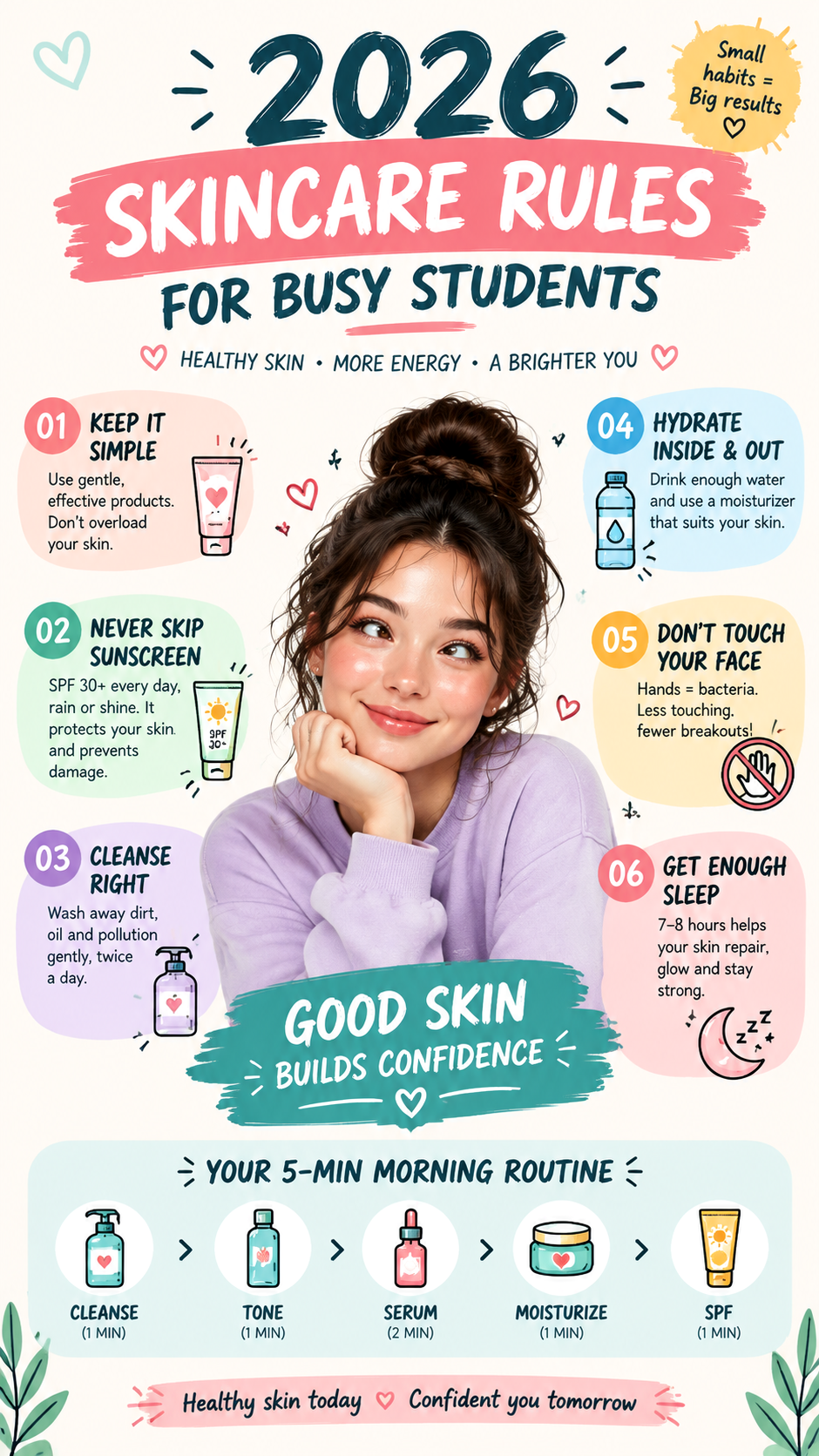
Your 5-Minute Morning Skincare Routine
A simple morning skincare routine can prepare your skin for the day without making you late for class. You can adjust the steps to suit your skin type and the amount of time you have.
Morning Routine Checklist
- Cleanse: Wash with a gentle cleanser or rinse with water if that better suits your skin.
- Optional serum: Use a suitable serum only if it addresses a specific concern and your skin tolerates it.
- Moisturize: Apply a comfortable layer of moisturizer.
- Protect: Finish with broad-spectrum SPF 30 or higher sunscreen.
On particularly busy mornings, focus on the essentials instead of skipping everything because you do not have time for every optional step. Clean skin, comfortable hydration, and sun protection provide a practical foundation.
Your 5-Minute Nighttime Skincare Routine
Your evening routine helps remove the day’s buildup and prepare your skin for overnight rest. It can also become a calming signal that your study day is finished.
Night Routine Checklist
- Cleanse: Remove sunscreen, makeup, sweat, and dirt with a gentle cleanser.
- Optional treatment: Apply a suitable treatment if you use one, following its instructions.
- Moisturize: Help maintain your skin barrier with a moisturizer suited to your needs.
- Lip care: Apply a simple lip balm if your lips feel dry.
You do not need a toner or serum to make your routine complete. These products may be useful for specific preferences or concerns, but they are optional. If you wear heavy or water-resistant makeup, you may need an appropriate makeup remover before cleansing.
Try to complete your nighttime routine before you become too tired to get out of bed. Even a short, gentle routine is more practical than repeatedly falling asleep with makeup on.
Common Skincare Mistakes Students Should Avoid
When you are trying to improve your skin, small changes can make your routine more comfortable and effective. Avoid these common mistakes:
- Using too many products: More steps can mean more opportunities for irritation and unnecessary spending.
- Skipping sunscreen: Sun protection matters throughout the year, not only during summer holidays.
- Scrubbing aggressively: Harsh cleansing and frequent exfoliation can irritate your skin.
- Picking at pimples: Squeezing blemishes can worsen inflammation and increase the risk of scars.
- Changing products constantly: Frequent changes make it harder to identify helpful ingredients and potential irritants.
- Expecting instant results: Many skin concerns require consistent care and time.
- Copying someone else’s routine: A product that works for a friend or influencer may not suit your skin.
- Ignoring persistent irritation: Stop using products that cause significant irritation and seek professional advice when necessary.
Remember that acne and other skin concerns are not personal failures. Your skin can change with age, hormones, environment, stress, and other factors. The purpose of skincare is to support your skin, not to create another standard you must meet perfectly.
At a Glance: The Best Skincare Rules for Busy Students
Your Daily Skin Checklist
- Keep your routine simple and use products suited to your skin.
- Cleanse gently and moisturize as needed.
- Apply broad-spectrum SPF 30 or higher sunscreen every morning.
- Get enough sleep, drink water, and eat balanced meals.
- Avoid picking blemishes and exfoliating too aggressively.
- Stay consistent and adjust your routine when your skin needs change.
Conclusion: Small Skincare Habits, Healthier Skin
Building a skincare routine as a busy student does not have to be complicated, expensive, or time-consuming. The most useful habits are often the simplest ones: cleanse gently, moisturize regularly, protect your skin from the sun, avoid picking blemishes, eat balanced meals, manage stress, and make sleep a priority.
Start with the essentials and give yourself time to establish a routine that works with your classes, budget, and personal needs. You can always add a targeted product later if you have a specific concern to address. There is no need to buy every trending skincare item or compare your skin with someone else’s online.
Most importantly, remember that healthy skin is not about achieving perfection. It is about caring for yourself in a way that feels realistic and sustainable. A few thoughtful minutes each morning and evening can become a valuable part of your everyday routine, even during the busiest weeks of the academic year.
Choose one habit to start today, whether it is applying sunscreen before leaving for class, keeping a water bottle in your backpack, or cleansing your face before bed. Small steps, repeated consistently, can help you build a skincare routine that supports your well-being throughout 2026 and beyond.
Tags
Skincare Routine for Students
Skincare Tips 2026
Clear Skin Tips
Healthy Skin Habits
Simple Skincare
Student Self-Care
Morning and Night Routine
Budget-Friendly Skincare