Natural Beauty Hacks for Clear Skin, Thicker Hair, and Brighter Under-Eyes
Looking for simple beauty tricks and hacks that fit easily into your daily routine? The secret to feeling confident in your skin often starts with consistent care, gentle ingredients, and a few smart adjustments to your beauty habits. From skincare tips for a fresh-looking complexion to hair care ideas and underarm care, there are plenty of ways to build a routine that feels practical, enjoyable, and personalized to your needs.
Natural beauty ingredients such as aloe vera, honey, yogurt, green tea, almond oil, and castor oil are popular in DIY beauty routines. They can inspire affordable self-care ideas, but it is important to understand what these ingredients can realistically do and how to use them safely. Some popular homemade combinations lack strong scientific evidence, and certain ingredients may irritate sensitive skin.
This guide explores five common beauty concerns: dark circles, thinning hair, acne and breakouts, oily skin with visible pores, and uneven underarm pigmentation. You will discover practical skincare tips, safer alternatives to questionable DIY remedies, and simple habits that support healthier-looking skin and hair.
Key Takeaways
- Build a consistent skincare routine with a gentle cleanser, moisturizer, and daily sunscreen.
- Understand the causes of dark circles before choosing an under-eye treatment.
- Use evidence-based hair care practices instead of relying on oils alone to treat thinning hair.
- Manage acne with gentle products and proven ingredients rather than harsh homemade scrubs.
- Avoid applying lemon juice directly to your face or underarms because it can cause irritation and increase sun sensitivity.
- Patch-test new skincare products and remember that gradual improvements are more realistic than overnight transformations.
1. Beauty Tricks for Dark Circles and Brighter-Looking Under-Eyes
Dark circles are a common beauty concern, and they can make the under-eye area appear tired even when you feel well-rested. They may develop for several reasons, including genetics, pigmentation, allergies, lack of sleep, dehydration, and the natural thinning of the skin around the eyes.
Before trying a homemade under-eye remedy, it helps to identify what may be contributing to the appearance of dark circles. A skincare ingredient cannot address every underlying cause, so realistic expectations are essential.
Can Coffee Powder and Almond Oil Help?
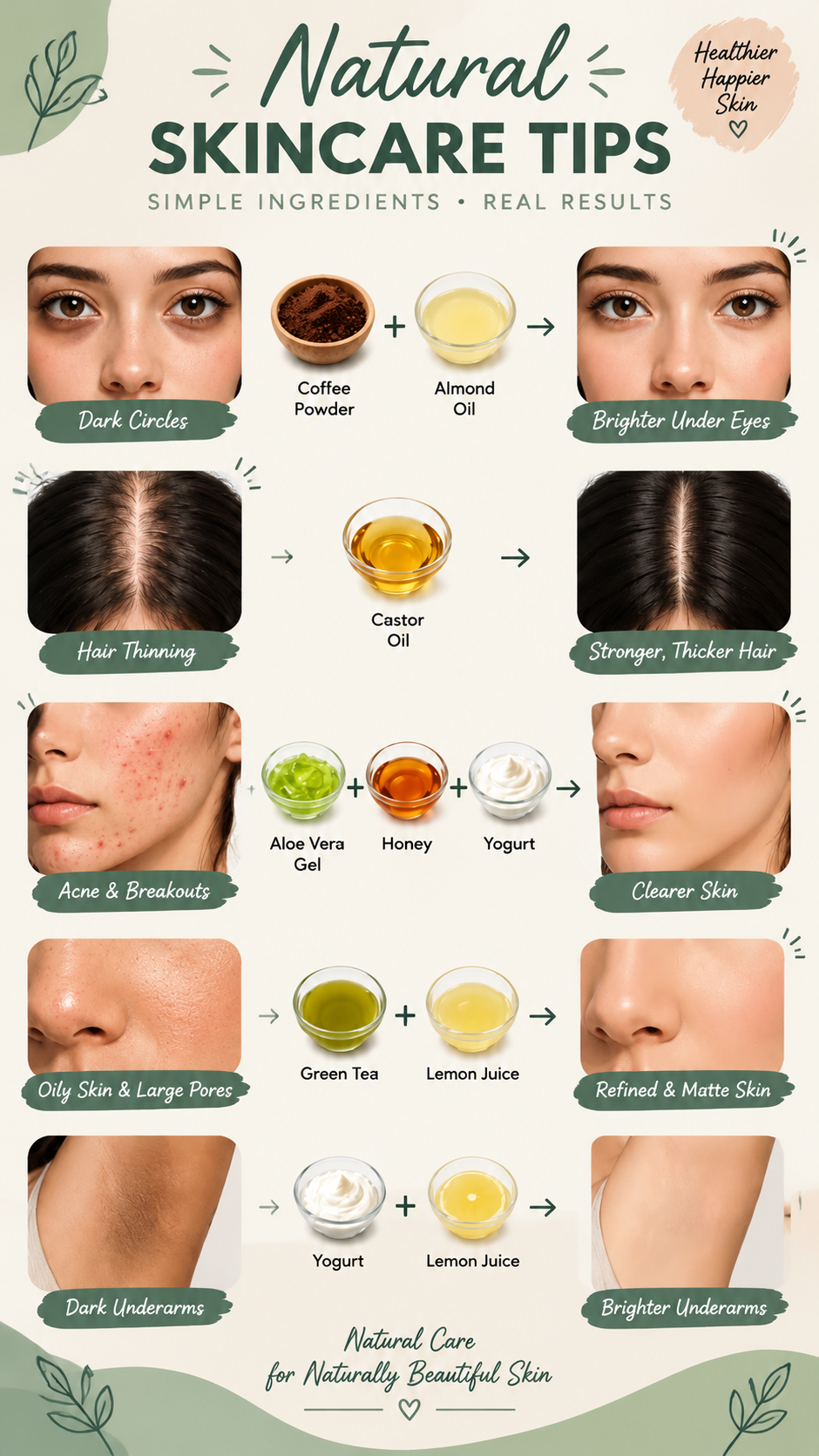
Coffee powder and almond oil are sometimes suggested as natural beauty ingredients for the under-eye area. Coffee contains caffeine, which is used in some formulated eye products to temporarily improve the appearance of puffiness. However, the effects of a properly formulated cosmetic product cannot be assumed to apply to a homemade mixture containing coffee grounds.
Almond oil acts as an emollient, helping soften the skin by reducing moisture loss. Nevertheless, it has not been established as a reliable treatment for dark circles. Coffee grounds can be abrasive, and rubbing them into the delicate skin around the eyes may cause irritation.
Important: Avoid scrubbing the under-eye area with coffee grounds or applying homemade mixtures close to your eyes. Choose a gentle, fragrance-free eye moisturizer instead, and seek professional advice if discoloration is persistent or changes suddenly.
Simple Ways to Improve the Under-Eye Area
- Get consistent sleep: Regular, sufficient sleep may help reduce the tired appearance that accompanies sleep deprivation.
- Try a cool compress: A clean, cool washcloth may temporarily reduce puffiness.
- Protect your skin from the sun: Use a broad-spectrum SPF 30 or higher sunscreen and sunglasses to help limit pigmentation caused by sun exposure.
- Consider a formulated eye product: Products containing caffeine may temporarily improve puffiness, while certain ingredients designed for pigmentation may help some people over time.
- Avoid rubbing your eyes: Frequent rubbing can worsen irritation and contribute to discoloration.
If dark circles are mainly related to genetics, facial structure, or naturally thin skin, topical products may provide only limited improvement. The goal is to care for the skin gently rather than expect a homemade mixture to completely remove dark circles.
2. Hair Care Tips for Thinning Hair and Fuller-Looking Locks
Thinning hair can be frustrating, especially when you notice more scalp showing along your part or more strands collecting in your brush. Hair density can change for many reasons, including genetics, hormonal changes, nutritional deficiencies, stress, illness, scalp conditions, and certain medications.
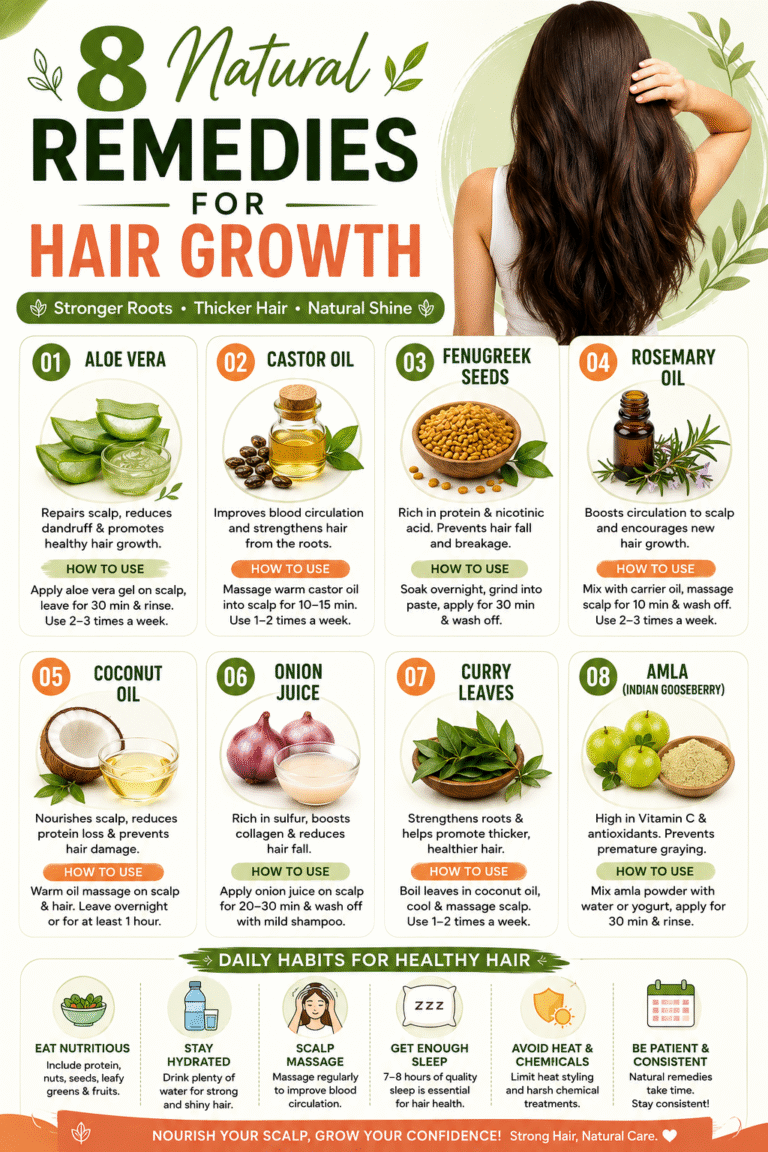
Castor oil is a popular ingredient in natural hair care routines because it has a thick texture that coats the hair and can make strands feel smoother. However, there is not enough strong clinical evidence to establish castor oil as a treatment that reliably stimulates hair growth or reverses hair loss.
How to Use Castor Oil More Carefully
If you enjoy using oils on your hair, treat castor oil as an optional conditioning product rather than a guaranteed hair-growth solution. Its thick consistency means a small amount is usually easier to manage than a generous application.
- Choose a small area of the scalp for an initial patch test.
- If you experience no irritation, apply a small amount to the hair or scalp as appropriate for your routine.
- Massage gently with your fingertips instead of scratching or rubbing aggressively.
- Wash thoroughly if the oil leaves your hair greasy or causes buildup.
- Stop using it if itching, redness, flaking, or discomfort develops.
People with an oily scalp or a history of scalp irritation may find heavy oils uncomfortable. Applying more product does not necessarily improve results, and oil alone cannot correct the underlying causes of many types of hair loss.
Everyday Habits That Support Healthier Hair
- Handle wet hair gently: Use a wide-tooth comb and avoid forceful brushing when strands are vulnerable to breakage.
- Limit excessive heat: Reduce the frequency of high-temperature styling tools and use suitable heat protection.
- Avoid tight hairstyles: Repeated tension from tight ponytails, braids, or extensions can contribute to traction-related hair loss.
- Eat a balanced diet: Adequate protein and essential nutrients support normal hair growth. Supplements are best used when a deficiency has been identified or a qualified professional recommends them.
- Keep your scalp comfortable: Cleanse regularly according to your scalp’s needs and address persistent itching or scaling.
Hair growth takes time, so changes in appearance should be assessed over months rather than days. If your hair is thinning noticeably, your part is widening, or you develop sudden shedding or bald patches, consult a healthcare professional or dermatologist to identify the cause.
3. Skincare Tips for Acne, Pimples, and Breakouts
Acne and breakouts can affect people with many different skin types, including oily, combination, and sometimes dry or sensitive skin. They develop when hair follicles become clogged with oil and dead skin cells, with inflammation and acne-related bacteria also playing a role.
When pimples appear, it is tempting to experiment with homemade face masks. Aloe vera gel, honey, and yogurt are frequently mentioned in DIY beauty routines, but their presence in a homemade mixture does not guarantee that it will clear acne.
Aloe Vera, Honey, and Yogurt: What Should You Know?
Aloe Vera Gel
Aloe vera is known for its soothing properties and is included in many skincare products. A simple, fragrance-free aloe vera gel may feel comforting on some irritated skin, although evidence supporting aloe vera as a stand-alone acne treatment is limited. Choose a product formulated for skin rather than an unknown preparation containing added fragrance or other potentially irritating ingredients.
Honey
Honey is a humectant, meaning it can help attract and retain moisture. Certain medical-grade honey products are used for specific wound-care purposes, but ordinary kitchen honey has not been established as a reliable treatment for acne. Its texture may also make a homemade face mask messy, and some people can develop irritation or allergic reactions.
Yogurt
Yogurt contains lactic acid, which is also used in formulated exfoliating skincare products. However, the concentration, acidity, and other properties of yogurt vary, so applying it to the face is not equivalent to using a tested cosmetic exfoliant. Homemade yogurt masks may irritate sensitive or acne-prone skin.
These ingredients can be interesting to learn about, but you do not need to combine all three to create an effective skincare routine. A few well-chosen products are often easier to tolerate and use consistently.
A Simple Routine for Acne-Prone Skin
- Cleanse gently: Wash your face with a mild cleanser, usually once or twice daily depending on your skin and activity.
- Choose a proven acne ingredient: Salicylic acid may help unclog pores, while benzoyl peroxide can help reduce acne-causing bacteria and inflammatory breakouts. Introduce one product at a time to assess tolerance.
- Moisturize daily: Look for a lightweight, non-comedogenic moisturizer that does not unnecessarily clog pores.
- Wear sunscreen: Broad-spectrum SPF 30 or higher helps protect the skin and reduce the risk of dark marks becoming more noticeable after breakouts.
- Avoid picking pimples: Squeezing lesions can increase inflammation and the risk of scarring or post-inflammatory pigmentation.
Pro Tip: Introduce new acne products gradually instead of layering several active ingredients at once. If your skin becomes persistently red, tight, flaky, or painful, reduce use and seek professional advice when needed.
Acne treatments commonly need several weeks to show noticeable improvement. Deep, painful breakouts, persistent acne, and acne that causes scars may require professional treatment rather than DIY masks.
4. Managing Oily Skin and the Appearance of Large Pores
Oily skin develops when sebaceous glands produce excess sebum. It can create shine, make pores more noticeable, and contribute to clogged pores in some people. However, oil is also part of the skin’s natural protective barrier, so the goal should be balance rather than eliminating every trace of shine.
Green tea and lemon juice are sometimes combined in homemade skincare recipes intended to refine pores and create a matte finish. Although green tea contains antioxidant compounds that are being studied for their potential skincare benefits, a homemade mixture is not a proven treatment for enlarged pores. Lemon juice, meanwhile, can be irritating and is best avoided as a direct facial treatment.
Why You Should Avoid Lemon Juice on Your Face
Lemon juice is naturally acidic, and its concentration is not controlled like that of a cosmetic product. Applying it directly to the skin can cause stinging, dryness, irritation, and, in some circumstances, phytophotodermatitis when skin exposed to certain citrus compounds comes into contact with ultraviolet light. This reaction can result in redness and dark discoloration.
Using lemon juice to lighten the skin or shrink pores is therefore not a good DIY beauty shortcut. A safer approach is to choose skincare products designed and tested for facial use.
Better Ways to Control Shine
- Use a gentle cleanser: Remove excess oil, sunscreen, and daily buildup without stripping your skin.
- Consider salicylic acid: This ingredient can help remove material inside pores and may improve blackheads and clogged pores when tolerated.
- Choose a lightweight moisturizer: Oily skin still needs hydration. A non-comedogenic gel or lotion may feel more comfortable than a heavy cream.
- Try blotting papers: These can absorb surface oil during the day without requiring repeated washing.
- Use sunscreen every morning: A lightweight, broad-spectrum sunscreen can protect your skin without adding unnecessary heaviness when you choose a suitable formula.
It is also helpful to understand that pores cannot permanently open and close like doors. Their appearance is influenced by genetics, sebum, congestion, and skin elasticity. Consistent care may make pores look less noticeable, but no homemade mask can permanently erase them.
5. Gentle Underarm Care for a More Even-Looking Skin Tone
Uneven underarm pigmentation is another common concern addressed by natural beauty hacks. The skin in this area can become darker for several reasons, including friction, shaving-related irritation, reactions to deodorants, and post-inflammatory hyperpigmentation. Sometimes, darker and thicker skin in body folds can be associated with a medical condition such as acanthosis nigricans.
Yogurt and lemon juice are often suggested as ingredients for brightening dark underarms. However, this combination is not a proven pigmentation treatment, and lemon juice can irritate delicate underarm skin. Irritation may actually make discoloration worse, particularly in people who are prone to post-inflammatory hyperpigmentation.
Safer Alternatives to Lemon Juice and DIY Brightening Masks
Instead of trying to bleach the area with kitchen ingredients, focus on reducing irritation and supporting the skin barrier. These steps may help prevent further discoloration while allowing existing dark marks to gradually improve.
- Reduce friction: Choose comfortable clothing and avoid repeated rubbing against the underarms.
- Shave gently: Use a clean, sharp razor, suitable shaving gel, and light pressure. Consider another hair-removal method if shaving repeatedly causes irritation.
- Choose a gentle deodorant: If your current product causes burning, itching, or redness, stop using it and consider a fragrance-free alternative.
- Moisturize when needed: A simple, fragrance-free moisturizer can help support the skin barrier if the area is dry or irritated.
- Avoid aggressive exfoliation: Scrubbing, strong acids, and harsh homemade treatments can worsen irritation and pigmentation.
If you want to use a product intended to improve uneven skin tone, choose a formulation suitable for sensitive body areas and follow its directions. Ingredients such as niacinamide may help support a more even-looking complexion in some formulations, but results vary and irritation remains possible.
Do not apply a product immediately after shaving if it stings or contains potentially irritating active ingredients. Introduce products carefully and discontinue them if the skin becomes uncomfortable.
When Dark Underarms Need Medical Attention
Underarm discoloration does not always result from cosmetic habits. If the skin becomes noticeably thicker or velvety, darkening develops suddenly, or similar changes appear around the neck or groin, arrange a medical evaluation. A healthcare professional can determine whether an underlying condition needs attention.
Natural skin color varies widely, and darker underarms are not automatically a sign of poor hygiene. The healthiest approach is to avoid harsh lightening methods and focus on comfort, skin health, and any underlying causes.
6. How to Build a Simple Beauty Routine at Home
You do not need a large collection of products or a complicated list of DIY recipes to care for your skin and hair. A routine that fits your needs, budget, and schedule is often easier to maintain than a collection of trendy beauty hacks.
Start with a few essentials and add specialized products only when there is a clear reason to use them. This makes it easier to identify which products work well and which may be causing irritation.
A Beginner-Friendly Morning Routine
- Cleanse: Use a gentle cleanser or rinse with water if that is sufficient for your skin.
- Apply a suitable moisturizer: Choose a lightweight formula for oily skin or a richer option if your skin is dry.
- Protect your skin: Finish with broad-spectrum SPF 30 or higher sunscreen on exposed skin.
- Care for your hair: Use products suited to your scalp and hair texture, and minimize unnecessary heat or tension.
A Simple Evening Routine
- Remove sunscreen and makeup: Cleanse thoroughly but gently, without scrubbing.
- Use a targeted treatment if needed: Select an appropriate product for concerns such as acne or uneven pigmentation, introducing it gradually.
- Moisturize: Support the skin barrier with a product that feels comfortable.
- Keep the routine consistent: Give products time to work before making frequent changes.
Expert Insight: Keep DIY Beauty Safe
Natural does not automatically mean gentle or effective. The skin’s barrier can be damaged by ingredients that are too acidic, abrasive, or irritating, even when they come from a kitchen.
- Patch-test a new product on a small area before broader use.
- Never apply lemon juice directly to the face or underarms as a brightening treatment.
- Avoid scrubbing coffee grounds or other rough particles into delicate skin.
- Use clean hands and utensils if preparing a cosmetic mixture, and discard it rather than storing homemade blends for later.
7. Common Beauty Mistakes to Avoid
Even well-intentioned beauty habits can cause problems when they are too aggressive or based on unrealistic promises. Avoiding a few common mistakes can make your routine more comfortable and effective.
Expecting Instant Results
Skin renewal and hair growth take time. A moisturizer may make dry skin feel softer relatively quickly, but concerns such as acne, pigmentation, and hair thinning usually require a more targeted approach. Be cautious of remedies that promise dramatic results after one application.
Using Too Many Ingredients at Once
Mixing several ingredients together makes it difficult to determine which one is helping or causing irritation. This is especially important when experimenting with acne treatments, exfoliants, essential oils, or products intended for delicate areas.
Introduce one new product at a time and monitor how your skin responds. If you experience swelling, blistering, significant pain, or a persistent rash, stop using the suspected product and seek appropriate medical advice.
Ignoring Your Individual Skin Type
A beauty hack that feels comfortable for one person may not suit someone else. Dry skin may benefit from richer moisturizers, while oily skin may feel better with lighter formulations. Sensitive skin may react to fragrances, essential oils, or strongly acidic ingredients.
Pay attention to how your skin behaves rather than following every trend. The most useful beauty routine is one that supports your skin without leaving it irritated, overly dry, or uncomfortable.
8. Quick Points: Beauty Tricks and Hacks at a Glance
Your Beauty Routine Checklist
- Dark circles: Prioritize sleep, sun protection, and gentle under-eye care.
- Thinning hair: Reduce breakage and investigate persistent hair loss instead of relying on castor oil alone.
- Acne: Choose gentle cleansing and proven acne treatments suited to your skin.
- Oily skin: Use lightweight, non-comedogenic products and avoid harsh DIY pore treatments.
- Dark underarms: Minimize friction and irritation rather than applying lemon juice or abrasive scrubs.
- Everyday skincare: Stay consistent, introduce products gradually, and protect exposed skin with sunscreen.
Conclusion: Make Beauty Hacks Work for Your Routine
Beauty tricks and hacks can be a fun way to discover new self-care habits, simplify your routine, and learn more about ingredients commonly used in skincare and hair care. From coffee and almond oil-inspired under-eye routines to castor oil hair care, aloe vera skincare, and gentle underarm care, there are many ideas to explore. The key is understanding what these ingredients can realistically achieve and knowing when a popular remedy is not worth the risk.
For clearer-looking skin, focus on gentle cleansing, suitable moisturizers, sunscreen, and proven acne treatments when needed. For healthier-looking hair, prioritize gentle handling, balanced nutrition, and professional assessment when thinning persists. For uneven pigmentation, reduce irritation and avoid harsh lightening ingredients that may make discoloration worse.
Remember that healthy beauty routines are built through consistency, not overnight transformations. Choose a few practical habits, pay attention to your skin’s response, and adjust your routine as needed. If a concern is persistent, painful, sudden, or worsening, a dermatologist or other qualified healthcare professional can help you find an appropriate solution.
Ready to refresh your self-care routine? Save your favorite beauty tips, try the safer ideas that suit your needs, and make time for small habits that help you feel comfortable and confident in your own skin.
Tags
Beauty Tricks and Hacks
Skincare Tips
DIY Beauty
Natural Beauty
Acne Care
Hair Care Tips
Glowing Skin
Underarm Care