How to Brighten Dull Arms Naturally with a DIY Natural Skincare Remedy
Dreaming of smoother, softer, brighter-looking arms? A simple skincare routine can help your skin look healthier and feel more comfortable without requiring an expensive collection of beauty products. With gentle cleansing, regular moisturizing, sun protection, and carefully chosen ingredients, you can build an easy arm care routine that fits naturally into your week.
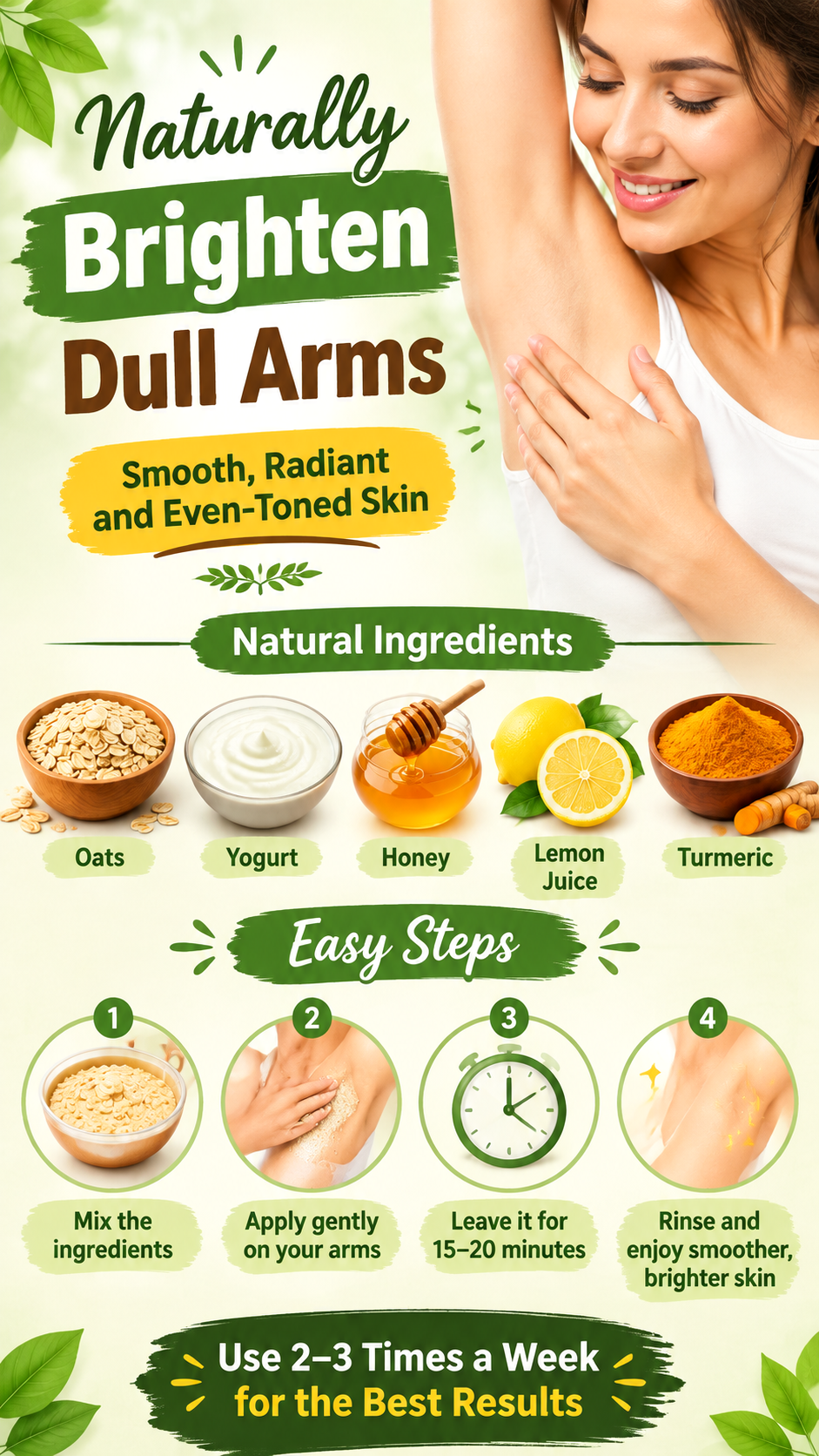
Natural skincare ingredients such as oats, plain yogurt, honey, and turmeric are popular in homemade beauty recipes. They can offer different benefits, from helping skin feel softer to providing soothing moisture. However, natural ingredients are not automatically suitable for every skin type, and no homemade mask can guarantee lighter skin or remove every dark spot.
If your goal is to improve the appearance of dull arms, the best approach is to focus on healthy skin rather than changing your natural skin tone. This guide explains how to create a gentle DIY arm mask, how to use it responsibly, and which daily habits can help your arms look smoother and more radiant over time.
Key Takeaways
- Oats can help create a gentle, skin-comforting homemade mask.
- Plain yogurt and honey add moisture to a simple DIY skincare mixture.
- Lemon juice can irritate skin and increase the risk of sun-related reactions, so it is best left out of homemade arm masks.
- Moisturizer and broad-spectrum SPF 30 or higher sunscreen are important parts of an effective arm care routine.
- Use gentle skincare consistently rather than scrubbing or applying harsh ingredients.
- Patch-test new ingredients and stop using any mixture that causes burning, itching, redness, or swelling.
Why Do Arms Sometimes Look Dull or Uneven?
Arms are exposed to everyday environmental factors, including sunlight, dry air, friction from clothing, and frequent washing. Over time, these factors can affect the skin’s texture and appearance. Understanding the possible cause of dull-looking arms helps you choose a routine that supports your skin instead of irritating it.
1. Dryness and Dehydration
When the skin loses moisture, it may appear rough, flaky, or less radiant. Hot showers, strong soaps, cold weather, and low humidity can contribute to dryness. Sometimes, what looks like dullness is simply skin that needs a more consistent moisturizing routine.
Applying a fragrance-free body lotion after bathing helps retain moisture and improve the feel of dry arms. Ingredients such as glycerin, ceramides, and petrolatum can be useful for supporting the skin barrier.
2. Sun Exposure and Uneven Skin Tone
Sun exposure can contribute to tanning, dark spots, and uneven pigmentation. Because arms are often uncovered outdoors, they may receive considerable sunlight during daily activities such as walking, driving, gardening, or commuting.
Sun protection is especially important when your goal is to reduce the appearance of uneven tone. A broad-spectrum sunscreen with SPF 30 or higher helps protect exposed skin from ultraviolet radiation. Reapply it according to the product directions, particularly after swimming, sweating, or extended outdoor activity.
3. Rough Texture and Dead Skin Buildup
Skin naturally sheds dead cells, but dryness and certain skin conditions can leave the surface feeling rough. Some people also develop small, firm bumps on the upper arms, commonly associated with keratosis pilaris. These bumps are not caused by poor hygiene and do not need aggressive scrubbing.
For rough arms, gentle cleansing and regular moisturizing are usually better starting points than abrasive exfoliation. If you have persistent bumps, a pharmacist or dermatologist can recommend suitable products, such as lotions containing urea or lactic acid, when appropriate for your skin.
Natural Ingredients for a Gentle DIY Arm Mask
A homemade arm mask can be a relaxing addition to a self-care routine. The ingredients commonly used in natural beauty recipes have different properties, but their benefits should be understood realistically. A mask may temporarily soften the skin, yet it cannot reliably erase pigmentation or permanently brighten your natural complexion.
Oats: A Comforting Choice for Dry Skin
Finely ground oats are a popular ingredient in gentle skincare products because colloidal oatmeal can help soothe dry, itchy skin and support the skin barrier. Plain kitchen oats are not identical to formulated colloidal oatmeal products, but finely ground oats can still provide a soft texture for a rinse-off mask.
Choose plain, unsweetened oats without added flavorings. Grind them into a fine powder before mixing so the texture is less abrasive. Avoid rubbing the mixture forcefully across your arms, especially if your skin is sensitive or inflamed.
Plain Yogurt: A Creamy Base
Plain yogurt gives a homemade mask a smooth, creamy consistency. It also contains water and fats that can temporarily make the skin feel softer. Some yogurts contain lactic acid, but the concentration and acidity vary, so homemade yogurt should not be treated as a predictable exfoliating treatment.
For a simple recipe, use fresh, plain yogurt without added fragrance, sugar, or flavorings. If dairy products cause skin irritation or you have a known milk allergy, skip this ingredient and choose a suitable alternative, such as a little water mixed with finely ground oats.
Honey: A Moisture-Friendly Addition
Honey is a humectant-rich ingredient often included in homemade beauty recipes. It can help a mask spread easily and leave the skin feeling soft after rinsing. Medical-grade honey is used in specific wound-care products, but ordinary kitchen honey should not be considered a substitute for medical treatment.
If you would like to include honey in your arm mask, use a small amount and mix it thoroughly with the other ingredients. Avoid it if you have a known allergy or if it causes irritation. Because homemade mixtures are not preserved, prepare only what you need for one use.
Turmeric: Use With Care
Turmeric is a familiar ingredient in traditional beauty routines. It contains curcumin, a compound that has been studied for its biological properties, but evidence for turmeric as a home treatment for uneven arm pigmentation is limited.
Turmeric powder can temporarily stain skin, clothing, towels, and bathroom surfaces. It may also cause irritation or allergic contact dermatitis in some people. If you choose to try it, use only a tiny amount, patch-test first, and avoid applying it to broken or inflamed skin.
Lemon Juice: Why It Is Better to Skip It
Lemon juice is frequently recommended online for natural skin brightening, but it is not a good choice for a DIY arm mask. Its acidity can irritate the skin, and citrus compounds can cause phototoxic reactions in the presence of sunlight. This may lead to redness, blistering, or dark marks that take time to fade.
Important safety tip: Avoid applying lemon juice directly to your skin, especially before going outdoors. Irritation and sun-related reactions can make uneven pigmentation more noticeable rather than improving it.
How to Make a Gentle Homemade Arm Mask
If your skin is not irritated or broken, you can try a simple oat-based mask for a little extra softness. This recipe is intended as an optional rinse-off skincare treat, not a medical treatment for dark spots or a guaranteed skin-brightening solution.
Simple Oat and Yogurt Arm Mask
Ingredients for one application:
- 1 tablespoon of finely ground plain oats
- 1 tablespoon of plain, unsweetened yogurt
- 1/2 teaspoon of honey, optional
- A few drops of clean water if needed to adjust the texture
Preparation: Combine the oats and yogurt in a clean bowl. Add the honey if desired, then mix until you have a smooth, spreadable paste. If the mixture feels too thick, add a few drops of water.
Use: Prepare the mixture immediately before application. Do not store leftovers for future use.
Step 1: Cleanse Your Arms Gently
Wash your arms with lukewarm water and a mild cleanser if needed. Pat them dry with a soft towel, leaving the skin slightly damp. Avoid hot water, rough washcloths, or vigorous rubbing, as these can aggravate dryness and irritation.
Step 2: Apply a Thin, Even Layer
Spread a small amount of the mask over clean, intact skin. Keep it away from your eyes, lips, and any cuts or irritated areas. Do not massage it in like a scrub, since oat particles can still cause friction when rubbed against the skin.
If you experience stinging, itching, burning, or redness, rinse the mixture off immediately. Never assume that discomfort means an ingredient is working.
Step 3: Keep the Application Short
The visual inspiration for this routine suggests leaving a homemade mask on for 15 to 20 minutes. However, longer contact does not necessarily improve results, and food-based mixtures are not standardized skincare products.
For a cautious first try, begin with about five minutes, provided you have already completed a patch test and your skin feels comfortable. Rinse sooner at the first sign of irritation. If your skin is sensitive, eczema-prone, or currently inflamed, skip homemade masks and use products designed for sensitive skin instead.
Step 4: Rinse and Pat Dry
Use lukewarm water to remove the mask completely. Avoid scrubbing to remove stubborn residue. Gently pat your arms dry and apply a fragrance-free moisturizer while the skin is still slightly damp.
This final step is important because the moisturizer helps reduce water loss and supports the skin barrier. A simple lotion may be more beneficial for dry-looking arms than adding more ingredients to your homemade mask.
Expert Insight
Healthy-looking skin depends more on consistent barrier care than on a single DIY treatment.
- Choose gentle, fragrance-free products when your skin is easily irritated.
- Moisturize after bathing to help maintain softness.
- Use sunscreen on exposed arms to limit further sun-related pigmentation.
How Often Should You Use a DIY Arm Mask?
It is tempting to repeat a homemade treatment several times a week in the hope of seeing faster results. However, frequent applications can increase the chance of irritation, particularly when a recipe contains several food-based ingredients.
If you decide to use the oat and yogurt mask, start with an occasional application rather than immediately following a fixed schedule. Assess how your skin responds over the following day. If there is any redness, itching, dryness, or discomfort, stop using it.
There is no established frequency that makes homemade masks effective for skin brightening. The suggestion to use a mask two or three times per week should not be treated as a proven requirement. For most people seeking softer arms, daily moisturizing and sun protection are more useful priorities.
Why a Patch Test Matters
Even familiar ingredients can cause unexpected reactions. Before applying a new mixture over a large area, place a small amount on a discreet patch of intact skin and follow the product’s or ingredient’s appropriate testing guidance. Monitor the area for irritation rather than assuming an immediate reaction is the only possible problem.
A home patch test cannot guarantee that a reaction will never occur, but it can help identify some problems before you use a product more widely. If you have a history of eczema, contact allergies, or highly reactive skin, ask a dermatologist about suitable ingredients before experimenting with homemade recipes.
Daily Habits for Smoother, Brighter-Looking Arms
A DIY mask is only one small part of an arm care routine. If you want your skin to look more even and feel softer, concentrate on the habits that protect it every day.
Moisturize Consistently
Apply a suitable body moisturizer after bathing and whenever your arms feel dry. Look for products containing glycerin, ceramides, dimethicone, or petrolatum if your skin needs extra moisture. Creams and ointments may be more helpful than lightweight lotions for very dry skin.
Fragrance-free formulas are a sensible option for people prone to sensitivity. You do not need a complicated routine or multiple expensive products to maintain comfortable skin.
Protect Your Arms From the Sun
Sun protection is one of the most important steps when uneven pigmentation is a concern. Apply a broad-spectrum sunscreen with SPF 30 or higher to exposed arms before spending time outdoors. Follow the label instructions and reapply as directed, especially after swimming, sweating, or towel drying.
Protective clothing and shade provide additional support. If you spend long periods outdoors, consider lightweight long sleeves and plan breaks in shaded areas when practical.
Remember: Moisturizer can improve dryness, but it cannot replace sunscreen. If you are trying to prevent new dark marks or help existing sun-related discoloration fade, consistent sun protection is an essential part of the routine.
Avoid Harsh Scrubs and Over-Exfoliation
Rubbing your arms with sugar, salt, rough gloves, or abrasive homemade mixtures can damage the skin barrier. Repeated irritation may leave the skin red, sensitive, or more prone to post-inflammatory hyperpigmentation, particularly in skin tones that naturally develop dark marks after inflammation.
If you need help with rough texture, consider a formulated body lotion containing urea or lactic acid, where appropriate. Introduce one product at a time and follow its directions. Avoid applying exfoliating ingredients to freshly shaved, broken, or irritated skin.
Be Gentle After Hair Removal
Shaving and waxing can leave some people with temporary redness, bumps, or dark marks. Use clean equipment, avoid dry shaving when possible, and moisturize with a gentle product afterward. Do not immediately apply a homemade mask, exfoliating lotion, or potentially irritating ingredient to freshly shaved skin.
If ingrown hairs or persistent bumps are common, a dermatologist can help identify the cause and recommend a suitable treatment rather than relying on repeated scrubbing.
What Results Can You Realistically Expect?
After moisturizing and using a gentle rinse-off mask, your arms may feel softer or look temporarily smoother. These changes are different from a lasting reduction in pigmentation. Homemade masks have limited evidence for treating dark spots, and results vary depending on the condition of your skin and the cause of the discoloration.
Dryness-related dullness may improve relatively quickly with regular moisturizing. Pigmentation caused by sun exposure, inflammation, or other factors generally takes longer to improve, and some causes require professional treatment. There is no reliable timeline for brightening arms with a homemade recipe.
It is also important to distinguish between healthy skin and lighter skin. Your natural skin tone does not need to change for your arms to look smooth, hydrated, and well cared for. A realistic goal is comfortable skin with a more even appearance, while preserving your natural complexion.
When to Seek Professional Advice
Consider speaking with a dermatologist if dark patches appear suddenly, spread, become thick or velvety, or are accompanied by persistent itching, pain, or other changes. New or changing spots should also be assessed when they look unusual or continue to evolve.
Professional advice is particularly useful when discoloration does not improve with gentle skincare or when you are unsure whether you have dryness, eczema, keratosis pilaris, a pigmentary condition, or another skin concern. Treating the underlying cause is often more effective than trying multiple home remedies.
Common Mistakes to Avoid When Brightening Dull Arms
Natural skincare is most helpful when it is gentle and practical. Avoid these common mistakes to reduce the risk of irritation and disappointment.
- Using lemon juice on the skin: Citrus juice may cause irritation and sunlight-related skin reactions.
- Scrubbing too hard: Friction can worsen dryness and contribute to dark marks after inflammation.
- Applying too many ingredients at once: Complex mixtures make it difficult to identify the cause of a reaction.
- Leaving homemade masks on for too long: Longer application does not guarantee better results.
- Skipping moisturizer: A mask alone is unlikely to address persistent dryness.
- Ignoring sunscreen: Continued UV exposure can contribute to tanning and uneven pigmentation.
- Expecting instant changes in skin tone: No kitchen ingredient can guarantee permanent or dramatic skin brightening.
A Simple Weekly Arm Care Routine
You do not need to spend a long time on skincare to care for your arms effectively. A straightforward routine is easier to maintain and helps you notice how your skin responds to different products.
Every Morning
- Apply moisturizer if your arms feel dry.
- Use broad-spectrum SPF 30 or higher sunscreen on exposed skin.
- Choose clothing that offers additional sun protection when needed.
After Bathing
- Use lukewarm water rather than very hot water.
- Pat your arms dry instead of rubbing them vigorously.
- Apply a fragrance-free moisturizer while the skin is slightly damp.
Occasionally, If Your Skin Tolerates It
- Try a simple oat-based rinse-off mask after patch-testing, if desired.
- Introduce any new body-care product individually.
- Skip masks and exfoliation whenever your skin is irritated, sunburned, or freshly shaved.
Quick Points: At a Glance
- Use finely ground oats and plain yogurt for an optional gentle mask.
- Leave lemon juice out of DIY skincare recipes.
- Patch-test new ingredients and stop if irritation develops.
- Moisturize regularly to support soft, comfortable skin.
- Protect exposed arms with broad-spectrum sunscreen every day you need sun protection.
Conclusion: Build a Gentle Routine for Naturally Radiant Arms
Brightening dull-looking arms starts with understanding what your skin needs. Dryness, sun exposure, friction, and uneven pigmentation can all affect the appearance of your arms, but each concern may respond to a different approach. A simple homemade oat and yogurt mask can be an occasional self-care option if your skin tolerates the ingredients, although its benefits are mainly cosmetic and temporary.
For lasting improvements in skin comfort, focus on gentle cleansing, regular moisturizing, and consistent sun protection. Avoid harsh scrubs, skip lemon juice, and be cautious with ingredients such as turmeric that may irritate or stain the skin. If discoloration is persistent, unusual, or worsening, professional guidance can help you choose a more effective treatment.
Most importantly, remember that radiant skin does not have to be lighter skin. Treat your arms with patience, protect their natural barrier, and choose habits that help them feel healthy and look their best. A simple, consistent routine is a more reliable foundation for naturally glowing skin than any single homemade remedy.
Tags
Brighten Dull Arms
Natural Arm Care
DIY Skincare
Oatmeal Skin Mask
Moisturizing Tips
Even-Looking Skin Tone
Natural Beauty Routine
Sun Protection