12 Simple Gut Health Tips Easy Biohacks for Better Digestion and a Healthier Gut
Looking for simple ways to support your gut health without completely changing your lifestyle? The good news is that small, consistent habits can make a meaningful difference in how you feel. From eating more fiber and fermented foods to staying hydrated, managing stress, and getting quality sleep, everyday choices can help support healthy digestion and a balanced gut microbiome.
Your gut does much more than process food. It houses trillions of microorganisms that interact with your digestive system, help break down certain dietary components, and contribute to normal immune function. The balance and diversity of these microorganisms are influenced by several factors, including diet, physical activity, sleep, stress, and medication use.
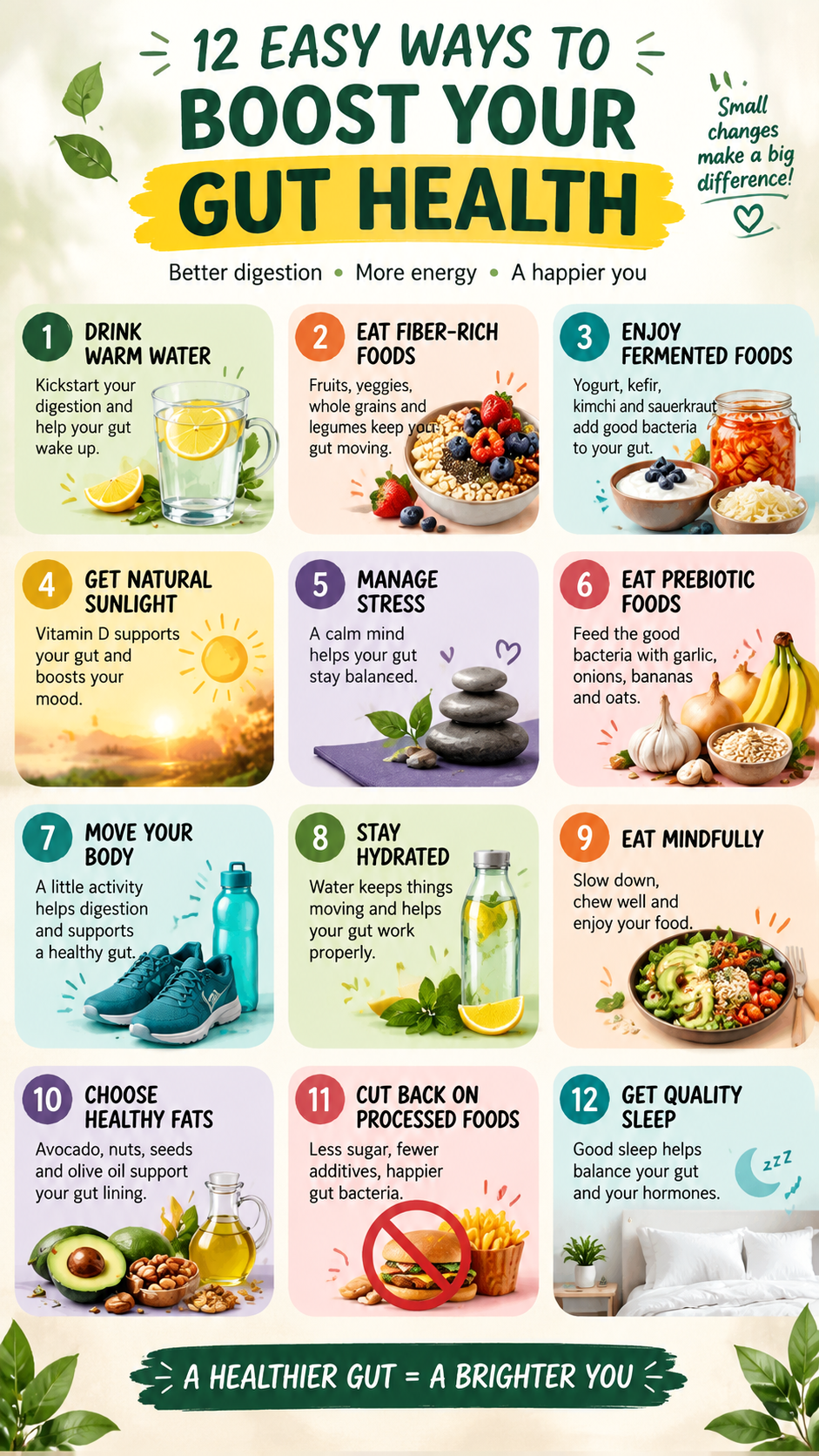
These 12 simple gut health biohacks offer practical ways to build a gut-friendly routine using accessible foods and realistic lifestyle changes. You do not need expensive supplements or complicated wellness routines to get started. Focus on a few manageable habits, pay attention to how your body responds, and build from there.
Key Takeaways
- Eat a variety of fiber-rich plant foods to nourish beneficial gut bacteria.
- Include fermented foods, such as yogurt or kefir, if you tolerate them well.
- Drink enough water to support digestion and help fiber do its job.
- Eat slowly and take short walks after meals to encourage comfortable digestion.
- Manage stress and maintain a consistent sleep schedule to support overall well-being.
- Make gradual changes rather than trying to overhaul your entire routine overnight.
What Is Gut Health, and Why Does It Matter?
Gut health refers to how well your digestive system functions and how it interacts with the microorganisms living in your intestines. This community of bacteria and other microbes is known as the gut microbiome. Although every person’s microbiome is different, the foods you eat and the habits you maintain can influence its composition and activity.
A healthy digestive system helps break down food, absorb nutrients, and move waste through the intestines. Gut microorganisms also help ferment certain types of dietary fiber, producing substances called short-chain fatty acids that play important roles in the intestinal environment.
When digestion is working comfortably, you may experience regular bowel movements and less disruptive bloating or abdominal discomfort. However, occasional digestive symptoms can happen to anyone, and they do not automatically mean your microbiome is unhealthy.
Important: There is no single food, drink, or morning ritual that guarantees a healthy gut. The most useful approach is to combine a varied diet with regular movement, adequate hydration, stress management, and sufficient sleep.
12 Simple Gut Health Biohacks to Try Every Day
1. Start Your Day With Warm Water
Beginning your morning with a glass of warm water is a simple way to establish a hydration habit. After several hours of sleep without drinking, water helps replenish fluids and prepares you for the day ahead.
Warm water may feel soothing, especially if you prefer it to cold drinks. However, it has not been shown to offer unique digestive benefits over water at a comfortable temperature. The main advantage is making hydration part of your daily routine.
How to make it a habit
- Keep a glass or reusable water bottle near your kitchen sink.
- Drink a glass of water when you wake up, adjusting the amount to your comfort.
- Add a slice of lemon if you enjoy the flavor, but remember that lemon water is not a detox treatment.
You can also drink water throughout the day rather than trying to consume a large amount at once. Your overall fluid needs depend on factors such as activity, climate, diet, and individual health.
2. Add Fermented Foods to Your Diet
Fermented foods are popular in gut health routines because they can provide distinctive flavors, useful nutrients, and, in some cases, live microorganisms. Examples include yogurt with live cultures, kefir, kimchi, sauerkraut, and certain fermented vegetables.
Some fermented foods contain live microbes that may influence the gut microbiome, while others are cooked or pasteurized in ways that reduce or eliminate live cultures. The benefits also vary by food, strain, preparation, and individual.
Yogurt and kefir can provide protein and calcium, while fermented vegetables can add variety to meals. Choose products that fit your dietary needs and check labels when you specifically want live cultures.
Easy ways to enjoy fermented foods
- Add plain yogurt to breakfast with oats and berries.
- Blend kefir into a smoothie if you tolerate dairy.
- Serve a small portion of kimchi or sauerkraut alongside lunch.
- Try fermented plant-based alternatives if you avoid dairy.
Start with small portions if you are not used to fermented foods. Some products contain considerable sodium or added sugar, so check the nutrition label and choose options that suit your needs.
3. Increase Your Fiber Intake
Dietary fiber is one of the most important parts of a gut-friendly eating pattern. Found in plant foods, fiber supports bowel regularity, and certain types serve as fuel for beneficial gut microorganisms.
There are different types of fiber. Some help add bulk to stool, while others form a gel or are fermented by intestinal bacteria. Eating a variety of plant foods helps you obtain different fibers instead of relying on a single source.
Good choices include oats, beans, lentils, pears, apples, berries, vegetables, whole grains, nuts, and seeds. You do not need to eat every option daily. Start by adding one fiber-rich food to meals you already enjoy.
Simple fiber upgrades
- Choose oatmeal or whole-grain toast for breakfast.
- Add lentils, chickpeas, or beans to soups and salads.
- Include fruit as a snack instead of relying only on packaged snacks.
- Mix chia seeds or ground flaxseed into yogurt or porridge.
- Include vegetables at lunch and dinner.
Pro Tip: Increase fiber gradually and drink enough fluids. A sudden jump in fiber can cause gas, bloating, or abdominal discomfort, especially if your current diet is low in fiber.
4. Eat More Prebiotic Foods
Prebiotics are substances, often specific types of dietary fiber, that beneficial microorganisms can use. They are found naturally in many everyday foods, making it possible to support your gut without purchasing a specialized product.
Foods that contain prebiotic fibers include onions, garlic, leeks, asparagus, oats, beans, and slightly green bananas. These foods can fit into a balanced eating pattern and offer nutrients beyond their potential effects on gut bacteria.
For example, add sliced onions and garlic to soups, roast asparagus as a side dish, or use oats in breakfast recipes. If you prefer bananas, enjoy them at the ripeness you find comfortable. Less-ripe bananas generally contain more resistant starch than very ripe ones.
Some prebiotic-rich foods can trigger symptoms in people with irritable bowel syndrome or other digestive sensitivities. If onions, garlic, or certain legumes cause discomfort, try smaller portions or seek individualized dietary guidance.
5. Stay Hydrated Throughout the Day
Water supports normal digestion and helps fiber contribute to softer, easier-to-pass stools. When your fluid intake is inadequate, constipation may become more likely, particularly if you are also eating too little fiber.
Although individual needs vary, drinking regularly throughout the day is a practical starting point. Water is an excellent everyday choice, while other drinks and water-rich foods can contribute to total fluid intake.
Make hydration easier
- Keep water accessible at your desk or in your bag.
- Drink with meals and snacks.
- Carry a refillable bottle when traveling or exercising.
- Eat water-rich foods such as cucumbers, oranges, melons, and soups.
You do not need to force yourself to drink excessive amounts. Thirst, activity, weather, and urine color can offer useful general clues, although certain medical conditions and medications affect fluid needs. Follow medical advice if you have been instructed to restrict fluids.
6. Include Polyphenol-Rich Foods
Polyphenols are naturally occurring plant compounds found in foods such as berries, tea, cocoa, olives, and many colorful fruits and vegetables. Some polyphenols are transformed by gut microorganisms, and research continues to explore how these interactions influence human health.
You can include polyphenol-rich foods without following a complicated diet. Add blueberries or strawberries to breakfast, enjoy unsweetened tea, or choose a small portion of dark chocolate as an occasional treat.
Colorful plant foods also supply vitamins, minerals, and other beneficial compounds. A varied diet is more useful than relying on a single so-called superfood.
When choosing chocolate, consider the added sugar and portion size. Tea can be a good option, but caffeinated varieties may affect sleep or cause discomfort in some people, especially when consumed later in the day.
7. Eat Slowly and Chew Your Food Well
Eating more slowly gives you time to notice fullness and may help reduce discomfort associated with rushed meals. Digestion begins in the mouth, where chewing breaks food into smaller pieces and mixes it with saliva.
There is no need to count a fixed number of chews for every bite. Foods have different textures, and the amount of chewing required varies. Instead, aim to eat at a comfortable pace and chew thoroughly before swallowing.
Try mindful eating
- Sit down for meals when possible instead of eating while rushing between tasks.
- Put your fork down occasionally between bites.
- Minimize distractions if they encourage you to eat too quickly.
- Pause when you begin to feel comfortably satisfied.
Slower eating is not a cure for persistent bloating or digestive problems, but it can make meals more comfortable and help you recognize your body’s hunger and fullness signals.
8. Get Natural Sunlight Daily
Spending time outdoors during daylight can support your body’s circadian rhythm, the internal timing system that helps regulate sleep and wakefulness. A consistent daily rhythm is useful for overall health and may indirectly support digestive function.
Morning daylight can be especially helpful for establishing a regular wake time and making it easier to feel sleepy at an appropriate hour later in the day. A short outdoor walk or a few minutes in a garden can be an easy way to incorporate daylight into your routine.
Sunlight also contributes to vitamin D production in the skin, but the amount produced varies with location, season, skin pigmentation, clothing, age, and other factors. Outdoor light exposure should not replace appropriate vitamin D guidance from a healthcare professional.
Protect your skin from excessive ultraviolet exposure by following local sun safety recommendations. You can benefit from outdoor daylight without deliberately tanning or risking sunburn.
9. Manage Stress With Simple Daily Practices
Your brain and digestive system communicate through a network often called the gut-brain axis. Stress can influence digestive sensations, bowel habits, appetite, and how strongly you notice discomfort. This is one reason digestive symptoms may become more noticeable during demanding periods.
Stress management cannot resolve every digestive condition, but simple relaxation practices can help you cope with everyday pressures and support overall well-being.
Gut-friendly stress management ideas
- Practice a few minutes of slow, comfortable breathing.
- Take a quiet walk outdoors without checking your phone constantly.
- Try journaling to organize thoughts and identify stress triggers.
- Make time for enjoyable hobbies and supportive social connections.
- Use gentle stretching or meditation if you find them relaxing.
Why This Matters: Gut health is influenced by more than food. The gut-brain connection means that digestive comfort, stress, and daily routines can interact. A balanced approach that includes relaxation, movement, and sleep is often more sustainable than focusing exclusively on diet.
10. Move Your Body After Meals
Gentle physical activity supports general health and can be a useful addition to a digestive wellness routine. A relaxed walk after eating is an accessible option that does not require special equipment or a gym membership.
Walking after meals may also help moderate the rise in blood glucose that occurs after eating. The effect varies depending on the person, meal, timing, and activity level, but even a brief walk can be a practical starting point.
Try walking for 10 to 15 minutes after lunch or dinner if it feels comfortable. You can walk around your neighborhood, take a few laps indoors, or use stairs at a pace suited to your fitness level.
- Begin with five minutes if you are new to regular exercise.
- Choose a comfortable pace rather than turning every walk into a workout.
- Adjust the timing and intensity if you experience reflux or discomfort after eating.
- Build movement into your day with regular breaks from prolonged sitting.
You do not need to complete a long walk after every meal to benefit from being more active. Consistency matters more than perfection.
11. Include Healthy Fats in Balanced Meals
Dietary fats help your body absorb fat-soluble vitamins and provide energy. Unsaturated fats from foods such as olive oil, avocados, nuts, and seeds can be part of a balanced eating pattern that supports overall health.
Try adding a little olive oil to roasted vegetables, including avocado in a sandwich, or sprinkling nuts and seeds over oatmeal. These foods also contribute different nutrients, making them useful additions to a varied diet.
Healthy fats are not a special gut-healing treatment, and more is not always better. Fat can slow stomach emptying, and large or high-fat meals may worsen reflux, fullness, or discomfort in some people. Choose portions that suit your appetite and digestive tolerance.
Easy ways to add unsaturated fats
- Use olive oil in salad dressings or when cooking.
- Add a small handful of nuts to a snack.
- Include seeds in porridge or yogurt.
- Enjoy avocado with eggs, whole-grain toast, or salads.
For the best overall results, combine healthy fats with fiber-rich vegetables, whole grains, legumes, and appropriate protein sources instead of relying on any single nutrient.
12. Prioritize Good Sleep
Sleep is essential for physical recovery, mental performance, and normal body regulation. Your digestive system also operates within daily biological rhythms, and irregular sleep patterns may be associated with changes in appetite, eating habits, and digestive symptoms.
Getting enough consistent sleep will not guarantee a particular microbiome composition, but it supports a broader foundation of good health. Most adults need at least seven hours of sleep per night, although individual needs vary.
Build a sleep-friendly routine
- Go to bed and wake up at similar times each day.
- Keep your bedroom quiet, dark, and comfortably cool.
- Reduce bright light and stimulating activities before bedtime.
- Limit late-day caffeine if it interferes with sleep.
- Allow enough time between a large evening meal and lying down, particularly if you experience reflux.
If you regularly struggle to sleep despite maintaining healthy habits, consider discussing the problem with a healthcare professional. Persistent sleep difficulties can have many causes that require individualized support.
How to Build a Simple Daily Gut Health Routine
Trying all 12 gut health biohacks at once can feel overwhelming. A more realistic approach is to select two or three habits and practice them consistently before adding more.
For example, you could begin with water in the morning, a fiber-rich breakfast, and a short walk after lunch. Once those habits feel natural, consider adding fermented foods, a regular bedtime, or a few minutes of relaxation.
An Example of a Gut-Friendly Day
- Morning: Drink water, enjoy oats with berries and seeds, and spend a little time outdoors.
- Lunch: Build a balanced meal with vegetables, whole grains, and beans, lentils, eggs, fish, or another protein source.
- After lunch: Take a gentle 10-minute walk if comfortable.
- Afternoon: Choose fruit, yogurt, or a small handful of nuts for a snack, depending on your preferences and tolerance.
- Dinner: Include vegetables, a suitable protein source, and healthy fats. Add fermented vegetables if you enjoy them.
- Evening: Reduce stimulating activities, practice relaxation, and follow a consistent bedtime routine.
This is an example, not a strict meal plan. Adapt the foods, portions, and timing to your culture, budget, dietary requirements, and personal preferences. A healthy routine should fit your life rather than make every meal feel like a task.
Common Gut Health Mistakes to Avoid
Gut health advice is everywhere, but not every popular claim is supported by strong evidence. Avoiding a few common mistakes can help you focus on habits that are practical and sustainable.
Expecting Instant Results
Dietary and lifestyle changes do not produce identical results for everyone. Improvements in bowel regularity may happen after increasing fiber and fluids, while other changes take longer or may not noticeably affect symptoms. Give yourself time to establish habits without expecting a complete transformation overnight.
Changing Your Diet Too Quickly
Adding large amounts of fiber, beans, fermented vegetables, and other unfamiliar foods all at once may cause gas or bloating. Introduce changes gradually and observe which foods you tolerate well. If you have a diagnosed digestive condition, a more individualized plan may be necessary.
Relying on Supplements Instead of Food
Probiotic, prebiotic, and digestive supplements are widely marketed, but their effects depend on the ingredient, dose, strain, and reason for taking them. A supplement that helps one person may not help another. Start by evaluating your everyday eating pattern, and ask a qualified healthcare professional before using supplements to manage persistent symptoms.
Ignoring Persistent Symptoms
Occasional gas or changes in bowel habits can be normal, but ongoing symptoms deserve attention. Do not assume that every digestive problem can be fixed with fermented foods, more water, or stress management.
Seek medical advice for persistent abdominal pain, ongoing diarrhea or constipation, unexplained weight loss, or symptoms that interfere with daily life. Blood in the stool, black tarry stools, severe abdominal pain, or signs of significant dehydration warrant prompt medical assessment.
How to Tell Whether Your New Habits Are Helping
Instead of focusing on a supposed perfect gut, pay attention to practical signs of digestive comfort and overall well-being. You might notice more regular bowel movements, easier hydration, a steadier daily routine, or greater awareness of which meals leave you feeling comfortable.
Consider keeping a simple food and symptom journal for a short period. Record major dietary changes, meal timing, bowel habits, sleep, and any symptoms that concern you. This can help you spot patterns without labeling individual foods as universally good or bad.
Be careful not to eliminate large groups of foods based on a few uncomfortable experiences. Digestive symptoms can have several causes, and unnecessary restrictions may make it harder to get adequate nutrition. A registered dietitian or other qualified professional can help you identify triggers while maintaining a balanced diet.
Quick Points: Your Gut Health Checklist
- Drink water regularly throughout the day.
- Eat a variety of vegetables, fruits, whole grains, legumes, nuts, and seeds.
- Include fermented foods if they suit your diet and digestion.
- Slow down during meals and move your body regularly.
- Make time for stress relief and consistent, sufficient sleep.
Conclusion: Small Daily Habits Can Support a Healthier Gut
Supporting your gut health does not have to involve complicated protocols, expensive products, or strict food rules. Often, the most useful place to start is with ordinary habits that fit naturally into your day.
Drink enough water, increase fiber gradually, explore fermented and prebiotic foods, and enjoy a wider variety of plant-based ingredients. Pair these dietary choices with regular movement, mindful eating, stress management, daylight exposure, and a consistent sleep schedule.
Remember that everyone’s digestive system is different. A food that works well for one person may cause discomfort for another, and no single biohack can guarantee a balanced microbiome or prevent digestive disease. Pay attention to your body’s responses and seek professional guidance when symptoms persist.
Your first step can be simple: choose one habit from this list and practice it today. Tomorrow, repeat it or add another small change. Over time, these manageable choices can become part of a balanced routine that supports comfortable digestion and overall wellness. Save this checklist so you can return to it whenever you need fresh inspiration for your gut health journey.
Tags
Gut Health
Gut Health Tips
Gut Microbiome
Healthy Digestion
Prebiotic Foods
Fermented Foods
Healthy Habits
Biohacking