Collagen-Boosting Foods for Healthy Skin, Hair Natural Glow
Healthy, glowing skin starts with the everyday choices you make, and the foods on your plate can play an important role in supporting your skin from within. If you are looking for natural ways to encourage collagen production, maintain skin elasticity, and build a balanced beauty routine, adding nutrient-rich foods to your meals is a great place to begin. From vitamin C-packed citrus fruits to creamy avocados, crunchy seeds, fresh vegetables, and antioxidant-rich olives, a varied diet provides essential nutrients that help your body maintain healthy skin.
Collagen is a structural protein found throughout the body, including the skin, bones, cartilage, and connective tissues. Your body produces collagen naturally, but production gradually changes with age and can be influenced by factors such as sun exposure, smoking, sleep, and overall nutrition. While no single food can guarantee younger-looking skin, a balanced eating pattern can supply the building blocks and supporting nutrients your body needs.
Key Takeaways
- Vitamin C from citrus fruits and amla supports normal collagen formation.
- Avocados, chia seeds, and flax seeds provide healthy fats and other valuable nutrients.
- Beans and other protein-rich foods help supply amino acids needed to build body proteins, including collagen.
- Carrots, olives, and green vegetables contribute vitamins, minerals, and antioxidants to a balanced diet.
- Consistent nutrition, adequate sleep, sun protection, and healthy habits work together to support skin health.
- No individual food can replace collagen production or guarantee wrinkle-free skin.
What Is Collagen and Why Does Your Skin Need It?
Collagen is one of the main structural proteins in the skin. It helps form the supportive framework that contributes to skin strength, firmness, and resilience. Together with elastin and other components of the skin, collagen helps skin maintain its structure and recover from everyday movement.
Your body continuously produces and breaks down collagen. As you grow older, collagen production and the structure of the skin change naturally. Environmental factors, especially repeated ultraviolet exposure, can also contribute to collagen breakdown and visible signs of aging.
Nutrition matters because your body needs amino acids, vitamins, minerals, and energy to maintain tissues and carry out normal biological processes. Eating a range of nutrient-dense foods helps provide these essentials.
Can Foods Directly Boost Collagen?
The phrase “collagen-boosting foods” is commonly used to describe foods that provide nutrients involved in collagen production or support overall skin health. Most plant foods do not contain the same collagen found in animal connective tissues. Instead, they provide nutrients that help your body produce its own collagen and maintain normal tissue function.
Important: There is a difference between eating foods that supply nutrients needed for collagen formation and eating collagen itself. Fruits, vegetables, legumes, nuts, and seeds can support your body’s natural processes, but they do not instantly increase collagen levels or reverse skin aging.
10 Natural Foods That Support Healthy, Glowing Skin
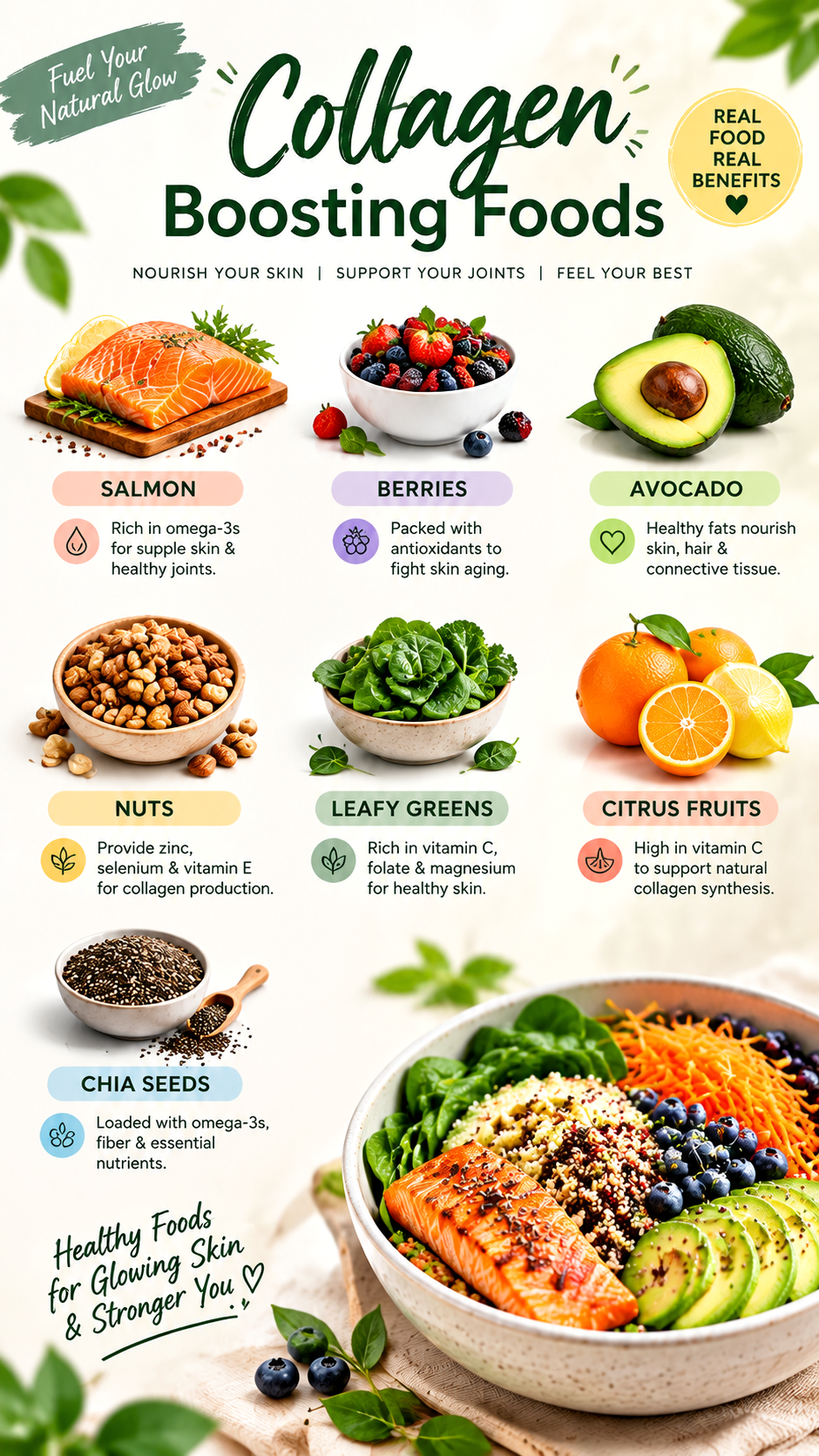
The best approach to skin-friendly nutrition is variety. Each food offers a different combination of vitamins, minerals, healthy fats, fiber, and other beneficial compounds. Try incorporating several of the following options into your weekly meals rather than relying on one so-called superfood.
1. Citrus Fruits for Vitamin C
Oranges, lemons, grapefruit, mandarins, and other citrus fruits are excellent sources of vitamin C. This essential vitamin plays a direct role in normal collagen synthesis, helping the body form and maintain connective tissue.
Vitamin C also acts as an antioxidant, helping protect cells from oxidative stress. Eating vitamin C-rich foods regularly is a practical way to support overall health while adding refreshing flavor and natural sweetness to your diet.
Easy Ways to Eat More Citrus
- Enjoy a fresh orange or mandarin as a snack.
- Add lemon juice to salads, roasted vegetables, or homemade dressings.
- Combine orange segments with leafy greens and avocado.
- Use whole fruit more often than juice to benefit from its fiber.
Vitamin C is sensitive to heat and prolonged storage, so including some fresh fruits and vegetables in your daily routine is a useful strategy. You do not need to follow a complicated recipe to benefit from them.
2. Amla for a Vitamin C-Rich Addition
Amla, also known as Indian gooseberry, is a traditional fruit valued for its distinctive tart flavor and nutrient content. It can provide substantial vitamin C, although the amount varies with the variety, preparation, processing, and storage method.
Vitamin C is essential for the enzymes involved in collagen formation. Including amla as part of a balanced diet can therefore help you meet your vitamin C needs. It also offers a flavorful alternative to more familiar citrus fruits.
How to Include Amla
- Eat fresh amla if it is available and suits your taste.
- Add a small amount of unsweetened amla puree to a meal.
- Choose products with minimal added sugar when possible.
Amla can be a useful part of a varied diet, but it is not a guaranteed skin treatment. Freshness, serving size, and the rest of your diet all matter when considering nutrient intake.
3. Carrots for Beta-Carotene and Skin Health
Carrots are rich in beta-carotene, a plant pigment that the body can convert into vitamin A as needed. Vitamin A is important for normal cell growth and the maintenance of healthy skin. Carrots also provide fiber and other beneficial plant compounds.
Adding carrots to meals is an easy way to increase vegetable intake. Their natural sweetness makes them suitable for both savory dishes and simple snacks.
Simple Carrot Ideas
- Grate raw carrots into salads and grain bowls.
- Roast carrot slices with olive oil and herbs.
- Blend cooked carrots into vegetable soups.
- Pair carrot sticks with hummus for a balanced snack.
Carrots do not directly supply collagen, but their nutrients can contribute to a healthy eating pattern that supports normal skin function.
4. Avocados for Healthy Fats
Avocados are known for their creamy texture and monounsaturated fats. They also provide fiber, folate, potassium, and vitamin E. These nutrients help make avocado a versatile addition to a balanced diet.
Healthy fats are important for normal cell function and help the body absorb fat-soluble vitamins, including vitamins A, D, E, and K. Vitamin E also contributes antioxidant activity. Although avocado is not a direct source of collagen, it can supply nutrients that complement an overall skin-supportive eating pattern.
Ways to Enjoy Avocado
- Add sliced avocado to a salad or whole-grain sandwich.
- Serve it in a bowl with beans, carrots, and leafy greens.
- Spread mashed avocado on whole-grain toast.
- Combine avocado with citrus juice and fresh herbs for a simple dressing.
Avocados are energy-dense, so choose a portion that fits your appetite and nutritional needs. A little can add flavor, texture, and satisfying fats to a meal.
5. Olives for Antioxidants and Unsaturated Fats
Olives contain monounsaturated fats and plant compounds, including polyphenols. These compounds contribute to the nutritional value of olives and olive-based foods. Extra-virgin olive oil is also a source of unsaturated fat and naturally occurring antioxidant compounds.
Olives can fit easily into Mediterranean-inspired meals. They pair well with vegetables, legumes, whole grains, and other ingredients that provide complementary nutrients.
Practical Ways to Use Olives
- Add a few olives to a chickpea or lentil salad.
- Use chopped olives to flavor grain bowls.
- Dress vegetables with a modest amount of extra-virgin olive oil.
- Combine olives with tomatoes, cucumber, herbs, and beans.
Some preserved olives are high in sodium. If you need to limit salt, compare labels and select lower-sodium options when available.
6. Garlic for Flavor and Plant Compounds
Garlic contains sulfur-containing compounds that contribute to its distinctive aroma and flavor. It can make nutritious meals more satisfying without requiring large amounts of salt or heavy sauces.
Garlic is not a proven direct collagen booster, and claims that it removes toxins or guarantees clearer skin are not well established. However, using it to flavor vegetables, beans, soups, and homemade dressings is an easy way to build enjoyable meals around whole foods.
Easy Garlic Pairings
- Roast garlic with carrots and other vegetables.
- Mix minced garlic with lemon juice and olive oil for dressing.
- Add garlic to lentil soup or bean stews.
- Use garlic with herbs to season avocado and grain bowls.
Think of garlic as a useful ingredient in a varied diet rather than a special treatment for skin concerns.
7. Flax Seeds for Omega-3 Fatty Acids
Flax seeds provide alpha-linolenic acid, a plant-based omega-3 fatty acid, along with fiber and lignans. These nutrients make flax seeds a valuable addition to meals that need extra texture and nutritional variety.
Omega-3 fats have important roles in normal body function. However, flax seeds should not be presented as a proven method for increasing skin collagen or eliminating wrinkles. Their strongest practical advantage is that they supply healthy fats and fiber in a small serving.
How to Eat Flax Seeds
- Sprinkle ground flax seeds over oatmeal or yogurt.
- Blend them into smoothies.
- Mix them into homemade whole-grain muffins.
- Add a spoonful to porridge or a breakfast bowl.
Ground flax seeds are often easier to digest than whole seeds. Increase fiber intake gradually and drink enough fluids to help prevent digestive discomfort.
8. Chia Seeds for Fiber and Essential Nutrients
Chia seeds are small but versatile. They provide fiber, plant-based omega-3 fatty acids, and minerals such as calcium, magnesium, and phosphorus. Their ability to absorb liquid makes them useful for puddings, overnight oats, and thickened smoothies.
Chia seeds do not directly contain collagen. Instead, they help add nutritional variety to meals and can contribute to an eating pattern that supports general health.
Simple Chia Seed Ideas
- Prepare chia pudding with milk or a fortified plant-based alternative.
- Stir chia seeds into overnight oats with citrus fruit.
- Add a small serving to a smoothie.
- Sprinkle them over a salad or grain bowl.
Because chia seeds absorb liquid and expand, mix them into a moist food or allow them to hydrate before eating. Avoid swallowing large amounts of dry chia seeds on their own, especially if you have difficulty swallowing.
9. Beans for Plant Protein
Beans provide plant-based protein, fiber, folate, iron, and other nutrients. Protein is particularly important because collagen is made from amino acids, which the body obtains by digesting dietary proteins and recycling existing proteins.
Beans do not contain the collagen found in animal connective tissue, but they can contribute amino acids to the body’s overall protein supply. Eating beans alongside vegetables, whole grains, seeds, and other protein-rich foods helps create satisfying, balanced meals.
Easy Ways to Eat More Beans
- Add chickpeas or kidney beans to salads.
- Prepare lentil and bean soups with vegetables.
- Use beans as the base of a nourishing lunch bowl.
- Make a simple bean spread with garlic, lemon, and olive oil.
Beans are especially useful for people following plant-forward diets because they supply protein and fiber together. Choose canned beans with little or no added salt when convenient, and rinse them to reduce some of the sodium.
10. Green Vegetables for a Broader Nutrient Mix
Green beans and leafy vegetables add color, fiber, vitamins, and minerals to everyday meals. Their nutritional profiles vary, but eating a variety of vegetables is a practical way to increase nutrient intake without depending on one particular food.
Green beans are easy to prepare and can be served steamed, roasted, or lightly sautéed. Pair them with beans, tofu, eggs, fish, or another protein source to create a more complete meal.
Leafy greens can also contribute vitamin C and other nutrients, depending on the vegetable and how it is prepared. Rotating between different green vegetables helps broaden the range of nutrients you consume.
How These Foods Work Together for Skin Nutrition
No single ingredient provides everything your body needs. The real benefit comes from combining foods that supply complementary nutrients throughout the day.
For example, citrus fruits and amla provide vitamin C, which is needed for normal collagen formation. Beans contribute protein and amino acids. Avocados, flax seeds, and chia seeds provide unsaturated fats and other nutrients, while carrots and a variety of vegetables add vitamins and plant compounds.
Combining these foods also makes meals more interesting, flavorful, and satisfying. A colorful plate is not a guarantee of perfect skin, but it can be a useful reminder to include a range of food groups.
Why This Matters
Your body needs more than one nutrient to maintain healthy tissues. Vitamin C supports collagen formation, dietary protein supplies amino acids, and healthy fats contribute to normal cell function. Eating a variety of whole foods consistently is more useful than expecting a single superfood to transform your skin.
Build a Simple Collagen-Supportive Meal Plan
You do not need expensive ingredients or elaborate recipes to put these ideas into practice. Start with meals you already enjoy, then add fruit, vegetables, legumes, or seeds where they fit naturally.
Breakfast: Citrus and Chia Oatmeal
Prepare oatmeal with milk or a fortified plant-based alternative. Add orange segments, a spoonful of chia seeds, and a little ground flax seed. This combination supplies fiber, healthy fats, and vitamin C-rich fruit while making breakfast filling and easy to prepare.
Lunch: Avocado and Bean Nourish Bowl
Start with a base of whole grains or leafy greens. Add beans or chickpeas, sliced avocado, shredded carrots, green beans, and a few olives. Finish with a lemon and olive oil dressing. This meal combines protein, fiber, unsaturated fats, and a variety of plant nutrients.
Snack: Fruit and Ground Flax
Enjoy a mandarin, orange, or another seasonal fruit with yogurt or an alternative that suits your diet. Sprinkle ground flax seeds over the yogurt for extra fiber and plant-based omega-3 fats.
Dinner: Garlic Vegetable and Bean Stew
Cook garlic with carrots, green beans, tomatoes, and your preferred beans or lentils. Season with herbs, spices, and a little olive oil. Serve with whole-grain bread, brown rice, or another staple. Add fresh citrus fruit on the side if you want an additional source of vitamin C.
Pro Tip: Make healthy choices easier by preparing a few ingredients in advance. Wash and cut vegetables, cook a batch of beans, portion seeds into small containers, and keep seasonal fruit available. Small routines are often easier to maintain than a strict diet plan.
Other Habits That Help Maintain Healthy Skin
Food is one part of skin health, but it is not the only factor. Everyday habits influence how skin looks and functions over time. A balanced diet works best alongside sensible skincare and general wellness practices.
Protect Your Skin From the Sun
Ultraviolet radiation contributes to premature skin aging and the breakdown of collagen. Use broad-spectrum sunscreen with SPF 30 or higher, reapply it as directed, and seek shade when the sun is strong. Protective clothing and sunglasses can also help reduce exposure.
Prioritize Sleep
Sleep supports normal recovery and many processes that help the body function well. Aim for a consistent sleep schedule and enough rest for your individual needs. A regular bedtime routine may help you maintain this habit.
Stay Hydrated
Water is essential for normal body function. Drinking enough fluids helps prevent dehydration, which can affect how you feel and may influence the appearance of your skin. However, drinking extra water beyond your needs does not automatically create glowing skin or increase collagen production.
Avoid Smoking and Limit Excessive Alcohol
Smoking can damage collagen and elastin and is associated with premature skin aging. Excessive alcohol can also interfere with general health and may contribute to dehydration. Avoiding smoking and keeping alcohol intake low can support your broader health goals.
Choose a Balanced Diet Over Restrictive Rules
Strict diets can make it harder to meet your nutritional needs and maintain a healthy relationship with food. Rather than cutting out entire food groups without a medical reason, focus on variety, appropriate portions, and regular meals that provide protein, vegetables, fruit, whole grains, and healthy fats.
Common Myths About Collagen-Boosting Foods
Myth 1: One Food Can Eliminate Wrinkles
No individual food can erase wrinkles or stop the natural aging process. Foods provide nutrients that support normal body function, but visible skin changes are influenced by age, genetics, sun exposure, lifestyle, and skincare habits.
Myth 2: Plant Foods Contain Large Amounts of Collagen
Collagen is an animal-derived structural protein. Fruits, vegetables, legumes, and seeds do not naturally supply collagen in the same way as foods containing animal connective tissue. Plant foods can still support collagen formation by providing nutrients such as vitamin C and amino acids from protein-containing foods.
Myth 3: More Supplements Always Mean Better Results
Taking excessive amounts of vitamins or other supplements does not necessarily improve skin health and may cause harm. Most people should begin by reviewing their diet and aiming to meet nutritional needs through food. Supplements may be appropriate in certain circumstances, but they should be selected according to individual needs and reliable medical advice.
Myth 4: Natural Means Risk-Free
Natural foods can be nutritious, but individual allergies, medical conditions, and medications still matter. People with specific dietary restrictions or health concerns should seek advice from a qualified healthcare professional before making major dietary changes or using concentrated supplements.
How Long Does It Take to Notice Changes in Your Skin?
There is no universal timeline for skin improvements from dietary changes. Your results depend on your starting diet, overall health, age, genetics, skincare routine, and many other factors. Correcting a nutrient deficiency can be important for health, but it does not mean visible changes will appear immediately.
Focus on habits you can maintain over months and years rather than searching for overnight results. Eating a variety of nutrient-rich foods, using sunscreen, sleeping well, and following a gentle skincare routine can help support healthy skin over time.
If you experience persistent dryness, sudden skin changes, a rash, or other ongoing concerns, consider speaking with a qualified healthcare professional or dermatologist. Nutrition can support skin health, but it does not replace appropriate assessment and treatment.
Quick Points: Natural Foods for Healthy Skin
- Vitamin C: Eat citrus fruits and amla to support normal collagen formation.
- Healthy fats: Add avocado, flax seeds, chia seeds, and olive-based foods to balanced meals.
- Protein: Include beans and other suitable protein sources to provide amino acids.
- Variety: Eat a range of colorful fruits and vegetables instead of relying on one superfood.
- Daily habits: Protect your skin from the sun, get enough sleep, and stay hydrated.
Conclusion: Nourish Your Skin From Within
Building a skin-supportive diet does not have to be complicated. Citrus fruits, amla, carrots, avocados, olives, garlic, flax seeds, chia seeds, beans, and green vegetables all offer different nutrients that can contribute to a balanced way of eating. Together, these foods help supply vitamin C, protein, healthy fats, fiber, vitamins, minerals, and beneficial plant compounds.
The most effective approach is to enjoy these ingredients regularly as part of varied, satisfying meals. Try adding citrus fruit to breakfast, beans to lunch, avocado to a grain bowl, or seeds to a snack. Simple changes can make nutritious eating feel natural rather than restrictive.
Remember that healthy skin is influenced by much more than food alone. Sun protection, sufficient sleep, hydration, and avoiding smoking are important parts of an overall wellness routine. No food guarantees increased collagen or flawless skin, but consistent healthy habits can help support your body’s normal functions.
Start with one or two foods from this list, experiment with simple recipes, and build from there. A colorful plate, a balanced routine, and realistic expectations are a practical foundation for supporting healthy skin and a natural glow from within.
Tags
Collagen-Boosting Foods
Healthy Skin Foods
Natural Skin Nutrition
Vitamin C Foods
Glowing Skin Tips
Antioxidant-Rich Foods
Healthy Eating
Skin Wellness