How to Tell If Eggs Are Fresh The Simple Water Test Everyone Should Know
Not sure whether the eggs in your refrigerator are still fresh? Before you crack them into a pan, try a simple kitchen trick that can help you understand their age: the egg water test. All you need is a bowl of water and an egg to see whether it sinks, stands upright, or floats. This easy method has been used in home kitchens for generations because it requires no special equipment and takes only a few moments.
Understanding how to tell if eggs are fresh can help you make smarter decisions about food storage, meal preparation, and reducing unnecessary food waste. However, there is one important detail to remember: the water test provides clues about an egg’s age, not a guarantee that it is safe to eat. Learning how the test works, how to interpret the results, and when to discard an egg will help you use this simple trick more confidently.
Key Takeaways
- A fresh egg usually sinks and lies flat on the bottom of a bowl of water.
- An older egg may sink but stand upright because its internal air cell has grown.
- An egg that floats is older and should be checked carefully before any decision about its use.
- The float test cannot reliably determine whether an egg contains harmful bacteria.
- Proper refrigeration and careful handling are essential for maintaining egg quality and safety.
- When in doubt about an egg’s safety, the safest choice is to throw it away.
How to Tell If Eggs Are Fresh With the Water Test
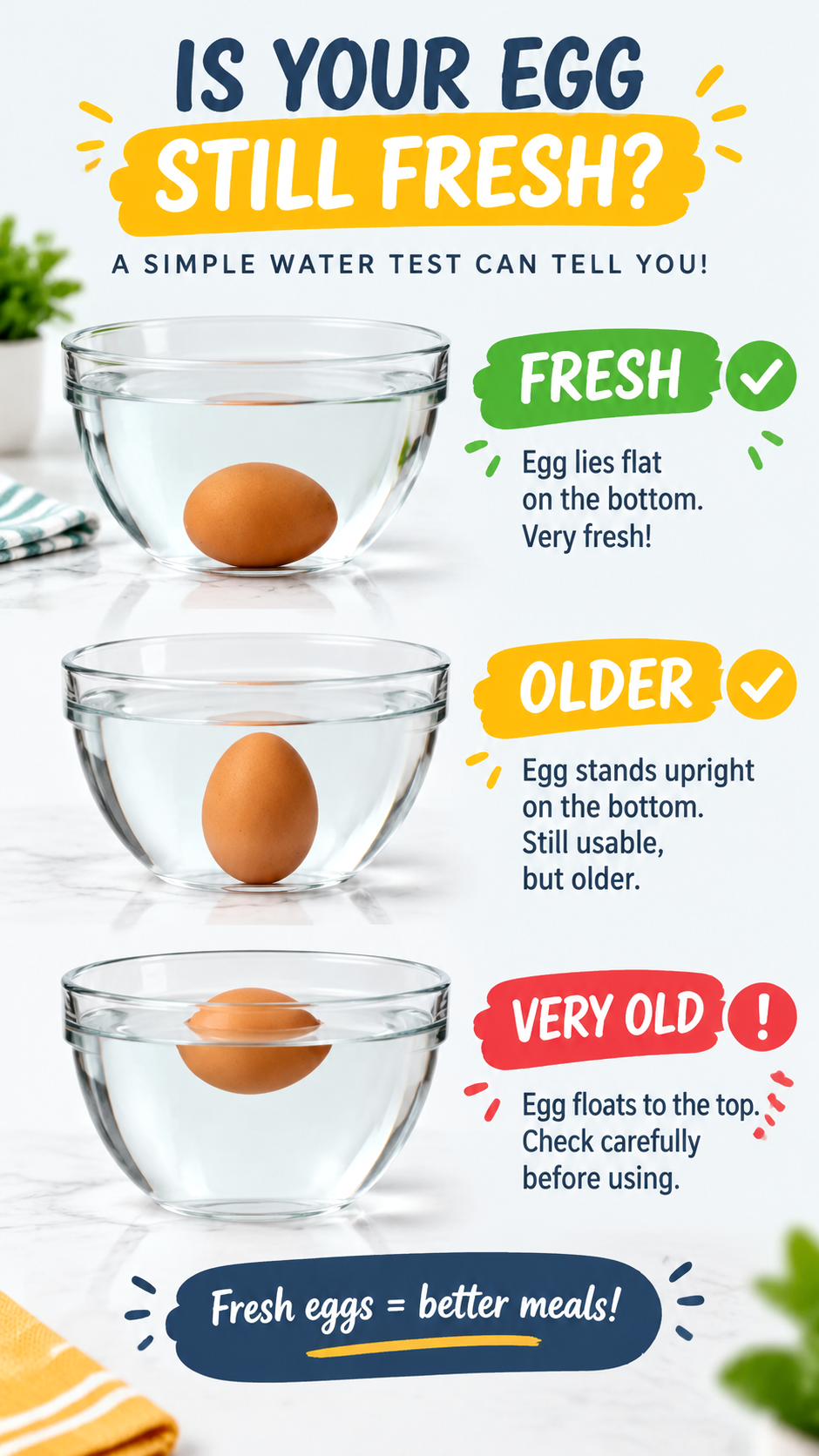
The egg water test is a straightforward way to estimate how old an egg may be. Instead of relying only on the date printed on the carton, you observe how the egg behaves when placed in water. The result usually falls into one of three categories: fresh, older, or floating.
As an egg ages, moisture and carbon dioxide gradually escape through its porous shell. Air enters through the shell, increasing the size of the air cell inside. This change affects the egg’s buoyancy and explains why older eggs can behave differently from fresh ones in water.
What You Need for the Egg Freshness Test
You do not need an expensive gadget or a special kitchen tool. Gather these simple items before you begin:
- A clean, deep bowl or transparent glass container.
- Enough cool water to fully cover the egg.
- The egg you want to check.
- A clean towel for drying the egg and cleaning up afterward.
A transparent bowl makes it easier to see the egg’s position without lifting it out of the water. Choose a container deep enough to let the egg sink or float freely, and use fresh water for each test.
Step-by-Step Instructions
- Fill a bowl with water. Add enough cool water to cover the egg completely.
- Lower the egg gently. Place it in the water rather than dropping it, which could crack the shell.
- Observe its position. Check whether it lies flat on the bottom, stands upright, or rises to the surface.
- Interpret the result. Use the egg’s position as a general indication of its age.
- Check storage history and condition. Consider how the egg has been handled, whether it has been refrigerated properly, and whether the shell is cracked.
Important: A sinking egg is not automatically safe, and a floating egg is not automatically contaminated. The water test estimates freshness based on buoyancy. It cannot detect Salmonella or other harmful microorganisms, so safe storage, proper cooking, and careful handling remain essential.
What Each Egg Water Test Result Means
The most useful part of this kitchen trick is knowing how to interpret the three possible results. Each position provides a different clue about the egg’s age and the changes happening inside its shell.
1. Fresh Eggs Sink and Lie Flat on the Bottom
In the first result, the egg sinks to the bottom of the bowl and rests horizontally. This is the classic sign associated with a fresh egg in the water test.
Fresh eggs generally have a relatively small air cell. Their contents are denser in relation to their overall volume, so the egg tends to sink and remain on its side.
This result is useful when you want to compare eggs of different ages or understand why an egg’s behavior changes over time. It can also help you recognize the typical buoyancy of a recently purchased egg.
Does a Flat-Sinking Egg Mean It Is Safe?
Not necessarily. The position indicates that the egg is likely relatively fresh, but it does not confirm that the egg has been stored safely or is free from bacteria. Even an egg that looks normal and sinks can carry harmful microorganisms.
Check the carton date and storage history, avoid eggs with cracked or leaking shells, and cook eggs thoroughly when food safety is a concern. If the egg has been mishandled or its safety is uncertain, do not rely on the water test alone.
2. Older Eggs Sink but Stand Upright
The second result shows an egg resting on the bottom of the bowl in a more vertical position. Rather than lying flat, one end points upward while the other remains close to the bottom.
This happens because the air cell inside the egg gradually becomes larger as moisture and carbon dioxide escape through the shell. The changing balance makes the egg more buoyant, allowing it to tilt or stand upright instead of remaining horizontal.
An egg in this position is generally older than one that lies flat. However, it may still be suitable for cooking if it has been stored properly and there are no other reasons to suspect that it is unsafe.
How Can You Use Older Eggs?
Older eggs may be useful in recipes where their age is not a concern, provided they have been kept under safe conditions and show no warning signs. For example, you might use a suitable egg in a fully cooked omelet, scrambled eggs, a cake, or a baked casserole.
Remember that an egg’s age and its safety are two different considerations. If you cannot establish how the egg was stored, do not assume that cooking it in an ordinary recipe will make every potentially unsafe egg acceptable to eat.
Pro Tip: If an egg stands upright but remains at the bottom, treat the result as a sign of age rather than a final safety verdict. Check the carton information, confirm proper refrigeration, and use the egg only when its handling history gives you confidence.
3. Eggs That Float to the Top
The third result is the one that deserves the most caution. When an egg rises to the surface of the water, it generally has a larger internal air cell than a fresh egg. That extra air makes the egg more buoyant and can cause it to float.
A floating egg is usually older, but floating does not prove that the egg is rotten or contaminated. Likewise, an egg that sinks is not guaranteed to be safe. The float test is a useful indicator of age, not a direct test for bacteria or spoilage.
Should You Eat an Egg That Floats?
The safest approach is to avoid using a floating egg when you are uncertain about its age or storage history. If you cannot confidently establish that it has been handled and stored safely, discard it rather than taking an unnecessary risk.
Do not taste a questionable egg to determine whether it is safe. A bad smell or unusual appearance after cracking an egg can indicate spoilage, but the absence of these signs does not rule out harmful bacteria. Wash your hands and clean surfaces after handling raw eggs.
Egg Water Test at a Glance
- Sinks and lies flat: Usually fresher.
- Sinks and stands upright: Usually older.
- Floats to the surface: Generally older, so use extra caution.
- Any cracked shell, unusual odor, or suspicious appearance: Do not use the egg.
- Uncertain storage history: Discard the egg if you cannot establish that it is safe.
Why Do Eggs Float as They Get Older?
Eggs may appear simple on the outside, but several gradual changes occur inside the shell as they age. Understanding these changes explains why the water test works and why its results should be interpreted carefully.
The Role of the Air Cell
When an egg is laid, it contains a small air cell between its inner and outer shell membranes, usually at the broader end. As the egg cools after laying and continues to age, moisture and carbon dioxide gradually pass through the porous shell.
As moisture is lost, the air cell becomes larger. This changes the relationship between the egg’s mass and its volume, making the egg more buoyant in water. The change is gradual, which is why some eggs lie flat while others tilt or stand upright before eventually floating.
Other Changes That Happen Inside an Egg
Age can also affect the egg white and yolk. The thick white gradually becomes thinner, and the yolk membrane can weaken. These changes may become noticeable when you crack an egg into a plate.
A fresher egg often has a firmer white that holds its shape around a rounded yolk. An older egg may spread more widely across the plate, and its yolk may appear flatter. These differences can affect the appearance and performance of eggs in cooking and baking.
However, appearance is not a reliable food safety test. A normal-looking egg may still contain harmful bacteria, so always consider storage conditions and cooking practices alongside visual clues.
Why This Matters
The egg water test works because aging changes an egg’s internal air cell and buoyancy. It can help estimate freshness, but it cannot measure bacterial contamination. Use the result as one clue, then make food safety decisions based on proper refrigeration, shell condition, storage history, and appropriate cooking.
Other Ways to Check Egg Freshness
The water test is convenient, but it should not be the only method you consider. A few additional checks can help you recognize obvious quality problems and handle eggs more responsibly.
1. Check the Shell
Before using an egg, examine its shell for cracks, leaks, or unusual contamination. A damaged shell can allow bacteria to enter, so eggs with cracked shells should generally be discarded unless they were intentionally cracked into a clean container for immediate use during controlled handling.
Keep eggs away from raw meat juices and other potential sources of contamination. Follow local guidance on whether eggs should be washed, since washing practices vary depending on how eggs are produced and sold.
2. Crack the Egg Into a Separate Bowl
If the shell is intact and the egg has been stored appropriately, cracking it into a separate, clean bowl can help you inspect its appearance before adding it to other ingredients.
Look for unusual discoloration, mold, or an unpleasant sulfur-like odor. Discard an egg if it smells bad or looks suspicious. Never taste raw egg to check its condition, and avoid allowing raw egg to contact food that will be eaten without further cooking.
3. Read the Carton Date and Storage Instructions
The date on an egg carton provides useful information about its expected quality and recommended use, although the exact meaning of date labels varies by country. Check the label and follow local food safety guidance rather than relying on a universal number of days.
Proper storage is particularly important. In places where eggs are sold refrigerated, keep them refrigerated at the recommended temperature and avoid leaving them at room temperature for extended periods. Once eggs have been refrigerated, repeated warming and cooling can encourage condensation and increase handling risks.
Remember that a date label and the water test answer different questions. The date helps you understand the product’s recommended storage period, while the water test offers a clue about the egg’s age.
How to Store Eggs So They Stay Fresh Longer
Good storage habits are more useful than repeatedly testing eggs to decide whether they are safe. You can help preserve egg quality by keeping them at a consistent, appropriate temperature and protecting them from contamination.
Keep Eggs Refrigerated When Required
Follow the storage instructions on the carton and local food safety recommendations. For commercially sold eggs that require refrigeration, store them promptly in a refrigerator maintained at 4°C (40°F) or below.
Avoid leaving refrigerated eggs on the kitchen counter for long periods. Temperature changes can encourage condensation on the shell and make safe handling more difficult. If eggs have been exposed to unsafe temperatures for an extended period, do not assume that chilling them again will make them safe.
Store Eggs in Their Original Carton
The original carton helps protect eggs from physical damage and makes it easier to keep track of date information. It can also help prevent eggs from absorbing strong odors from nearby foods.
Where refrigeration is recommended, storing eggs inside the refrigerator rather than in a frequently warmed door compartment can help maintain a more consistent temperature. Place the carton where it is protected from spills and contamination.
Handle Eggs With Clean Hands and Utensils
Wash your hands before and after handling raw eggs. Clean bowls, countertops, utensils, and other surfaces that come into contact with raw egg contents.
Keep raw eggs separate from ready-to-eat foods, and avoid using the same unwashed utensils for raw and cooked ingredients. These simple habits reduce the chance of cross-contamination during meal preparation.
Food Safety Reminder: Eggs can contain Salmonella even when their shells are clean and they look and smell normal. Cook eggs thoroughly until the whites and yolks are firm, or use pasteurized eggs for recipes that call for raw or lightly cooked eggs. People at higher risk of serious foodborne illness should avoid raw or undercooked eggs.
Common Egg Freshness Myths to Avoid
Many kitchen tips are passed from one generation to the next. Some are useful, but others can create a false sense of security. Understanding the limits of common egg freshness checks helps you make better decisions.
Myth 1: A Sinking Egg Is Always Safe
Fact: Sinking usually indicates that an egg is relatively fresh, but it does not prove that the egg is free from harmful bacteria. Safe storage and proper cooking are still essential.
Myth 2: Every Floating Egg Is Rotten
Fact: Floating is generally a sign that an egg is older because its internal air cell has expanded. It does not independently prove that the egg is spoiled. Nevertheless, if the egg’s handling history is uncertain, discarding it is the safer choice.
Myth 3: A Normal Smell Means an Egg Is Safe
Fact: An unpleasant odor can reveal spoilage, but many foodborne pathogens do not noticeably change an egg’s smell, taste, or appearance. Never use a smell test as your only safety check.
Myth 4: Cooking Can Make Every Questionable Egg Safe
Fact: Thorough cooking reduces the risk from many harmful microorganisms, but it should not be used to justify eating eggs that have been stored improperly or show signs of spoilage. When an egg’s safety is doubtful, discard it.
Frequently Asked Questions About the Egg Water Test
Can I Perform the Egg Water Test With Cold Water?
Yes. Cool water works well for this simple test. Fill a clean bowl with enough water to cover the egg, lower the egg gently, and observe whether it lies flat, stands upright, or floats.
How Accurate Is the Egg Float Test?
The test can provide a useful indication of an egg’s age because the internal air cell grows over time. However, it cannot establish an exact age or reliably identify bacterial contamination. Treat it as a rough freshness guide rather than a definitive safety test.
Can an Egg Still Be Used if It Stands Upright?
An egg that stands upright but remains on the bottom is generally older. It may still be usable if it has been stored properly and shows no signs of spoilage. Check the carton information and handling history, and cook it thoroughly. If you are uncertain about its safety, throw it away.
Should I Wash Eggs Before Putting Them in the Refrigerator?
Follow the advice provided by local food safety authorities and the supplier. Commercial egg washing and storage practices vary by country. Unnecessary washing at home can damage the shell’s protective surface or spread contamination if done incorrectly. Keep eggs clean, protect them from contamination, and follow the storage instructions for the eggs you buy.
Does Refrigeration Stop Eggs From Aging?
No. Refrigeration slows quality changes and helps maintain freshness, but it does not stop aging completely. Eggs gradually change over time even when stored correctly, which is why following carton dates and appropriate storage guidance remains important.
What Should I Do if an Egg Floats but Smells Normal?
A normal smell does not prove that an egg is safe. Floating indicates that the egg is generally older, but it cannot determine whether the egg contains harmful bacteria. If you cannot confirm safe storage and handling, discard it instead of relying on smell or appearance.
Quick Points: Remember These Egg Safety Tips
- Use the water test to estimate age, not to confirm safety.
- Fresh eggs usually sink and lie flat.
- Older eggs may sink upright or float as their air cells enlarge.
- Follow carton instructions and keep eggs at the recommended temperature.
- Discard eggs with cracked shells, suspicious appearances, or unpleasant odors.
- Cook eggs thoroughly and wash hands and surfaces after handling raw eggs.
Conclusion: Use the Egg Water Test Wisely
The egg water test is one of the easiest kitchen tricks to learn. With a bowl of water and a few seconds of observation, you can get a general idea of whether an egg is relatively fresh or has aged. An egg that sinks and lies flat is usually fresher, one that stands upright is generally older, and one that floats has usually developed a larger air cell over time.
Still, the most important lesson is that freshness and food safety are not the same thing. A floating egg is not automatically contaminated, and a sinking egg is not guaranteed to be safe. Storage conditions, shell integrity, handling, and proper cooking all matter when deciding whether to use an egg.
Make the water test part of your kitchen knowledge, but pair it with sensible food safety habits. Keep eggs stored according to their packaging instructions, prevent cross-contamination, and never taste a questionable egg to check its condition. If you are unsure whether an egg has been handled safely, the safest decision is to discard it.
With these simple habits, you can make more informed choices in the kitchen, reduce avoidable food waste, and handle eggs with greater confidence every day.
Tags
Egg Freshness
Egg Water Test
Food Safety
Kitchen Tips
Egg Storage
Cooking Tips
Food Waste Reduction
Kitchen Hacks