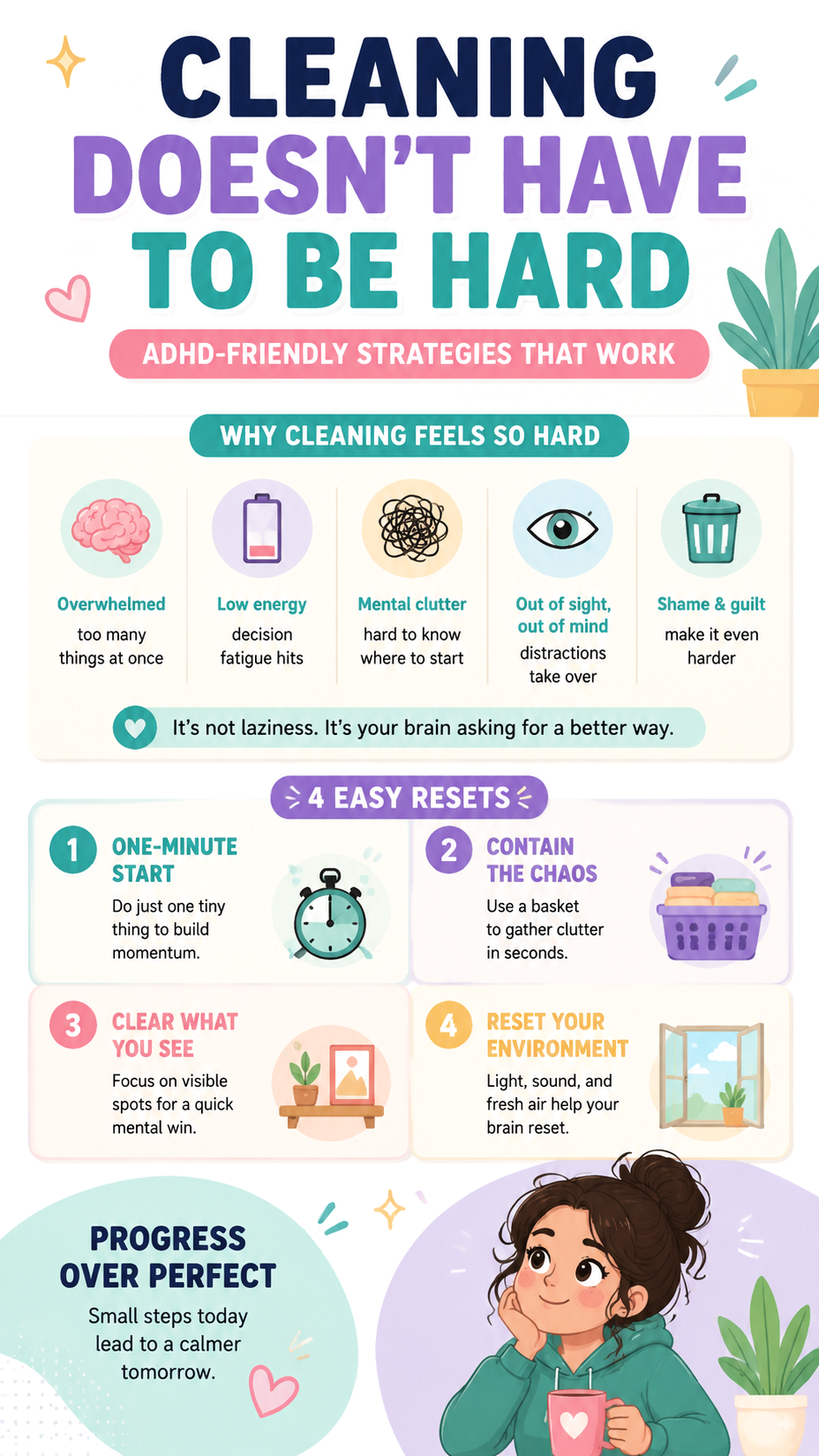
ADHD Cleaning Tips 4 Gentle Resets for Overwhelming Messy Days
Cleaning can feel impossible on difficult ADHD days, especially when every item in a room seems to demand a decision at the same time. A messy space is not always a sign of laziness or a lack of effort. For many people with ADHD, the hardest part of cleaning is not the physical movement, but the mental load behind every choice, from deciding where things belong to figuring out what task should happen first.
The good news is that traditional cleaning methods are not the only option. ADHD-friendly cleaning focuses on reducing overwhelm, lowering decision fatigue, and creating small moments of progress. Instead of trying to complete a perfect deep clean, gentle reset strategies help make your space feel more manageable one simple action at a time.
Key Takeaways
- ADHD cleaning struggles often come from decision overload, not a lack of motivation.
- Simple resets can create visible progress without requiring a full cleaning session.
- The trash-only sweep reduces choices and makes starting easier.
- A basket method helps organize clutter without constant stopping and sorting.
- Small sensory changes can help your brain transition into action.
Why Cleaning Feels So Difficult on Hard ADHD Days
Many people assume cleaning is a simple checklist: pick up items, put them away, wipe surfaces, and finish. However, ADHD brains often experience cleaning as a series of hundreds of hidden decisions.
Each object requires an answer. Should it stay? Should it be moved? Where does it belong? Does it need repair? Should it be donated? These small choices can quickly become exhausting before any actual cleaning begins.
Important: The challenge is often not cleaning itself. The biggest barrier can be the decision-making process hidden inside cleaning tasks. Reducing choices is one of the most effective ways to make progress feel possible.
Executive Function and Cleaning Overload
Executive function skills help with planning, organizing, prioritizing, and starting tasks. When these skills feel strained, even basic chores can seem overwhelming.
A cluttered room can create too many visual reminders at once. Laundry, dishes, papers, and misplaced items compete for attention. Instead of creating a clear starting point, the brain may respond by freezing or avoiding the task entirely.
The Emotional Weight of Mess
Cleaning struggles often come with frustration and shame. Feeling behind can make the mess feel even larger, creating a cycle where stress makes starting harder.
A kinder approach is to treat cleaning as a support tool rather than a test of personal discipline. Your environment should work with you, not against you.
The Gentle Reset Principle: Clean Less, Reset More
The gentle reset approach changes the goal from achieving a perfect home to creating a more comfortable environment. A reset is a small action that improves your surroundings without requiring a huge burst of energy.
Instead of asking, “How do I clean this entire room?” try asking, “What is one thing I can do to make this space easier to exist in?”
4 ADHD-Friendly Cleaning Resets That Actually Help
1. The Trash-Only Sweep
The trash-only sweep is one of the easiest ways to begin when your brain feels stuck. Grab a bag and focus only on obvious garbage.
Do not sort. Do not organize. Do not make decisions about sentimental items or things that need a permanent home. The only question is simple: “Is this trash?”
- Empty wrappers go in the bag.
- Old receipts and disposable items get removed.
- Anything clearly meant for the trash leaves the room.
This strategy works because it removes complicated choices. You create a cleaner visual space without needing a full organization plan.
2. The Basket Method for Clutter
The basket method helps when objects are scattered throughout a room but deciding their final location feels overwhelming.
Place a basket, bin, or container in the room. Collect anything that does not belong there. The goal is not to organize everything immediately. The goal is to clear surfaces and create breathing room.
Why the Basket Method Works
Sorting can happen later when you have more energy. The immediate benefit is a calmer visual environment, which can make future cleaning tasks easier to approach.
3. The Sightline Reset
A sightline reset focuses only on what you see from a doorway or your main resting area. Instead of cleaning every corner, choose the first visual distractions your eyes notice.
This could mean clearing the top of a table, removing items from the couch, or creating a visible path through a room.
The purpose is not perfection. It is reducing visual noise so your space feels calmer.
4. The Sensory Shift First Method
Sometimes the first step is not cleaning. Sometimes your nervous system needs a transition before your body can start moving.
Try changing the environment before beginning:
- Open a window for fresh air.
- Play calming or motivating music.
- Turn on a pleasant light.
- Use a comforting scent if you enjoy it.
These small changes can create a clearer mental starting point and make cleaning feel less like a sudden demand.
Why This Matters
A gentle cleaning routine supports consistency because it respects your available energy. Small actions can build trust with yourself and make future resets easier.
- Less pressure creates more willingness to begin.
- Visible progress can improve motivation.
- Simple systems reduce repeated decision-making.
How to Create an ADHD-Friendly Cleaning Routine
Start With Tiny Cleaning Goals
Large cleaning goals often create pressure. Instead of planning an entire home makeover, choose a small target.
- Clear one surface.
- Fill one trash bag.
- Put away five items.
- Reset one small area.
Small wins matter because they create evidence that progress is possible.
Make Cleaning Easier to Start
The best cleaning system is one you can actually begin. Keep supplies accessible, reduce complicated storage systems, and create simple homes for frequently used items.
Convenience often matters more than perfection. A system that saves a few seconds can make a major difference over time.
At a Glance: Gentle ADHD Cleaning Reminders
Quick Points
- Cleaning freezes often come from too many decisions.
- Focus on resets instead of perfect results.
- Remove trash before organizing clutter.
- Create calm spaces with simple, repeatable habits.
Conclusion: Cleaning Can Feel Possible Again
Hard ADHD days do not require impossible cleaning standards. A messy space can be improved through small, gentle actions that respect your energy and reduce mental overload.
The goal is not to become a perfect cleaner. The goal is to create an environment that supports your daily life. Whether you start with a trash-only sweep, a simple basket method, a sightline reset, or a sensory shift, every small step counts.
When cleaning feels impossible, remember that the first step does not have to be a complete transformation. Sometimes the most helpful reset is simply creating enough calm to begin.
Tags
ADHD Cleaning Tips
ADHD Home Organization
Gentle Cleaning Routine
Executive Function Support
Decluttering Tips
Low Energy Cleaning