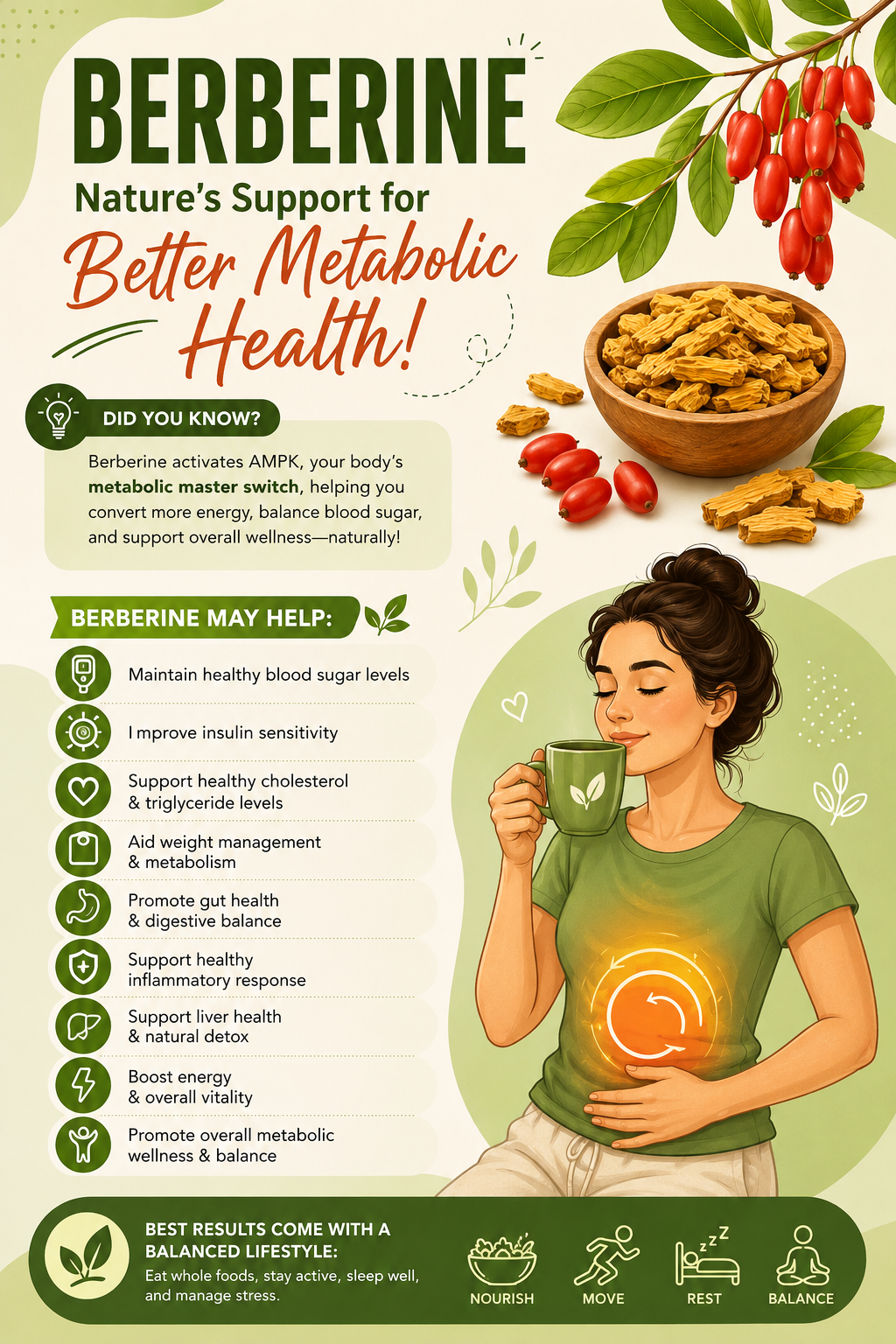
Berberine Benefits for Metabolic Health, Blood Sugar Natural Wellness Guide
Berberine has become one of the most talked-about natural compounds in the wellness world, especially among people looking to support healthy metabolism, balanced blood sugar, and overall vitality. Derived from several plants in the Berberis family, this bright yellow botanical compound has been used in traditional practices for centuries. Today, modern research continues to explore its potential role in supporting metabolic function when combined with a healthy lifestyle.
Whether your goal is maintaining healthy energy levels, supporting digestive wellness, or promoting balanced blood sugar already within the normal range, understanding how berberine works can help you make informed decisions. While no supplement can replace nutritious eating, physical activity, and quality sleep, berberine has earned attention because of the unique way it interacts with the body’s natural metabolic pathways.
Key Takeaways
- Berberine is a plant-derived compound commonly used to support metabolic wellness.
- It is widely studied for its role in supporting healthy blood sugar already within the normal range.
- Healthy habits remain the foundation of long-term wellness.
- Digestive, cardiovascular, and metabolic health are closely connected.
- Choosing quality supplements and following professional guidance is important.
What Is Berberine?
Berberine is a naturally occurring alkaloid found in plants such as barberry, goldenseal, Oregon grape, and tree turmeric. Traditionally, these plants have been valued in different cultures for their beneficial properties. Today, purified berberine is commonly available as a dietary supplement in capsule form.
Scientists are particularly interested in berberine because it appears to influence several biological pathways involved in metabolism. Rather than targeting only one system, it may support multiple aspects of overall metabolic health, making it an attractive option for wellness-minded individuals.
Important: Berberine is intended to complement healthy lifestyle habits, not replace them. Nutritious meals, regular exercise, stress management, and adequate sleep remain the most important factors for maintaining long-term metabolic health.
How Berberine Supports Metabolic Health
One reason berberine receives so much attention is its connection with an enzyme called AMP-activated protein kinase, often abbreviated as AMPK. Sometimes referred to as the body’s metabolic regulator, AMPK helps coordinate how cells use and produce energy.
When AMPK functions efficiently, the body can better regulate energy production, nutrient utilization, and metabolic balance. Researchers believe this relationship may help explain why berberine continues to be studied for a wide variety of wellness applications.
Supporting Healthy Blood Sugar
Healthy blood sugar management is one of the most recognized reasons people consider berberine. Studies suggest that it may help support insulin sensitivity and encourage efficient glucose metabolism in healthy adults. These benefits are generally discussed alongside balanced nutrition and consistent physical activity.
Encouraging Healthy Energy Production
Efficient metabolism allows the body to convert nutrients into usable energy. Because berberine is associated with cellular energy pathways, many people include it in wellness routines focused on maintaining daily vitality.
Supporting Healthy Weight Management
Weight management is influenced by many factors including nutrition, movement, sleep quality, hormones, and stress. Berberine may support healthy metabolic function that complements an active lifestyle, but sustainable results always depend on consistent healthy habits.
Why This Matters
- Metabolic health affects energy, heart health, and overall wellness.
- Small daily lifestyle improvements often create lasting long-term benefits.
- Supplements work best when combined with healthy routines.
Potential Wellness Benefits
Although research continues to evolve, berberine is commonly discussed for its potential role in supporting several areas of health.
- Healthy blood sugar already within the normal range.
- Healthy insulin sensitivity.
- Balanced cholesterol and triglyceride levels already within healthy ranges.
- Digestive wellness and gut microbiome support.
- Healthy inflammatory response.
- Liver wellness.
- Cardiometabolic health.
- Overall metabolic vitality.
These potential benefits are interconnected because metabolism influences nearly every organ system. Supporting one aspect of metabolic wellness often contributes to improvements in overall health habits.
Berberine and Digestive Wellness
The digestive system plays an essential role in overall health. A balanced gut microbiome supports nutrient absorption, immune function, and metabolic processes. Researchers continue exploring how berberine interacts with beneficial gut bacteria and digestive balance.
Maintaining digestive wellness also includes eating fiber-rich foods, drinking enough water, and consuming a variety of fruits, vegetables, whole grains, legumes, and fermented foods when appropriate.
Pro Tip: Even the highest-quality supplement cannot overcome an unhealthy lifestyle. Building consistent habits like daily walking, balanced meals, hydration, and regular sleep often delivers the greatest long-term health benefits.
Heart and Cardiometabolic Wellness
Heart health and metabolism are closely connected. Healthy cholesterol levels, balanced blood sugar, healthy blood pressure, and maintaining an appropriate body weight all contribute to cardiovascular wellness.
Many people interested in berberine are also focused on supporting healthy cardiometabolic function through comprehensive lifestyle improvements rather than relying on a single solution.
Creating a Healthy Lifestyle Around Berberine
Building a healthy routine involves much more than taking a supplement. Consider these practical strategies:
Eat Nutrient-Dense Foods
- Choose colorful vegetables daily.
- Include lean protein sources.
- Prioritize whole grains over refined grains.
- Add healthy fats such as nuts, seeds, and olive oil.
- Reduce heavily processed foods whenever possible.
Stay Physically Active
Regular movement helps support insulin sensitivity, cardiovascular health, and healthy energy metabolism. Walking, strength training, cycling, swimming, and flexibility exercises all contribute to overall wellness.
Prioritize Quality Sleep
Sleep affects hormones involved in appetite, energy production, and metabolism. Adults generally benefit from maintaining a consistent sleep schedule and creating a relaxing bedtime routine.
Manage Daily Stress
Chronic stress may influence metabolic health through hormonal pathways. Meditation, deep breathing, yoga, journaling, spending time outdoors, and social connection are simple ways to encourage better balance.
Choosing a Quality Berberine Supplement
Not all supplements are manufactured equally. When shopping for berberine, consider products that provide transparent labeling and are manufactured according to recognized quality standards.
- Look for clearly labeled ingredients.
- Follow serving recommendations.
- Check expiration dates.
- Purchase from reputable manufacturers.
- Consult a qualified healthcare professional before beginning supplementation.
Important: Individuals who are pregnant, breastfeeding, taking prescription medications, or managing existing medical conditions should seek professional medical guidance before using berberine supplements.
Frequently Asked Questions
Is berberine a vitamin?
No. Berberine is a naturally occurring plant compound rather than a vitamin or mineral.
Can berberine replace healthy eating?
No. A balanced diet remains the foundation of metabolic health. Supplements are designed to complement healthy habits rather than replace them.
How long should someone take berberine?
Usage varies depending on personal goals and healthcare recommendations. Always follow product directions and professional advice.
Can exercise improve metabolic health without supplements?
Yes. Regular exercise, healthy nutrition, sufficient sleep, and stress management remain among the most effective strategies for supporting metabolism.
At a Glance
- Berberine is a natural plant compound.
- It is commonly used to support metabolic wellness.
- Healthy habits maximize potential benefits.
- Quality supplements and professional guidance matter.
- Long-term consistency delivers the best results.
Conclusion
Berberine has become an increasingly popular addition to wellness routines because of its potential role in supporting healthy metabolism, balanced blood sugar already within the normal range, digestive wellness, and overall vitality. While research continues to expand our understanding of this fascinating plant compound, the most effective approach always combines informed supplementation with nutritious eating, regular exercise, quality sleep, and stress management.
Rather than looking for a quick fix, focus on building sustainable daily habits that support your body’s natural ability to maintain metabolic balance. When paired with a healthy lifestyle and professional guidance where appropriate, berberine may become one valuable piece of a broader wellness strategy designed to help you feel your best every day.
Tags
Berberine Metabolic Health Blood Sugar Support Natural Wellness Gut Health Healthy Lifestyle Energy Support Holistic Health