Best Daily Drinking Water Routine Timing for All-Day Hydration
Staying hydrated is one of the simplest yet most transformative habits you can adopt for your health. While we all know that we should be drinking enough water, the nuance often lies in the timing. Have you ever wondered why you feel sluggish in the afternoon despite having your morning coffee, or why your digestion feels a bit heavy after a large meal? Often, the culprit is not just how much you drink, but when you drink it. By aligning your water intake with your body’s natural rhythms, you can optimize everything from your metabolic rate to your mental clarity. In this guide, we are going to dive deep into a structured water routine that ensures you stay energized, focused, and healthy from the moment you wake up until you close your eyes at night.
The Power of a Morning Hydration Ritual
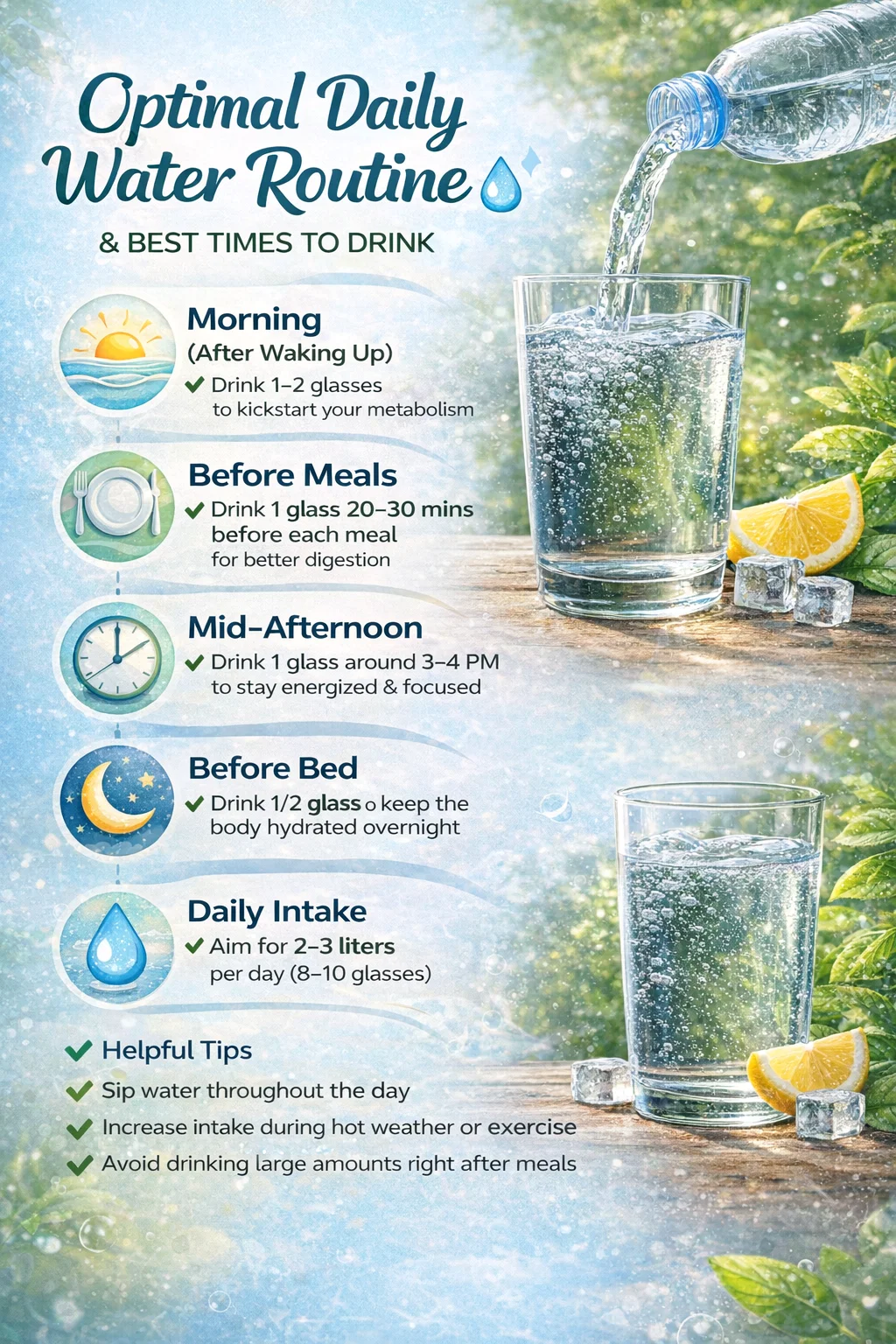
The moment you wake up, your body is in a natural state of dehydration. After six to eight hours of sleep without any fluid intake, your cells are literally thirsty for replenishment. Starting your day with one to two glasses of water on an empty stomach is perhaps the most significant change you can make to your daily routine. This initial boost does more than just quench your thirst; it acts as a wake up call for your internal organs.
When you drink water first thing in the morning, you help flush out the toxins that your body has been processing overnight. It kickstarts your metabolism and prepares your digestive tract for the food you are about to eat. Think of it as a gentle internal shower that clears the way for a productive day. Many people find that this simple habit reduces that morning brain fog far more effectively than a sudden jolt of caffeine ever could.
Timing Your Intake Around Meals for Optimal Digestion
One of the biggest mistakes people make is guzzling a giant glass of water while they are actively chewing their food. While hydration is essential, drinking too much during a meal can dilute the stomach acid and enzymes needed for efficient digestion. Instead, the secret lies in the 20 to 30 minute window before you sit down to eat.
The Pre-Breakfast Boost
Drinking a glass of water about half an hour before breakfast sets the tone for your digestive health. It ensures that your stomach is hydrated enough to produce the necessary gastric juices. Additionally, this habit provides a natural sense of fullness, which can prevent the common tendency to overeat during the first meal of the day. By the time you start eating, your body is primed and ready to absorb nutrients efficiently.
Hydrating Before Lunch and Dinner
The same principle applies to your midday and evening meals. A glass of water 20 to 30 minutes before lunch and dinner supports the metabolic process. It acts as a bridge between your morning and afternoon activities, ensuring that your energy levels do not dip as your body works to process food. If you find yourself reaching for sugary snacks in the late morning or late afternoon, try drinking a glass of water first. Often, our brains confuse the signal for thirst with the signal for hunger.
Maintaining Momentum: Mid-Morning and Afternoon Windows
Consistency is the hallmark of a great hydration routine. It is better to sip water steadily throughout the day than to drink massive amounts all at once. To keep your energy levels stable, aim for specific “check-in” times during the day.
- Mid-Morning (Around 11 AM): This is a critical time when the initial hydration from breakfast starts to wear off. A glass of water here helps maintain focus as you head into your most productive hours.
- Mid-Afternoon (Around 3 to 4 PM): Many people experience the infamous afternoon slump during this window. Rather than reaching for a third cup of coffee, try a cold glass of water. Dehydration is a leading cause of fatigue, and a quick hydration break can sharpen your mental acuity and keep you going until the end of the workday.
The Evening Wind-Down and Bedtime Hydration
As the day comes to a close, your hydration needs shift. While you still need to remain hydrated, you want to avoid drinking so much that your sleep is interrupted by frequent trips to the bathroom. The goal is balance. Drinking a glass of water before dinner helps with the final large digestive task of the day.
Before bed, consider having a small amount of water, roughly half a glass to a full glass. This helps your body maintain fluid balance during the long fasting period of sleep. It supports the natural detoxification processes that happen while you dream and ensures you do not wake up with a parched throat or a dehydration headache. If you find that drinking water late at night disrupts your sleep, try to finish your last significant glass about an hour before you plan to lie down.
Understanding Your Total Daily Needs
While specific timings are helpful, the foundation of your routine is hitting your total daily volume. For most adults, a target of 2 to 3 liters, or roughly 8 to 10 glasses, is a healthy benchmark. However, this is not a one size fits all number. Your body’s requirements can change based on several factors.
Adjusting for Activity and Climate
If you are hitting the gym, going for a run, or engaging in any strenuous physical activity, your water needs will increase significantly. You lose fluids through sweat, and these must be replaced to prevent cramping and exhaustion. Similarly, hot or humid weather demands a higher intake. On these days, do not stick strictly to the 10 glass rule; listen to your body and add an extra glass or two whenever you feel the heat.
Listen to Your Body Signals
Your body is incredibly communicative if you know what to look for. Beyond the obvious feeling of a dry mouth, signs of mild dehydration include:
- Dark yellow urine (it should ideally be a pale straw color).
- Sudden, unexplained headaches.
- A lack of focus or increased irritability.
- Dry or dull-looking skin.
By following a timed routine, you can prevent these symptoms before they even start, staying ahead of the dehydration curve.
Expert Tips for Better Hydration Habits
Knowing when to drink is half the battle; the other half is how you do it. To get the most out of your water routine, keep these three golden rules in mind:
- Drink Slowly: Avoid chugging your water. When you drink too fast, your body may not absorb the fluid as effectively, and much of it will pass right through your system. Sipping slowly allows your tissues to soak up the moisture.
- Avoid Large Amounts Post-Meal: As mentioned earlier, try to wait at least 30 to 60 minutes after a meal before drinking a large amount of water. This allows your stomach to do its job without interference.
- Carry a Reusable Bottle: It is much easier to stick to a routine when water is always within arm’s reach. Having a bottle on your desk or in your bag serves as a constant visual reminder to take a sip.
Conclusion: Making Hydration Second Nature
Building a drinking water routine is one of the most rewarding investments you can make in your personal wellness. It does not require expensive supplements or complicated equipment, just a bit of intentionality and a commitment to your body’s needs. By starting your day with a flush of hydration, timing your glasses around your meals, and maintaining a steady intake through the afternoon, you are supporting every system in your body from the inside out.
Remember that health is a journey of small, consistent actions. You do not have to be perfect from day one. Start by implementing the morning glass of water, and once that feels natural, add in the pre-meal glasses. Before you know it, you will be enjoying higher energy levels, clearer skin, and better digestion. So, take a sip, stay consistent, and let your hydration routine empower your healthiest self.