Best Sleeping Positions for Pain Relief and a More Restful Nights Sleep
Getting a good night’s sleep is not only about how many hours you spend in bed. The way you position your body while sleeping can have a major impact on comfort, relaxation, and how refreshed you feel in the morning. Many people experience common nighttime discomforts such as shoulder pain, back tension, neck stiffness, sinus pressure, or joint aches simply because their sleeping posture does not properly support their body.
Choosing the right sleeping position can help create better alignment, reduce unnecessary pressure on sensitive areas, and encourage a more comfortable rest experience. From placing a pillow under your knees to adjusting your head elevation, small changes can make a noticeable difference in your bedtime routine.
Key Takeaways
- The right sleep position can improve comfort and support natural body alignment.
- Pillow placement plays an important role in reducing pressure on muscles and joints.
- Side sleeping, back sleeping, and elevated positions may help with different concerns.
- Small bedtime adjustments can create a more relaxing sleep environment.
- Consistent sleep habits combined with proper posture support overall wellness.
Why Your Sleeping Position Matters
Your body spends several hours in the same position every night, which means your sleeping posture can influence how your muscles, joints, and spine feel when you wake up. A position that creates too much pressure or twists your body out of alignment may contribute to stiffness and discomfort.
Good sleep posture focuses on keeping your head, neck, shoulders, and hips in a comfortable alignment. The goal is not to find one perfect position for everyone, but rather to discover what works best for your individual needs.
Important: A supportive sleeping position should help your body relax instead of forcing it into an uncomfortable posture. Listen to your body and make small adjustments until you find a position that feels natural.
Best Sleeping Positions for Common Discomforts
Sleeping With Shoulder Pain
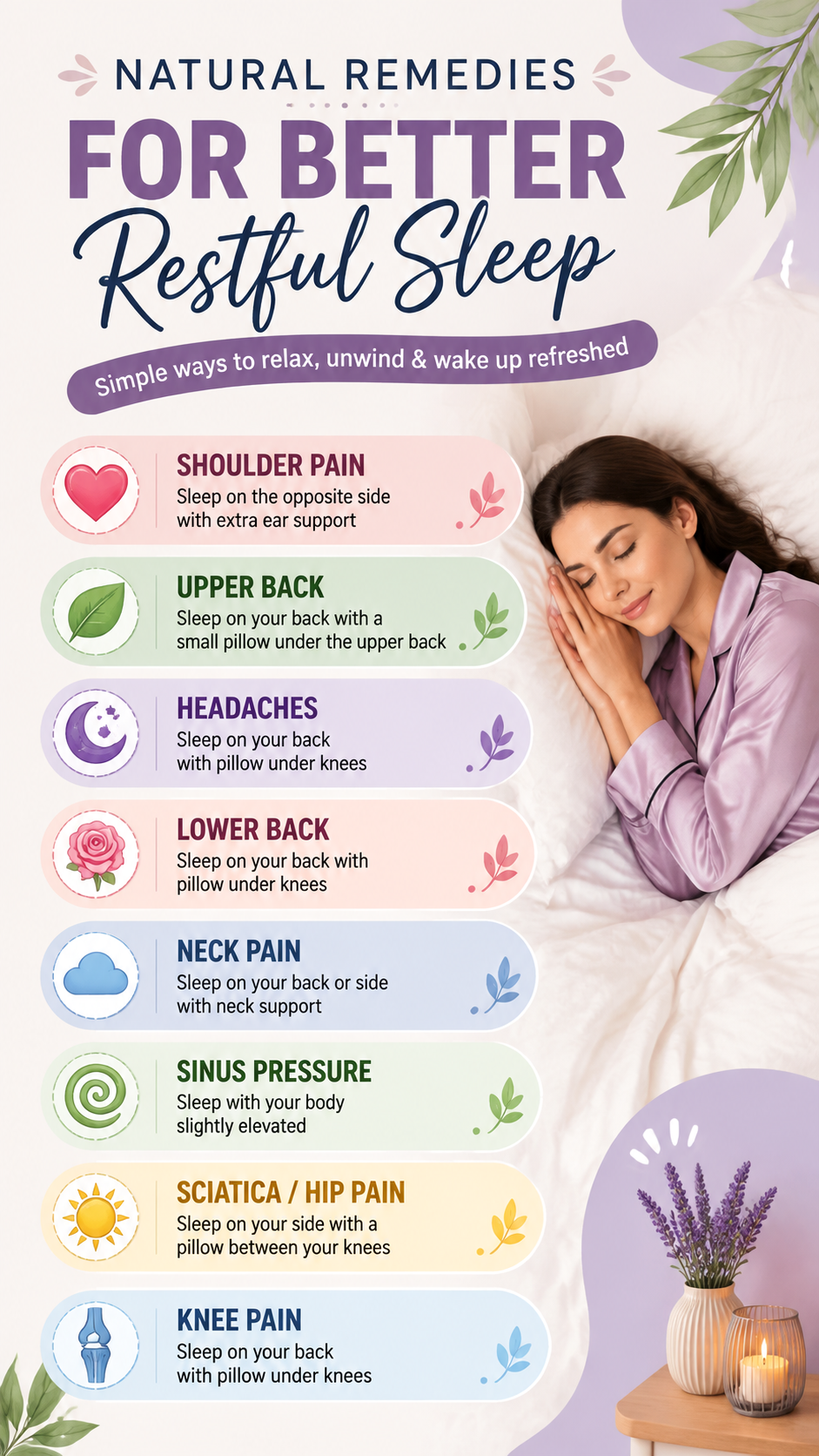
When dealing with shoulder discomfort, sleeping on the opposite side may provide better comfort by reducing direct pressure on the painful area. Supporting your upper body with a comfortable pillow can help keep your shoulders relaxed.
Helpful Sleep Tips
- Avoid placing your full body weight on the painful shoulder.
- Use a pillow that keeps your neck and spine aligned.
- Try hugging a pillow to support your upper arm and shoulder.
Supporting Upper Back Comfort
Upper back tension can sometimes be linked to poor sleeping alignment. Sleeping on your back with proper pillow support may help maintain a more balanced posture during the night.
A pillow that is too high or too flat can place extra strain on your upper back and neck. Finding the right height allows your shoulders to rest naturally while your spine stays supported.
Sleep Positions for Head Discomfort
Some people find that sleeping flat on their back with gentle support under the knees helps them feel more relaxed. This position may reduce tension by allowing the body to rest in a neutral posture.
Comfortable head support is also important. Your pillow should support your neck without pushing your head too far forward.
Lower Back Support While Sleeping
Lower back discomfort is one of the most common reasons people search for better sleep positions. Many sleepers find comfort by lying on their back with a pillow underneath their knees.
This adjustment can help create a more relaxed position by reducing tension around the lower back area. Side sleepers may also benefit from placing a pillow between their knees.
Pro Tip: Your pillow is not just for your head. Strategic pillow placement under your knees, between your legs, or around your arms can improve overall sleep comfort.
How Pillow Placement Improves Sleep Quality
Pillows are essential tools for creating proper support during sleep. The right placement can help maintain natural curves in the body and reduce pressure points.
Pillow Under the Knees
For back sleepers, placing a pillow under the knees can create a more comfortable position by supporting the legs and reducing strain around the lower back.
Pillow Between the Knees
Side sleepers often use a pillow between the knees to help keep the hips aligned. This simple adjustment can make the sleeping position feel more balanced and supported.
Neck and Head Support
A supportive pillow should fill the space between your head and mattress while keeping your neck comfortable. The ideal pillow height depends on your preferred sleeping position and personal comfort.
Expert Insight
Sleep comfort often comes from small improvements rather than major changes. Adjusting your pillow position, mattress support, and sleeping posture can help create a more relaxing nighttime routine.
Sleeping Positions for Neck and Hip Comfort
Neck and hip discomfort can make it difficult to settle into a restful sleep. A comfortable position should allow your muscles to relax while avoiding unnecessary pressure.
Neck Support Tips
- Choose a pillow that supports the natural curve of your neck.
- Avoid sleeping with your head tilted at an uncomfortable angle.
- Keep your shoulders relaxed instead of pushing them forward.
Hip and Sciatic Comfort
For side sleepers experiencing hip discomfort, placing a pillow between the knees can provide extra support. Keeping the legs comfortably aligned may help reduce pressure during rest.
Elevated Sleeping Positions for Sinus Comfort
Some sleepers prefer slightly elevating the upper body when experiencing sinus pressure or congestion. Raising the head area with appropriate support may create a more comfortable breathing experience.
The key is gentle elevation rather than an extreme angle that strains the neck. Comfort and relaxation should always remain the priority.
Creating a Better Nighttime Routine
Your sleeping position is only one part of quality rest. Creating healthy bedtime habits can make it easier for your body and mind to prepare for sleep.
- Create a calming environment with comfortable bedding and reduced distractions.
- Maintain a consistent sleep schedule whenever possible.
- Choose a relaxing activity before bed, such as reading or gentle stretching.
- Adjust your sleeping setup based on your comfort needs.
At a Glance
- Support your spine with comfortable alignment.
- Use pillows strategically for extra comfort.
- Choose a sleep position that fits your body.
- Make small adjustments for better rest.
Conclusion
Finding the best sleeping position can transform your nightly routine and help you wake up feeling more comfortable. Whether you need better support for your back, shoulders, neck, hips, or overall relaxation, simple posture adjustments can make a meaningful difference.
The most effective sleep position is the one that allows your body to fully relax while maintaining comfortable support. Experiment with pillow placement, body alignment, and gentle adjustments to discover what works best for you.
A restful night begins with creating the right conditions for your body to recover. With thoughtful sleep habits and proper positioning, you can build a more comfortable and refreshing bedtime experience.
Tags
Sleep Positions
Pain Relief Sleep Tips
Better Sleep Habits
Sleeping Posture
Sleep Wellness
Natural Sleep Remedies