Houseplant Light Guide Best Indoor Plants for Every Light Level
Choosing the right houseplant can feel overwhelming, especially when every room in your home has different lighting conditions. Some plants love bright sunshine streaming through a window, while others thrive in cozy corners with very little natural light. Understanding how light affects plant growth is the secret to creating a healthy, beautiful indoor garden.
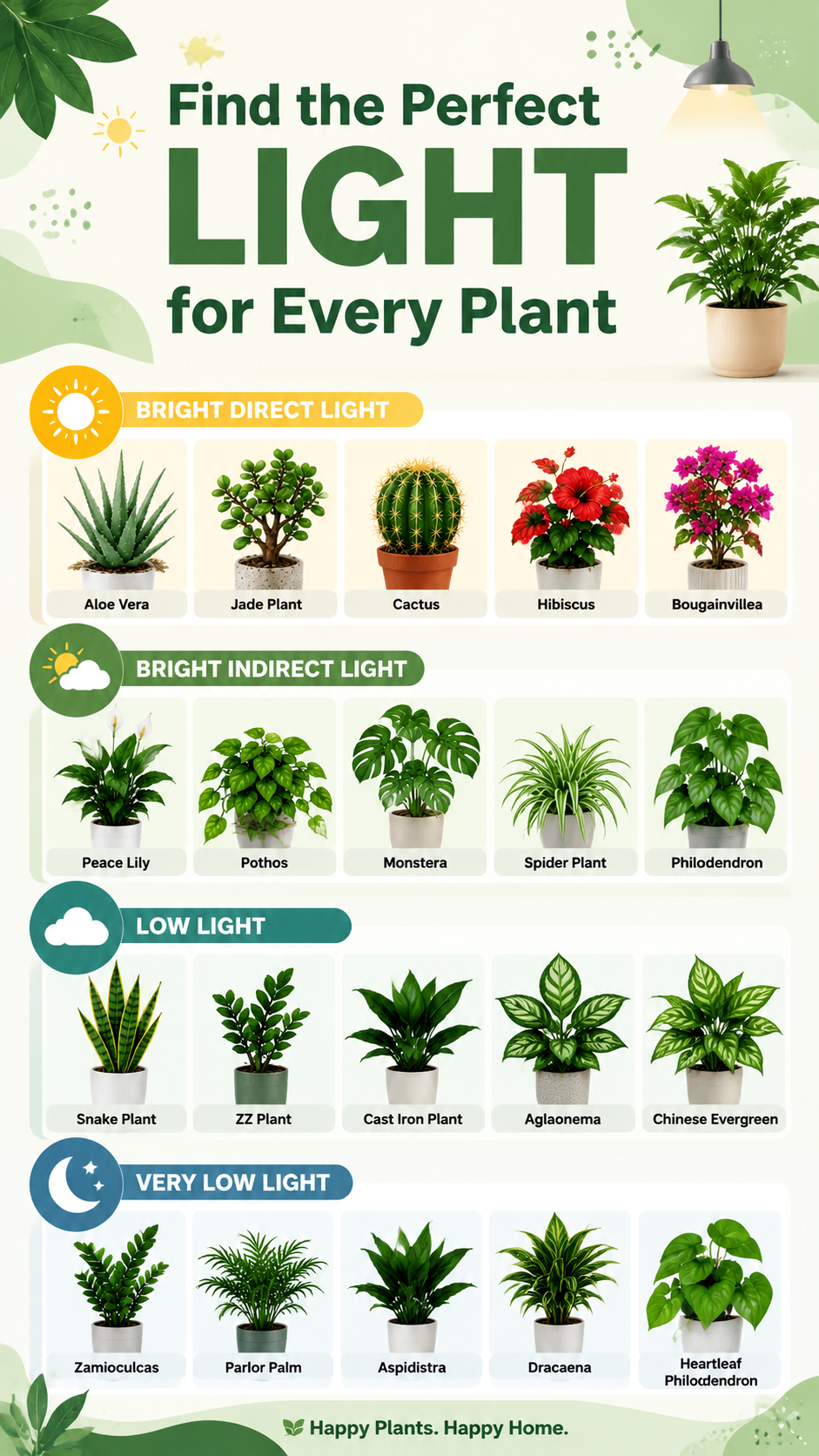
This complete houseplant light guide helps you match popular indoor plants with their ideal lighting needs. From bright direct light favorites like aloe vera and cactus to low-light champions like snake plants and ZZ plants, you can discover which greenery will thrive in your home environment.
Key Takeaways
- Different houseplants require different levels of natural light to stay healthy.
- Bright direct light works best for sun-loving plants like aloe vera, jade, and cactus.
- Bright indirect light supports many popular indoor plants including pothos and monstera.
- Low-light plants are perfect for offices, bedrooms, and rooms with limited windows.
- Choosing the correct lighting condition helps prevent weak growth and plant stress.
Understanding Houseplant Light Requirements
Light is one of the most important factors in indoor plant care. Plants use light energy to create food through photosynthesis, which supports healthy leaves, strong stems, and new growth. While water and soil matter, even the healthiest plant can struggle if it receives the wrong amount of light.
Every home has unique lighting patterns. A sunny windowsill may provide intense direct sunlight, while a hallway or north-facing room may only receive soft, filtered light. The goal is not to find the brightest spot possible, but to find the lighting environment that matches your plant’s natural preferences.
Important: More light does not always mean better growth. A shade-loving plant placed in harsh sunlight may develop leaf damage, while a sun-loving plant kept in darkness may become weak and stretched.
Bright Direct Light Plants
Bright direct light refers to strong sunlight that reaches the plant without being filtered through curtains or placed far away from a window. These plants typically enjoy several hours of sunshine and are excellent choices for bright windowsills, balconies, or sunny rooms.
Aloe Vera: A Simple Sun-Loving Favorite
Aloe vera is a popular indoor plant known for its thick, water-storing leaves and easy-care nature. It prefers bright light and can handle direct sun when gradually introduced. Place it near a sunny window and allow the soil to dry between watering sessions.
Jade Plant and Cactus: Desert-Inspired Greenery
Jade plants and cactus varieties naturally come from environments with plenty of sunlight. They perform best in bright spaces where they can receive consistent light throughout the day. Their low watering needs also make them great choices for busy plant owners.
Hibiscus and Bougainvillea for Colorful Spaces
Flowering plants such as hibiscus and bougainvillea enjoy strong sunlight because they need energy to support blooms. These plants can add vibrant color to bright indoor areas or sunny outdoor spaces.
Bright Indirect Light Plants
Bright indirect light is one of the most versatile lighting conditions for houseplants. This type of light is strong but softened, often coming from a nearby window where sunlight does not hit the leaves directly. Many popular indoor plants prefer this balanced environment.
Peace Lily for Elegant Indoor Spaces
Peace lilies are loved for their lush green leaves and graceful appearance. They grow well in bright indirect light and can be a beautiful addition to living rooms, bedrooms, or workspaces.
Pothos, Monstera, and Philodendron
Pothos, monstera, and philodendron are among the most popular houseplants because they adapt well to indoor environments. They prefer bright indirect light, although many varieties can tolerate slightly lower light conditions.
These plants are excellent for beginners because they are forgiving and can grow beautifully with regular care. Their trailing vines and large leaves also make them ideal choices for shelves, hanging planters, and decorative corners.
Low Light Houseplants That Thrive Indoors
Low-light plants are perfect for spaces where natural sunlight is limited. They do not mean plants that require no light at all, but rather plants that can survive and grow with less intense lighting than many other varieties.
Snake Plant: A Reliable Indoor Choice
Snake plants are known for their tall, upright leaves and impressive durability. They can handle lower light conditions and require minimal watering, making them ideal for beginners or rooms with limited sunlight.
ZZ Plant and Cast Iron Plant
ZZ plants and cast iron plants are excellent options for people who want attractive greenery without complicated maintenance. Their strong leaves and slow growth make them well suited for offices, apartments, and shaded areas.
Aglaonema and Chinese Evergreen
Aglaonema, also called Chinese evergreen, offers beautiful foliage patterns while adapting well to indoor conditions. These plants are commonly chosen for their decorative leaves and ability to tolerate lower light.
Very Low Light Plants for Darker Rooms
Some homes have areas where natural light is extremely limited. Corners away from windows, interior offices, and rooms with small openings can still benefit from greenery when you choose plants that tolerate very low light.
Zamioculcas and Aspidistra
Zamioculcas, commonly known as the ZZ plant, and aspidistra are valued for their toughness. They can handle inconsistent care and lower lighting while maintaining attractive foliage.
Parlor Palm and Dracaena
Parlor palms and dracaena plants bring a tropical feeling into indoor spaces. They work well in areas where bright sunlight is unavailable but some ambient light is present.
How to Choose the Right Plant for Your Space
Selecting a houseplant starts with observing your home’s lighting throughout the day. Notice where sunlight appears, how long it lasts, and whether the light is direct or filtered.
- Check your window direction: Sunny windows usually provide stronger light, while shaded areas offer softer conditions.
- Observe leaf changes: Yellowing, fading, or stretched growth may indicate incorrect lighting.
- Match plant personality: Choose easy-care varieties if you are new to indoor gardening.
- Adjust placement: Moving a plant closer or farther from a window can make a big difference.
Quick Points
- Bright direct light suits sun-loving plants.
- Bright indirect light works for many popular tropical houseplants.
- Low-light plants are great for offices and shaded rooms.
- The right lighting creates healthier, longer-lasting indoor greenery.
Create a Healthier Indoor Garden With the Right Light
Growing beautiful houseplants becomes much easier when you understand their lighting needs. The perfect plant is not always the one that looks most attractive at the store, but the one that matches your home’s environment.
Final Thought: A thoughtful approach to plant placement can transform your home into a vibrant indoor garden. By choosing plants based on light conditions, you create a space where greenery can naturally thrive.
Whether you love bright tropical foliage, hardy low-maintenance plants, or simple green accents for darker corners, there is a houseplant that fits your lifestyle. Use lighting as your guide, experiment with placement, and enjoy the process of building your own indoor plant collection.
Tags
Houseplant Care
Indoor Plants
Plant Light Guide
Low Light Plants
Plant Parent Tips
Indoor Gardening
Houseplant Decor