8 Best Anti-Bloat Snacks and Herbal Teas for Natural Digestive Relief
Bloating can leave you feeling uncomfortable, sluggish, and ready for a little relief. Fortunately, simple food choices and soothing herbal teas can become helpful parts of a balanced digestive wellness routine. From refreshing cucumber slices paired with peppermint tea to naturally sweet pineapple and green tea, there are plenty of easy combinations to enjoy throughout the day. These eight anti-bloat snacks and herbal teas offer practical inspiration for anyone looking to support healthy digestion, stay hydrated, and build more mindful eating habits.
Whether you experience occasional fullness after meals or simply want more gut-friendly snack ideas, the key is finding foods and drinks that work well with your body. Fruits, vegetables, yogurt, and caffeine-free herbal teas can all have a place in a varied diet. While no snack or tea can instantly eliminate bloating, choosing suitable ingredients, eating slowly, and identifying personal food triggers may help you feel more comfortable over time.
Key Takeaways
- Combine hydrating fruits and vegetables with gentle, nourishing snacks.
- Try peppermint, ginger, or chamomile tea as part of a relaxing routine.
- Choose yogurt with live cultures if you tolerate dairy well.
- Increase fiber gradually and drink enough water to support regular bowel movements.
- Remember that individual food sensitivities and portion sizes can affect bloating.
- Seek medical advice if bloating is persistent, severe, or accompanied by concerning symptoms.
1. Cucumber and Peppermint Tea for a Refreshing Snack
Cucumber and peppermint tea make a light, refreshing combination for warm afternoons or moments when you want something simple between meals. Cucumber contains a high proportion of water, making it a useful addition to a hydration-friendly eating pattern. Peppermint tea offers a cool, aromatic flavor that many people find soothing after eating.
How to Enjoy Cucumber and Peppermint Tea
Slice a fresh cucumber into rounds and serve it plain or with a small amount of lemon juice and your favorite herbs. For the tea, add fresh peppermint leaves or a peppermint tea bag to hot water and allow it to steep according to the package instructions. Let it cool slightly before drinking.
This pairing works well when you want a snack that feels light rather than heavy. You can also add cucumber slices to a small bowl of plain yogurt dip or serve them alongside a handful of crackers for a more substantial snack.
Important: Peppermint may help some people with digestive discomfort, but it can worsen acid reflux or heartburn. If you experience reflux, consider a different herbal tea and pay attention to how your body responds.
2. Papaya and Ginger Tea for a Tropical Digestive Routine
Papaya brings natural sweetness, a soft texture, and useful nutrients to your snack routine. It contains fiber and an enzyme called papain, which helps break down certain proteins. However, eating papaya should not be viewed as a guaranteed treatment for bloating or other digestive symptoms.
Pairing a small bowl of ripe papaya with ginger tea creates a comforting combination with a bright, slightly spicy flavor. Ginger has a long history of culinary use and has been studied for several digestive concerns, particularly nausea. Its effects on bloating can vary, so it is best enjoyed as one part of a broader approach to digestive comfort.
Simple Papaya and Ginger Tea Preparation
- Cut ripe papaya into small cubes and place them in a bowl.
- Slice a small piece of fresh ginger or use a ginger tea bag.
- Steep the ginger in hot water for several minutes, following package directions when applicable.
- Enjoy the papaya slowly alongside the warm tea.
For extra flavor, add a squeeze of lime to the papaya. Keep the portion comfortable for your appetite, especially if large servings of fruit tend to make you feel overly full.
3. Banana and Chamomile Tea for a Calming Evening Snack
Bananas are convenient, portable, and naturally sweet. They provide carbohydrates, fiber, and potassium, an essential mineral involved in normal muscle and nerve function. A banana can be a practical snack when you want something satisfying without preparing a full meal.
Chamomile tea complements bananas with its delicate floral aroma. Many people enjoy chamomile as part of an evening wind-down routine because it is naturally caffeine-free when prepared as a pure herbal infusion. Although chamomile is traditionally used for relaxation and digestive comfort, evidence that it directly relieves bloating is limited.
Make This Pairing Part of Your Evening
Choose a banana that matches your taste preference and enjoy it on its own or with a small serving of oats. Prepare chamomile tea with hot water and allow it to steep until the flavor is pleasant. Sip slowly while relaxing after dinner.
If you are sensitive to certain fermentable carbohydrates, remember that banana ripeness and serving size may influence your individual response. Start with a portion you tolerate comfortably rather than assuming every fruit works equally well for everyone.
4. Melon and Fennel Tea for a Light, Hydrating Combination
Melon is naturally juicy and refreshing, making it a popular choice for a light snack. Depending on the variety, it also provides nutrients such as vitamin C and potassium. Its high water content can contribute to your overall fluid intake, although eating melon does not specifically remove trapped gas or eliminate abdominal swelling.
Fennel tea has a mild, slightly sweet, anise-like flavor. Fennel seeds are traditionally used after meals in some food cultures, and fennel preparations have been explored for digestive discomfort. However, research supporting fennel tea as a reliable treatment for bloating remains limited.
How to Serve Melon and Fennel Tea
Cut melon into bite-sized pieces and chill it for a refreshing snack. Prepare fennel tea using a commercially packaged tea bag or the directions provided with the dried seeds. Avoid making concentrated herbal preparations unless advised by a qualified healthcare professional.
This combination is especially convenient when you want a simple afternoon snack. If melon seems to increase your symptoms, try a smaller serving or choose a fruit that you already know you tolerate well.
5. Yogurt and Mint Tea to Support a Balanced Gut
Plain yogurt can be a useful snack because it supplies protein, calcium, and, in products containing live cultures, beneficial microorganisms. Some probiotic strains have been studied for specific gastrointestinal concerns, but their effects differ by strain and condition. Not every yogurt product contains the same cultures or provides the same potential benefits.
Pairing yogurt with mint tea offers a creamy, tangy snack alongside a refreshing herbal drink. You can top plain yogurt with a few blueberries, sliced strawberries, or a small portion of oats for extra texture and flavor.
Choose a Yogurt That Suits Your Digestion
Look for plain yogurt with live cultures if you want to include fermented dairy in your routine. Unsweetened varieties make it easier to control added sugar, and lactose-free yogurt may be a better choice if lactose causes symptoms for you.
Mint tea can be prepared with fresh leaves or a suitable herbal tea bag. Enjoy it warm or chilled, depending on your preference.
Pro Tip: Yogurt is not automatically suitable for everyone with bloating. If dairy products cause gas, cramps, or diarrhea, try a lactose-free option or a suitable non-dairy alternative. Notice how you feel rather than relying on broad claims about probiotics.
6. Pineapple and Green Tea for a Fresh, Flavorful Snack
Pineapple offers a juicy texture and sweet-tart flavor that works well as a snack on its own. It contains vitamin C and an enzyme mixture known as bromelain, which can break down proteins under certain conditions. However, claims that eating pineapple will directly relieve bloating are not well established.
Green tea provides a complementary flavor and contains plant compounds called catechins. It also naturally contains caffeine, so it may be less suitable than caffeine-free herbal tea if you are sensitive to stimulants or prefer to avoid caffeine later in the day.
Prepare Pineapple and Green Tea at Home
- Cut fresh pineapple into small, manageable pieces.
- Steep a green tea bag or loose-leaf green tea in hot water according to the product instructions.
- Avoid excessively hot water or prolonged steeping if you prefer a less bitter flavor.
- Serve the pineapple with the tea, warm or cooled to your liking.
For a more filling snack, combine pineapple with a small serving of plain yogurt or a few nuts if you tolerate them well. The goal is to build a satisfying eating pattern rather than depend on one ingredient to solve digestive symptoms.
7. Kiwi and Dandelion Tea for Fiber and Variety
Kiwi is a nutrient-rich fruit that provides vitamin C, fiber, and other plant compounds. Some research suggests that green kiwifruit may help improve bowel regularity in certain people, particularly those who experience constipation. Because constipation can contribute to abdominal fullness and bloating, supporting regular bowel movements may be helpful for some individuals.
Kiwi also contains actinidin, an enzyme involved in protein digestion. Its presence does not mean that kiwi will prevent every form of bloating, but the fruit can be a valuable addition to a varied diet.
Dandelion tea is made from parts of the dandelion plant and is traditionally consumed as an herbal infusion. It is sometimes promoted for its diuretic properties, but strong evidence that it relieves ordinary bloating is lacking. Water retention and intestinal gas are different issues, and a drink that affects fluid balance will not necessarily relieve digestive gas.
Ways to Enjoy Kiwi and Dandelion Tea
Wash and slice a kiwi, leaving the skin on if you enjoy its texture and have cleaned it thoroughly. Alternatively, peel it before eating. Prepare dandelion tea according to its packaging and drink it in a moderate amount if it is appropriate for you.
People who take medications or have kidney, liver, gallbladder, or other ongoing health concerns should ask a healthcare professional before regularly using dandelion products. Herbal products can interact with medicines, and their safety depends on the individual and the preparation.
8. Celery and Hibiscus Tea for a Colorful, Refreshing Option
Celery contains water and fiber and provides a crisp texture that makes it an easy vegetable snack. Enjoying celery with a balanced meal plan can contribute to vegetable intake and hydration, but celery is not a proven treatment for bloating or water retention.
Hibiscus tea is known for its deep red color and tart, cranberry-like flavor. It can be enjoyed hot or cold and is naturally caffeine-free when made from hibiscus alone. Some studies have examined hibiscus preparations for blood pressure and other health measures, but that does not establish hibiscus tea as a reliable remedy for abdominal bloating.
Create a Simple Celery and Hibiscus Tea Snack
Wash celery stalks thoroughly and cut them into sticks. Enjoy them plain or pair them with a small serving of hummus or another dip you tolerate well. Brew hibiscus tea according to the package directions and allow it to cool if you prefer a chilled drink.
Hibiscus may lower blood pressure, and it can interact with certain medications. If you have low blood pressure, take blood pressure medication, are pregnant, or have a medical condition requiring dietary precautions, seek professional guidance before using hibiscus regularly.
Expert Insight: Understand What Is Causing the Bloating
Bloating is not always caused by the same thing. It may be associated with intestinal gas, constipation, food intolerances, eating patterns, hormonal changes, or an underlying digestive condition.
- Gas-related bloating may respond to identifying trigger foods and adjusting eating habits.
- Constipation-related discomfort may improve with appropriate fluid intake, gradual fiber changes, and regular movement.
- Fluid retention and digestive gas require different approaches, so persistent symptoms deserve individual assessment.
How to Build an Anti-Bloat Snack Routine That Works for You
The most useful snack routine is one that is enjoyable, practical, and compatible with your individual digestive needs. You do not need to eat all eight combinations every day. Instead, choose a few options that suit your preferences, appetite, budget, and tolerance.
Start With Comfortable Portions
Even nutritious foods can cause discomfort when you eat more than your body comfortably tolerates. Large meals and snacks may increase feelings of fullness, while certain fruits and vegetables can trigger symptoms in people who are sensitive to particular carbohydrates.
Try a modest serving first and observe how you feel. If a food consistently causes symptoms, consider reducing the portion or choosing an alternative rather than forcing yourself to eat it because it is labeled healthy.
Eat Slowly and Pay Attention to Your Habits
Eating quickly can cause you to swallow more air, which may contribute to gas and abdominal discomfort. Slowing down, chewing thoroughly, and sitting comfortably during meals can help you notice fullness and make eating more pleasant.
Other useful habits include limiting carbonated drinks if they trigger gas, avoiding chewing gum if it leads to swallowed air, and taking a gentle walk after eating if you feel comfortable doing so.
Increase Fiber Gradually
Fiber supports bowel regularity and overall digestive health, but increasing your intake too quickly can lead to more gas and bloating. If you are adding kiwi, vegetables, oats, or other fiber-rich foods to your routine, increase portions gradually and drink enough fluids.
People with conditions such as irritable bowel syndrome may react differently to particular foods. A dietitian can help identify appropriate options without unnecessarily restricting your diet.
Choose Herbal Teas Thoughtfully
Herbal tea can provide a comforting ritual and contribute to fluid intake. Peppermint, ginger, chamomile, fennel, dandelion, and hibiscus each have different flavors and potential considerations. Their traditional uses should not be confused with proof that they can treat or prevent bloating.
Check the ingredient list because some tea blends contain caffeine, sweeteners, or additional herbs. If you take medication, have a chronic condition, or are pregnant or breastfeeding, ask a qualified healthcare professional about herbs that may not be suitable for you.
Foods and Habits That May Make Bloating Worse
Finding your personal triggers can be more useful than following a strict list of foods to avoid. Different people react to different ingredients, and a food that causes discomfort for one person may be perfectly comfortable for another.
- Carbonated beverages: The bubbles can increase gas and belching in some people.
- Large meals: Eating very large portions may increase pressure and feelings of fullness.
- Sudden fiber increases: Adding a lot of fiber quickly may temporarily increase gas.
- Individual food intolerances: Lactose and certain fermentable carbohydrates can trigger symptoms in susceptible people.
- Sugar alcohols: Sweeteners such as sorbitol and mannitol may cause gas or diarrhea in some individuals.
- Eating quickly: Swallowing excess air while eating may contribute to discomfort.
Consider keeping a simple food and symptom diary for a week or two. Record what you eat, approximate portions, when symptoms occur, and whether bowel movements change. Look for consistent patterns instead of eliminating several food groups at once.
When Should You Seek Medical Advice for Bloating?
Occasional bloating is common, and it may improve with changes in eating habits or bowel regularity. However, persistent or worsening symptoms should not automatically be attributed to diet. Herbal teas and snacks cannot diagnose or treat every cause of abdominal swelling.
Speak with a healthcare professional if bloating happens frequently, does not improve, interferes with daily activities, or occurs alongside unexplained weight loss, ongoing changes in bowel habits, or reduced appetite.
Seek urgent medical care for severe or sudden abdominal pain, a markedly swollen abdomen with an inability to pass stool or gas, persistent vomiting, blood in your stool, or other serious symptoms. These signs may indicate a problem that requires prompt assessment.
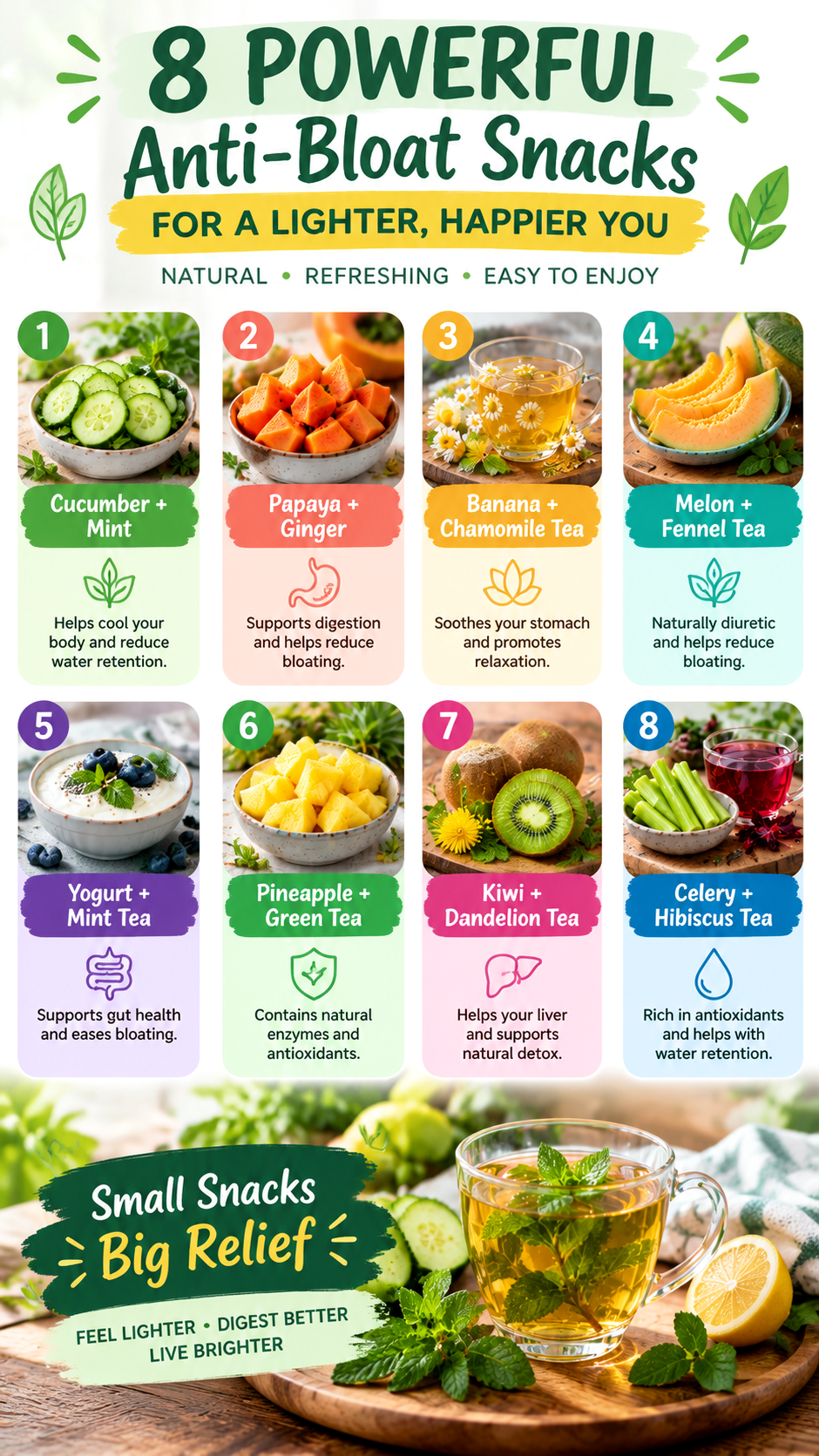
Quick Points: Eight Anti-Bloat Snack and Tea Pairings
- Cucumber and peppermint tea: A refreshing, water-rich snack with a cooling herbal drink.
- Papaya and ginger tea: A tropical combination with natural sweetness and warming flavor.
- Banana and chamomile tea: A convenient snack for a relaxing evening routine.
- Melon and fennel tea: A light, juicy pairing with a gently sweet herbal infusion.
- Yogurt and mint tea: A protein-containing snack that may suit people who tolerate dairy.
- Pineapple and green tea: A bright fruit pairing with a naturally caffeinated beverage.
- Kiwi and dandelion tea: A fiber-containing fruit with a traditional herbal infusion.
- Celery and hibiscus tea: A crisp vegetable snack with a colorful, tart drink.
Conclusion: Find Your Favorite Foods for Everyday Digestive Comfort
Adding anti-bloat snack ideas and herbal teas to your daily routine can be a simple way to make healthy eating more enjoyable. Cucumber with peppermint tea, papaya with ginger tea, banana with chamomile, and the other combinations offer variety without requiring complicated recipes or expensive ingredients.
The most important step is choosing foods and drinks that agree with your body. Stay hydrated, eat at a comfortable pace, increase fiber gradually, and pay attention to patterns that may explain your symptoms. Herbal teas can be pleasant additions to your routine, but they are not guaranteed quick fixes for bloating or water retention.
With a little experimentation, you can create a collection of satisfying, gut-friendly snack ideas that fit your lifestyle. Save your favorite combinations, keep portions comfortable, and remember that persistent digestive symptoms deserve proper medical attention rather than relying on home remedies alone.
Tags
Anti-Bloat Snacks
Herbal Teas
Digestive Health
Gut Health
Healthy Snacks
Peppermint Tea
Natural Wellness
Bloating Relief