DIY Onion Oil for Hair Growth Thick Hair Homemade Scalp Treatment Recipe
Achieving luscious, thick hair often feels like an endless journey of trying expensive serums and chemical treatments that promise the world but deliver very little. However, some of the most potent secrets for hair restoration aren’t found in a salon aisle but right in your kitchen pantry. Onion oil has emerged as a powerhouse natural remedy for those struggling with thinning hair, slow growth, or a lackluster scalp environment. While the idea of putting onion on your hair might seem unusual at first, the science behind its sulfur-rich profile makes it one of the most effective traditional treatments available today. This guide will walk you through everything you need to know about creating and using your own DIY onion oil to transform your hair health from the roots up.
The Science of Onion Oil for Hair Growth
To understand why onion oil is so effective, we have to look at its chemical composition. Onions are incredibly high in sulfur, a mineral that is often referred to as a beauty mineral. Sulfur is essential for the production of enzymes and proteins, specifically keratin, which is the primary structural component of our hair. When you apply onion oil to the scalp, it provides extra sulfur to support strong and thick hair, preventing hair loss and promoting growth.
Beyond sulfur, onions are packed with antioxidants like flavonoids. These compounds help protect the hair and scalp from free radical damage and environmental stressors that can lead to premature graying or follicle weakening. The antibacterial and antifungal properties of onions also ensure that the scalp remains free from infections, dandruff, and buildup, creating the perfect environment for new hair to thrive.
Essential Ingredients for Your Homemade Blend
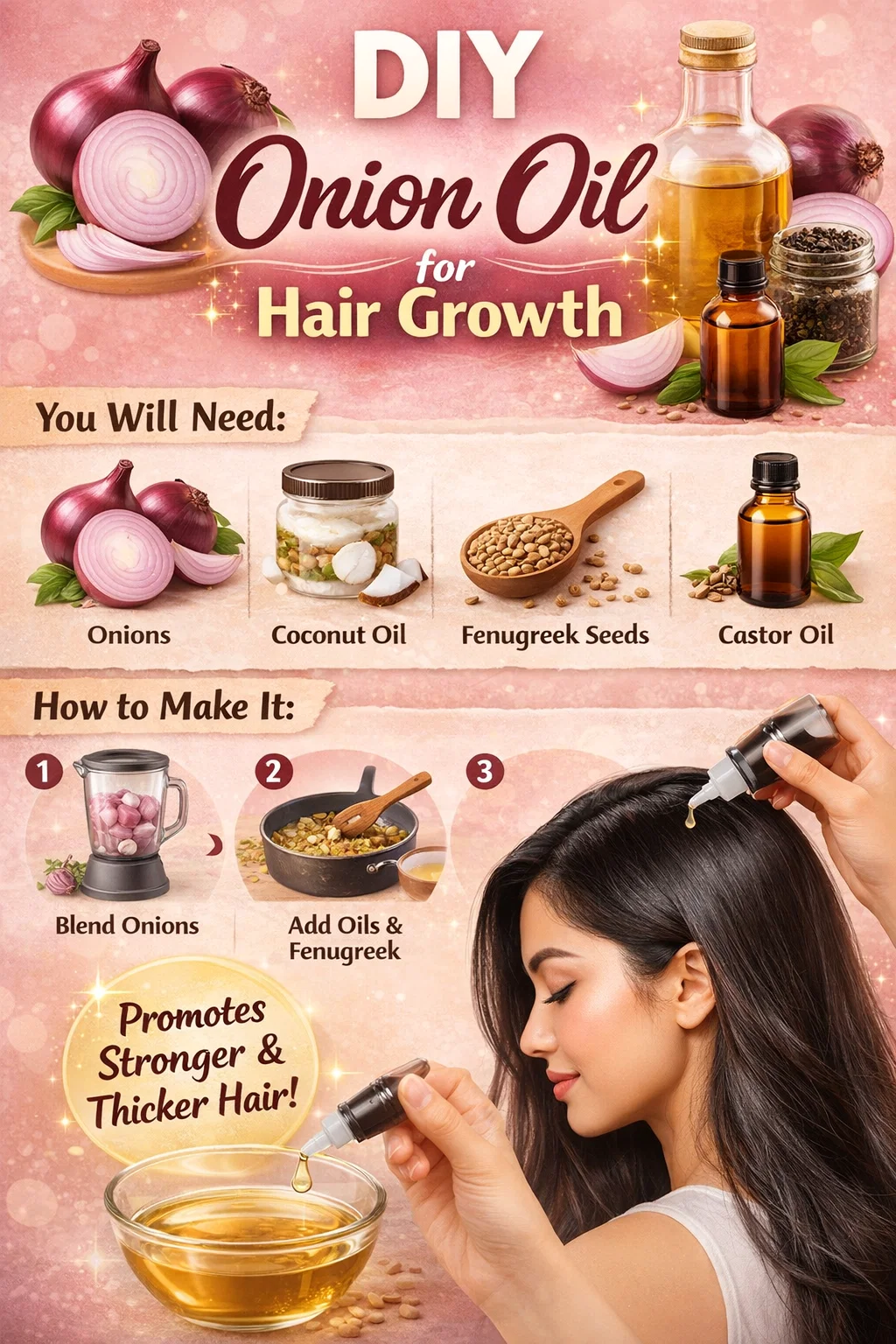
While the onion is the star of the show, combining it with the right carrier oils and seeds enhances its efficacy and makes the application process much smoother. For the best results, you will need a few specific items that work in synergy to nourish your strands.
The Power of Red Onions
Red onions are generally preferred for hair treatments because they contain higher levels of antioxidants and sulfur compared to white or yellow varieties. You will need two to three medium-sized onions to create a potent batch of oil that will last you through several treatments.
Coconut Oil as a Base
Coconut oil is one of the few oils that can actually penetrate the hair shaft rather than just sitting on top of it. It acts as the perfect carrier, helping the onion nutrients reach deep into the follicles. It also provides deep moisturization to counteract any potential drying effects of the onion juice.
Fenugreek Seeds for Strength
Fenugreek seeds, also known as Methi, are a secret weapon in traditional hair care. They are rich in folic acid, Vitamin A, Vitamin K, and Vitamin C. These seeds help in treating scalp issues like dandruff and are known to be highly effective in preventing hair thinning and promoting volume.
Castor Oil for Thickness
Adding a small amount of castor oil to your mixture can significantly boost the thickening properties of the blend. Castor oil is rich in ricinoleic acid, which helps increase circulation to the scalp and triggers the follicles into a growth phase.
Step by Step Guide to Making DIY Onion Oil
Creating this oil at home ensures that you are using fresh, organic ingredients without any hidden preservatives or synthetic fragrances. Follow these steps to prepare your infusion.
Step 1: Preparation and Blending
Start by peeling and roughly chopping your red onions. Place them into a blender or food processor. You want to blend them until they form a smooth paste. If the mixture is too dry to blend, you can add a tablespoon of water or a splash of your coconut oil to help it move. The goal is to break down the onion fibers as much as possible to release the maximum amount of juice.
Step 2: Combining the Ingredients
In a heavy bottomed pan, pour in about one cup of coconut oil and two tablespoons of castor oil. Add your onion paste into the oil along with a tablespoon of fenugreek seeds. Give the mixture a good stir to ensure everything is evenly distributed before you turn on the heat.
Step 3: The Heating Process
Place the pan on a low flame. It is crucial to use low heat to avoid burning the onion paste, which would destroy the beneficial nutrients. Let the mixture simmer gently. You will notice the onion paste changing color and the moisture evaporating. This process usually takes about twenty to thirty minutes. Once the onion solids turn a light golden brown, turn off the heat.
Step 4: Cooling and Straining
Allow the oil to cool down completely at room temperature. Once cooled, use a fine mesh strainer or a muslin cloth to strain the oil into a clean glass bowl. Squeeze the cloth tightly to extract every last drop of the infused oil. Discard the leftover solids and transfer your golden onion oil into a glass bottle for storage.
How to Apply Onion Oil for Maximum Results
The way you apply the oil is just as important as how you make it. For the best results, consistency is key. Aim to use this treatment at least twice a week as part of your hair maintenance routine.
Start by detangling your hair with a wide tooth comb. Section your hair into four parts to ensure even application. Using an applicator bottle or your fingertips, apply the oil directly to the scalp. Focus on areas where you notice thinning or slower growth. Once the scalp is covered, work the remaining oil through the lengths of your hair to protect against breakage.
Massage your scalp for five to ten minutes using circular motions. This massage increases blood flow to the follicles, which helps the nutrients in the oil to be absorbed more effectively. Leave the oil in for at least thirty minutes, or for a deep conditioning treatment, you can leave it on for a few hours before washing.
Tips for Managing the Onion Scent
The most common concern with onion oil is the lingering smell. While the benefits are worth it, you can minimize the scent with a few simple tricks. Adding a few drops of essential oils like lavender, rosemary, or peppermint to your finished oil can help mask the onion aroma. When washing the oil out, use a clarifying shampoo and follow up with a fragrant conditioner. You can also use a final rinse of apple cider vinegar diluted in water to neutralize any remaining odor and add extra shine to your hair.
Benefits of Regular Use
If you stay consistent with your onion oil applications, you can expect to see a variety of improvements in your hair quality. Users often report a significant reduction in hair fall within the first few weeks. Over time, you may notice baby hairs sprouting in sparse areas and an overall increase in the diameter of your hair strands.
- Accelerated Growth: The sulfur boost keeps hair in the growth phase longer.
- Reduced Breakage: The infusion of oils strengthens the hair shaft.
- Scalp Detox: Antibacterial properties clear up itchy or flaky scalp conditions.
- Improved Texture: Fenugreek and coconut oil leave the hair feeling soft and manageable.
Common Mistakes to Avoid
To get the most out of your DIY journey, be mindful of a few common pitfalls. First, never apply the oil if you have open cuts or sores on your scalp, as the onion juice will cause significant stinging. Second, do not overheat the oil during the cooking process, as high heat can denature the enzymes that make onions effective for hair growth. Lastly, avoid using too much castor oil in the blend, as its thick consistency can be difficult to wash out and may weigh down fine hair if not balanced correctly with coconut oil.
Patch Testing
As with any new topical treatment, always perform a patch test on a small area of your skin before applying the oil to your entire scalp. This ensures that you do not have an undiagnosed allergy to onions or any of the other ingredients in the recipe.
The Importance of Patience in Hair Care
Natural remedies work wonders, but they do not work overnight. Hair growth is a biological process that takes time. While the onion oil provides the scalp with the tools it needs to succeed, you must give your body time to respond. Typically, it takes about three to six months of regular use to see significant changes in length and density. View your hair maintenance days as a form of self care and a long term investment in your confidence.
Conclusion
Embracing a DIY approach to hair care allows you to take control of what goes onto your body while tapping into the wisdom of traditional beauty rituals. This onion oil recipe is a simple, cost effective, and scientifically backed way to fight hair loss and achieve the thick, healthy hair you have always wanted. By combining the sulfur of onions with the nourishing properties of coconut oil and fenugreek seeds, you are giving your scalp a premium treatment right at home. Start your journey today, stay consistent with your applications, and enjoy the transformation as your hair becomes stronger and more vibrant with every passing week.