Easy Stain Removal Tips How to Remove Coffee, Wine, Grease, and More Stains
Spilled coffee on your favorite shirt? A splash of red wine on the tablecloth? Grass stains on the kids’ clothes after a fun afternoon outdoors? Before tossing everything into the washing machine, take a moment to treat the stain properly. With the right stain removal tricks, many everyday marks can become much easier to remove, helping you keep your clothes, towels, and household fabrics looking fresh and clean.
Effective stain removal does not always require expensive cleaning products or complicated routines. Simple household ingredients, such as baking soda, dish soap, and liquid laundry detergent, can help tackle a variety of common stains when used correctly. The key is knowing what caused the stain, acting quickly, and choosing a treatment that works with the fabric rather than against it.
Key Takeaways
- Blot fresh stains gently instead of rubbing them deeper into the fabric.
- Use cold water for blood and many other protein-based stains.
- Apply baking soda to help absorb fresh grease before washing.
- Choose a stain treatment based on the substance and fabric type.
- Check the stain before drying because heat can make some marks harder to remove.
- Test cleaning solutions on a hidden area before treating visible fabric.
Why You Should Treat Stains Before Washing
It is tempting to put stained clothing straight into the washing machine and hope for the best. However, ordinary washing does not always remove concentrated spills, oily marks, or deeply colored stains. Some residues can remain trapped in the fibers even after a regular wash cycle.
Pre-treating gives you a chance to loosen or absorb the substance before washing. The best approach depends on the type of stain. Grease needs a different treatment from blood, while coffee and tea may respond well to detergent when handled promptly.
Important: Never place a stained garment in a hot dryer until you have checked that the mark is gone. Heat can make some stains more difficult to remove. Air-dry the item while you inspect the results, and repeat a suitable treatment if necessary.
The Basic Rules of Stain Removal
- Act promptly: Fresh stains are often easier to treat than stains that have dried.
- Blot, do not scrub: Use a clean cloth or paper towel to lift excess liquid without spreading it.
- Work from the outside inward: This can help prevent the stain from spreading across the fabric.
- Read the care label: Delicate fabrics may need professional cleaning or specialized products.
- Use the right water temperature: Cold water is a sensible starting point for blood and many protein-based stains.
- Rinse thoroughly: Remove cleaning product residue before washing as directed.
1. How to Remove Coffee and Tea Stains
Coffee and tea spills can leave noticeable brown marks on white shirts, pillowcases, tablecloths, and other washable fabrics. These stains are caused by colored compounds in the drinks, and milk or sugar can make the cleanup more complicated.
Step-by-Step Coffee Stain Treatment
- Blot the spill. Use a clean, absorbent cloth to remove as much liquid as possible.
- Rinse with cool water. If practical, rinse the back of the stained fabric to help push the coffee out of the fibers.
- Apply liquid laundry detergent. Gently work a small amount into the affected area according to the product instructions.
- Allow time to work. Follow the recommended pre-treatment time on the detergent label.
- Wash as directed. Use the warmest temperature permitted by the garment’s care label.
- Inspect before drying. If a brown mark remains, repeat the treatment rather than applying heat.
For tea stains, the same general process is a useful starting point. Older or stubborn marks may need a fabric-safe stain remover designed for colored beverage stains. Always test the product on a hidden section first.
Helpful tip: Avoid rubbing a fresh coffee spill aggressively. This can spread the liquid and force it farther into the fibers.
2. Remove Grease and Oil Stains With Simple Supplies
Cooking oil, butter, salad dressing, and greasy food can leave dark marks that remain visible even after washing. Because oils do not mix easily with water, rinsing alone may not be enough.
How to Treat Fresh Grease
- Remove excess oil. Gently lift away food or liquid with a spoon and blot the area with an absorbent towel.
- Apply baking soda if appropriate. Sprinkle a small amount over the fresh greasy spot to help absorb surface oil.
- Brush away the powder. After allowing it some time to absorb the oil, remove it gently without spreading the stain.
- Use dish soap carefully. A small amount of grease-cutting dish soap may help loosen oil on suitable, washable fabrics. Check the garment’s care instructions first.
- Rinse and wash. Rinse out the soap thoroughly, then launder according to the care label.
- Check the result. Repeat the treatment if necessary before drying.
Pro Tip: Baking soda is useful for absorbing some fresh grease, but it does not remove every oil stain on its own. For washable clothing, a suitable detergent or fabric-safe stain remover is usually an important part of the process.
Be cautious when using dish soap on delicate fabrics, dark garments, or materials with special finishes. Avoid putting dish soap directly into a washing machine because excessive suds can create problems. Treat the stain separately and rinse thoroughly before laundering.
3. How to Get Red Wine Stains Out of Fabric
Red wine can leave a vivid purple or reddish mark on clothing, napkins, upholstery, and table linens. Quick action can help prevent the liquid from spreading and becoming more difficult to remove.
The Best First Steps for Red Wine
- Blot immediately. Press a clean cloth against the spill to absorb excess wine. Do not rub.
- Rinse with cool water. If the fabric is washable, rinse the affected area promptly when possible.
- Apply a suitable detergent. Use liquid laundry detergent or a stain remover approved for the material.
- Follow the product instructions. Allow the treatment to work for the recommended time.
- Wash and inspect. Launder the item according to its care label and check the stain before drying.
For stubborn wine marks, an oxygen-based stain remover may be appropriate for some colorfast fabrics. Check the product label and test a hidden area first. Never assume that a treatment safe for white cotton is also safe for wool, silk, or brightly colored clothing.
For upholstery or a non-washable tablecloth, blot the spill and use a cleaner suitable for the material. Avoid soaking furniture fabric, as excess moisture can affect the padding beneath it.
4. Remove Blood Stains With Cold Water
Blood stains require a slightly different approach from grease or coffee. Blood contains proteins that can become more difficult to remove when exposed to heat, so cold water is generally the best first choice for washable fabrics.
Steps for Treating Blood Marks
- Rinse with cold water. Flush fresh blood from the fabric as soon as possible, provided the care label permits water treatment.
- Blot gently. Use a clean cloth to absorb loosened residue.
- Apply laundry detergent. Work a small amount into the stain according to the detergent instructions.
- Rinse and repeat if needed. Older stains may require several gentle treatments.
- Wash according to the care label. Use an appropriate cycle and temperature.
- Check before drying. Do not use a hot dryer while the stain remains visible.
For stubborn stains on suitable fabrics, an enzyme-based laundry product may help break down protein residues. Follow the label and avoid enzyme products on materials for which they are not recommended, including some wool and silk items.
When treating blood from another person, wear disposable gloves if practical, especially when the source is unknown. Handle contaminated items carefully and wash your hands afterward.
5. How to Remove Ink Stains From Clothes
Ink stains can come from leaking pens, markers, or accidental contact with printed materials. Different inks have different formulas, so the best treatment depends on the type of ink and the fabric involved.
Using Rubbing Alcohol on Suitable Fabrics
- Place an absorbent cloth underneath. This helps catch ink as it transfers out of the fabric.
- Test first. Apply a small amount of rubbing alcohol to a hidden area to check for color changes or damage.
- Dab gently. If the material tolerates it, use a cotton pad or clean cloth lightly moistened with rubbing alcohol.
- Blot with a clean section. Change the absorbent material as ink transfers so it does not spread.
- Rinse and launder. Once the ink has lifted as much as possible, follow the care label and detergent instructions.
Keep rubbing alcohol away from flames, sparks, and heat sources because it is flammable. Provide good ventilation and never mix it with bleach or other cleaning chemicals. Some inks need a specialized remover, while delicate or dry-clean-only fabrics may require professional treatment.
6. Get Grass Stains Out of Everyday Clothing
Grass stains are common on jeans, school uniforms, sportswear, and children’s clothing. Their green color comes from plant pigments and other organic compounds that can cling to fabric fibers.
A Simple Grass Stain Removal Method
- Remove loose dirt. Let wet mud dry when practical, then brush away loose soil gently.
- Apply liquid laundry detergent. Use a detergent suitable for the garment and work it into the stained area carefully.
- Wait as directed. Give the detergent the recommended amount of time to loosen the stain.
- Wash normally. Follow the garment’s care instructions.
- Inspect in good light. If green discoloration remains, repeat the treatment before drying.
For durable, colorfast clothing, an appropriate oxygen-based stain remover may help with persistent grass marks. Always follow the product instructions and avoid chlorine bleach unless the care label specifically permits it.
7. Remove Tomato Sauce and Other Food Stains
Tomato sauce, ketchup, pasta sauce, and similar foods can leave orange or red marks on clothing and table linens. These stains may contain pigments, oils, and food particles, so removing excess material before washing is essential.
Treating Tomato Sauce Stains
- Scrape off the excess. Use a spoon or dull utensil to lift away sauce without pushing it into the fibers.
- Rinse with cool water. If the garment is washable, rinse from the back of the stain when possible.
- Apply laundry detergent. Gently work it into the affected area.
- Wash according to the care label. Use a suitable cycle and temperature.
- Check before drying. Repeat the treatment if orange or red discoloration remains.
For oily tomato sauces, choose a detergent or stain remover that addresses both food residue and grease. Avoid using hot water as the first step when you are unsure how the fabric or stain will respond.
8. Tackle Chocolate Stains Without Spreading Them
Chocolate stains can be especially frustrating because they often contain a combination of colored cocoa solids, fats, and sometimes milk or sugar. Fortunately, a careful pre-treatment routine can make them easier to manage.
Chocolate Stain Removal Steps
- Remove solid chocolate. If the chocolate is soft, chill it briefly with a wrapped cold pack when appropriate, then lift it gently with a dull utensil.
- Rinse from the back. Use cool water on washable fabric to help move the residue out of the fibers.
- Apply liquid detergent. Work it in gently and follow the product’s recommended treatment time.
- Wash as directed. Choose a suitable wash cycle for the garment.
- Inspect carefully. Repeat the treatment if a brown or oily mark remains.
Avoid vigorous scrubbing, which can spread melted chocolate and damage delicate fibers. For wool, silk, or other special-care materials, consult the care label before applying detergent or water.
9. How to Remove Makeup Stains From Clothing
Foundation, lipstick, mascara, and other cosmetics can leave marks on collars, towels, pillowcases, and tops. Some makeup products are oil-based, while others contain pigments or waxes that need a targeted treatment.
A Gentle Makeup Stain Treatment
- Lift off excess makeup. Use a spoon or dull edge for thick residue, taking care not to smear it.
- Blot the stain. Use a clean cloth to remove surface material.
- Apply a small amount of suitable dish soap or laundry detergent. Choose a product appropriate for the fabric and the type of cosmetic.
- Work gently. Avoid hard rubbing, especially on lightweight or delicate clothing.
- Rinse thoroughly. Remove the cleaner before placing the item in the washing machine.
- Launder and inspect. Follow the care label and repeat if needed before drying.
Waterproof mascara, long-wear lipstick, and heavy foundation may need a dedicated fabric-safe stain remover. Avoid assuming that facial makeup remover is suitable for every garment, since it may contain oils that leave another mark.
10. Deal With Sweat Stains and Underarm Discoloration
Sweat stains can appear as yellow patches on light-colored shirts or as dull residue on darker fabrics. Underarm discoloration often involves a combination of sweat, body oils, deodorant ingredients, and detergent buildup rather than sweat alone.
How to Pre-Treat Sweat Marks
- Check the care label. Confirm that the garment can be soaked and washed at home.
- Prepare a suitable cleaning solution. For compatible washable fabrics, a solution of water and a modest amount of baking soda may help loosen some residue.
- Apply carefully. Test the solution on a hidden area first, especially on colored garments.
- Rinse thoroughly. Do not allow cleaning residue to remain in the fibers.
- Wash as directed. Use a detergent appropriate for the material and soil level.
- Air-dry and inspect. Repeat a safe treatment if discoloration remains.
Do not assume that baking soda will remove every yellow stain. Some discoloration is caused by a reaction between body oils and antiperspirant ingredients, and older stains may require a suitable enzyme-based or oxygen-based product.
For delicate fabrics or stubborn discoloration, a professional cleaner may be the safest option. Avoid using strong acids, abrasive scrubbing, or untested mixtures that could damage the garment.
Why Matching the Treatment to the Stain Matters
Expert Insight
Stain removal works best when you identify what you are trying to remove. Greasy marks often need a product that helps loosen oil, protein-based stains generally benefit from cold-water treatment, and colored beverage stains may respond to detergent or a suitable stain remover. Treating every stain in exactly the same way can waste time or make the mark more difficult to remove.
It also helps to consider the fabric itself. Cotton, polyester, denim, wool, silk, and upholstery materials do not all respond to the same cleaners or temperatures. A treatment that works on a durable cotton T-shirt may be unsuitable for a delicate blouse or a garment with a special finish.
Common Stain Removal Mistakes to Avoid
Rubbing Instead of Blotting
Scrubbing a fresh spill can spread it, push it deeper into the fibers, and create a larger affected area. Blot gently and use clean sections of your cloth as the stain transfers.
Using Heat Too Soon
Hot water and dryer heat can make some stains harder to remove. Begin with an appropriate temperature for the stain, then check the fabric before using a heated drying cycle.
Mixing Cleaning Products
Combining household cleaners can release dangerous fumes or create irritating chemicals. Never mix bleach with ammonia, acids such as vinegar, or rubbing alcohol. Use one product at a time, follow its label, and rinse thoroughly before trying a different treatment.
Ignoring Fabric Care Instructions
Not every fabric is suitable for soaking, vigorous rubbing, or household stain removers. Check the care label before starting, and take dry-clean-only garments to a professional when needed. Tell the cleaner what caused the stain and which products you have already tried.
Assuming One Treatment Will Work for Every Stain
Different stains contain different materials, and older stains can be more challenging than fresh ones. If the first treatment does not work, reassess the stain and choose a compatible alternative rather than applying stronger products at random.
Build a Simple Stain Removal Kit at Home
You do not need a cabinet full of specialized products to handle common laundry mishaps. Keeping a few useful supplies together makes it easier to respond before stains have time to dry.
- Clean white cloths: Useful for blotting without transferring dye onto the stained material.
- Liquid laundry detergent: A versatile first-line option for many washable garments.
- Baking soda: Helpful for absorbing some fresh greasy residues and preparing certain fabric-safe cleaning solutions.
- Grease-cutting dish soap: Useful for selected oily stains when the fabric tolerates it.
- Fabric-safe stain remover: Choose one suited to your laundry needs and follow the label.
- A soft brush: Useful for gently removing dry dirt from durable fabrics.
- Disposable gloves: Helpful when handling certain stains or cleaning products.
Store cleaning products in their original containers and keep them away from children and pets. Follow storage directions, avoid transferring chemicals into food or drink containers, and use adequate ventilation when required.
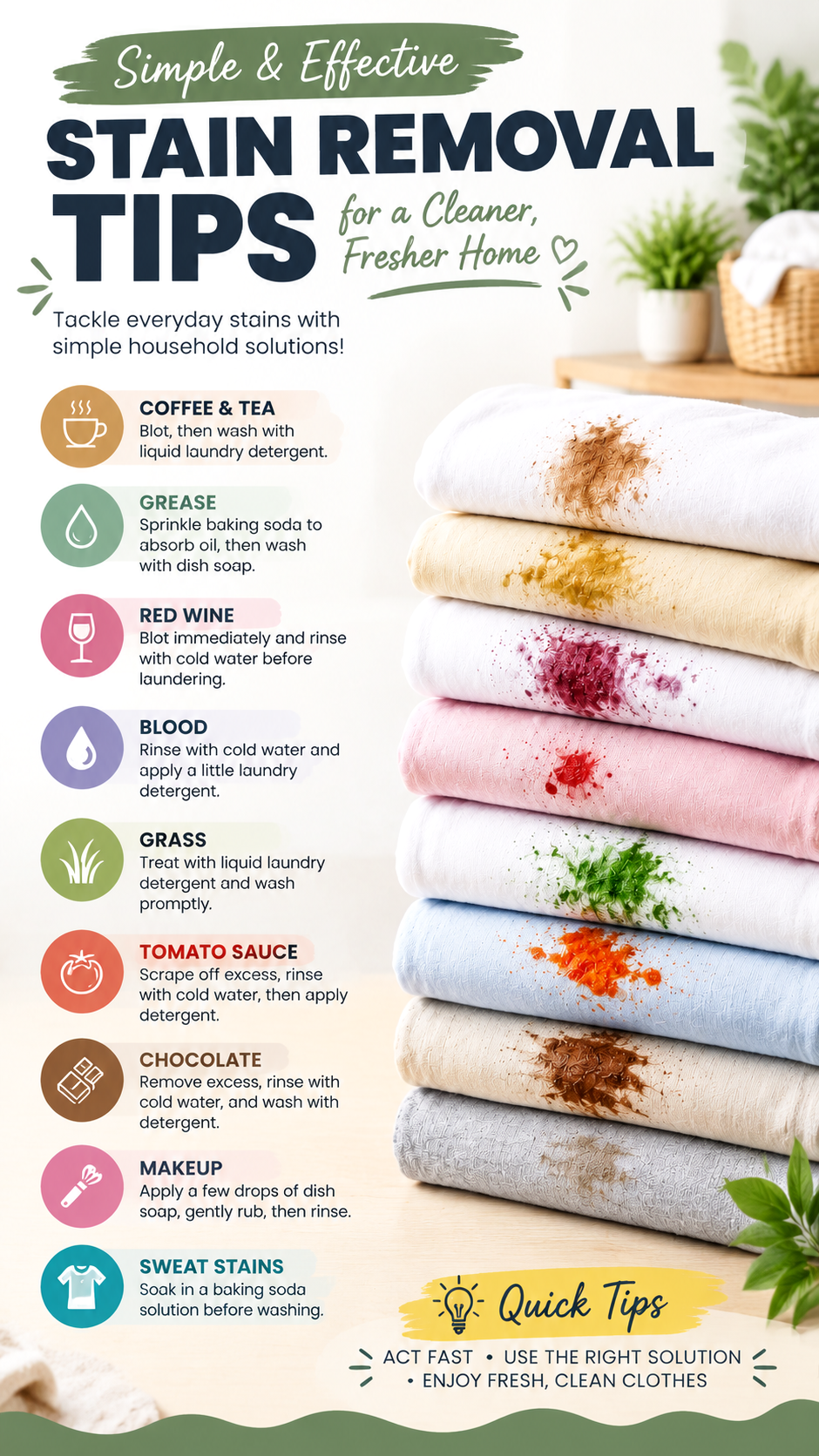
A Quick Guide to Common Laundry Stains
| Stain Type | First Step | Treatment to Consider |
|---|---|---|
| Coffee and tea | Blot and rinse with cool water | Liquid laundry detergent |
| Grease and oil | Lift excess oil | Baking soda followed by suitable detergent |
| Red wine | Blot immediately | Detergent or fabric-safe stain remover |
| Blood | Rinse with cold water | Suitable laundry detergent |
| Ink | Blot and prevent spreading | Tested ink remover or rubbing alcohol on compatible fabric |
| Grass | Remove loose dirt | Liquid laundry detergent |
| Tomato sauce | Scrape and rinse | Laundry detergent or suitable stain remover |
| Chocolate | Lift solids and rinse with cool water | Liquid laundry detergent |
| Makeup | Remove excess product | Suitable detergent or makeup stain remover |
| Sweat stains | Check fabric care instructions | Suitable detergent or stain treatment |
Use this table as a starting point rather than a guarantee. The fabric, age of the stain, and ingredients in the spilled substance all affect the results. Always follow the garment’s care label and the cleaning product’s directions.
Quick Points: Remember These Stain Removal Basics
- Blot spills promptly instead of rubbing them.
- Use cold water first for blood and many protein-based stains.
- Choose cleaners based on the stain and fabric type.
- Test products on a hidden area before use.
- Never mix household cleaning chemicals.
- Inspect treated garments before putting them in the dryer.
Conclusion: Give Stained Clothes a Fresh Start
Stains are an ordinary part of everyday life, but they do not always mean that a favorite shirt, tablecloth, or towel is ruined. With a little patience and the right stain removal technique, many common marks can be treated before they become permanent eyesores.
Start by identifying the stain, removing excess residue, and choosing a suitable treatment for the fabric. Use baking soda to help absorb certain fresh greasy marks, liquid laundry detergent for many everyday spills, and cold water as the first step for blood stains. For ink, makeup, wine, grass, and stubborn food marks, choose a compatible stain remover when necessary.
Most importantly, avoid aggressive scrubbing, untested chemical mixtures, and premature machine drying. A few careful steps can help make laundry day less frustrating while protecting the clothes and household fabrics you want to keep looking their best.
Keep this stain removal guide handy for the next coffee spill, dinner mishap, or muddy afternoon. The next time a stain appears, you will have a practical plan ready to go. Treat it promptly, wash it wisely, and give your fabrics the fresh start they deserve.
Tags
Stain Removal Tips
Laundry Hacks
Coffee Stain Removal
Grease Stain Removal
Natural Cleaning Tips
Fabric Care
Home Cleaning
DIY Cleaning Hacks