Foods That Ruin vs Save Your Health Clean Eating Guide
Everyday food choices can have a powerful impact on how you feel, from your energy levels and digestion to your long-term wellness. The foods you regularly include in your meals can either support your body’s natural needs or create habits that leave you feeling tired, sluggish, and unbalanced. Understanding the difference between foods that may work against your health and foods that nourish your body is a simple step toward creating a cleaner, more mindful eating routine.
This guide explores the connection between common unhealthy food choices and nutrient-rich alternatives. By learning which foods support your body and which ones are best enjoyed less often, you can build a balanced approach to clean eating without extreme restrictions.
Key Takeaways
- Whole foods provide essential nutrients that support daily wellness.
- Reducing processed foods can help create healthier eating patterns.
- Leafy greens, berries, whole grains, and healthy fats are smart choices for balanced meals.
- Hydration plays an important role in digestion, energy, and overall health.
- Small daily food swaps can create lasting lifestyle improvements.
Understanding Foods That Support or Harm Your Health
Healthy eating is not about labeling every food as completely good or bad. Instead, it is about understanding how different foods affect your body and making choices that align with your personal wellness goals. Some foods provide vitamins, minerals, fiber, and beneficial compounds, while others may contain high amounts of added sugars, refined ingredients, or unhealthy fats.
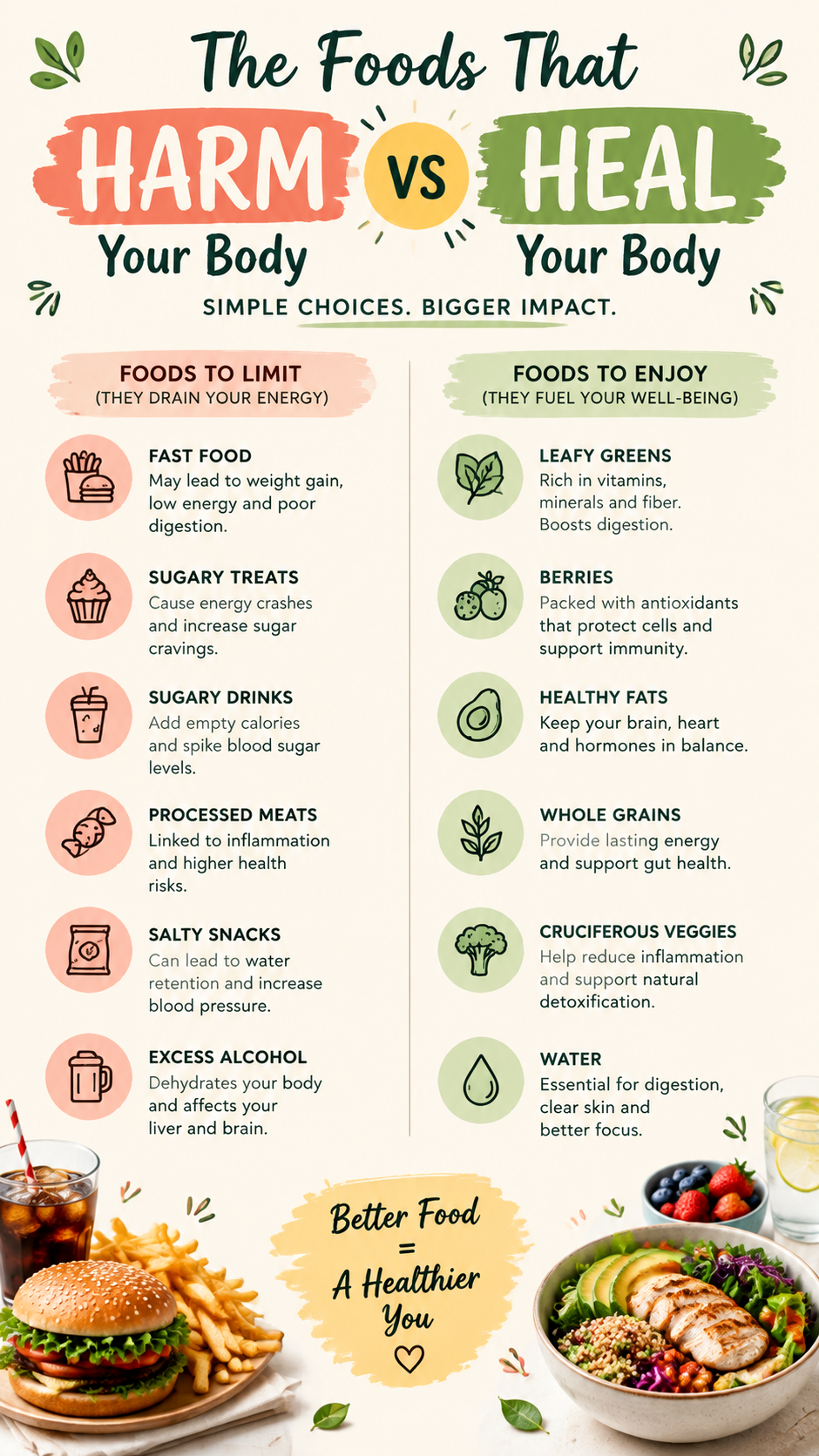
The visual comparison between foods that can negatively impact health and foods that can nourish the body highlights an important message: your daily choices matter. A meal pattern built around colorful vegetables, quality proteins, whole grains, and natural ingredients can help create a stronger foundation for healthy living.
Important: Long-term health is influenced by consistent habits rather than one single meal. Making small improvements, such as replacing processed snacks with nutrient-dense options, can make healthy eating easier and more sustainable.
Foods That May Work Against Your Wellness Goals
Many popular convenience foods are designed to be quick and enjoyable, but they may not always provide the nutrients your body needs. Eating these foods frequently can make it harder to maintain balanced nutrition.
Sugary Drinks and Added Sugar
Sugary beverages are a common source of excess sugar in many diets. Drinks such as sweetened sodas and flavored beverages can add calories without providing important nutrients. Frequent high-sugar choices may also contribute to energy fluctuations throughout the day.
Choosing water, herbal drinks, or naturally flavored water can be a simple way to improve hydration habits while reducing unnecessary added sugar.
Refined Carbohydrates
Refined carbohydrates, such as many highly processed breads and baked goods, often contain fewer naturally occurring nutrients compared with whole-grain alternatives. They can be part of a balanced diet, but choosing higher-fiber options more often can support better meal balance.
Better Everyday Swaps
- Choose whole-grain bread instead of heavily refined options.
- Add vegetables or legumes to meals for extra fiber.
- Pair carbohydrates with protein or healthy fats for a balanced plate.
Processed Snacks and Fried Foods
Packaged snacks and fried foods are often convenient, but many contain added ingredients, excess sodium, or fats that may not support a nutrient-rich lifestyle when eaten frequently.
Instead of relying on processed snacks every day, consider options like nuts, fruit, yogurt, vegetables with dips, or homemade snacks made from simple ingredients.
Processed Meats and Excess Alcohol
Processed meats and excessive alcohol consumption are often associated with health concerns when they become regular habits. Creating a balanced lifestyle means enjoying foods mindfully while prioritizing options that provide more nutritional value.
Nutrient-Rich Foods That Help Nourish Your Body
Building a healthier plate does not require complicated recipes or expensive ingredients. Many simple foods found in everyday grocery stores provide important nutrients that support overall wellness.
Leafy Greens for Essential Nutrients
Leafy greens such as spinach, lettuce, and other green vegetables are valued for their vitamins, minerals, and fiber. Adding greens to salads, smoothies, soups, or meals is an easy way to increase vegetable intake.
Berries and Colorful Fruits
Berries are popular choices for healthy eating because they provide natural sweetness along with beneficial plant compounds. Blueberries, strawberries, and similar fruits can be enjoyed as snacks, breakfast toppings, or smoothie ingredients.
Healthy Fats for Balanced Meals
Healthy fats from foods like avocados, nuts, seeds, and other natural sources can be part of a balanced diet. Including these foods can make meals more satisfying while adding important nutrients.
Whole Grains and Fiber-Rich Choices
Whole grains provide more natural nutrients and fiber compared with many refined alternatives. Foods like brown rice, oats, and other whole-grain options can be included in meals for variety and balance.
Cruciferous Vegetables and Fermented Foods
Vegetables such as broccoli and other cruciferous varieties add valuable nutrients to meals. Fermented foods can also be included as part of a diverse eating pattern that supports a healthy gut environment.
Water: The Simple Wellness Essential
Staying hydrated is one of the easiest healthy habits to practice. Water supports many important body functions and helps maintain daily energy and focus.
How to Create a Cleaner Eating Routine
Clean eating is less about perfection and more about creating better patterns over time. A realistic approach focuses on adding more nourishing foods instead of only removing foods from your diet.
Start With Small Food Swaps
- Replace sugary drinks with water or unsweetened options.
- Choose fruit when you want a naturally sweet snack.
- Add vegetables to at least one meal each day.
- Keep simple healthy ingredients available at home.
Plan Meals Around Real Foods
Meal planning becomes easier when you focus on basic ingredients. Fresh produce, whole grains, healthy fats, and balanced proteins create a flexible foundation for many different meals.
Quick Note: Healthy eating is a personal journey. The best approach is one that fits your lifestyle, preferences, and daily routine while encouraging more nourishing choices.
At a Glance: Simple Healthy Eating Reminders
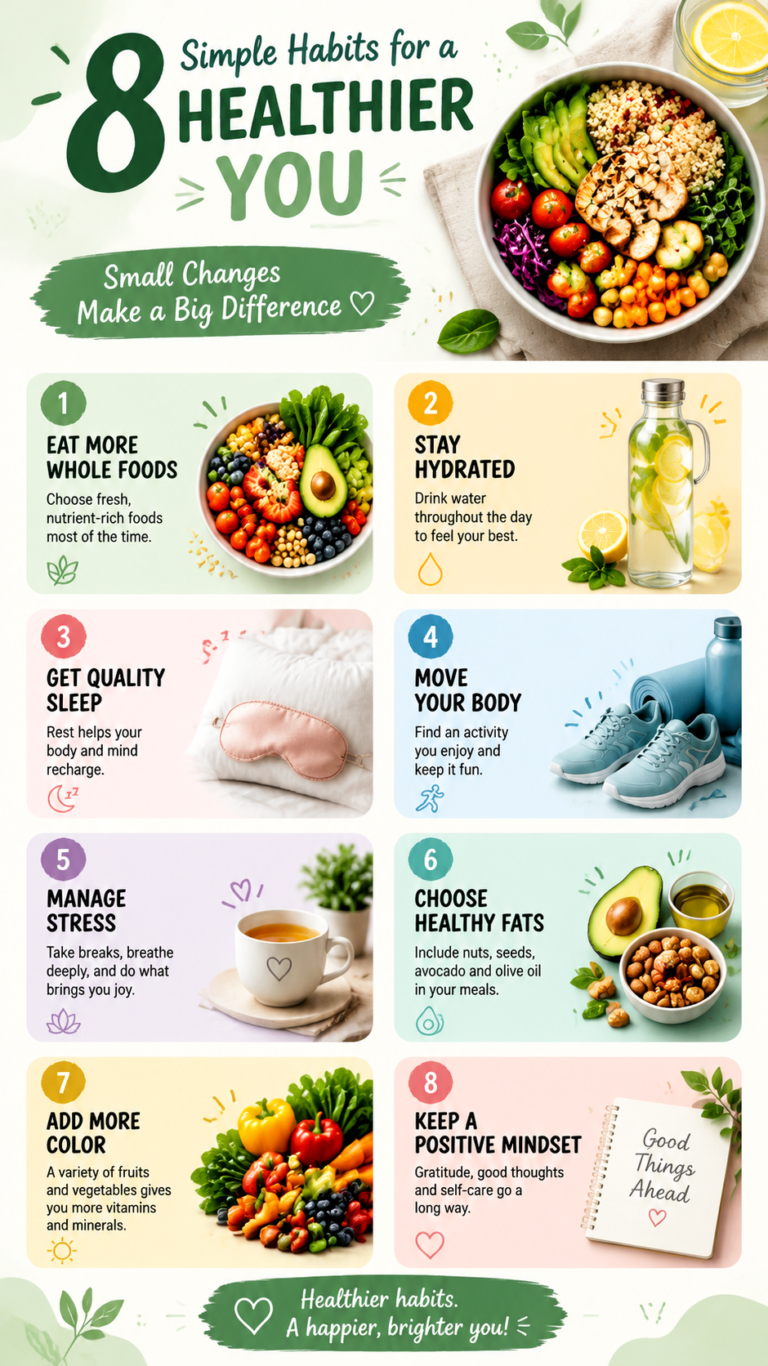
- Focus on adding more whole foods to your meals.
- Choose colorful fruits and vegetables regularly.
- Reduce frequent reliance on highly processed foods.
- Stay hydrated throughout the day.
Conclusion: Nourish Your Body With Better Choices
Healthy eating begins with awareness. Understanding how different foods affect your body allows you to make choices that support your energy, wellness, and everyday goals. You do not need a perfect diet to create positive changes. Simple improvements, repeated consistently, can build a stronger foundation for a healthier lifestyle.
Whether you are replacing processed snacks, adding more vegetables, or drinking more water, every small decision is a step toward better nutrition. Choose foods that nourish your body, enjoy your meals mindfully, and create habits that support the way you want to feel every day.
Tags
Clean Eating
Healthy Food Choices
Nutrition Tips
Whole Foods
Healthy Lifestyle
Gut Health