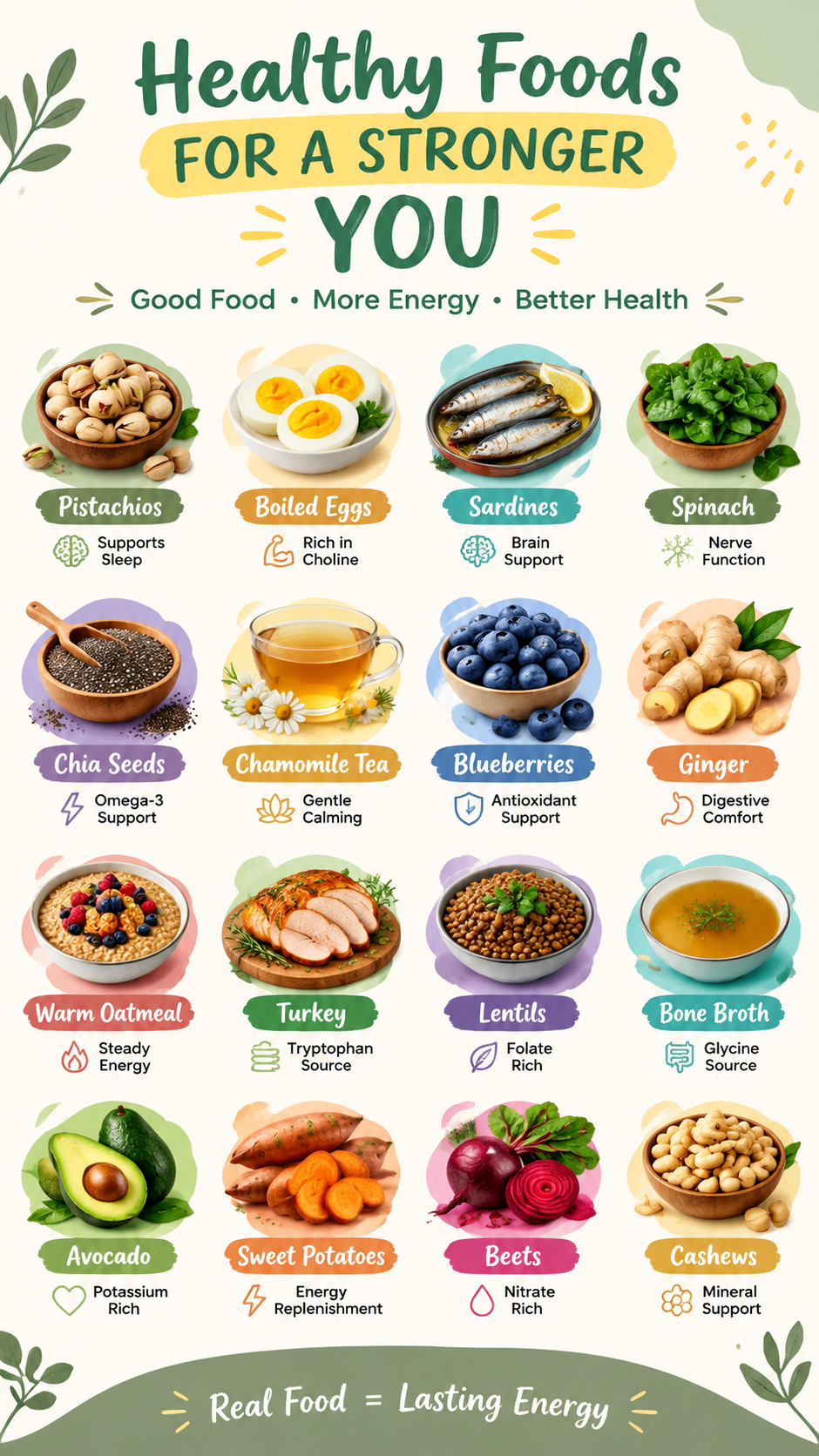
Foods to Eat for Fight-or-Flight Recovery and Nervous System Support
When your body experiences stress, it relies on a complex network of signals involving the brain, nervous system, hormones, and energy systems. The fight-or-flight response is a natural survival mechanism, but after periods of intense stress, many people look for gentle ways to support recovery and restore balance. One of the simplest places to begin is with nourishing foods that provide essential nutrients for steady energy, relaxation, and overall wellness.
The foods highlighted in this guide represent nutrient-rich choices often associated with nervous system support, antioxidant protection, digestive comfort, and balanced nutrition. From omega-3-rich sardines and chia seeds to calming chamomile tea and mineral-packed leafy greens, these ingredients can be incorporated into everyday meals to create a more supportive eating pattern.
Key Takeaways
- Nutrient-dense foods can help support overall wellness during stressful periods.
- Protein, healthy fats, minerals, and antioxidants play important roles in balanced nutrition.
- Foods like berries, leafy greens, eggs, and seeds can easily fit into daily meals.
- Warm, comforting options may encourage mindful eating and relaxation habits.
- A balanced diet works best alongside healthy lifestyle practices like sleep and movement.
Understanding the Fight-or-Flight Response and Recovery
The fight-or-flight response prepares the body to handle challenging situations. During moments of stress, the body may increase alertness, change energy use, and prioritize immediate action. While this response is helpful in short bursts, ongoing stress can leave many people feeling mentally and physically drained.
Recovery involves creating habits that encourage balance. Nutrition is one piece of that process because the body needs consistent access to vitamins, minerals, protein, fiber, and healthy fats to maintain normal functions.
Important: Food does not instantly switch off stress responses, but a nourishing eating pattern can provide the building blocks your body needs for everyday energy, resilience, and overall health.
Foods That Support Nervous System Wellness
Pistachios for Sleep and Relaxation Support
Pistachios are a convenient snack option that provides healthy fats, plant-based protein, and important minerals. They are often included in wellness-focused diets because they contain nutrients that contribute to normal body functions.
Enjoy pistachios on their own, sprinkle them over oatmeal, or add them to yogurt for a satisfying combination of textures and flavors.
Boiled Eggs for Protein and Choline
Eggs are a simple source of high-quality protein and contain choline, a nutrient involved in normal brain function. Their versatility makes them easy to include in breakfast plates, salads, or quick snacks.
A balanced meal with eggs, vegetables, and whole grains can help provide lasting satisfaction throughout the day.
Sardines for Healthy Fats
Sardines are a nutrient-rich seafood choice known for providing omega-3 fatty acids and protein. Healthy fats are an important part of a balanced diet and contribute to normal body processes.
Try adding sardines to salads, whole-grain toast, or Mediterranean-inspired meals for a flavorful nutrient boost.
Spinach for Vitamins and Minerals
Leafy greens like spinach are popular wellness foods because they contain fiber, vitamins, and minerals. Adding greens to meals is an easy way to increase nutritional variety.
Spinach works well in smoothies, soups, omelets, and simple vegetable dishes.
Calming and Nourishing Foods for Daily Balance
Chia Seeds and Omega-3 Nutrition
Chia seeds are tiny but nutrient-dense. They provide fiber, plant-based omega-3 fatty acids, and minerals. Their ability to absorb liquid makes them useful for puddings, smoothies, oatmeal, and breakfast bowls.
Chamomile Tea for a Relaxing Routine
Chamomile tea has long been enjoyed as a soothing beverage. Creating a warm tea ritual can encourage moments of calm and mindfulness, especially when paired with relaxing evening habits.
Blueberries for Antioxidant Support
Blueberries add natural sweetness while providing antioxidants and fiber. They are an easy addition to breakfast bowls, smoothies, snacks, and desserts.
Ginger for Digestive Comfort
Ginger is a flavorful ingredient traditionally used in many cultures. Its warm, spicy taste makes it a popular addition to teas, soups, stir-fries, and wellness recipes.
Comforting Foods That Help Create Balanced Meals
Warm Oatmeal for Steady Energy
Oatmeal is a comforting breakfast option that provides complex carbohydrates and fiber. Adding fruits, seeds, nuts, or yogurt can create a more complete meal that keeps you satisfied.
Turkey and Tryptophan-Rich Foods
Turkey is a lean protein source often associated with tryptophan, an amino acid used by the body in normal biological processes. Including protein with meals can help support balanced nutrition.
Lentils for Plant-Based Nutrition
Lentils provide plant protein, fiber, and nutrients such as folate. They are excellent in soups, salads, and hearty meals that are both affordable and nourishing.
Bone Broth and Comforting Hydration
Bone broth is often enjoyed as a warm, comforting beverage or soup base. It can be included as part of a varied diet focused on wholesome ingredients.
How to Add These Foods Into Your Routine
Healthy eating does not need to be complicated. Small changes can make nutritious choices easier to maintain.
- Add berries and chia seeds to morning oatmeal.
- Keep boiled eggs or pistachios available for convenient snacks.
- Include leafy greens in lunches and dinners.
- Use ginger and herbs to add flavor without relying on heavily processed ingredients.
- Create relaxing routines around nourishing meals and warm beverages.
Quick Points: Foods for Stress Recovery Support
- Choose a variety of colorful whole foods.
- Include protein and healthy fats regularly.
- Support digestion with fiber-rich choices.
- Create calming food rituals that encourage mindful eating.
Conclusion: Nourish Your Body During Recovery
Supporting your body after stressful moments starts with consistent, balanced habits. Foods like spinach, blueberries, eggs, chia seeds, oatmeal, ginger, and other nutrient-rich ingredients can become part of a lifestyle focused on wellness and nourishment.
Remember: A supportive diet is about patterns, not perfection. Choosing wholesome foods regularly can help create a stronger foundation for everyday wellbeing.
Explore different combinations, listen to your body’s needs, and create meals that feel both nourishing and enjoyable.
Tags
Nervous System Support
Stress Recovery Foods
Healthy Nutrition
Whole Foods
Mindful Eating
Wellness Lifestyle