Habit Stacking for People Who Hate Strict Routines Build Better Habits
Building better habits does not have to mean following a strict schedule, creating complicated routines, or completely changing your lifestyle overnight. For many people, traditional routines feel restrictive and difficult to maintain. Habit stacking offers a more flexible approach by helping you connect small, meaningful actions to habits you already perform every day.
The idea is simple: instead of relying on motivation alone, you create a natural trigger for a new behavior. By attaching a new habit to an existing routine, you make positive changes easier to remember and more likely to become part of your daily life.
Whether you want to improve productivity, practice self-care, create a healthier morning routine, or focus on personal growth, habit stacking can help you build consistency without feeling overwhelmed.
Key Takeaways
- Habit stacking connects new habits with actions you already do daily.
- Small habits are easier to maintain than major lifestyle changes.
- Flexible systems work better than strict routines for many people.
- Consistency matters more than perfection when building lasting habits.
- A simple two-minute habit can create momentum for bigger changes.
What Is Habit Stacking and Why Does It Work?
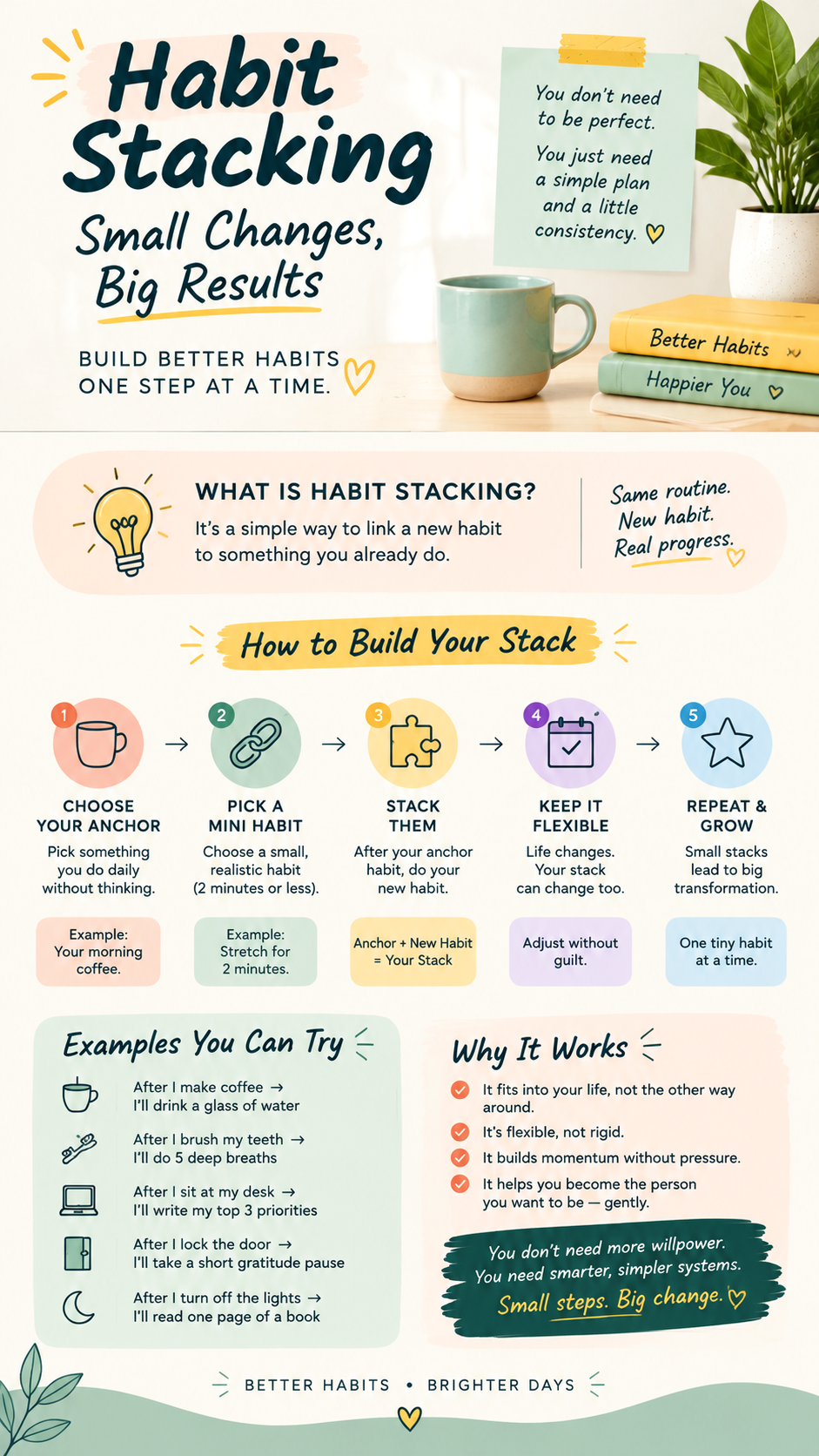
Habit stacking is a personal development strategy that involves pairing a new habit with an existing habit. The concept is based on using something familiar as an anchor, making the new behavior feel like a natural extension of what you already do.
For example, if you already make coffee every morning, you can use that moment as a reminder to drink a glass of water. If you brush your teeth before bed, you can stack a short gratitude practice afterward. The existing routine becomes a signal that helps your brain remember the new action.
Important: The power of habit stacking comes from reducing the mental effort required to start. Instead of asking yourself when or how you will complete a new habit, you simply connect it to something that already happens naturally.
This approach is especially helpful for people who dislike rigid routines. Rather than planning every minute of the day, you create small opportunities for improvement that fit around your current lifestyle.
Why Strict Routines Often Fail
Many people start a new routine with enthusiasm. They create a detailed schedule, set ambitious goals, and try to transform multiple areas of their life at once. While this can feel exciting at first, overly strict systems often become difficult to maintain.
Life changes constantly. Unexpected tasks, busy days, low-energy moments, and personal responsibilities can make a perfect routine impossible to follow. When a routine leaves no room for flexibility, missing one step can create frustration and cause people to give up completely.
The Difference Between Discipline and Design
Successful habit building is not only about having more willpower. It is about designing an environment where positive actions become easier.
A flexible system allows you to continue making progress even when your day does not go exactly as planned. Habit stacking focuses on creating helpful reminders within your existing lifestyle instead of forcing yourself into a completely new structure.
How to Build Your Own Habit Stack
Creating a habit stack does not require complicated planning. The best habit stacks are simple, realistic, and connected to actions you already perform consistently.
Step 1: Choose Your Anchor Habit
Your anchor habit is something you already do without thinking. It should happen regularly enough that it can remind you to complete your new habit.
Common anchor habits include:
- Making your morning coffee or tea
- Brushing your teeth
- Sitting down at your desk
- Locking the door before leaving home
- Turning off the lights before sleeping
Step 2: Pick a Small New Habit
The best new habits are small enough that they feel almost effortless. Starting with a tiny action helps you build confidence and consistency.
Examples of simple habits include:
- Taking three deep breaths
- Writing one sentence in a journal
- Drinking a glass of water
- Stretching for two minutes
- Writing your top three priorities
Step 3: Connect the Two Actions
The formula for a habit stack is simple:
After I [existing habit], I will [new habit].
Examples:
- After I make coffee, I will drink a glass of water.
- After I brush my teeth, I will practice five deep breaths.
- After I sit at my desk, I will write my top priorities.
- After I lock the door, I will think of one thing I appreciate.
Pro Tip: Choose a habit that feels almost too easy at first. The goal is not to create a perfect routine immediately. The goal is to make starting automatic.
Examples of Habit Stacking for Everyday Life
Habit stacking can be customized for almost any goal. The best approach is to match your new habit with a moment that already exists in your day.
Morning Habit Stacks
- After waking up, I will drink water before checking my phone.
- After making breakfast, I will prepare my priorities for the day.
- After brushing my teeth, I will spend one minute practicing mindfulness.
Work and Productivity Habit Stacks
- After opening my laptop, I will review my most important task.
- After finishing a meeting, I will write down the next action step.
- After sitting at my workspace, I will remove distractions for five minutes.
Evening Habit Stacks
- After turning off the lights, I will reflect on one positive moment.
- After putting away my work items, I will prepare for tomorrow.
- After washing my face, I will practice a calming self-care habit.
Expert Insight
Habit stacking works because it removes the need to constantly make decisions. When a behavior is connected to an existing routine, your environment helps guide your actions.
- Focus on one small habit at a time.
- Adjust your habit stack when your lifestyle changes.
- Celebrate consistency instead of chasing perfection.
How to Make Habit Stacking Last
Creating a habit stack is only the beginning. The key to long-term success is making your habits realistic enough to continue during busy or challenging periods.
Keep It Flexible
Your habits should support your life, not control it. If your schedule changes, update your habit stack instead of abandoning it.
Start Small and Grow Slowly
A tiny habit repeated consistently can become a powerful foundation for bigger changes. Small actions create momentum over time.
Avoid Perfection Thinking
Missing a day does not erase your progress. The goal is to return to your habit stack and continue building a healthier system.
At a Glance
- Choose an existing daily habit as your anchor.
- Add one small action that supports your goals.
- Use simple reminders instead of relying on motivation.
- Create flexible systems that fit your real lifestyle.
Conclusion: Build Better Habits Without a Strict Routine
Habit stacking provides a practical way to improve your daily life without creating unrealistic expectations. Instead of forcing yourself into a rigid schedule, you can build positive changes around the routines you already have.
The most effective habits are often the simplest ones. A small action repeated consistently can create meaningful transformation over time. By choosing the right anchor, keeping your habits manageable, and staying flexible, you can create a personal growth system that feels natural and sustainable.
Start with one small habit today. Connect it to something familiar, allow yourself room to adjust, and let those small wins build into lasting progress.
Tags
Habit Stacking
Better Habits
Self Improvement
Daily Routines
Productivity Tips
Mindful Living
Personal Growth