High Cortisol in Women 10 Signs Natural Ways to Lower Cortisol Levels
Feeling constantly tired, overwhelmed, or stuck in a cycle of stress can sometimes be linked to elevated cortisol levels. Cortisol is an essential hormone that helps the body respond to challenges, regulate energy, and maintain balance. However, when stress remains high for long periods, cortisol patterns can become disrupted and may contribute to changes in mood, sleep, appetite, and overall wellness.
Many women search for natural ways to lower cortisol because they want to feel more energized, improve their sleep, support healthy habits, and better understand the signals their bodies are sending. Recognizing possible signs of high cortisol is an important first step toward creating a healthier lifestyle.
Key Takeaways
- High cortisol may be associated with stress-related changes in sleep, mood, and energy levels.
- Common warning signs can include fatigue, cravings, weight changes, and difficulty concentrating.
- Healthy routines like quality sleep, balanced nutrition, and relaxation practices can support stress management.
- Regular movement and time outdoors may help promote overall wellness.
- Small daily habits can make a meaningful difference in maintaining balance.
Understanding Cortisol and Its Role in the Body
Cortisol is often called the “stress hormone” because it plays a major role in the body’s response to stressful situations. Produced by the adrenal glands, cortisol helps regulate metabolism, blood sugar levels, blood pressure, and the immune response. In healthy amounts, cortisol is necessary for daily function and protection.
The body naturally follows a cortisol rhythm. Levels are typically higher in the morning to help you wake up and become alert, then gradually decrease throughout the day to prepare the body for rest. Ongoing stress, poor sleep habits, and an unbalanced lifestyle can affect this natural rhythm.
Important: Cortisol itself is not harmful. The goal is not to eliminate cortisol but to support a healthy balance where your body can respond to stress effectively and return to a relaxed state.
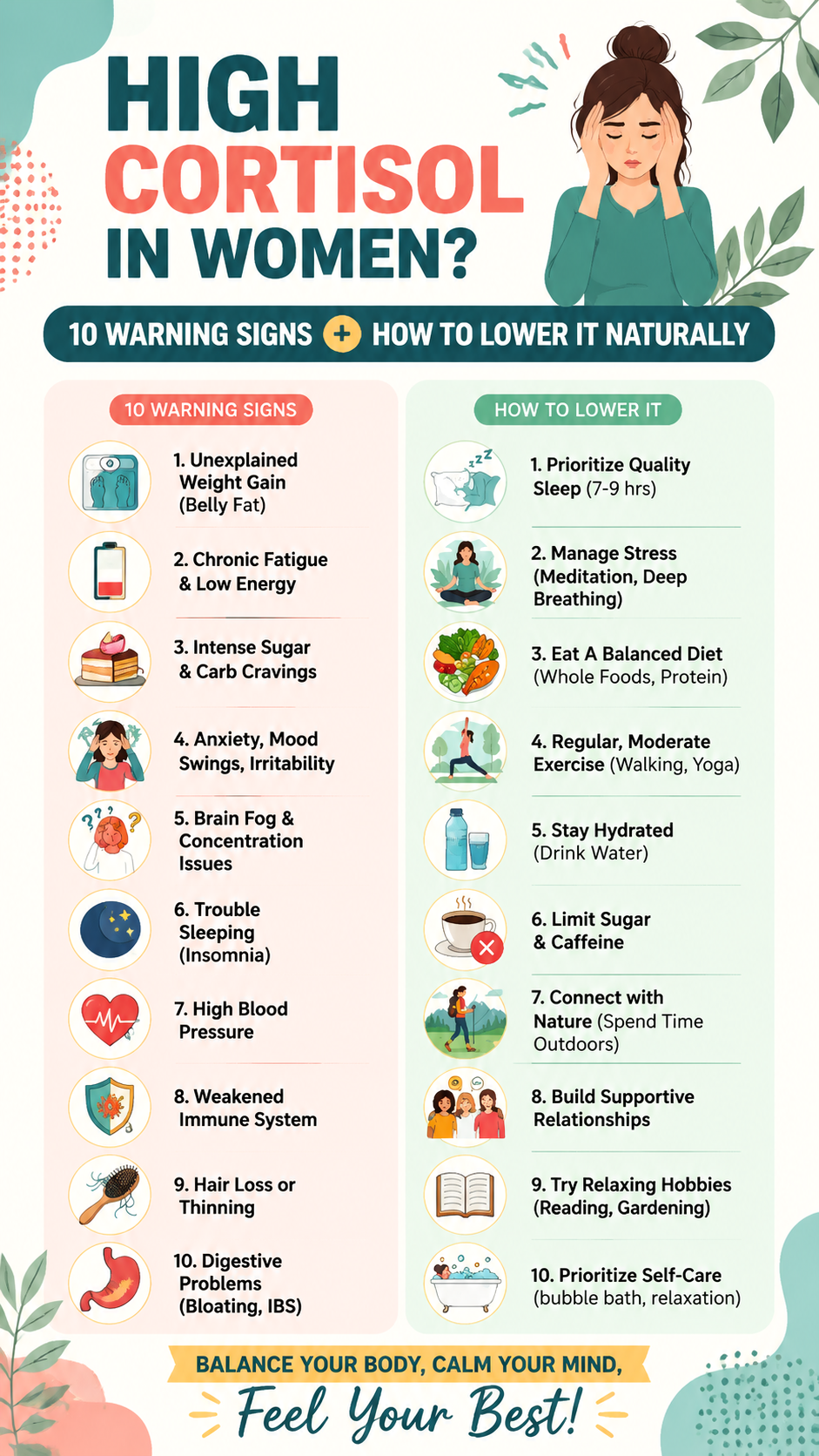
10 Possible Warning Signs of High Cortisol in Women
1. Unexplained Weight Gain, Especially Around the Belly
Changes in body composition can sometimes be connected with prolonged stress and hormone fluctuations. Some women notice increased fat storage around the abdominal area, even when their eating habits have not changed significantly.
Cortisol can influence appetite, cravings, and how the body uses energy. Supporting healthy stress management habits may help create a more balanced approach to weight wellness.
2. Constant Fatigue and Low Energy
Feeling exhausted despite getting through normal daily activities may be a sign that your body needs more recovery and support. Chronic stress can leave the nervous system in a state of constant alertness, making it harder to feel refreshed.
3. Strong Sugar and Carb Cravings
Stress can affect hunger signals and increase the desire for quick sources of energy. Many people experience stronger cravings for sweets or carbohydrate-rich foods during stressful periods.
Choosing balanced meals with protein, healthy fats, and fiber can help support steady energy levels throughout the day.
4. Anxiety, Mood Swings, and Irritability
High levels of ongoing stress may affect emotional well-being. Feeling more sensitive, easily frustrated, or emotionally drained can be a sign that your body needs more opportunities for relaxation and recovery.
5. Brain Fog and Concentration Problems
Difficulty focusing, forgetfulness, or feeling mentally tired can happen when the body experiences prolonged stress. Creating moments of calm and improving sleep routines may help support clearer thinking.
6. Trouble Sleeping
Sleep problems are one of the most common concerns associated with stress. Difficulty falling asleep, waking frequently, or feeling tired after sleep may indicate that your body is struggling to relax.
7. Increased Blood Pressure
Stress can temporarily influence blood pressure levels. Maintaining healthy habits such as regular movement, balanced meals, and relaxation techniques can support cardiovascular wellness.
8. Frequent Illness or Lower Immune Support
Periods of intense stress may affect how the body responds to everyday challenges. Prioritizing rest, nutrition, hydration, and self-care can help support your natural defenses.
9. Hair Changes
Stress can contribute to noticeable changes in hair health for some people. Supporting overall wellness through proper nutrition, relaxation, and healthy routines may benefit hair and body health.
10. Digestive Discomfort
The digestive system is closely connected to stress responses. Some women experience bloating, stomach discomfort, or changes in digestion during stressful times.
Expert Insight
Supporting cortisol balance is about creating consistent healthy habits rather than searching for a single quick solution.
- Focus on quality sleep and a calming evening routine.
- Choose nourishing foods that support steady energy.
- Make time for activities that help your mind and body relax.
Natural Ways to Lower Cortisol and Support Balance
Prioritize Quality Sleep
Sleep is one of the most powerful tools for supporting stress recovery. Aim for a consistent sleep schedule, create a relaxing bedtime routine, and reduce stimulating activities before bed.
Practice Stress Management Techniques
Simple practices like deep breathing, meditation, journaling, gentle stretching, and mindfulness can help signal safety and relaxation to the nervous system.
Eat a Balanced Diet
A balanced eating pattern with whole foods, protein sources, vegetables, fruits, and healthy fats can support stable energy and overall hormone health.
Move Your Body Regularly
Moderate exercise such as walking, yoga, swimming, or strength training can support mood, energy, and stress resilience. The key is choosing activities you enjoy and can maintain consistently.
Stay Hydrated and Reduce Excess Stimulants
Drinking enough water and being mindful of excessive sugar and caffeine intake may support more stable energy throughout the day.
Pro Tip: Small daily changes often create the biggest long-term improvements. Start with one simple habit, such as improving your bedtime routine or adding a relaxing walk to your day.
When to Seek Professional Guidance
While lifestyle habits can support overall wellness, persistent or concerning symptoms should always be discussed with a healthcare professional. Hormone-related concerns can have many possible causes, and a qualified provider can help identify the best approach for your individual needs.
At a Glance
- Recognize stress-related changes in your body.
- Build routines that support sleep and relaxation.
- Choose balanced nutrition and regular movement.
- Create time for recovery and self-care.
Conclusion: Creating Healthy Cortisol Balance Naturally
Understanding the possible signs of high cortisol can help women become more aware of their bodies and make supportive lifestyle choices. Stress is a normal part of life, but consistent self-care can help the body return to a more balanced state.
Better sleep, nourishing foods, mindful movement, relaxation practices, and meaningful connections all play a role in creating a healthier relationship with stress. Instead of focusing on perfection, aim for small habits that make you feel stronger, calmer, and more energized over time.
Supporting cortisol balance is a journey built through daily choices. By listening to your body and prioritizing wellness, you can create routines that encourage long-term health and balance.
Tags
High Cortisol
Women’s Wellness
Stress Management
Hormone Balance
Natural Stress Relief
Healthy Lifestyle