Inner Peace Guide Simple Steps to Mental Clarity and Calm
Finding inner peace in a busy world can feel challenging, but creating a calmer mind often begins with understanding what you can control and releasing what you cannot. A peaceful mindset is not about changing every situation around you. It is about building awareness, setting healthy boundaries, and focusing your energy on personal growth.
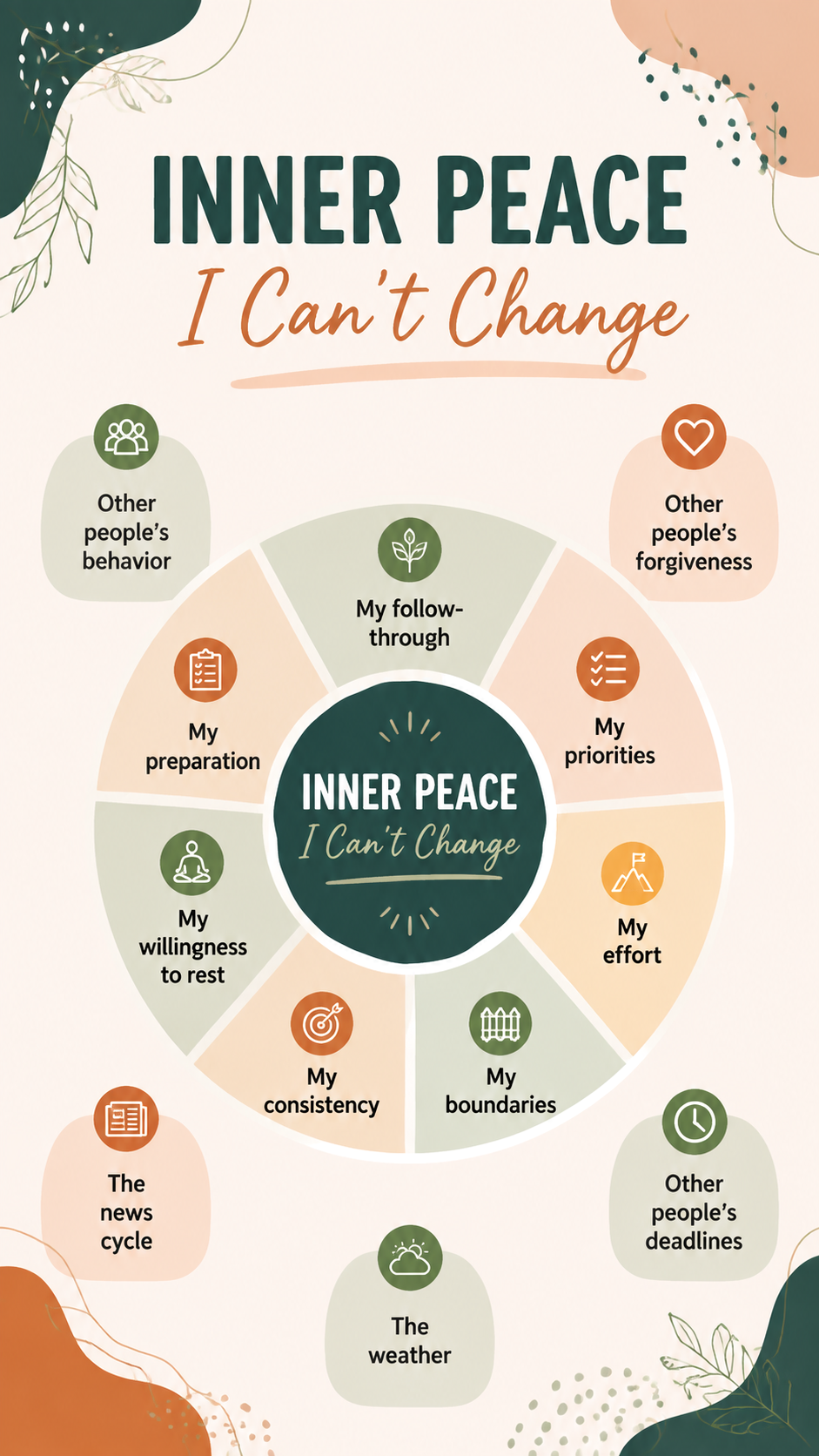
The idea behind mental clarity is simple: some parts of life belong to you, while others belong to the world around you. Your effort, priorities, preparation, consistency, and willingness to rest are within your influence. Other people’s actions, opinions, forgiveness, deadlines, and choices are not yours to manage.
Key Takeaways
- Inner peace grows when you focus on what you can control.
- Healthy boundaries protect your energy and emotional balance.
- Mindfulness helps reduce stress and improve mental clarity.
- Letting go of outside expectations creates more calm.
- Small daily habits can support long-term personal growth.
Understanding the Difference Between Control and Acceptance
One of the most important steps toward inner peace is recognizing the difference between influence and control. Many people experience stress because they spend emotional energy trying to change things that are outside their power.
You cannot control another person’s behavior, honesty, forgiveness, growth pace, or decisions. You can only control your own response, attitude, choices, and actions. This shift in perspective creates space for emotional freedom.
Important: Peace does not come from having a perfect life. It comes from developing the ability to remain grounded even when life feels uncertain. Focusing on your own choices allows you to build confidence and emotional strength.
Why Trying to Control Everything Creates Stress
The desire for certainty is natural. People often want to predict outcomes, receive approval, or fix situations before they become uncomfortable. However, constantly worrying about external factors can create anxiety and mental exhaustion.
When your thoughts are focused on things you cannot change, you may lose awareness of the areas where you actually have power. Redirecting your attention toward your own habits and choices can create a stronger sense of balance.
- Instead of worrying about someone’s opinion, focus on your authenticity.
- Instead of chasing perfection, focus on consistent progress.
- Instead of replaying the past, focus on the next helpful action.
The Areas Where You Can Create Inner Peace
Building mental clarity starts with identifying the parts of your life where your choices matter. The goal is not to become disconnected from the world. The goal is to become more intentional with your energy.
Your Effort and Personal Growth
Your effort is one of the strongest areas you can influence. While results may not always appear immediately, consistent action helps you move forward. Whether you are learning a new skill, improving your health, or creating better habits, your commitment matters.
Small Actions Create Lasting Change
Personal transformation rarely happens through one dramatic moment. It is usually created through small daily decisions. Taking time to reflect, organize your priorities, and care for your well-being can gradually improve your emotional state.
Your Boundaries and Priorities
Healthy boundaries are essential for maintaining inner peace. They help you protect your time, energy, and emotional health without needing to control other people.
Setting boundaries may mean saying no when your schedule is full, creating space for rest, or choosing relationships that support your well-being. Boundaries are not about pushing people away. They are about respecting yourself.
Practical Ways to Improve Mental Clarity Daily
Inner peace is not only a mindset. It is also supported by daily practices that help your mind slow down and reconnect with the present moment.
Practice Mindfulness
Mindfulness helps you become aware of your thoughts without automatically reacting to them. A few quiet moments of breathing, reflection, or meditation can help you notice patterns that create stress.
Simple mindfulness practices include:
- Taking a few deep breaths before responding to stressful situations.
- Noticing your emotions without judging yourself.
- Spending time away from constant digital distractions.
- Writing down thoughts to clear mental clutter.
Create Space for Rest
Rest is not a sign of weakness or laziness. It is an important part of maintaining focus, creativity, and emotional balance. A tired mind often reacts more strongly to everyday challenges.
Allowing yourself time to pause can improve your ability to handle responsibilities with patience and clarity.
Why This Matters
Many sources of stress come from trying to manage things that were never yours to carry. Learning to focus on your own actions creates emotional space for confidence, calm, and personal growth.
Letting Go of What You Cannot Change
Letting go does not mean giving up. It means accepting reality while choosing how you want to respond. This mindset can help you stop fighting situations that drain your energy.
You may not be able to change someone’s behavior, the news cycle, the weather, or another person’s timeline. However, you can choose how much attention and emotional energy you give those things.
Building Emotional Freedom
Emotional freedom comes from understanding that your peace belongs to you. Other people may influence your experiences, but they do not have to control your inner state.
When you focus on self-awareness, healthy habits, and realistic expectations, you create a stronger foundation for happiness and resilience.
Simple Habits for a Calmer Mindset
Developing inner peace is an ongoing journey. These small habits can support a calmer and more focused lifestyle:
- Start your day with a clear intention.
- Spend less time comparing yourself to others.
- Focus on progress instead of perfection.
- Protect your personal boundaries.
- Make time for activities that restore your energy.
At a Glance
- Focus on what you can control.
- Release responsibility for other people’s choices.
- Create boundaries that protect your peace.
- Practice mindfulness and self-care.
Conclusion: Choose Peace Through Awareness and Action
Inner peace is created by becoming intentional about where you place your attention. You cannot control every person, event, or outcome, but you can always choose your response.
By focusing on your effort, priorities, preparation, consistency, and well-being, you create a calmer relationship with yourself and the world around you. Mental clarity grows when you stop carrying what was never yours to control.
Remember that peace is not a destination you reach once. It is a daily practice built through awareness, acceptance, and small meaningful choices.
Tags
Inner Peace
Mental Clarity
Mindfulness
Self Care
Stress Relief
Personal Growth
Emotional Balance