How to Choose the Right Onion for Every Recipe 8 Types Explained
Choosing the right onion can make a surprising difference in the flavor, texture, and overall success of your favorite recipes. Some onions add a rich, savory foundation to soups and stews, while others bring sweetness to roasted vegetables, crispness to fresh salads, or a mild finishing touch to tacos and sandwiches. With so many varieties available at the grocery store, knowing which onion to use can help you cook with greater confidence and get better results from everyday ingredients.
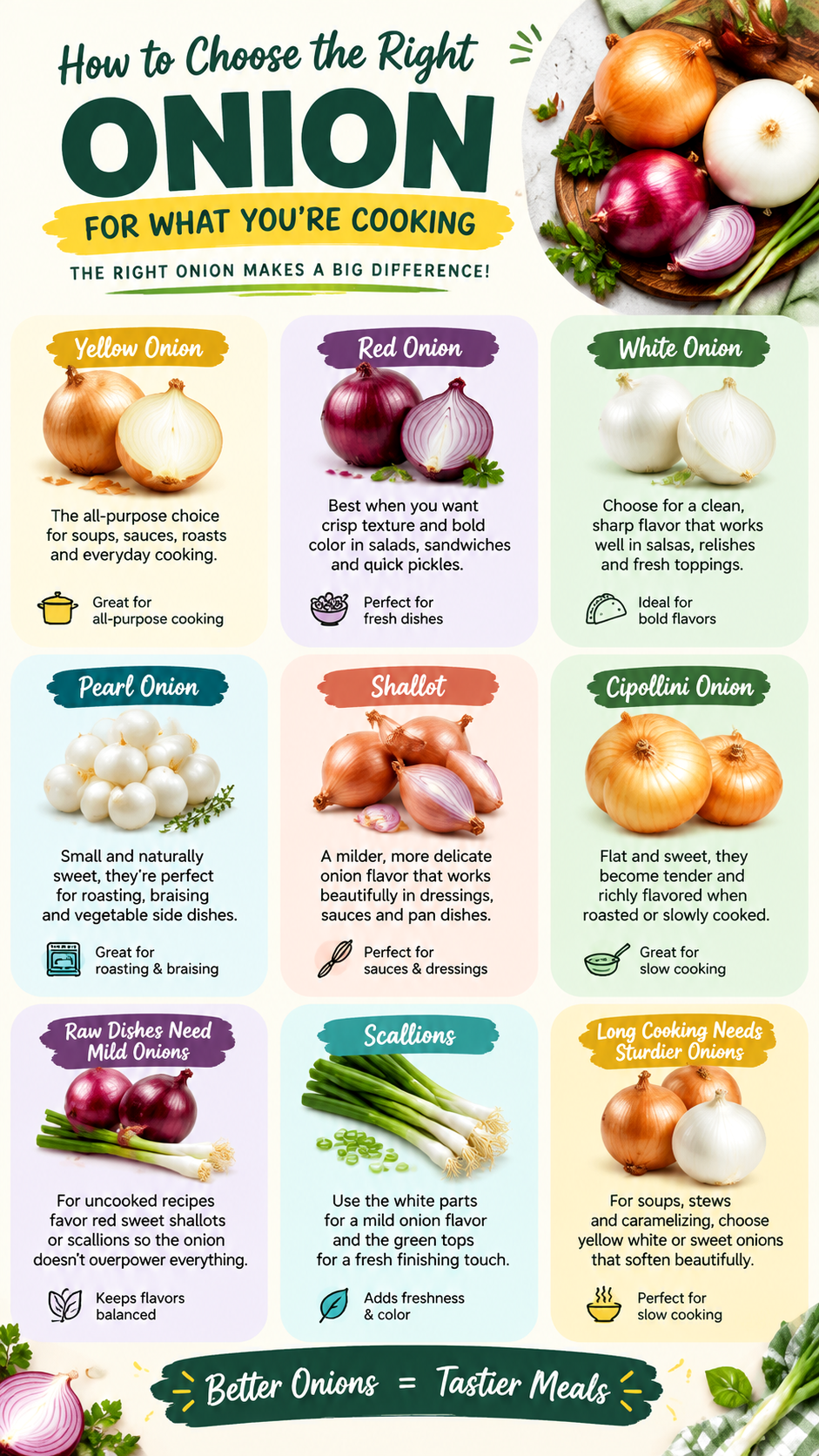
Yellow onions, sweet onions, red onions, white onions, pearl onions, shallots, cipollini onions, and scallions each have their own strengths. Although many onion varieties can be substituted for one another, understanding their differences makes it easier to choose the best option for your cooking method and desired flavor.
Key Takeaways
- Yellow onions are versatile and excellent for soups, sauces, stews, and everyday cooking.
- Sweet onions are ideal for caramelizing, roasting, burgers, and sandwiches when you want a milder flavor.
- Red onions add color and crisp texture to salads, salsas, sandwiches, and quick pickles.
- White onions offer a sharp, clean flavor that works well in tacos, fresh salsa, and other savory dishes.
- Shallots and scallions provide delicate onion flavor for dressings, sauces, garnishes, and fresh recipes.
- Pearl and cipollini onions are especially useful for roasting, braising, and serving as flavorful vegetable side dishes.
1. Yellow Onions: The Best All-Purpose Choice
Yellow onions are among the most useful ingredients to keep in your kitchen. Their balanced flavor, firm texture, and ability to develop sweetness during cooking make them a reliable choice for countless recipes. If you are unsure which onion a recipe requires, a yellow onion is often a sensible starting point.
When raw, yellow onions have a noticeable sharpness. Cooking softens that intensity and gradually brings out a deeper, sweeter flavor. As they cook, their natural sugars contribute to the rich aroma and savory foundation that makes many homemade meals taste so satisfying.
Best Uses for Yellow Onions
- Homemade soups and broths
- Tomato sauces and pasta dishes
- Beef, chicken, and vegetable stews
- Roasted vegetables and sheet-pan meals
- Meatloaf, casseroles, and savory fillings
- Slow-cooked dishes and caramelized onions
Yellow onions are particularly useful as a starting ingredient. Chopping one and cooking it gently in a little oil or butter can build a flavorful base before you add garlic, herbs, vegetables, meat, or liquids.
Pro Tip: For a richer flavor, cook chopped yellow onions over medium-low heat until soft and lightly golden before adding the remaining ingredients. Avoid rushing the process with excessive heat, which can cause the edges to burn before the onions become tender.
2. Sweet Onions: For Mild Flavor and Golden Caramelization
Sweet onions are a great choice when you want a gentler onion flavor without losing the familiar aroma and texture onions bring to a dish. They are often milder than standard yellow onions and are especially appealing in recipes where onion is a noticeable part of the finished meal.
These onions work well raw in sandwiches and burgers, where their mild taste complements cheese, fresh vegetables, sauces, and grilled ingredients. They are also delicious roasted or slowly cooked until tender and golden.
When to Choose Sweet Onions
- Burgers and grilled sandwiches
- Fresh salads and vegetable platters
- Roasted onion side dishes
- Caramelized onions for toast and sandwiches
- Grilled vegetables and barbecue meals
Sweet onions contain relatively high amounts of water and can be less pungent than some other varieties. Their exact flavor depends on the variety and growing conditions, so taste a small piece if you plan to use one in a raw dish.
How to Caramelize Sweet Onions
- Peel the onion and slice it into evenly sized strips.
- Heat a skillet over medium-low heat with a small amount of butter or olive oil.
- Add the onion and stir occasionally as it begins to soften.
- Continue cooking slowly, reducing the heat if the onion starts browning too quickly.
- Cook until the strips are tender and golden brown, adding a small splash of water if the pan becomes too dry.
Remember that caramelization takes time. A sweet onion can taste wonderful when cooked slowly, but simply using a sweet variety does not automatically produce deeply caramelized onions. Gentle heat and patience are what create that concentrated flavor.
3. Red Onions: The Favorite for Fresh Dishes
Red onions are easy to recognize by their purple-red outer layers and attractive rings of color inside. Their vivid appearance makes them especially popular in fresh recipes, where their color adds visual appeal without requiring complicated preparation.
The flavor of a red onion is generally sharp, slightly sweet, and pleasantly pungent. Depending on the individual onion, it may taste mild enough for a salad or strong enough to stand out in a sandwich. Thin slicing helps distribute its flavor evenly and makes the texture easier to enjoy.
Best Ways to Use Red Onions
- Garden salads and grain bowls
- Fresh tomato salsa and other uncooked salsas
- Burgers, wraps, and sandwiches
- Tacos and Mediterranean-inspired dishes
- Quick-pickled onions
- Fresh vegetable platters
Red onions are especially useful when a dish needs both crunch and color. Their purple rings can brighten a simple salad, while a few thin slices can add contrast to tacos, grilled vegetables, or a sandwich filled with creamy ingredients.
A Simple Trick for Milder Red Onions
If raw red onion tastes too strong, slice it thinly and soak the slices in cold water for about 10 minutes. Drain and pat them dry before adding them to your recipe. This can reduce some of their sharpness while preserving their crisp texture.
For a tangier result, try quick-pickling red onion slices in vinegar with a little water, salt, and sugar. After a short resting period, the onions become pleasantly tangy and make an excellent topping for sandwiches, tacos, salads, and grain bowls.
4. White Onions: A Sharp, Clean Flavor
White onions have pale skin and white flesh, with a crisp texture and a distinctly savory flavor. They are particularly useful in recipes where the onion is meant to provide a fresh, noticeable bite rather than simply melt into a sauce.
They are a popular option for many Mexican-inspired dishes, including tacos, fresh salsas, and other preparations featuring chopped raw onion. Their clean appearance also makes them useful in dishes where you prefer not to introduce the purple color of red onions.
Best Uses for White Onions
- Fresh salsa and pico de gallo
- Tacos, burritos, and quesadillas
- Chopped onion toppings for savory dishes
- Relishes and flavorful condiments
- Soups, sauces, and cooked vegetable dishes
White onions can be used both raw and cooked. Their sharpness may be more noticeable when raw, while cooking softens their bite and develops a sweeter, more rounded flavor.
If you are making fresh salsa, chop the onion finely so that it blends with tomatoes, chilies, herbs, and citrus juice. Smaller pieces distribute the flavor more evenly, allowing every bite to contain a balanced combination of ingredients.
5. Pearl Onions: Small, Tender, and Perfect for Side Dishes
Pearl onions are small, round onions that are often sold peeled or in frozen packages. Their compact size makes them convenient for recipes where you want whole or nearly whole onions instead of large chopped pieces.
They have a mild onion flavor that becomes sweeter and more delicate when cooked. Their shape also makes them attractive on a plate, especially when served alongside roasted vegetables, meat, poultry, or hearty vegetarian dishes.
How to Cook Pearl Onions
- Roasting: Toss them with olive oil, salt, pepper, and herbs, then roast until tender and lightly browned.
- Braising: Cook them gently in broth or a flavorful sauce until soft.
- Stews: Add them to hearty dishes for small, sweet bursts of onion flavor.
- Vegetable sides: Glaze them with a little butter and cooking liquid for a simple accompaniment.
Frozen pearl onions are especially convenient because they are often already peeled. Depending on the recipe, you may be able to add them directly to the pan without thawing first. Follow the package instructions and allow enough cooking time for the centers to become tender.
When using fresh pearl onions, removing the skins can be the most time-consuming part. Briefly blanching them in boiling water and transferring them to cold water can help loosen the skins, making peeling easier.
6. Shallots: A Delicate Choice for Sauces and Dressings
Shallots resemble small, elongated onions and often grow in clusters. Their flavor is generally more delicate and nuanced than that of a standard yellow onion, making them particularly useful in recipes where a strong onion taste might overpower the other ingredients.
When finely chopped and cooked gently, shallots create an aromatic base for sauces and pan dishes. They are also excellent raw in salad dressings, vinaigrettes, and marinades, where their mild pungency adds complexity without dominating the finished recipe.
Best Recipes for Shallots
- Homemade vinaigrettes and salad dressings
- Pan sauces for vegetables, poultry, and meat
- Roasted vegetables and savory side dishes
- Marinades and herb-based sauces
- Finely chopped toppings and garnishes
- Gentle sautés and delicate pasta dishes
To prepare shallots, remove the papery outer skin and slice or mince the flesh according to your recipe. Because shallots are relatively small, a fine mince is often all you need to flavor an entire dressing or sauce.
Expert Insight: Shallots are especially useful when you want onion flavor to support other ingredients rather than become the main attraction. Start with a small amount in dressings and sauces, then adjust to taste. Their flavor is concentrated enough that a little can go a long way.
7. Cipollini Onions: Flat, Sweet, and Delicious Roasted
Cipollini onions are small, flattened onions known for their naturally sweet flavor and attractive shape. Their name is associated with Italian cooking, and they are particularly appealing when served whole or in halves as part of a roasted vegetable dish.
These onions can become exceptionally tender during slow cooking. Their natural sweetness develops as they soften, making them a wonderful accompaniment to roasted vegetables, baked dishes, and hearty main courses.
The Best Ways to Prepare Cipollini Onions
- Roasted: Coat with olive oil, salt, pepper, and fresh herbs before roasting until tender.
- Slow-cooked: Cook gently in a covered pan with a little liquid until soft and flavorful.
- Glazed: Simmer with a modest amount of butter, broth, and a touch of sweetness if desired.
- Served whole: Present them alongside roasted potatoes, carrots, mushrooms, or other vegetables.
Because cipollini onions are naturally compact, they can be served as a complete side dish rather than chopped into a larger recipe. Their flattened shape also helps them cook evenly when cut in half and placed on a baking tray.
A Simple Roasting Method
- Preheat your oven to approximately 400°F (200°C).
- Peel the onions and trim their ends, keeping enough of the root area to help them hold together if desired.
- Toss with olive oil, salt, pepper, and thyme or rosemary.
- Arrange in a single layer in a roasting dish.
- Roast for about 25 to 40 minutes, depending on their size, turning as needed until tender and browned.
Cooking times can vary, so check the onions with a knife. They are ready when the centers are soft and the outside has developed a little color.
8. Scallions: Fresh Flavor for Everyday Finishing Touches
Scallions, also called green onions, are long, slender vegetables with white bases and green tops. Unlike mature bulb onions, they are harvested while their stems remain narrow, giving them a fresh appearance and a mild, versatile flavor.
Both the white and green portions are edible, but they have slightly different uses. The white parts generally have a more pronounced onion flavor and are useful in quick sautés, stir-fries, and savory fillings. The green tops are milder and make an attractive garnish for finished dishes.
How to Use Scallions in Your Cooking
- Sprinkle sliced green tops over soups and noodles.
- Add chopped scallions to omelets and scrambled eggs.
- Use them in stir-fries, fried rice, and savory pancakes.
- Mix them into dips, dressings, and creamy sauces.
- Scatter them over baked potatoes, tacos, and grain bowls.
- Use the white portions as a mild aromatic base for quick-cooking dishes.
Scallions are particularly helpful when you want fresh onion flavor without the preparation time required for a large bulb onion. Simply trim the roots, rinse away any dirt, pat dry, and slice into rounds or thin diagonal pieces.
For the best appearance, add the green tops near the end of cooking or sprinkle them over the finished dish. Prolonged cooking can dull their color and soften their fresh flavor.
Which Onion Should You Choose for Raw Dishes or Long Cooking?
One of the easiest ways to select an onion is to consider how long it will cook and whether it will be served raw. Fresh dishes often benefit from onions with a crisp texture and a flavor that complements the other ingredients. Long-cooked dishes usually need onions that can soften gradually and build a deeper savory base.
Best Onions for Raw Recipes
When making salads, sandwiches, fresh salsa, or other uncooked dishes, consider these options:
- Red onions: Ideal when you want bright color, crunch, and a noticeable onion flavor.
- Sweet onions: A good choice when you prefer a milder bite in sandwiches or salads.
- Shallots: Excellent for dressings, vinaigrettes, and finely chopped raw preparations.
- Scallions: Useful for fresh garnishes, dips, and recipes that need a gentle onion note.
- White onions: Suitable for fresh salsas and recipes where a sharper flavor is welcome.
Best Onions for Long Cooking
For soups, stews, sauces, roasts, and other dishes that spend more time on the stove or in the oven, these varieties are particularly useful:
- Yellow onions: A dependable option for building flavor in almost any savory dish.
- Sweet onions: Ideal when you want a gentle, sweet result in roasted or slowly cooked preparations.
- White onions: Useful in broths, sauces, and cooked dishes that benefit from their clean flavor.
- Pearl onions: Great for braises, stews, and small whole-onion side dishes.
- Cipollini onions: Excellent for slow roasting and serving whole alongside a main course.
Why This Matters
Cooking changes an onion’s flavor and texture. Raw onions tend to taste sharper and feel crunchier, while cooked onions become softer and generally sweeter. Slow cooking can also create deeper, more complex flavors. Choosing a variety that suits your cooking method helps you control the balance of your dish.
How to Choose Fresh Onions at the Grocery Store
Knowing the different onion varieties is useful, but selecting fresh onions is just as important. A good onion should feel firm, have a dry outer skin, and show no obvious signs of decay.
What to Look For
- Firmness: Choose onions that feel solid when gently squeezed.
- Dry outer skin: Papery, dry skin is normal for many mature bulb onions.
- Minimal damage: Avoid onions with deep cuts, extensive bruising, or soft, wet areas.
- Fresh aroma: A strong sour or rotten smell can indicate spoilage.
- Appropriate size: Select small onions for whole-roasting recipes and larger ones when you need plenty of chopped onion.
A little dried skin or a small amount of natural variation in color is generally normal. However, soft spots, visible mold, leaking moisture, or a persistent unpleasant smell are signs to choose another onion.
How to Store Different Onion Varieties
Proper storage helps preserve onion quality and reduces unnecessary food waste. The best storage method depends on whether the onion is whole or cut and whether it is a mature bulb onion or a fresh green variety.
Whole Bulb Onions
Store whole yellow, red, white, and sweet onions in a cool, dry, well-ventilated place away from direct sunlight. A basket or open container that allows air to circulate is often a practical choice. Avoid storing whole onions in sealed plastic bags where moisture can accumulate.
Sweet onions may have a shorter storage life than some standard storage onions, so check them regularly and use any that are beginning to soften. Keep onions separate from potatoes when possible because the storage conditions that suit each vegetable differ, and moisture and gases can contribute to faster deterioration.
Cut Onions and Fresh Scallions
Once an onion has been cut or peeled, place it in a clean, covered container and refrigerate promptly. Use refrigerated cut onions within a few days for the best quality, following food-safety guidance and discarding any that show signs of spoilage.
Scallions should be refrigerated to help preserve their crispness. Remove damaged leaves, keep them in a suitable produce container, and wash them just before use unless your storage method specifically calls for clean, dry produce.
Shallots, pearl onions, and cipollini onions generally benefit from the same basic approach as other mature bulb onions when they are whole and dry. Follow package instructions for peeled, packaged, or frozen products.
Can You Substitute One Type of Onion for Another?
Yes. In many recipes, you can replace one onion variety with another, especially when the onion is cooked as part of a larger dish. However, substitutions may change the sweetness, sharpness, texture, color, or appearance of the final result.
Easy Onion Substitutions
- Yellow for white onions: A practical swap in soups, stews, sauces, and cooked dishes.
- White for yellow onions: Useful in many cooked recipes, although the flavor may be sharper.
- Red for white onions: Suitable for fresh salsa and salads when you do not mind the purple color.
- Sweet for yellow onions: A good option when a milder flavor is preferred, particularly in roasting and caramelizing.
- Shallots for bulb onions: Useful in dressings and delicate sauces, but remember that shallots have a different flavor and size.
- Scallions for bulb onions: Best for quick-cooking dishes and garnishes rather than recipes that rely on a large amount of cooked onion.
When replacing pearl or cipollini onions with a standard bulb onion, remember that the shape and texture will be different. A chopped yellow onion can add similar savory flavor to a stew, but it will not provide the same appearance as whole, tender pearl onions.
For most everyday recipes, start with a similar amount of onion by weight or volume, then adjust to taste. If the onion is served raw, use a smaller amount initially when substituting a stronger variety.
Quick Points: Choosing the Right Onion
- For everyday cooking: Choose yellow onions for their versatility.
- For a milder bite: Try sweet onions in sandwiches, burgers, and roasted dishes.
- For colorful raw recipes: Use red onions in salads, salsas, and quick pickles.
- For delicate sauces: Reach for shallots, especially when making dressings or pan sauces.
- For fresh finishing touches: Slice scallions and add their green tops just before serving.
Conclusion: Make Every Onion Count
Choosing the right onion does not need to be complicated. Once you understand how each variety tastes and behaves during cooking, you can make better decisions at the grocery store and create dishes with more balanced flavor and texture.
Yellow onions are a dependable everyday staple, sweet onions offer a gentler taste, red onions bring color and crunch, and white onions provide a clean, sharp flavor. Shallots are excellent for delicate sauces and dressings, while pearl and cipollini onions shine in roasted and braised dishes. Scallions round out the list with a fresh, mild flavor that works beautifully as both an ingredient and a garnish.
The next time you prepare dinner, think about the role you want your onion to play. Do you need a savory foundation for a soup, a crisp topping for tacos, a sweet roasted side dish, or a delicate aromatic for a dressing? Let the recipe guide your choice, and do not be afraid to experiment with different varieties.
With these simple cooking tips, your kitchen can make better use of every onion. Keep this guide handy, try a new variety in your next meal, and discover which onions become your favorite ingredients for everyday cooking.
Tags
Onion Guide
Cooking Tips
Onion Varieties
Kitchen Hacks
Food Preparation
Home Cooking
Vegetable Guide
Recipe Tips