How to Let Go of the Past Find Peace Emotional Healing Tips
Letting go is one of the most powerful steps you can take toward creating a calmer, healthier, and more fulfilling life. Many people hold onto past experiences, painful memories, old habits, or situations they cannot change because releasing them feels difficult. However, true emotional growth begins when you learn how to accept what happened, release what weighs you down, and make space for new possibilities.
The journey of letting go is not about forgetting your past or pretending that difficult moments never existed. It is about choosing peace over resistance and focusing your energy on what you can control. Whether you are healing from a challenging relationship, overcoming negative thoughts, or simply seeking personal growth, learning how to let go can transform the way you experience everyday life.
Key Takeaways
- Letting go helps create emotional freedom and inner peace.
- Acceptance allows you to move forward without fighting reality.
- Releasing what you cannot control reduces stress and worry.
- Forgiveness can help you heal from past experiences.
- Creating space for new opportunities begins with releasing old burdens.
What Does It Really Mean to Let Go?
Many people misunderstand the meaning of letting go. They assume it means giving up, ignoring their feelings, or pretending something did not matter. In reality, letting go is an act of self-respect and emotional awareness.
When you let go, you are not removing the importance of a person, experience, or chapter in your life. Instead, you are releasing the emotional weight attached to it. You allow yourself to remember without being controlled by the past.
Important: Letting go does not erase your history. It simply means your past no longer has the power to determine your present emotions, decisions, and future direction.
Why Holding On Can Feel So Heavy
Holding onto painful situations often creates emotional exhaustion. Replaying old conversations, worrying about outcomes, or wishing things had happened differently can keep your mind stuck in a cycle of frustration.
Common things people struggle to release include:
- Past mistakes and regrets
- Relationships that no longer support their growth
- Fear of change and uncertainty
- Negative beliefs about themselves
- Situations outside their control
The longer you carry emotional burdens, the harder it becomes to focus on the opportunities available in the present moment.
How to Let Go of What No Longer Serves You
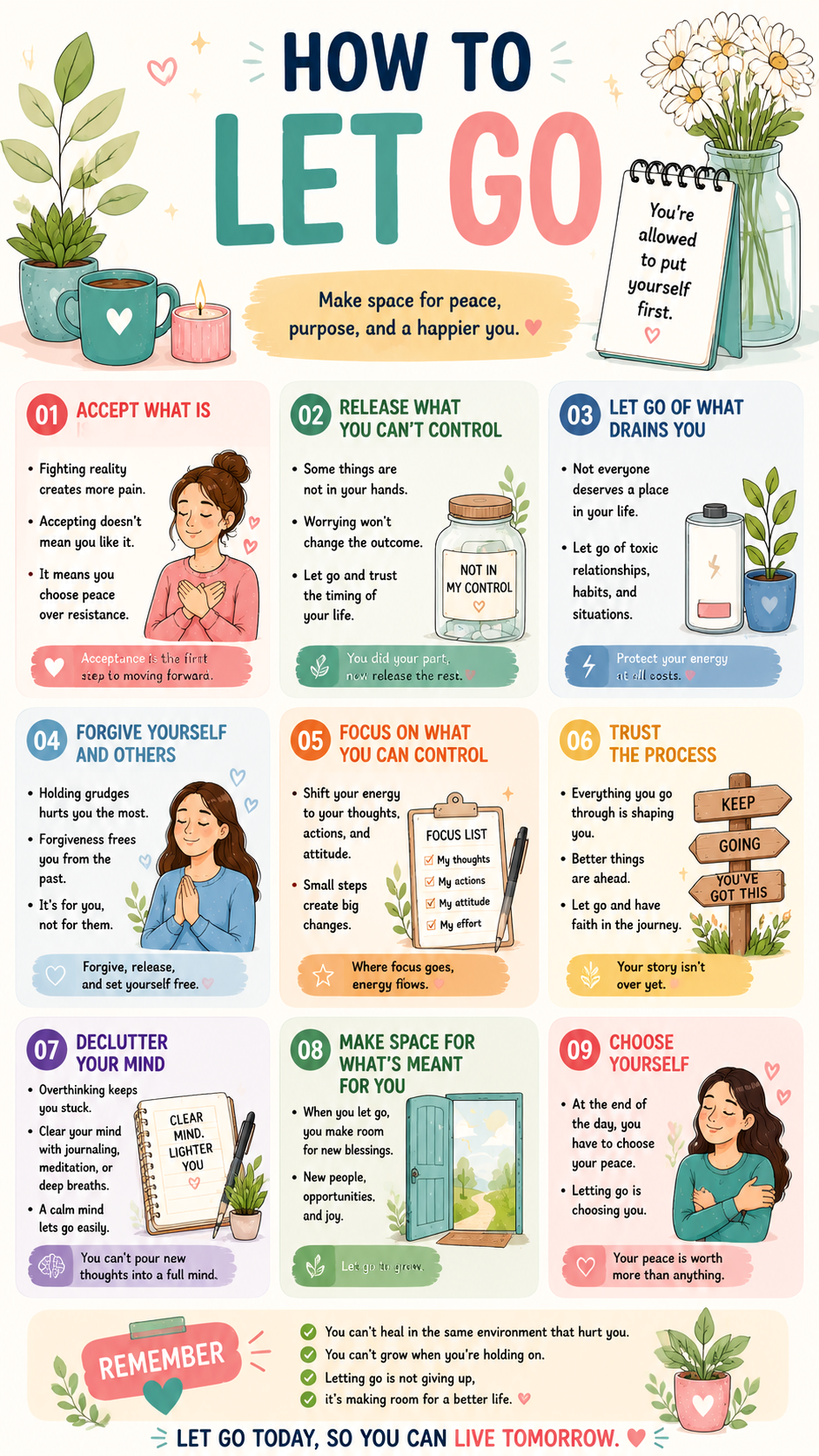
1. Accept What Is Instead of Fighting Reality
Acceptance is the first step toward emotional freedom. It does not mean you approve of everything that happened. It simply means you stop wasting energy fighting something that has already occurred.
When you accept reality, you create room for healing. Instead of asking, “Why did this happen?” repeatedly, you can begin asking, “What can I learn from this experience?”
Practice Acceptance With These Simple Steps
- Acknowledge your emotions without judging them.
- Allow yourself time to process difficult feelings.
- Focus on what you can do today instead of what you cannot change.
2. Release What You Cannot Control
A major part of learning how to let go is understanding the difference between responsibility and control. You can control your choices, actions, and attitude, but you cannot control another person’s behavior, thoughts, or decisions.
Constantly worrying about things outside your control drains your energy. Releasing that need for certainty allows you to feel lighter and more confident.
3. Let Go of Relationships and Habits That Drain You
Not everything that stays in your life deserves to remain there. Some relationships, routines, and thought patterns may prevent you from becoming the person you want to be.
Protecting your energy is an important part of personal growth. Letting go of unhealthy connections does not make you selfish. It means you are creating healthier boundaries.
- Notice how certain people make you feel after interactions.
- Identify habits that keep you stuck.
- Choose environments that support your peace and growth.
The Power of Forgiveness in Emotional Healing
Forgiveness is one of the most important parts of letting go. It allows you to release anger, disappointment, and emotional pain that may have been affecting your happiness.
Forgiving someone does not mean accepting harmful behavior or allowing someone to hurt you again. Forgiveness is about freeing yourself from carrying the emotional burden.
Important: Forgiveness is a gift you give yourself. It creates space for healing, peace, and a healthier relationship with your own emotions.
Ways to Practice Forgiveness
- Write down what you need to release.
- Recognize that everyone has imperfections.
- Focus on your future instead of repeating past pain.
- Show yourself compassion for past choices.
Creating Space for a Better Future
When you release what no longer belongs in your life, you create room for new experiences, relationships, and opportunities. A cluttered mind often leaves little space for creativity, happiness, and personal development.
Think of letting go as making room for growth. Just like clearing an overcrowded space allows you to organize and refresh your surroundings, emotional decluttering allows you to build a more peaceful life.
Focus on What You Can Control
Your attention is one of your greatest resources. Where your focus goes, your energy follows. Instead of spending your energy on regrets or worries, redirect it toward actions that improve your life.
- Create small daily goals.
- Practice gratitude.
- Build healthy routines.
- Spend time with supportive people.
- Invest in your personal growth.
Why This Matters
Letting go creates emotional space for the life you want to build. When you release unnecessary weight, you can approach new chapters with more confidence, clarity, and peace.
- Peace grows when resistance decreases.
- Healing happens when you allow yourself to move forward.
- Your future deserves your full attention.
Simple Daily Practices to Help You Let Go
Letting go is not always a one-time decision. Often, it is a daily practice. Small actions repeated consistently can help you develop emotional strength and resilience.
Try These Mindful Habits
- Spend a few minutes journaling your thoughts.
- Take deep breaths when emotions feel overwhelming.
- Practice gratitude for what is currently going well.
- Create boundaries that protect your peace.
- Remind yourself that growth takes time.
At a Glance: Letting Go Reminders
Quick Points
- Release what you cannot control.
- Choose peace over constant resistance.
- Forgive yourself and others.
- Create space for new beginnings.
Conclusion: Let Go Today and Create Space for Tomorrow
Learning how to let go is a powerful act of self-care. It allows you to stop carrying emotional burdens that no longer support your happiness and start building a life focused on peace, growth, and possibility.
You do not need to have everything figured out before moving forward. Every small step toward acceptance, forgiveness, and self-awareness helps you create a healthier relationship with yourself and your future.
The past may have shaped your story, but it does not have to define your next chapter. Release what is heavy, protect your energy, and make space for the life you are ready to create.
Tags
How to Let Go
Emotional Healing
Self Growth
Inner Peace
Mindset Shift
Self Love
Personal Growth