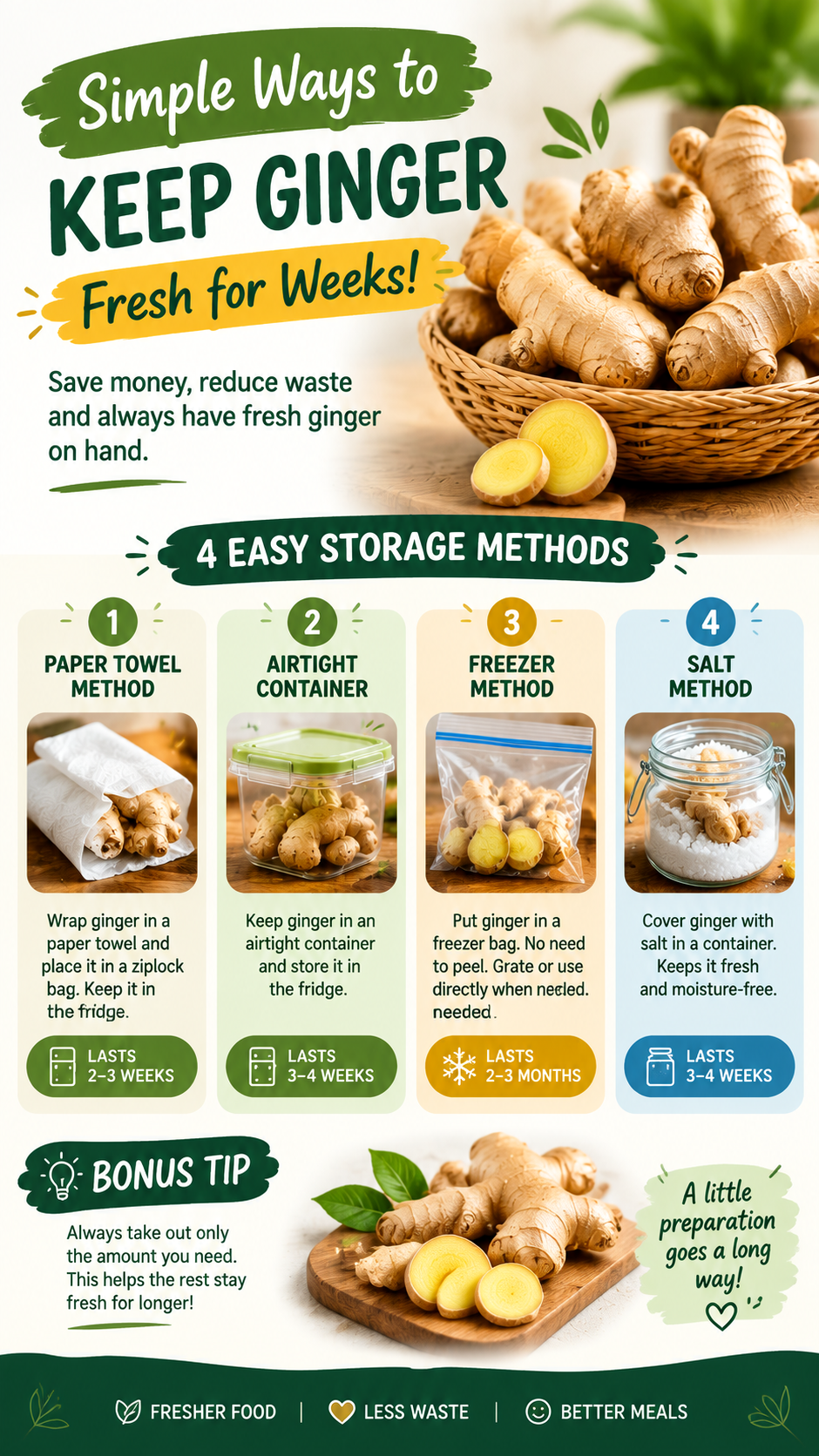
How to Store Ginger and Keep It Fresh for Weeks 4 Easy Kitchen Storage Tips
Fresh ginger adds a warm, zesty flavor to stir-fries, soups, teas, marinades, and countless homemade recipes. But if you have ever bought a fresh ginger root only to find it wrinkled, shriveled, or moldy a few days later, you know how frustrating food waste can be. The good news is that keeping ginger fresh for weeks is easier than you might think. With a few simple kitchen storage hacks, you can preserve its flavor, texture, and aroma while making meal preparation more convenient.
Whether you use ginger every day or only occasionally, choosing the right storage method can make a noticeable difference. From wrapping ginger in paper towels to storing it in an airtight container, freezing it for long-term use, or experimenting with salt storage, there are several practical approaches to consider. The best method depends on how quickly you use ginger, how much space you have in your kitchen, and whether you prefer to keep it whole or prepare it in advance.
Key Takeaways
- Store fresh, unwashed ginger in the refrigerator to help preserve its firmness and flavor.
- Use a paper towel and a suitable storage bag to manage excess moisture.
- Keep ginger in an airtight container in the fridge when you want a simple, convenient storage option.
- Freeze whole ginger or sliced pieces for longer storage and easy meal preparation.
- Avoid washing ginger before storage, and remove only the amount you need.
- Check stored ginger regularly and discard pieces showing mold, sliminess, or signs of spoilage.
Why Proper Ginger Storage Matters
Fresh ginger is a flavorful ingredient, but its quality gradually declines when it is exposed to unsuitable conditions. Too much moisture can encourage mold, while excessive dryness can cause the root to lose firmness and become shriveled. Frequent temperature changes and poor storage habits may also shorten its useful life.
Learning how to store ginger properly helps you get more value from every purchase. Instead of throwing away unused pieces, you can keep them ready for future meals. Proper storage also makes it easier to maintain an organized refrigerator and reduce unnecessary grocery trips.
Another advantage is convenience. When ginger is stored correctly, you can quickly grate it into a sauce, slice it for tea, or add it to your favorite curry without having to search for a fresh replacement.
How to Choose Fresh Ginger Before Storing It
Good storage begins at the grocery store or market. Look for ginger roots that feel firm and heavy for their size. The skin should be relatively smooth and intact, although some natural wrinkles and small marks are normal.
Avoid pieces that feel unusually soft, look deeply shriveled, or have visible mold. Fresh ginger should have a clean, spicy aroma when cut. If a piece smells unpleasant or appears rotten, choose another one.
- Firm texture: Fresh ginger should feel solid rather than mushy.
- Healthy skin: Look for intact skin without extensive damage.
- Fresh aroma: The cut surface should smell pleasantly spicy.
- Minimal damage: Choose roots without large soft spots or signs of decay.
There is no need to buy a large quantity unless you use ginger frequently. Purchasing an amount that suits your cooking habits makes storage easier and helps prevent waste.
1. Store Ginger in a Paper Towel
Wrapping fresh ginger in a paper towel is a simple refrigerator storage technique. The paper helps absorb surface moisture, while a suitable storage bag provides an additional barrier against excessive drying.
This method is particularly useful if you buy fresh ginger for weekly cooking and want to keep it accessible without using a complicated storage system.
What You Need
- Fresh ginger root
- A clean, dry paper towel
- A resealable food storage bag or suitable container
- A refrigerator with a consistently cool temperature
Step-by-Step Instructions
- Inspect the ginger. Remove any loose dirt with a dry cloth or soft brush.
- Keep it unwashed. Avoid rinsing the root before storage because lingering water can encourage spoilage.
- Wrap it gently. Cover the ginger with a clean, dry paper towel.
- Place it in a storage bag. Put the wrapped root inside a resealable bag or suitable container.
- Refrigerate it. Store the ginger in the refrigerator and keep it away from warm areas of the kitchen.
- Check it regularly. Replace the paper towel if it becomes damp, and inspect the ginger for spoilage.
Important: The goal is to manage moisture, not trap wetness around the ginger. Always start with a dry root and dry paper towel. If condensation builds up inside the bag, open it briefly while checking the ginger, replace damp wrapping, and return the root to suitable storage.
How Long Does It Last?
Whole ginger stored correctly in the refrigerator can often remain usable for several weeks, although its actual shelf life depends on freshness at purchase, refrigerator temperature, moisture, and handling. The two to three weeks shown in many kitchen storage guides is a practical estimate, not a guarantee.
For the best results, keep the ginger whole until you need it. Every cut surface creates another area where moisture loss and spoilage can begin.
2. Keep Ginger in an Airtight Container
If you prefer a neat, reusable kitchen storage solution, an airtight container can be a convenient option. A clean container helps protect ginger from food odors and limits exposure to the refrigerator’s dry air.
This method works well for households that cook regularly and want to keep ginger in a dedicated spot rather than loose in a refrigerator drawer.
How to Store Ginger in an Airtight Container
- Select firm ginger without visible mold or soft, wet areas.
- Brush away loose dirt and leave the root unwashed.
- Make sure the container is clean and completely dry.
- Place the ginger inside without packing it tightly.
- Close the lid and refrigerate the container.
- Open it when you need ginger and inspect the contents before returning the remaining root to the refrigerator.
Airtight containers are especially helpful when you want to keep different ingredients organized. Choose a container that fits the amount of ginger you normally use, rather than one that takes up unnecessary refrigerator space.
Prevent Moisture Buildup
An airtight container is not automatically better if moisture gets trapped inside. Water droplets can collect when warm or damp ginger is placed in a cold container. That is why the root and container should be dry before storage.
If you notice condensation, inspect the ginger, dry the container, and replace any damp paper lining if you use one. Avoid sealing visibly wet ginger inside the container.
Depending on the condition of the root and your refrigerator, this method may keep ginger usable for several weeks. Check it regularly rather than relying on a fixed number of days.
3. Freeze Ginger for Longer Storage
Freezing is one of the most practical ways to preserve ginger when you buy it in bulk or use it only occasionally. Instead of worrying about finishing a large root before it deteriorates, you can freeze it and take out what you need for individual recipes.
Frozen ginger may become softer after thawing, but it remains useful in many cooked dishes, soups, marinades, sauces, and drinks. In fact, frozen ginger can be easier to grate because the firm texture helps you control small portions while it is still frozen.
How to Freeze Fresh Ginger
- Choose the right root. Start with fresh, firm ginger that shows no signs of spoilage.
- Decide whether to peel it. You can freeze ginger whole with the skin on, or peel it first if that suits your cooking habits.
- Keep it whole or cut it into portions. Whole roots work well if you grate ginger as needed. Slices and chunks are useful for recipes that require measured portions.
- Dry it thoroughly if washed. If you decide to rinse the ginger before freezing, dry it carefully with a clean towel.
- Place it in a freezer-safe bag. Use a suitable resealable bag or airtight freezer container.
- Remove excess air. Press out as much air as practical before sealing the bag.
- Label the package. Add the freezing date so you can keep track of storage time.
- Place it in the freezer. Keep the ginger frozen until you are ready to use it.
Pro Tip: Freeze ginger in small portions if you regularly add it to individual meals. This makes it easier to take out just enough for a recipe and return the rest to the freezer without repeatedly thawing a large quantity.
Do You Need to Peel Ginger Before Freezing?
No. Peeling is optional. If you usually peel ginger before cooking, you may prefer to prepare it before freezing. However, leaving the skin on reduces preparation time and allows you to peel or grate the root later as needed.
If the skin is clean and the recipe allows it, some cooks use ginger without peeling it. When necessary, scrub fresh ginger under running water before use and remove any damaged areas with a clean knife.
Can You Grate Frozen Ginger?
Yes. Frozen ginger can often be grated directly into a dish without thawing. This is particularly convenient for curries, stir-fries, sauces, soups, and homemade ginger tea.
Use a clean grater and work carefully because frozen roots can be firm and slippery. For recipes that call for slices, allow the ginger to soften slightly if needed, then cut it with a stable cutting board and a suitable knife.
Frozen ginger can maintain good quality for several months when properly packaged and kept continuously frozen. Two to three months is a useful quality target for everyday home cooking, although storage quality depends on packaging and freezer conditions.
4. What About Storing Ginger in Salt?
Some kitchen storage guides suggest covering ginger with salt in a jar. The idea is to use salt’s ability to draw out moisture and create a less favorable environment for some microorganisms. However, a jar of salt does not automatically make fresh ginger safe for long-term storage.
For ordinary home kitchens, refrigeration and freezing are more straightforward choices because their storage conditions are easier to control. If you want to try a salt-based preservation technique, use a tested recipe that specifies the appropriate salt concentration, preparation method, and storage conditions.
Important Considerations for Salt Storage
- Use a clean, food-safe container.
- Do not assume that completely covering ginger with salt makes it shelf-stable.
- Follow a reliable preservation recipe rather than guessing at the amount of salt required.
- Keep the preparation refrigerated when the recipe calls for refrigeration.
- Discard the contents if you notice mold, an unusual odor, or other signs of spoilage.
If your main goal is to keep fresh ginger available for everyday recipes, you do not need to rely on salt storage. A dry, properly sealed container in the refrigerator or a freezer-safe bag will usually be simpler to manage.
Which Ginger Storage Method Is Best?
The best ginger storage method depends on how often you cook with it. There is no single approach that suits every household, but comparing the options makes it easier to choose.
| Storage Method | Best For | Main Benefit |
|---|---|---|
| Paper towel and bag | Regular refrigerator use | Helps manage moisture |
| Airtight container | Organized refrigerator storage | Keeps ginger contained and accessible |
| Freezer-safe bag | Occasional use or bulk purchases | Supports storage for several months |
| Salt-based preservation | People following a tested preservation recipe | A specialized preservation option |
If you use fresh ginger every few days, try the paper towel method or a dry airtight container in the refrigerator. If you often forget about ingredients in the fridge, freezing may be the better choice because it gives you more flexibility.
Why This Matters
Good food storage is about more than extending shelf life. It helps you plan meals, reduce unnecessary waste, and make the most of ingredients you already have.
- Keep only the amount you expect to use soon in the refrigerator.
- Freeze extra ginger before it starts to deteriorate.
- Check stored ingredients regularly instead of assuming they are still fresh.
Common Ginger Storage Mistakes to Avoid
Even a good storage method can fail if a few small details are overlooked. Avoiding these common mistakes will help you preserve fresh ginger more effectively.
1. Washing Ginger Too Early
Washing ginger before putting it away can leave moisture in creases and around damaged areas. For refrigerator storage, keep the root unwashed and brush away loose dirt. Wash it under running water when you are ready to prepare it.
2. Leaving Ginger Uncovered in the Fridge
Refrigerator air can dry out exposed ginger. Store it in a suitable bag or container to help maintain quality. If you use paper towels, make sure they remain dry enough to manage moisture rather than becoming damp and clinging to the root.
3. Sealing Damp Ginger in an Airtight Container
Sealing wet ginger can trap moisture and encourage spoilage. Dry the root and container before storing them. If condensation develops, inspect the contents and correct the moisture problem promptly.
4. Cutting More Than You Need
Cut ginger has exposed surfaces that can lose moisture and deteriorate faster than an intact root. Whenever possible, leave the ginger whole and cut or grate only the amount required for your recipe.
5. Ignoring Signs of Spoilage
Wrinkling alone does not always mean ginger has spoiled, but extensive softness, mold, sliminess, or an unpleasant smell are warning signs. Discard ginger that shows clear signs of decay. Do not taste questionable food to decide whether it is safe.
How to Keep Ginger Fresh After Cutting It
Sometimes you need only a small slice of ginger for a cup of tea or a quick dinner. What should you do with the remaining piece?
First, use a clean knife and cutting board. Cut off only the amount you need, then place the remaining root in a clean, dry storage bag or container and refrigerate it promptly. Keep the cut surface protected from excess moisture and inspect the ginger regularly.
If you know you will not use the rest soon, freezing is a practical alternative. Cut the ginger into convenient portions or freeze the remaining root whole. Package it securely to limit exposure to air and unwanted freezer odors.
For chopped or grated ginger, use a clean utensil and transfer the unused portion to a suitable container. Refrigerate it promptly and use it within a short period, or freeze it for longer storage. Because preparation increases the exposed surface area, chopped ginger generally needs more careful handling than an intact root.
Easy Ways to Use Your Stored Ginger
Once your ginger is stored properly, it becomes much easier to add a burst of flavor to everyday meals. You do not need complicated recipes to make good use of this versatile ingredient.
Fresh Ginger Tea
Slice a few pieces of fresh or frozen ginger and steep them in hot water. Add lemon or a little honey if you enjoy those flavors. Adjust the amount of ginger to suit your taste.
Stir-Fries and Rice Dishes
Grated ginger brings a bright, aromatic flavor to vegetables, rice, noodles, and stir-fried dishes. Add it with garlic or other aromatics near the beginning of cooking to distribute its flavor throughout the meal.
Soups, Curries, and Sauces
Fresh ginger works well in lentil soups, vegetable broths, curries, and homemade sauces. Frozen ginger can be grated directly into many hot dishes, making it a useful option for busy weeknights.
Marinades and Salad Dressings
Combine grated ginger with ingredients such as garlic, citrus juice, vinegar, soy sauce, or oil to create a flavorful marinade or dressing. Keep the mixture refrigerated and follow safe handling practices for any additional ingredients.
These simple ideas make it easier to use the ginger you have stored instead of letting it sit untouched in the refrigerator.
Quick Points: Keeping Ginger Fresh for Weeks
- For everyday use: Wrap unwashed ginger in a dry paper towel and place it in a suitable storage bag in the refrigerator.
- For organized storage: Use a clean, dry airtight container and check for condensation.
- For long-term convenience: Freeze ginger whole, sliced, or in portions.
- For better quality: Cut only what you need and keep the remaining root protected.
- For food safety: Inspect stored ginger and discard any pieces with mold, sliminess, or clear signs of decay.
Conclusion: Make Fresh Ginger Last Longer
Keeping ginger fresh for weeks does not require expensive equipment or complicated kitchen routines. With a few practical storage habits, you can preserve its flavor, reduce food waste, and keep this versatile ingredient ready for your favorite recipes.
For short-term storage, try wrapping unwashed ginger in a dry paper towel and placing it in a suitable bag in the refrigerator. An airtight container is another convenient option when the ginger and container are completely dry. If you buy ginger in larger quantities or use it only occasionally, freezing is a dependable way to keep it available for future meals.
Remember to check your ginger regularly, avoid unnecessary washing before storage, and remove only the amount you need. Choose the method that fits your cooking routine, and adjust it whenever you notice excess moisture or changes in quality.
Small kitchen habits can make a real difference. Try one of these ginger storage methods today, keep your refrigerator organized, and enjoy having fresh ginger ready for tea, stir-fries, soups, and flavorful homemade meals whenever inspiration strikes.
Tags
How to Store Ginger
Keep Ginger Fresh
Kitchen Storage Hacks
Food Storage Tips
Freezing Fresh Ginger
Reduce Food Waste
Meal Prep Tips
Fresh Ginger Recipes