Self Care Checklist Daily Self-Care Routine Wellness Tips for Teens
Self-care does not have to be complicated, expensive, or time-consuming. Sometimes, the most meaningful self-care habits are simple daily choices that help you slow down, recharge, and pay attention to what you need. A thoughtful self-care checklist for teens can make it easier to build healthy routines around mental wellness, physical health, skincare, emotional well-being, and personal time.
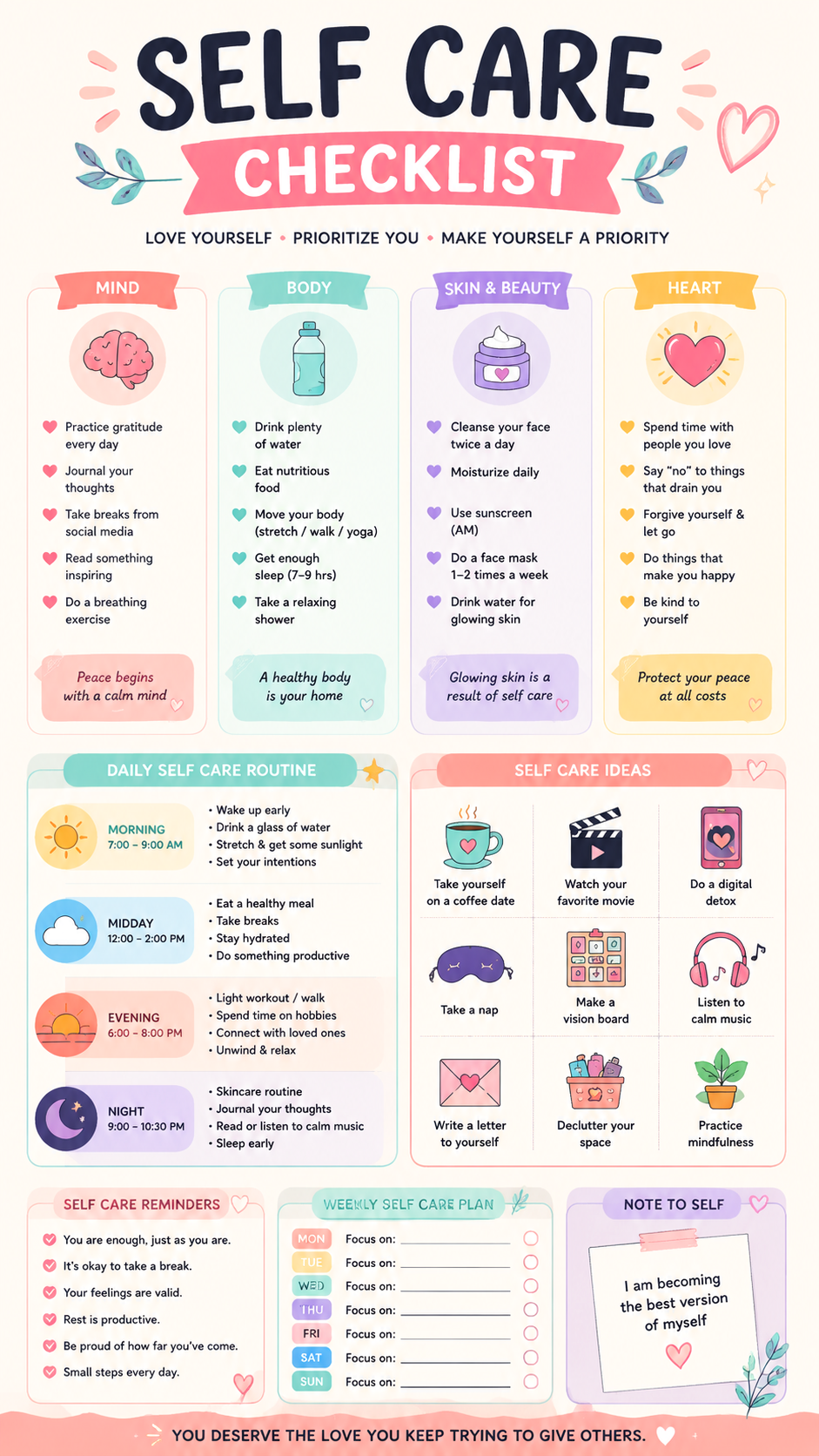
The routine featured here brings those ideas together in an approachable way. It encourages teens to care for four important areas: the mind, body, skin and beauty, and heart. It also includes morning, midday, evening, and nighttime habits, along with relaxing self-care activities and a weekly planning system.
Key Takeaways
- Self-care works best when it includes both mental and physical well-being.
- Small daily habits can make a routine feel realistic and easier to maintain.
- Hydration, movement, nutritious meals, sleep, and personal hygiene are useful foundations.
- Journaling, mindfulness, hobbies, breaks, and digital downtime can support emotional balance.
- A weekly self-care plan can help teens turn good intentions into consistent habits.
What Is a Self-Care Routine for Teens?
A teen self-care routine is a collection of healthy habits that support everyday well-being. It can include anything from getting enough rest and drinking water to taking a break from social media, writing in a journal, spending time with people you love, or enjoying a favorite hobby.
The goal is not to create a perfect schedule. Instead, self-care should help you notice what makes you feel more rested, comfortable, focused, and emotionally supported. Some days may allow time for a longer routine, while other days may require something much simpler.
Important: A good self-care routine should feel supportive rather than stressful. You do not need to complete every item every day. Choose the habits that fit your energy, schedule, and current needs.
Mind: Simple Mental Wellness Habits
The first section of a balanced self-care checklist focuses on the mind. Teen life can involve school responsibilities, friendships, family life, social media, activities, and many changing emotions. Creating small moments to pause can make a busy day feel more manageable.
Practice Gratitude
Take a few moments to think about something you appreciate. It can be something as simple as a favorite song, a good conversation, a comfortable bed, a sunny morning, or something you accomplished. Writing down a few positive moments can encourage you to pay attention to the good parts of your day.
Journal Your Thoughts
Journaling can provide a private place to organize thoughts and reflect on emotions. You do not need to write pages. A few sentences about how you feel, what happened during the day, or what you want to accomplish tomorrow can be enough.
Take Social Media Breaks
Digital breaks can create space for other activities. Put your phone aside for a while and read, walk, listen to calming music, talk with someone, or simply enjoy a quiet moment.
Read and Practice Breathing
Reading something inspiring can make a relaxing break feel more intentional. Simple breathing exercises can also be used when you want to slow down and reconnect with the present moment.
Body: Everyday Healthy Habits
Taking care of your body is another important part of teen self-care. The checklist highlights practical habits such as drinking plenty of water, eating nutritious food, moving your body, getting enough sleep, and enjoying a relaxing shower.
Stay Hydrated
Keep water available throughout the day and make hydration a regular part of your routine. Having a reusable water bottle nearby can make remembering to drink easier.
Choose Nourishing Foods
Regular meals and a varied diet can support everyday energy and overall wellness. Rather than focusing on restrictive rules, think about creating balanced meals that include a variety of nutritious foods.
Move in a Way You Enjoy
Movement does not have to mean an intense workout. Walking, stretching, yoga, dancing, recreational activities, or another enjoyable form of movement can all become part of a healthy routine.
Make Sleep a Priority
Rest is an essential part of a sustainable routine. Creating a consistent nighttime wind-down can help you make sleep a regular priority. Consider dimming distractions, putting devices away, and giving yourself enough time to relax before bed.
Skin and Beauty: Keep Your Routine Simple
Skincare can be an enjoyable form of self-care, especially when the routine stays simple and comfortable. The checklist suggests cleansing the face, moisturizing, using sunscreen during the day, and occasionally enjoying a face mask.
A basic routine is often easier to maintain than a long list of products. Focus on gentle personal care and choose products that suit your individual skin needs. If a product causes persistent irritation or discomfort, stop using it and consider asking a qualified healthcare professional or dermatologist for advice.
A Simple Daily Skincare Flow
- Cleanse your face gently as appropriate for your skin.
- Apply moisturizer to help maintain comfortable skin.
- Use sunscreen during daytime outdoor exposure.
- Keep optional treatments, such as a face mask, occasional rather than making them a daily requirement.
Pro Tip: Self-care is not about looking perfect. Skincare can be a calming personal ritual, but healthy self-care also means accepting that your skin and energy levels can naturally change from day to day.
Heart: Emotional Self-Care and Personal Boundaries
Emotional self-care deserves just as much attention as skincare or physical wellness. The heart-focused section of the routine encourages spending time with people you love, saying no to things that drain you, forgiving yourself, doing things that make you happy, and practicing kindness toward yourself.
Protect Your Energy
Learning to recognize when something is overwhelming can help you make healthier choices. You do not have to say yes to every request. Respectful boundaries can create more room for schoolwork, rest, friendships, hobbies, and activities that matter to you.
Spend Time With People You Love
Self-care does not always mean being alone. A conversation with a trusted friend, family member, or supportive person can be a meaningful part of taking care of your emotional well-being.
Be Kind to Yourself
Everyone has difficult days and makes mistakes. Instead of expecting perfection, try speaking to yourself with the same patience you would offer someone you care about. Small steps still count as progress.
Why This Matters
A sustainable self-care routine is flexible. When your schedule is busy, choose one or two habits that genuinely help you recharge instead of trying to complete a long checklist perfectly.
A Daily Self-Care Routine You Can Actually Follow
The daily routine can be divided into four parts: morning, midday, evening, and night. Breaking self-care into smaller sections makes it easier to fit around school, activities, homework, and personal responsibilities.
Morning: Start With Intention
- Wake up and give yourself enough time to get ready without unnecessary rushing.
- Drink a glass of water.
- Stretch or spend a few moments outside.
- Set a simple intention for the day.
Midday: Reset and Recharge
- Eat a nourishing meal.
- Take a short break when possible.
- Keep drinking water throughout the day.
- Spend some time on a productive or enjoyable activity.
Evening: Slow Down
- Take a light walk or do gentle movement.
- Spend time on hobbies.
- Connect with loved ones.
- Give yourself permission to unwind.
Night: Prepare for Rest
- Complete a comfortable skincare routine.
- Write down thoughts or reflections.
- Read or listen to calming music.
- Give yourself enough time for sleep.
Fun Self-Care Ideas for Teens
Self-care should include activities you genuinely enjoy. The visual checklist suggests several easy ideas that can turn free time into a relaxing reset.
- Take yourself on a coffee or café-style date.
- Watch a favorite movie.
- Try a short digital detox.
- Take a nap when appropriate.
- Make a vision board.
- Listen to calming music.
- Write a kind letter to yourself.
- Declutter a small area of your room.
- Practice mindfulness.
There is no need to do all of these activities. Pick one that matches your mood. If you feel mentally tired, a quiet activity may be ideal. If you feel restless, movement or tidying your space might provide a better reset.
Create a Weekly Self-Care Plan
Daily habits are helpful, but a simple weekly plan can make self-care even easier to organize. Instead of writing an overwhelming list, choose one focus for each day.
- Monday: Choose a positive intention for the week.
- Tuesday: Focus on movement, stretching, or another enjoyable physical activity.
- Wednesday: Take a break from digital distractions.
- Thursday: Make time for a hobby or creative activity.
- Friday: Connect with someone you enjoy spending time with.
- Saturday: Give yourself extra time to relax and recharge.
- Sunday: Reflect on the week and prepare gently for the next one.
You can also use a weekly self-care planner with a simple blank space for each day. Write down one realistic focus rather than creating a demanding schedule. Checking off small goals can make progress visible and motivating.
Self-Care Reminders Worth Keeping
A strong self-care checklist should also include reminders about self-compassion. You are allowed to rest. You are allowed to take breaks. Your feelings deserve attention, and progress does not have to happen all at once.
- You are enough as you are.
- Taking a break is okay.
- Your feelings matter.
- Rest can be productive.
- Be proud of how far you have come.
- Small steps can still move you forward.
Important: If stress, sadness, anxiety, or other difficult feelings become persistent or interfere with everyday life, self-care alone may not be enough. Reaching out to a trusted adult, school counselor, healthcare professional, or another appropriate source of support is an important form of taking care of yourself.
How to Make Your Self-Care Routine Stick
The easiest routine to maintain is usually the one that fits naturally into your existing day. Start with a few habits rather than changing everything at once. Once those habits feel familiar, you can gradually add another.
Start Small
Choose two or three habits that feel realistic. For example, you might begin with drinking water in the morning, taking a short evening walk, and writing a few lines in a journal.
Connect Habits to Existing Routines
Attach a new habit to something you already do. You could journal after brushing your teeth at night, stretch after waking up, or practice a few mindful breaths before starting homework.
Avoid the All-or-Nothing Mindset
Missing a habit does not mean you failed. Life changes, schedules become busy, and energy levels vary. Simply return to your routine when you are ready.
At a Glance: Teen Self-Care Checklist
Quick Points
- Care for your mind with journaling, gratitude, reading, and breaks.
- Support your body with hydration, nutritious food, movement, and rest.
- Keep skincare simple, comfortable, and consistent.
- Protect your emotional energy through boundaries, connection, and self-kindness.
- Use a flexible daily or weekly routine instead of chasing perfection.
Conclusion: Make Self-Care Part of Your Everyday Life
A good self-care checklist for teens is less about completing every task and more about building a healthier relationship with your everyday needs. Caring for your mind, body, skin, and emotional well-being can start with incredibly small actions.
Drink some water. Take a break. Stretch your body. Write down your thoughts. Spend time with someone you love. Put your phone away for a while. Enjoy a hobby. Get ready for bed without rushing. These simple choices can become meaningful rituals when they are practiced consistently and with intention.
The most important part is to keep your routine flexible and kind. Some days will be productive, while others may require more rest. Both are part of a healthy rhythm. Use the checklist as inspiration, choose the habits that genuinely support you, and remember that self-care is not selfish or a reward for being perfect. It is a practical way to make space for your well-being every day.
Tags
Teen Self Care
Self Care Checklist
Daily Self Care Routine
Teen Wellness
Self Love
Mental Wellness
Skincare Routine
Healthy Habits