What To Do During a Disaster Emergency Preparedness Guide Safety Tips
Natural disasters can happen without warning, and being prepared can make a major difference in protecting yourself, your family, and your community. From powerful storms and earthquakes to floods, fires, and unexpected power outages, knowing what actions to take before, during, and after an emergency helps reduce fear and confusion when every second matters.
The foundation of disaster preparedness is simple: stay calm, stay informed, and have a plan. A well-prepared household does not need to predict every emergency, but it should have the right supplies, knowledge, and habits to respond safely. This emergency preparedness guide covers essential disaster safety tips that can help you build confidence and readiness for different situations.
Key Takeaways
- Create an emergency plan and know your evacuation routes.
- Prepare a disaster go bag with essential supplies.
- Learn safety steps for earthquakes, floods, fires, storms, and other hazards.
- Stay updated through official emergency alerts and trusted sources.
- Regularly check and refresh your emergency supplies.
Why Disaster Preparedness Is Important
Emergencies often create stressful conditions where clear thinking becomes difficult. Roads may become unsafe, communication systems may be interrupted, and basic resources like clean water or electricity may not be immediately available. Preparing ahead allows you to focus on safety rather than searching for supplies or making decisions under pressure.
Important: Disaster preparedness is not about expecting the worst. It is about building confidence, reducing risks, and making sure you have the tools and knowledge needed to protect yourself during unexpected events.
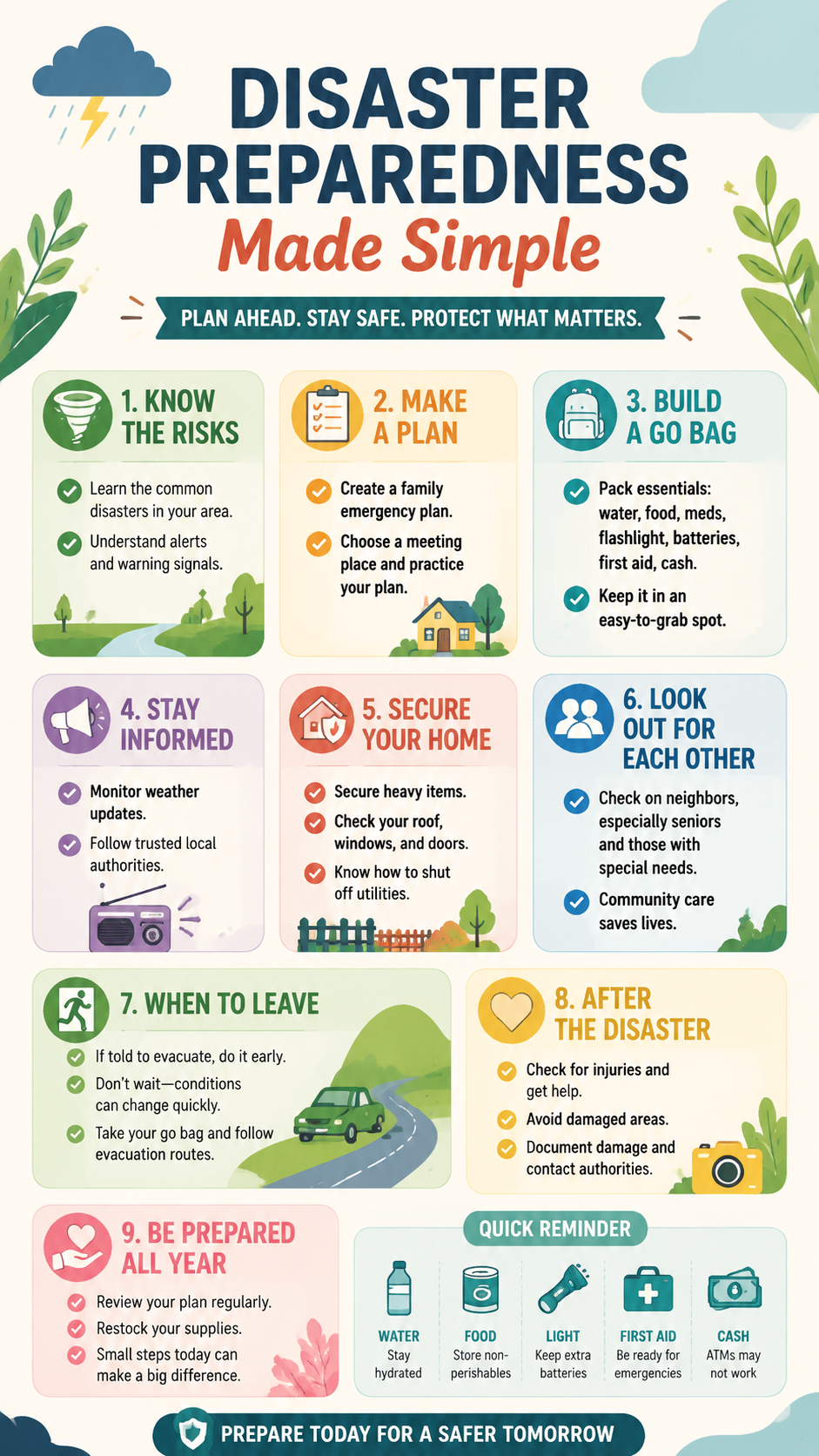
A strong emergency plan should include important contact information, meeting locations, medical needs, and steps for different types of disasters. Every household is different, so your plan should consider children, elderly family members, pets, and anyone who may need extra assistance.
What To Do Before a Disaster
Build an Emergency Go Bag
An emergency kit, also known as a disaster go bag, is one of the most important parts of preparedness. It should contain supplies that help you survive comfortably if you need to leave your home quickly or if essential services are temporarily unavailable.
- Drinking water and ready-to-eat food
- Flashlights and extra batteries
- First-aid supplies and necessary medicines
- Phone chargers and power banks
- Important documents stored safely
- Whistle, protective masks, and basic clothing
- Cash and personal hygiene items
Create a Family Emergency Plan
A disaster plan should be easy for everyone in your household to understand. Decide where family members will meet if separated, identify emergency contacts, and learn nearby evacuation routes.
Practice your plan occasionally so that everyone knows what to do. Simple preparation, such as knowing where exits are located or where emergency supplies are stored, can save valuable time.
Typhoon and Severe Storm Safety Tips
Strong storms can bring heavy rain, powerful winds, flooding, and dangerous conditions. Before a typhoon or severe storm arrives, charge devices, secure outdoor objects, prepare food and water, and monitor official weather updates.
Before the Storm
- Store enough water and non-perishable food.
- Bring outdoor items indoors.
- Protect important documents from water damage.
- Charge phones and backup batteries.
During the Storm
- Stay indoors and away from windows.
- Follow official weather warnings.
- Avoid unnecessary travel.
- Turn off electricity if flooding creates danger.
Earthquake Safety: Drop, Cover, and Hold On
Earthquakes can occur suddenly, leaving little time to react. The safest response during shaking is to remember the basic method: Drop, Cover, and Hold On.
- Drop: Get down to your hands and knees to avoid being knocked over.
- Cover: Protect yourself under a sturdy table or desk.
- Hold On: Stay protected until the shaking stops.
Pro Tip: Avoid standing near windows, shelves, or heavy objects that could fall during an earthquake. After shaking stops, check for injuries and possible hazards before moving around.
Flood, Landslide, and Tsunami Preparedness
Flooding and water-related disasters can become dangerous quickly. Fast-moving water can damage buildings, sweep away vehicles, and create hidden hazards. Preparation and quick action are essential.
Flood Safety Actions
- Move valuables and important items to higher locations.
- Avoid walking or driving through floodwater.
- Turn off electricity if it is safe to do so.
- Clean and disinfect areas affected by flooding.
- Throw away contaminated food and unsafe supplies.
Tsunami Awareness
If you experience a strong earthquake near a coastline, move immediately to higher ground when advised. Do not stay near beaches to watch waves. Follow evacuation instructions and return only after authorities confirm the area is safe.
Why This Matters
Preparedness helps communities recover faster after disasters.
- Knowing evacuation routes prevents last-minute confusion.
- Emergency supplies provide support when services are interrupted.
- Safety knowledge helps protect yourself and others.
Fire, Tornado, and Power Outage Safety
Different disasters require different responses. Understanding basic safety actions can help you react quickly and correctly.
Fire Safety
- Stay low to avoid breathing smoke.
- Use stairs instead of elevators.
- Feel doors before opening them.
- Call emergency services when safe.
Tornado and Strong Wind Safety
- Move to the lowest safe level of a building.
- Stay away from windows.
- Protect your head and neck.
Power Outage Preparation
- Use flashlights instead of candles when possible.
- Keep refrigerator doors closed.
- Unplug sensitive electronics.
- Conserve phone battery power.
How To Stay Ready All Year
Emergency preparedness is not a one-time activity. Supplies expire, family situations change, and new risks may develop. A few simple habits can keep your emergency plan effective.
- Check emergency supplies regularly.
- Replace expired food, batteries, and medicine.
- Review evacuation plans with family members.
- Learn basic first aid skills.
- Stay aware of local emergency information.
At a Glance
- Prepare supplies before emergencies happen.
- Know the safest response for different disasters.
- Follow official instructions during crises.
- Keep your emergency plan updated.
Conclusion: Preparation Creates Confidence
Disasters are unpredictable, but your response does not have to be. A thoughtful emergency plan, a stocked disaster kit, and basic safety knowledge can help you face challenging situations with greater confidence.
Whether you are preparing for storms, earthquakes, floods, fires, or power outages, small steps today can create meaningful protection tomorrow. Stay informed, stay prepared, and encourage others around you to build their own emergency readiness plan.
Tags
Emergency Preparedness
Disaster Safety
Emergency Kit
Survival Tips
Natural Disasters
Safety Guide