Vitamin Rich Foods Chart Essential Vitamins and Their Best Food Sources
Eating a balanced diet starts with understanding the nutrients your body needs every day. Vitamins are essential compounds that support important functions such as immune health, energy production, healthy skin, strong bones, and overall wellness. By choosing a variety of colorful fruits, vegetables, whole grains, proteins, nuts, and seeds, you can naturally increase your intake of these valuable nutrients.
The most effective approach to getting enough vitamins is not focusing on a single “superfood,” but creating a diverse plate filled with different food groups. Each vitamin plays a unique role, and many common foods provide excellent sources of these nutrients. From orange vegetables rich in vitamin A to leafy greens packed with vitamin K, everyday ingredients can help support a healthier lifestyle.
Key Takeaways
- Different vitamins support different areas of health, from vision to immunity and bone strength.
- Colorful fruits and vegetables are simple ways to add more nutrients to your meals.
- Whole foods often provide a combination of vitamins, minerals, and other beneficial compounds.
- Healthy fats, nuts, seeds, and proteins can support balanced nutrition.
- A varied diet helps ensure you receive a wide range of essential vitamins.
Understanding Essential Vitamins and Their Food Sources
Vitamins are nutrients that the body needs in small amounts to maintain normal processes. They help transform food into energy, protect cells, support immune defenses, and contribute to healthy growth and repair. Since the body cannot always produce enough vitamins on its own, food becomes an important source.
A vitamin-rich eating pattern includes a mix of fruits, vegetables, grains, dairy or alternatives, lean proteins, and healthy fats. The goal is variety because no single food contains every vitamin your body requires.
Vitamin A: Supporting Vision and Healthy Skin
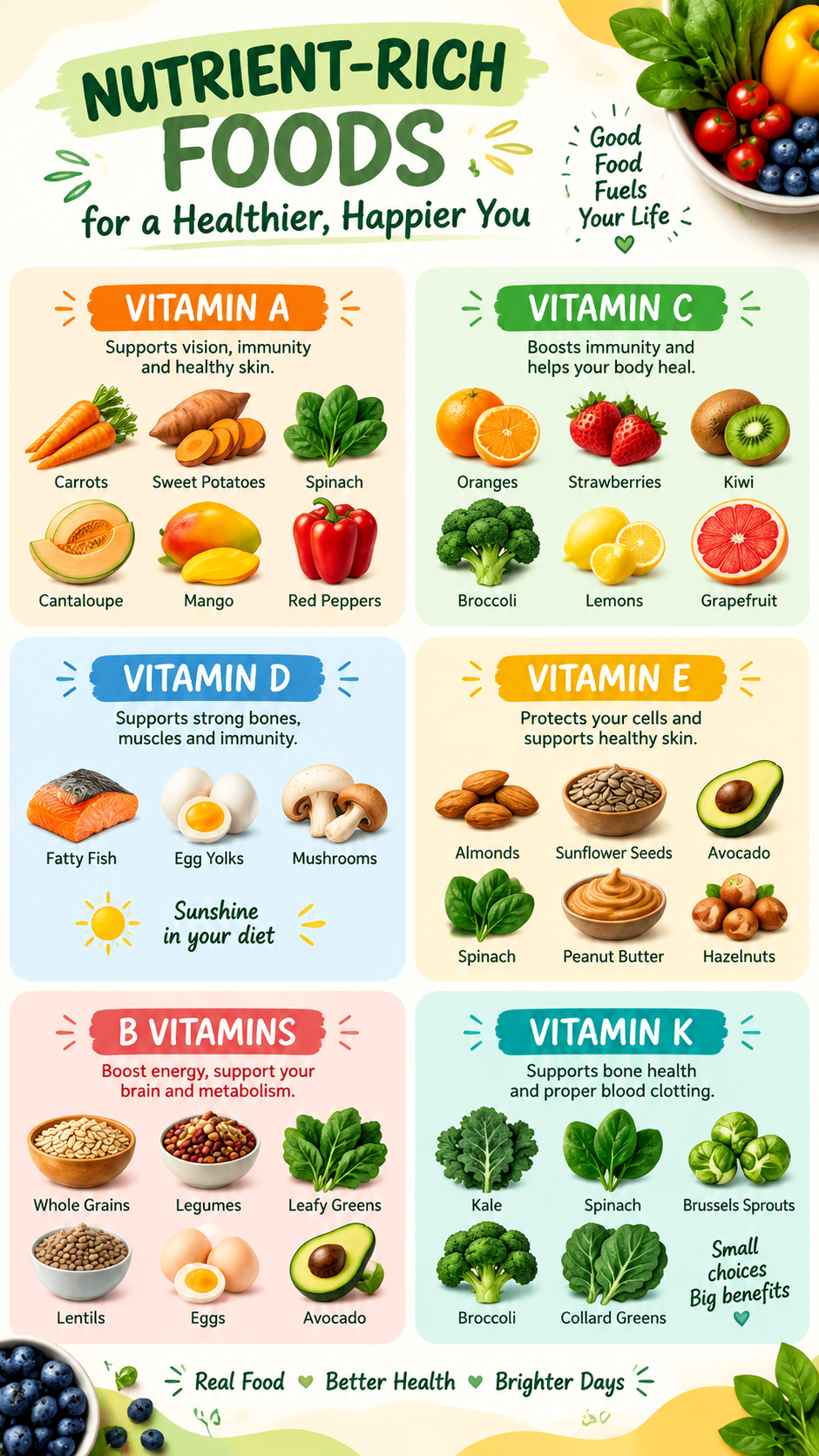
Vitamin A is commonly associated with eye health and is found in many orange and yellow foods. Carrots, sweet potatoes, and mangoes are popular examples of foods that contain nutrients the body can use to support normal vision.
Green vegetables such as spinach and broccoli also contribute valuable nutrients to a balanced diet. Adding a combination of colorful vegetables to meals is an easy way to increase nutrient variety.
Simple Ways to Add More Vitamin A Foods
- Add shredded carrots to salads or wraps.
- Enjoy roasted sweet potatoes as a side dish.
- Blend mango into smoothies for a naturally sweet option.
Vitamin C: A Fresh Source of Daily Nutrition
Vitamin C is widely known as a nutrient found in citrus fruits and berries. Foods such as oranges, strawberries, kiwi, grapefruit, and bell peppers are commonly included in healthy eating plans because they provide refreshing flavors along with important nutrients.
Including vitamin C-rich foods throughout the week can be simple. Fresh fruit can be enjoyed as a snack, while vegetables like bell peppers and broccoli can add color and nutrition to everyday meals.
Important: A colorful plate is often a sign of dietary variety. Combining different fruits and vegetables helps create meals with a wider range of vitamins and beneficial plant compounds.
Vitamin D and Vitamin E: Nutrients for Overall Wellness
Vitamin D and vitamin E have important roles in a balanced nutrition plan. The foods shown in this guide highlight common sources that can be included as part of a varied diet.
Vitamin D Foods for a Balanced Diet
Vitamin D is often linked with bone health and immune system support. Foods commonly associated with vitamin D include fatty fish, egg yolks, mushrooms, and fortified milk products.
Creating balanced meals with protein sources and nutrient-rich sides can help you build a stronger overall eating pattern. Foods containing vitamin D can be especially useful additions when included alongside other healthy choices.
Vitamin E from Nuts, Seeds, and Healthy Fats
Vitamin E is found in foods such as almonds, sunflower seeds, avocado, spinach, and peanut butter. These foods are also popular because they add texture, flavor, and satisfying nutrients to meals.
Easy Vitamin E Meal Ideas
- Sprinkle sunflower seeds over salads or yogurt.
- Add avocado slices to sandwiches and bowls.
- Use nut butters as a topping for fruit or whole grains.
B Vitamins: Fueling Everyday Energy and Nutrition
B vitamins represent a group of nutrients found in many everyday foods. Whole grains, legumes, leafy greens, eggs, chicken, and other protein sources are commonly included in diets that provide B vitamins.
These foods are versatile and easy to incorporate into breakfast, lunch, and dinner. For example, oats can be enjoyed in the morning, lentils can be added to soups, and leafy greens can enhance many meals.
Building Balanced Meals with B Vitamin Sources
- Choose whole grains such as oats or brown rice.
- Add legumes like lentils and beans for variety.
- Include protein sources such as eggs or chicken.
- Mix in leafy greens for additional nutrients.
Vitamin K: The Importance of Green Leafy Vegetables
Vitamin K is strongly associated with green leafy vegetables. Foods such as kale, spinach, broccoli, Brussels sprouts, and collard greens are common choices for people looking to add more nutrient-dense vegetables to their meals.
Leafy greens are easy to prepare in many ways. They can be added to salads, cooked into warm dishes, blended into smoothies, or served as a simple side.
Why Eating a Variety of Greens Matters
Different vegetables provide different combinations of nutrients. Rotating between spinach, kale, broccoli, and other greens can keep meals interesting while supporting a diverse eating pattern.
Why This Matters
- Small food choices made consistently can support healthier eating habits.
- Adding more natural, colorful foods can make meals more nutritious.
- Balanced nutrition comes from variety rather than relying on one ingredient.
How to Create a Vitamin-Rich Daily Eating Plan
A vitamin-rich diet does not need to be complicated. Simple adjustments can make a meaningful difference. Start by adding more vegetables to your meals, choosing whole foods when possible, and including different colors on your plate.
Planning meals around nutrient-rich ingredients can also make grocery shopping easier. Keeping foods like fruits, leafy greens, nuts, seeds, whole grains, and quality protein sources available helps create more balanced options throughout the week.
At a Glance
- Eat a rainbow of fruits and vegetables.
- Include healthy fats from nuts, seeds, and avocado.
- Choose whole grains and legumes regularly.
- Mix different protein sources into meals.
Conclusion: Make Vitamins Part of Your Everyday Lifestyle
Choosing vitamin-rich foods is a simple way to create a stronger foundation for healthy living. Fruits, vegetables, whole grains, nuts, seeds, and proteins each bring unique nutrients that contribute to a balanced diet.
Rather than searching for one perfect food, focus on variety and consistency. A plate filled with different colors and wholesome ingredients can make healthy eating enjoyable, practical, and sustainable.
Use this vitamin food guide as inspiration for your next grocery trip, meal plan, or healthy recipe idea. Small choices every day can help you build better nutrition habits for the long term.
Tags
Vitamin Rich Foods
Healthy Eating
Nutrition Guide
Vitamin Sources
Healthy Food Chart
Wellness Tips