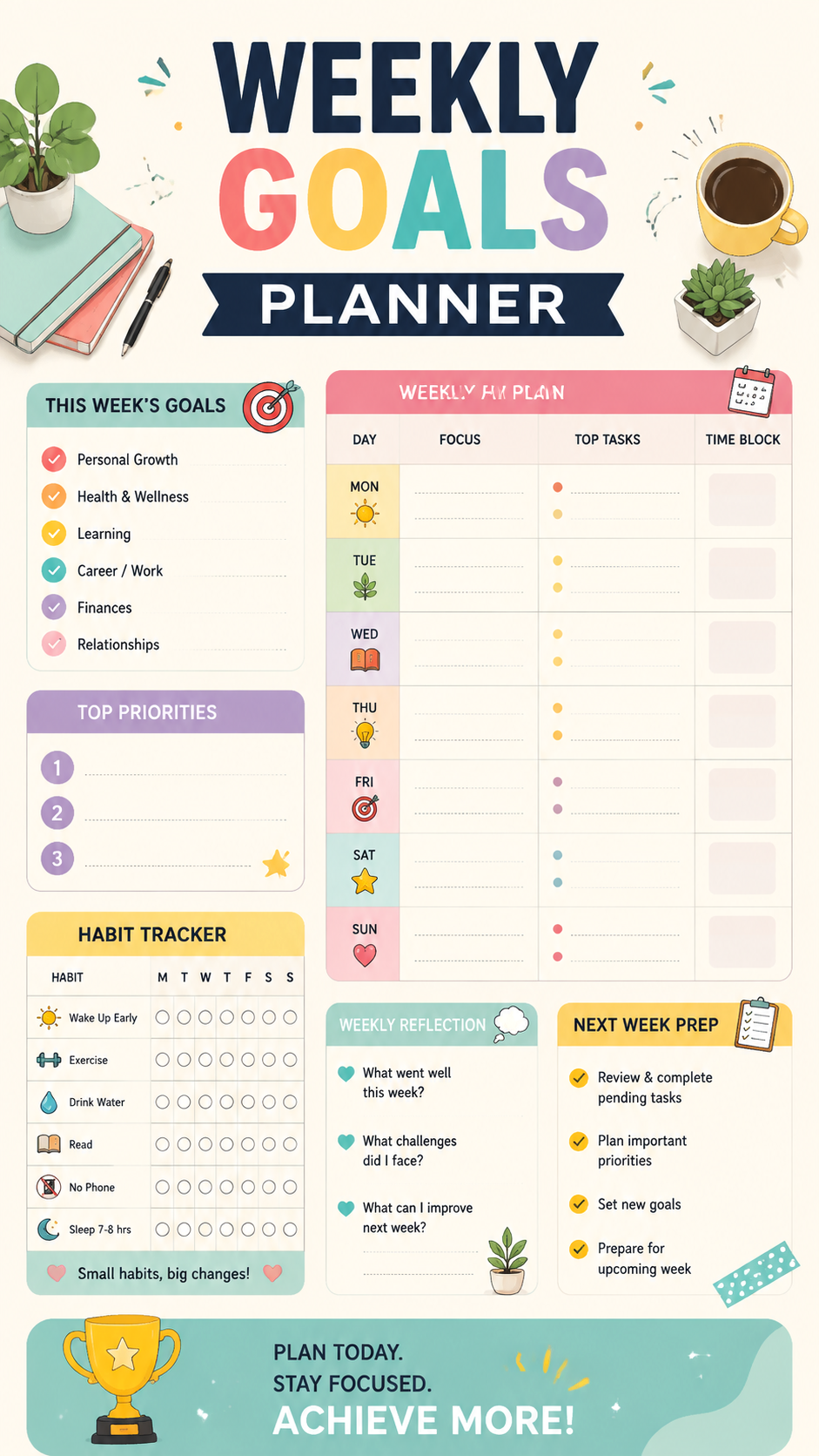
Weekly Goals Planner for Students Study Goals, Productivity Habit Tracker
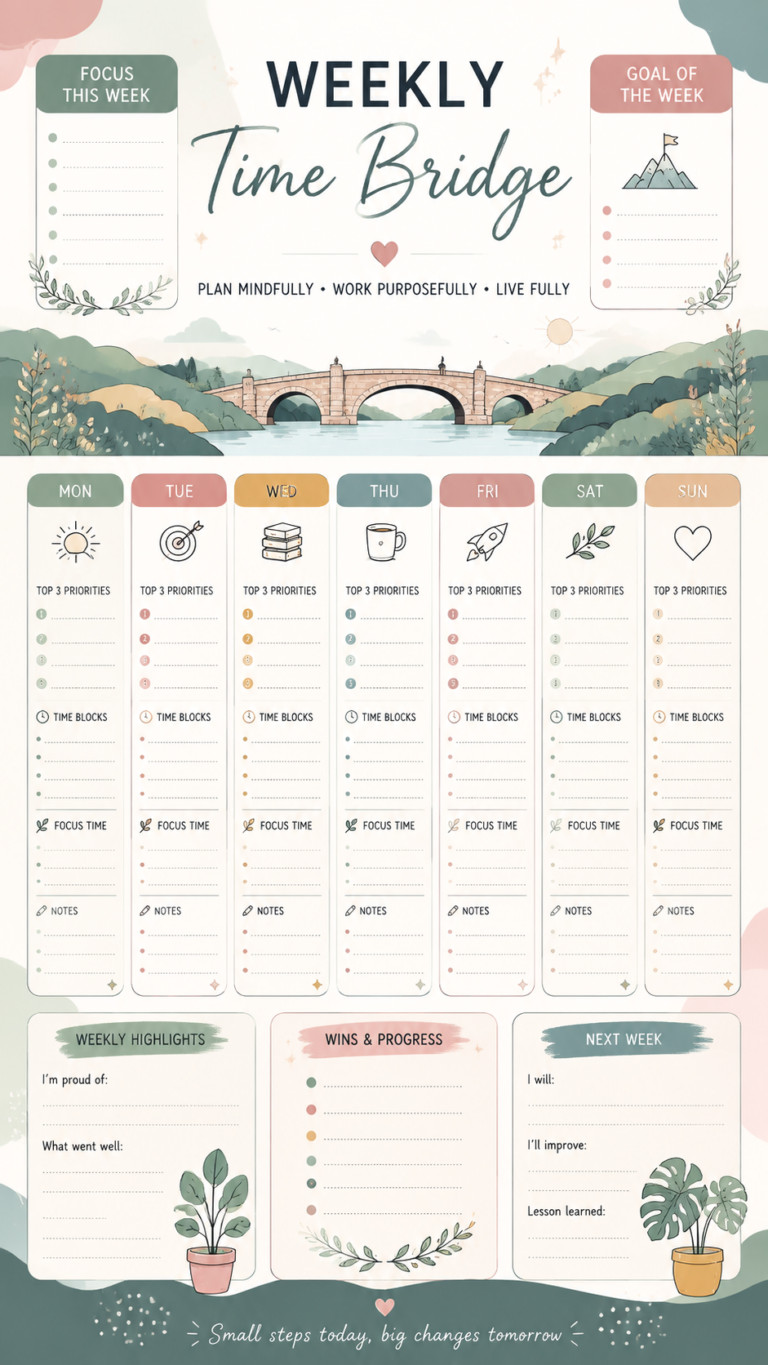
Creating a productive week starts with having a clear vision of what needs to be accomplished. A weekly goals planner is a simple yet powerful tool that helps students organize study goals, manage priorities, track habits, and stay focused on personal growth. Instead of feeling overwhelmed by a long list of responsibilities, a structured planner turns daily tasks into manageable steps that lead to meaningful progress.
For students balancing assignments, exams, personal goals, health routines, and everyday responsibilities, a weekly planner provides the clarity needed to make better decisions with time. By writing down goals, planning tasks, and reviewing achievements, students can build consistency and create a productive routine that supports long-term success.
Key Takeaways
- A weekly goals planner helps organize study plans and important tasks.
- Breaking goals into smaller steps improves focus and motivation.
- Habit tracking encourages consistency and positive daily routines.
- Weekly reviews help identify progress and areas for improvement.
- Planning ahead creates a balanced approach to academic and personal growth.
Why a Weekly Goals Planner Is Essential for Students
Students often have many goals at the same time. They may want to improve grades, complete assignments, develop healthier habits, exercise regularly, read more, or prepare for upcoming exams. Without a clear plan, these goals can easily become stressful or forgotten.
A weekly goals planner creates a visual roadmap for the days ahead. It allows students to decide what matters most, organize tasks by importance, and create realistic schedules. Instead of reacting to deadlines at the last minute, students can take control of their time and work with purpose.
Important: Productivity is not about filling every hour with tasks. A successful planner helps you focus on the activities that create the biggest impact while leaving room for rest and balance.
How to Use a Weekly Planner for Better Productivity
A weekly planner works best when it becomes part of a consistent routine. Taking a few minutes at the beginning of each week can make the entire schedule feel more organized and manageable.
1. Set Clear Weekly Goals
Start by identifying the most important goals for the week. These goals can include academic achievements, personal improvements, or habits you want to strengthen. A good weekly goal should be specific and realistic.
For example, instead of writing “study more,” create a clearer goal such as “review math notes for 30 minutes each evening” or “complete two practice tests before Friday.” Clear goals make progress easier to measure.
2. Prioritize Your Most Important Tasks
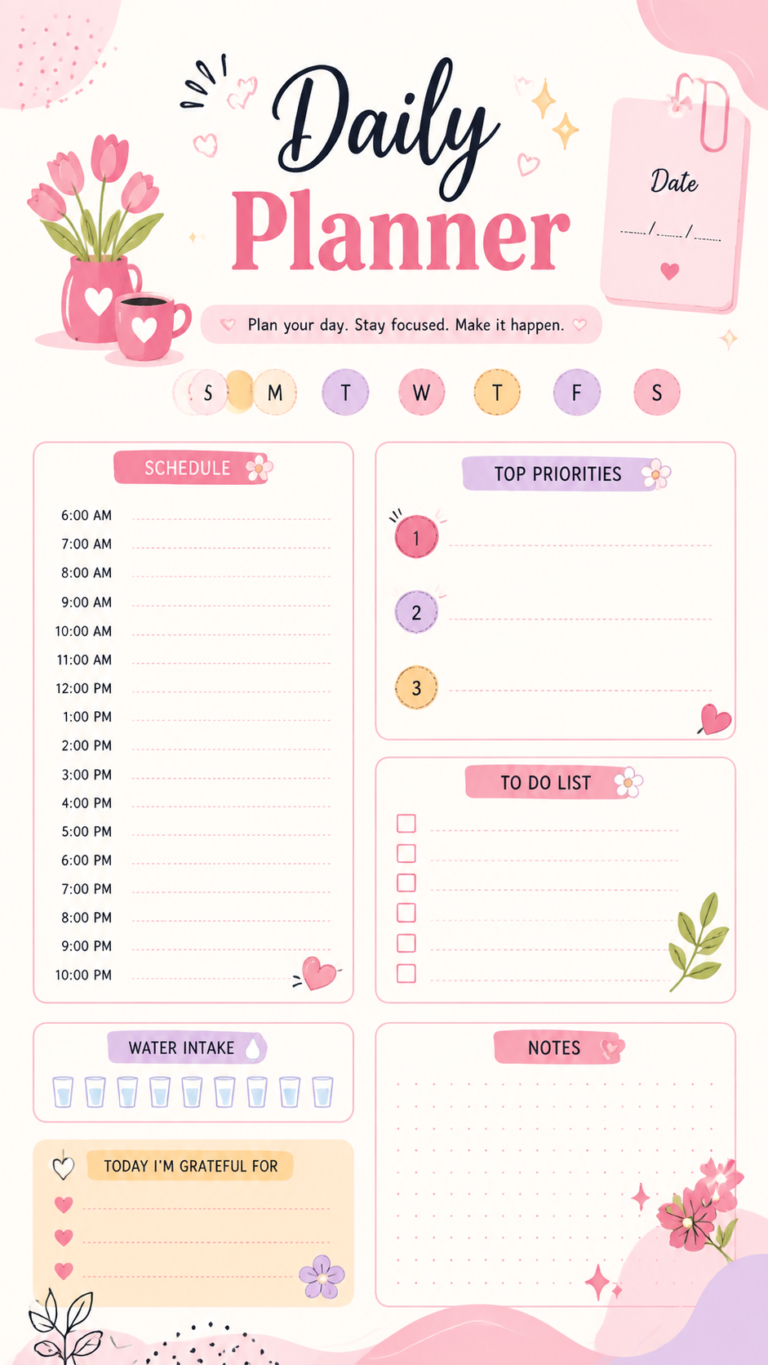
The top priorities section of a planner helps students identify the tasks that deserve attention first. Choosing three important goals for the week prevents distractions and keeps energy focused on meaningful work.
- Complete assignments before deadlines.
- Review difficult subjects regularly.
- Prepare study materials in advance.
- Make time for personal wellness.
3. Create a Daily Study Plan
A weekly study planner becomes more effective when each day has a clear purpose. Assign specific study goals, tasks, and estimated time requirements for each day.
This approach helps prevent procrastination because students already know what they need to accomplish. It also makes large projects feel easier by dividing them into smaller daily actions.
Building Better Habits with a Weekly Habit Tracker
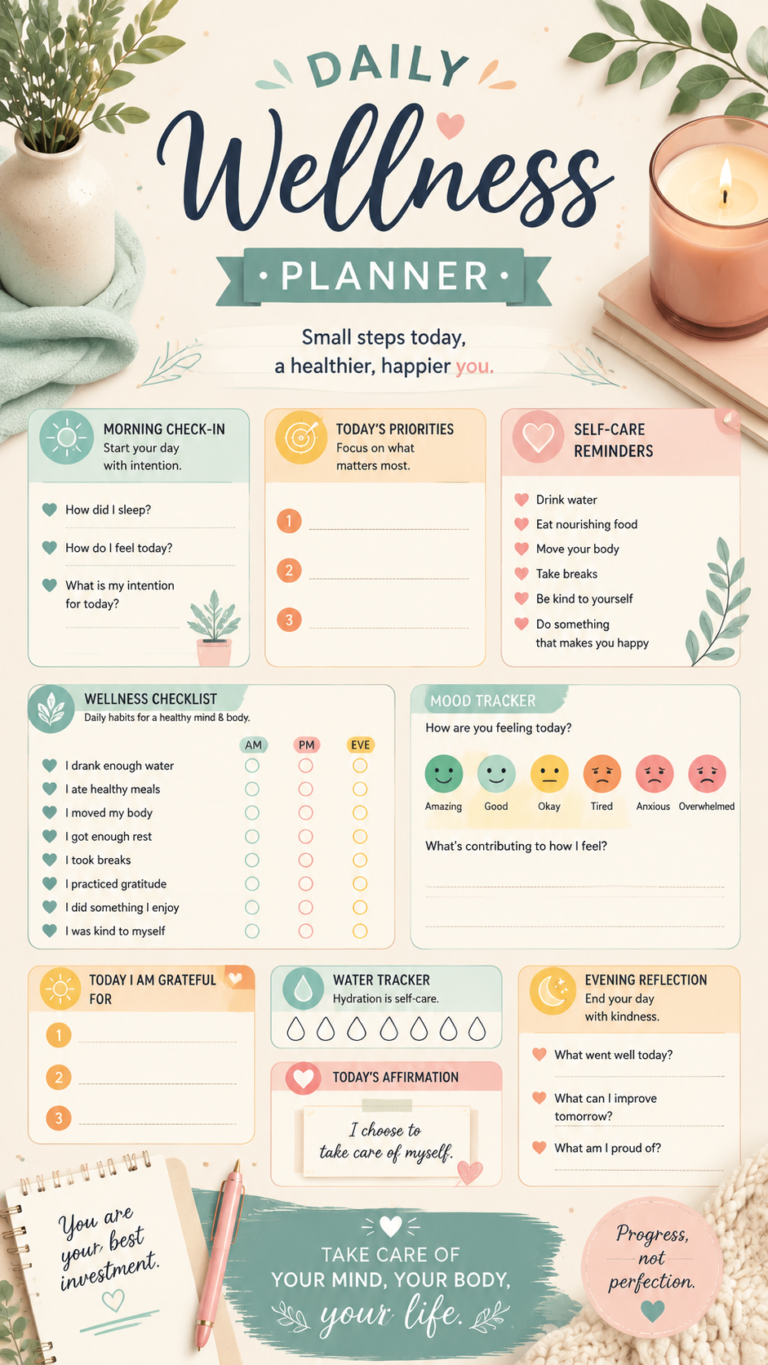
Many weekly planners include a habit tracker because small daily actions often create the biggest long-term results. Habits such as waking up early, drinking enough water, exercising, reading, and maintaining a consistent study schedule can improve overall productivity.
Tracking habits provides motivation because students can see their progress visually. Each completed day becomes a reminder that consistency matters more than perfection.
Simple Habits to Track Each Week
- Wake up at a consistent time.
- Study without distractions.
- Read for personal development.
- Exercise or stretch regularly.
- Maintain a healthy sleep routine.
- Reduce unnecessary screen time.
The Benefits of Weekly Planning for Academic Success
Planning each week can positively influence how students approach their studies. A structured schedule reduces stress, improves organization, and encourages a proactive mindset.
Improved Time Management
Many students struggle because they underestimate how much time tasks require. A weekly planner encourages realistic scheduling by showing available time and helping students divide responsibilities throughout the week.
Reduced Stress and Overwhelm
When tasks remain only in your mind, they can feel bigger than they actually are. Writing goals down creates a sense of control and allows students to approach challenges one step at a time.
Better Motivation
Seeing completed tasks and checked-off goals creates a feeling of achievement. This positive feedback encourages students to continue working toward their bigger goals.
Expert Insight
A planner is most valuable when it supports your lifestyle instead of creating pressure. The goal is to build a system that helps you stay focused, organized, and confident throughout the week.
How to Make Your Weekly Planner Work Better
Review Your Week Regularly
A weekly review helps students understand what worked well and what needs adjustment. At the end of the week, reflect on completed goals, challenges faced, and improvements for the next week.
Keep Goals Realistic
One common planning mistake is creating an unrealistic schedule. A productive planner should include enough flexibility for unexpected tasks, breaks, and personal time.
Celebrate Progress
Every completed goal deserves recognition. Celebrating small achievements builds confidence and encourages continued growth.
At a Glance: Weekly Planning Essentials
- Write your main goals for the week.
- Plan study sessions and important tasks.
- Track habits that support your growth.
- Review progress and adjust your routine.
Conclusion
A weekly goals planner is more than a simple schedule. It is a tool that helps students transform ideas into action, organize responsibilities, and create productive habits that last. By setting clear goals, tracking progress, and reviewing achievements, students can build confidence and stay focused throughout their academic journey.
Whether you are preparing for exams, managing assignments, or working toward personal goals, a well-designed weekly planner can help you make every day more intentional. Start planning your week, focus on your priorities, and take small steps toward bigger achievements.
Tags
Weekly Goals Planner
Study Planner
Student Productivity
Goal Setting
Habit Tracker
Study Motivation
Time Management