Why We Remember Embarrassing Moments The Psychology Behind Awkward Memories
Have you ever found yourself lying awake at night, suddenly remembering an awkward thing you said years ago? Maybe it was a small mistake, a social slip-up, or a moment when you felt everyone was watching you. Even though the event is long over, your brain can bring it back with surprising detail. These embarrassing memories often feel more intense than ordinary memories, and there is a fascinating reason behind it.
Our minds are designed to pay attention to experiences connected with strong emotions. Embarrassment, shame, anxiety, and self-consciousness create powerful signals in the brain that can make certain moments easier to remember. Understanding why we remember embarrassing moments can help us become more compassionate toward ourselves and stop giving old mistakes more power than they deserve.
Key Takeaways
- Embarrassing moments are remembered because they create strong emotional reactions.
- The spotlight effect makes us believe others notice our mistakes more than they actually do.
- Negative experiences often receive more attention because of the brain’s negativity bias.
- Replaying awkward memories can strengthen the memory over time.
- Self-compassion helps reduce the emotional impact of embarrassing moments.
Why Do We Remember Embarrassing Moments So Clearly?
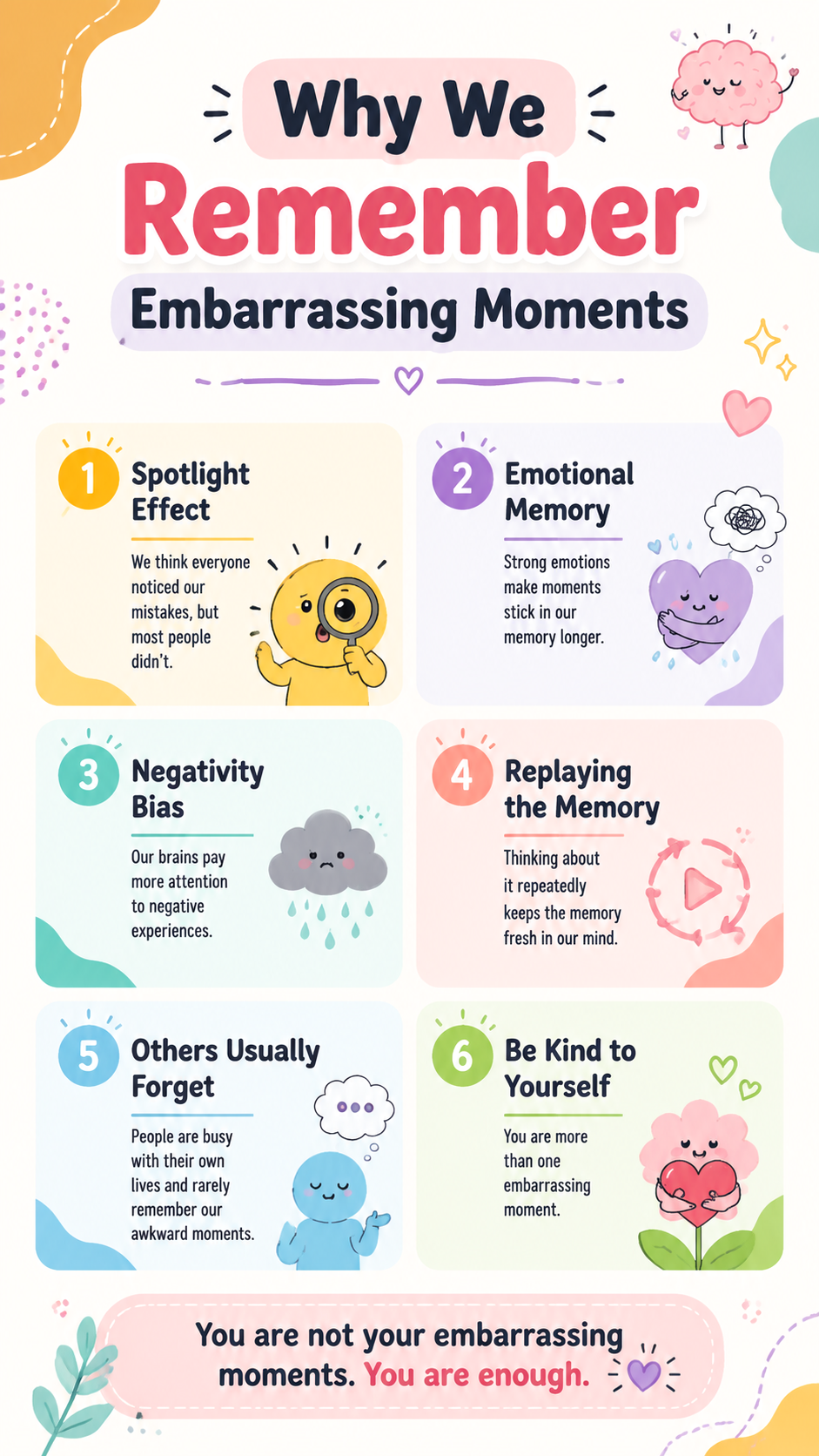
Embarrassing memories often stand out because they combine emotion, attention, and personal meaning. A simple mistake might not seem important to someone else, but your brain may mark it as a valuable learning experience. From an evolutionary perspective, remembering uncomfortable situations can help us avoid repeating behaviors that could affect our relationships or social acceptance.
When you feel embarrassed, your brain does not process the moment as just another ordinary event. The emotional intensity tells your memory system that something important happened. This is why you might forget what you ate last Tuesday but vividly remember a presentation mistake from years ago.
Important: Remembering an embarrassing moment does not mean the event was extremely significant. It often means your brain attached a strong emotional signal to the experience and stored it more deeply.
The Spotlight Effect: Why We Think Everyone Noticed
One major reason embarrassing moments feel so painful is a psychological phenomenon called the spotlight effect. This happens when we overestimate how much other people notice and remember our actions.
Imagine spilling a drink at a social event. In your mind, everyone saw it, everyone judged it, and everyone will remember it forever. In reality, most people probably noticed for a few seconds before returning their attention to their own conversations and concerns.
Why Your Brain Feels Like Everyone Is Watching
Your own experiences are naturally more noticeable to you than to anyone else. You experience your thoughts, emotions, and reactions from the inside, which makes your mistakes feel larger. Other people, however, are usually focused on their own lives, worries, and responsibilities.
- You remember your mistake because you experienced the emotion behind it.
- Others may remember little or nothing about the event.
- Your brain can confuse personal importance with public importance.
Emotional Memory Makes Awkward Moments Stick
Emotions act like highlighters for your memory. When something creates a strong feeling, your brain gives that experience extra attention. This is why emotional memories often feel more vivid than everyday events.
Embarrassment is especially powerful because it involves self-awareness. You are not only remembering what happened, but also remembering how you felt about yourself in that moment.
The Connection Between Feelings and Memory
When an experience creates discomfort, the brain tries to learn from it. The memory becomes a reminder of what happened and how you might respond differently in the future. While this can be helpful, it can also cause people to repeatedly revisit moments that no longer matter.
The Role of Negativity Bias in Awkward Memories
Human brains naturally pay more attention to negative experiences than positive ones. This tendency is known as negativity bias. It helped humans recognize danger and avoid harmful situations, but it can also make embarrassing moments feel more important than they really are.
A compliment from a stranger might make you smile for a few minutes, but an awkward comment you made years ago may return unexpectedly. This difference happens because negative emotions often create stronger mental impressions.
Why Negative Memories Feel More Powerful
The brain is constantly searching for information that can help protect you. Embarrassing moments are sometimes treated like warnings, encouraging you to avoid similar situations in the future.
However, not every uncomfortable memory represents a real problem. Sometimes your brain simply keeps repeating an old story that no longer applies to your current life.
Why We Replay Embarrassing Memories
Many people experience sudden flashbacks of awkward moments while doing unrelated activities. You might be brushing your teeth, driving, or trying to fall asleep when your brain suddenly reminds you of something embarrassing from the past.
This happens because memory is not stored like a video file that stays untouched. Every time you recall something, your brain processes that memory again. Repeatedly thinking about an embarrassing event can make it feel more familiar and emotionally significant.
Breaking the Cycle of Overthinking
If you constantly replay embarrassing memories, try redirecting your attention toward the present moment. Mindfulness techniques, journaling, and positive self-talk can help reduce the emotional intensity attached to old experiences.
- Notice the memory without judging yourself.
- Remind yourself that the moment has already passed.
- Focus on what you learned instead of what went wrong.
- Replace harsh self-criticism with understanding.
Why This Matters
Embarrassing memories are a normal part of being human. Learning how your brain handles these moments can help you develop emotional resilience and a healthier relationship with your past.
- Most people are focused on themselves, not your mistakes.
- Awkward moments often become meaningful lessons.
- Self-kindness can reduce unnecessary shame.
How to Be Kinder to Yourself After an Embarrassing Moment
Everyone experiences awkward situations. Forgetting a name, saying the wrong thing, making a mistake at work, or experiencing a social misunderstanding are all normal parts of life.
The difference between healthy reflection and harmful overthinking is the way you talk to yourself afterward. Treating yourself with patience allows you to move forward instead of staying stuck in an old memory.
Practice Self-Compassion
Imagine a close friend made the same mistake you did. You would probably offer kindness and reassurance instead of harsh criticism. Self-compassion means offering yourself that same understanding.
Important: An embarrassing moment is something you experienced, not a definition of who you are. Your mistakes are small pieces of your story, not the entire story.
At a Glance: Understanding Embarrassing Memories
Quick Points
- Strong emotions make memories easier to recall.
- Your mistakes usually matter less to others than they do to you.
- The brain remembers negative experiences more strongly.
- Reflection helps you grow, but overthinking keeps memories alive.
Conclusion: Your Embarrassing Moments Do Not Define You
Remembering embarrassing moments is a natural part of the human experience. Your brain stores these memories because they contain emotion, learning, and personal meaning. While awkward memories can feel uncomfortable, they can also remind you that you are growing, learning, and navigating life like everyone else.
The next time an embarrassing memory appears, remember that your mind may be exaggerating its importance. Most people have forgotten the moment, and even if they have not, they are likely more understanding than you imagine. With self-compassion and awareness, embarrassing memories can become reminders of resilience rather than sources of stress.
Tags
Psychology
Human Behavior
Emotional Memory
Self Improvement
Mental Wellness
Mindset Growth