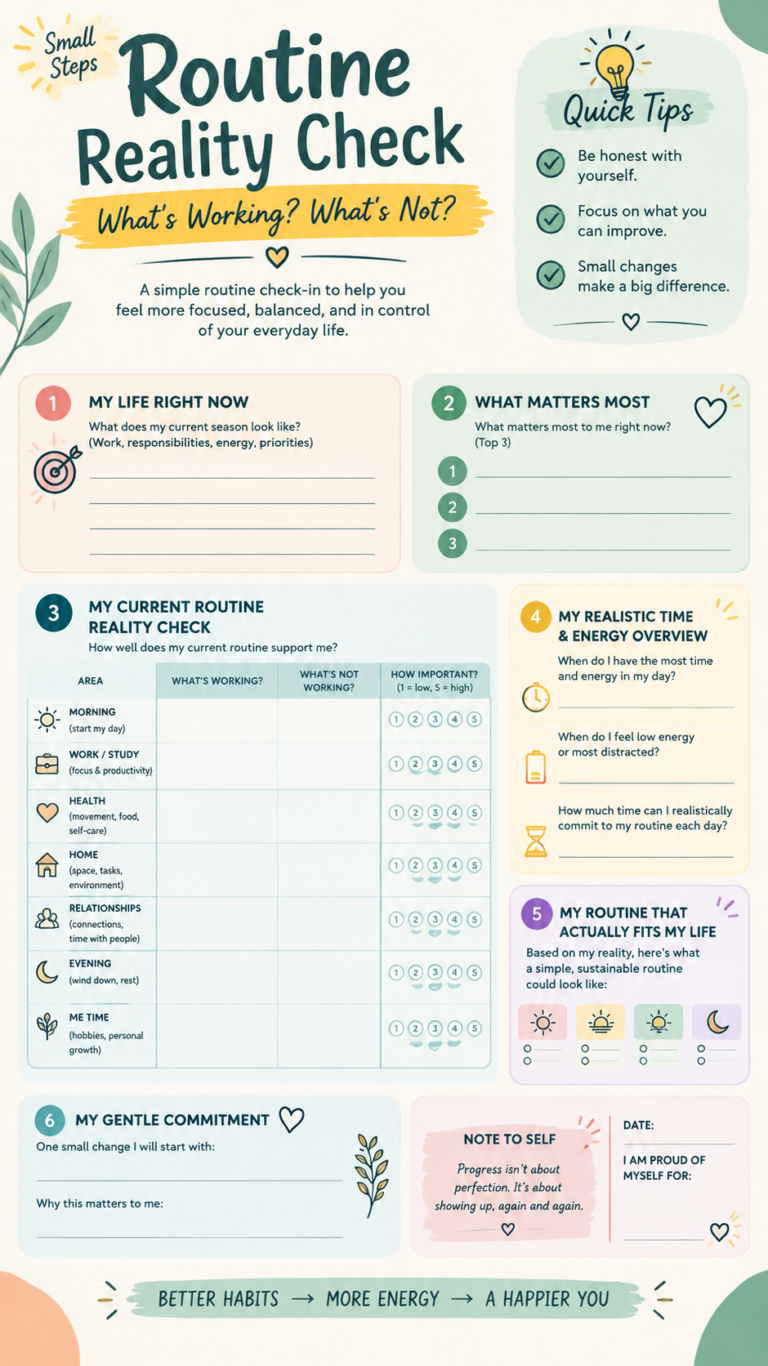
7 Habits of Highly Productive People Daily Routine for Success, Focus Motivation
Productivity is not about being busy every minute of the day. It is about consistently focusing on the right tasks, managing energy effectively, and creating routines that support long-term success. Highly productive people often share a set of common habits that help them accomplish more while reducing stress and maintaining balance. By adopting a few practical strategies, anyone can improve focus, increase efficiency, and make steady progress toward personal and professional goals.
Successful daily routines are built on intentional actions rather than motivation alone. The most productive individuals understand that habits create momentum. When positive habits become part of everyday life, productivity becomes a natural outcome rather than a constant struggle.
Key Takeaways
- Start the day with clear goals and priorities.
- Plan tasks ahead of time to reduce decision fatigue.
- Focus on high-impact activities before less important work.
- Group similar tasks together to improve efficiency.
- Avoid multitasking and concentrate on one task at a time.
- Review progress regularly and make improvements.
Why Productivity Habits Matter
Many people believe productivity is a skill reserved for naturally organized individuals. In reality, productivity is largely the result of systems and habits. Small daily actions compound over time and can dramatically influence results.
Whether you are managing a career, running a business, studying for exams, or working toward personal goals, effective habits help create structure. They reduce distractions, improve decision-making, and make it easier to stay consistent.
Important: Productivity is not measured by how much work you do. It is measured by how effectively you use your time and energy to achieve meaningful outcomes.
Habit 1: Rise Early and Set Clear Goals
Many productive people begin their day with intention. Waking up early creates uninterrupted time to prepare mentally, physically, and emotionally for the day ahead.
Starting the morning with clear goals helps establish direction. Instead of reacting to emails, notifications, and unexpected requests, productive individuals identify what matters most before the day becomes busy.
Benefits of a Strong Morning Routine
- Provides clarity and focus.
- Reduces stress and rushed decision-making.
- Creates momentum for the rest of the day.
- Improves consistency and discipline.
A simple morning routine may include reviewing goals, exercising, journaling, reading, or planning key tasks. The exact activities matter less than creating a routine that supports focus and purpose.
Habit 2: Plan Your Day in Advance
One of the most effective productivity strategies is planning. Productive people rarely start their day wondering what they should do next. Instead, they create a clear roadmap.
Planning can be done the night before or first thing in the morning. The goal is to identify priorities, allocate time effectively, and reduce unnecessary decisions.
Popular Planning Methods
- Daily to-do lists.
- Time blocking.
- Priority ranking systems.
- Digital productivity tools.
- Weekly planning sessions.
Time blocking is particularly effective because it assigns specific periods for focused work. Rather than simply listing tasks, it creates dedicated time to complete them.
Why This Matters
- Planning reduces overwhelm and uncertainty.
- Scheduled tasks are more likely to be completed.
- Clear priorities prevent wasted effort.
Habit 3: Tackle Top Priorities First
Highly productive people focus on important tasks before less significant ones. They understand that not all tasks contribute equally to success.
One popular productivity concept is often called “eating the frog.” It refers to completing the most challenging or important task early in the day before distractions accumulate.
When major priorities are addressed first, the rest of the day feels more manageable. Even if unexpected events occur later, meaningful progress has already been made.
How to Identify High-Impact Tasks
- Ask which task creates the greatest results.
- Focus on activities tied to long-term goals.
- Prioritize tasks with significant consequences.
- Complete important work before checking social media.
Pro Tip: Schedule your most demanding work during the hours when your energy and concentration are naturally highest.
Habit 4: Batch Similar Tasks Together
Task switching comes with hidden costs. Every time attention moves from one activity to another, the brain requires time to refocus. This constant switching can reduce efficiency and increase mental fatigue.
Productive individuals often batch similar activities together. Instead of responding to emails throughout the day, they may dedicate specific periods to communication. The same approach can be used for meetings, administrative work, content creation, and other recurring tasks.
Examples of Task Batching
- Responding to emails twice daily.
- Scheduling meetings back-to-back.
- Creating multiple pieces of content in one session.
- Handling administrative work during a dedicated block.
Batching minimizes interruptions and allows deeper concentration on the current activity.
Habit 5: Protect Your Energy and Focus
Productivity is not only about managing time. Energy management is equally important. A person with unlimited time but low energy will struggle to perform at their best.
Highly productive people recognize the connection between physical health and mental performance. They prioritize sleep, movement, hydration, nutrition, and recovery.
Ways to Maintain Energy Throughout the Day
- Take short breaks between focused work sessions.
- Stay hydrated.
- Get regular physical activity.
- Avoid excessive multitasking.
- Maintain healthy sleep habits.
Strategic breaks can actually increase productivity. Short periods of recovery help prevent burnout and improve long-term focus.
Habit 6: Avoid Multitasking
Multitasking is often viewed as a productivity skill, but research and practical experience consistently show the opposite. Attempting to perform multiple complex tasks simultaneously typically reduces quality and increases mistakes.
Productive people focus deeply on one activity at a time. This approach allows greater concentration, faster completion, and higher-quality results.
The Benefits of Single-Tasking
- Improved concentration.
- Fewer errors.
- Greater efficiency.
- Higher-quality work.
- Reduced mental fatigue.
Deep work sessions are especially valuable for creative projects, problem-solving, learning, and strategic thinking.
Important: Every interruption requires mental effort to regain focus. Protecting attention is one of the most effective ways to improve productivity.
Habit 7: Review and Reflect Regularly
Productive individuals understand the importance of continuous improvement. They regularly evaluate what worked, what did not, and what changes can improve future performance.
Reflection creates awareness. Without reviewing progress, it is difficult to identify strengths, weaknesses, and opportunities for growth.
Questions to Ask During a Daily Review
- What did I accomplish today?
- What distracted me?
- Which habits supported productivity?
- What should I improve tomorrow?
- What successes should I celebrate?
Even a brief five-minute review can provide valuable insights and help maintain momentum.
Building a Sustainable Productivity System
The most successful productivity routines are sustainable. Trying to change everything at once often leads to frustration and inconsistency.
Instead, focus on building habits gradually. Start with one or two changes, practice them consistently, and expand over time. Small improvements repeated daily create significant long-term results.
Consistency is more valuable than perfection. Missing a day occasionally is not a failure. The key is returning to productive habits as quickly as possible.
Steps to Create Your Own Routine
- Define your most important goals.
- Create a simple morning routine.
- Plan daily priorities.
- Schedule focused work sessions.
- Batch repetitive tasks.
- Review progress regularly.
- Adjust and improve over time.
Common Productivity Mistakes to Avoid
Even motivated individuals can fall into habits that reduce effectiveness. Awareness of common mistakes can help prevent setbacks.
- Overloading daily to-do lists.
- Failing to prioritize important tasks.
- Allowing constant notifications.
- Skipping breaks and recovery.
- Trying to multitask excessively.
- Ignoring regular reviews and reflection.
Productivity should support progress, not create stress. Sustainable systems always outperform short bursts of extreme effort.
At a Glance
- Set clear goals every morning.
- Plan tasks and schedule focused work blocks.
- Complete top priorities before minor tasks.
- Batch similar activities to reduce distractions.
- Review daily progress and improve continuously.
Conclusion
Developing productive habits is one of the most effective ways to achieve greater success, focus, and motivation. The seven habits discussed here provide a practical framework for improving daily performance without creating unnecessary complexity.
By rising early, planning effectively, prioritizing important work, batching tasks, protecting energy, avoiding multitasking, and reviewing progress regularly, you can build a routine that supports both productivity and personal growth. The goal is not to become busier. The goal is to become more intentional with your time, energy, and attention.
Small actions repeated consistently can transform the way you work and live. Start with one habit today, build momentum, and continue improving one step at a time.
Tags
Productivity Habits Daily Routine Time Management Success Habits Goal Setting Self Improvement Focus and Motivation Personal Development