8 Essential Cleaning Products for a Cleaner Home Simple Cleaning Guide
A clean, fresh home does not require a cupboard overflowing with cleaning supplies. With a few carefully chosen products, you can tackle everyday messes, remove stubborn grime, maintain sparkling bathrooms, and keep your floors looking their best without wasting money on unnecessary duplicates. The secret is building a practical cleaning kit around products that serve a clear purpose.
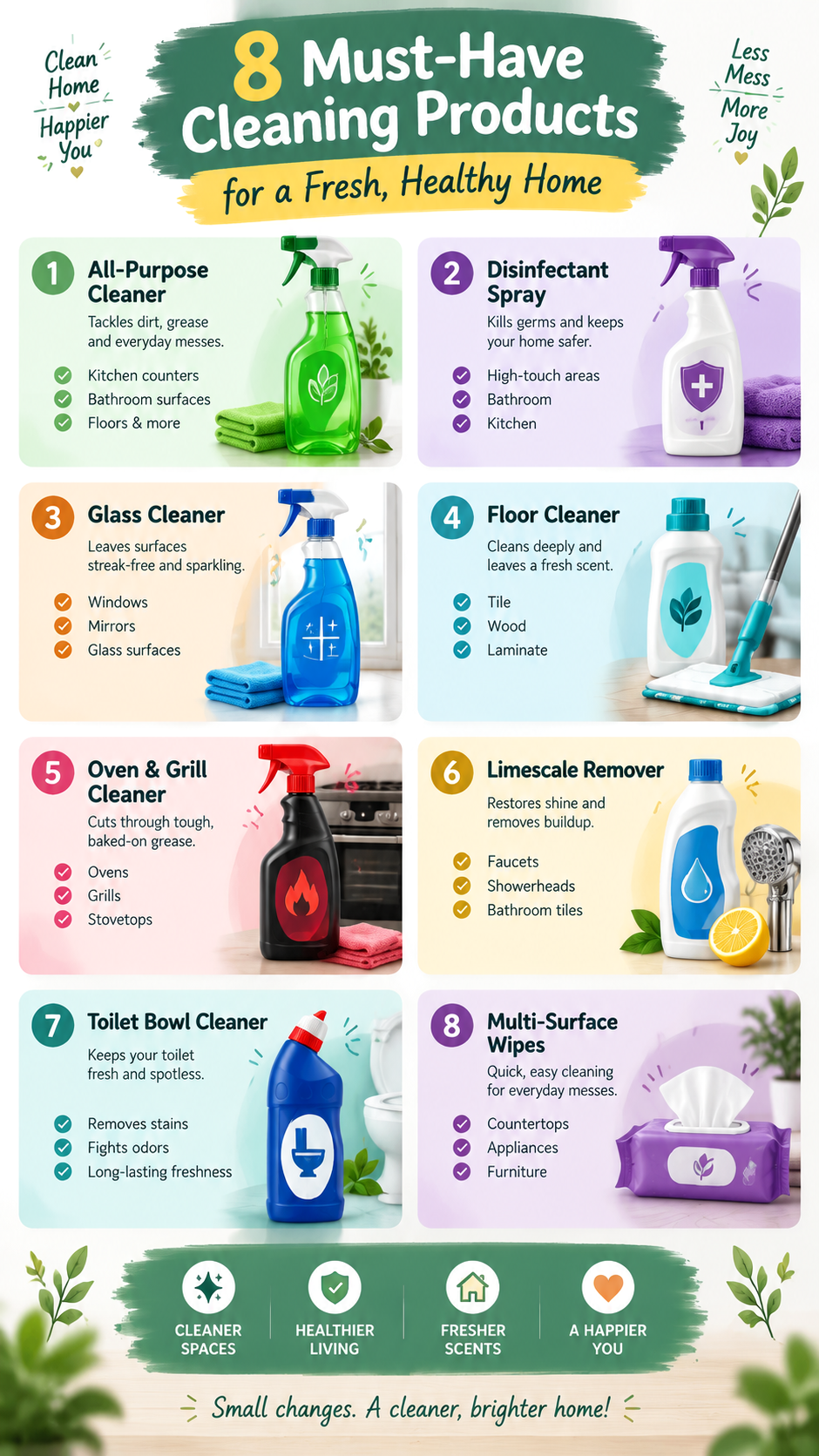
From versatile cream cleaners and concentrated disinfectants to floor cleaners, limescale removers, and convenient multi-surface wipes, the right cleaning essentials can make household chores simpler and more manageable. Whether you are organizing your first cleaning cupboard or trying to simplify an overflowing collection, these eight cleaning products offer a useful starting point for a cleaner, more organized home.
Key Takeaways
- Choose cleaning products based on the surfaces and messes you regularly encounter.
- Use multipurpose cleaners to reduce unnecessary duplication in your cleaning cupboard.
- Keep specialist products for tasks such as oven cleaning, limescale removal, and toilet sanitation.
- Always read product labels for dilution ratios, contact times, and surface compatibility.
- Never mix cleaning chemicals, especially bleach with acidic cleaners or ammonia.
- Store cleaning supplies safely and keep them away from children and pets.
Why You Don’t Need a Cupboard Full of Cleaning Products
It is easy to accumulate cleaning products. One bottle promises a sparkling kitchen, another claims to transform bathroom tiles, and a third seems essential for keeping floors spotless. Before long, your cupboard is crowded with half-used bottles, overlapping formulas, and products you rarely reach for.
A simpler approach starts with understanding what you actually clean. Most homes need a reliable product for general hard-surface cleaning, something suitable for routine floor care, a bathroom maintenance solution, and a few targeted cleaners for stubborn or specialized messes.
Instead of buying every product advertised for a particular room, look for options that match your household’s needs. A versatile cream cleaner may handle several compatible kitchen and bathroom surfaces, while a dedicated oven cleaner can make occasional deep-cleaning sessions easier.
Important: A smaller cleaning collection works best when every product has a purpose. Multipurpose does not mean suitable for every material, so always check the label before using a cleaner on natural stone, delicate finishes, painted surfaces, or specialty appliances.
8 Essential Cleaning Products That Earn Their Space
1. Cif Cream Cleaner for Everyday Surface Cleaning
A cream cleaner is a useful addition to a household cleaning kit because it can help remove everyday marks, residue, and grime from compatible hard surfaces. Its creamy consistency makes it practical for targeted cleaning jobs where a standard spray may not provide enough cleaning action.
Common uses may include kitchen sinks, bathroom basins, ceramic tiles, and suitable stovetop surfaces. It can also help tackle the dull film that builds up around frequently used areas.
How to Use a Cream Cleaner Effectively
- Check the label to confirm that the surface is suitable.
- Apply a small amount as directed, using a soft cloth or non-scratch sponge when appropriate.
- Clean gently rather than scrubbing aggressively.
- Rinse thoroughly when required and dry the surface with a clean cloth.
Although cream cleaners are convenient, they are not automatically safe for every finish. Avoid using them on natural stone, delicate polished materials, or easily scratched surfaces unless the manufacturer specifically approves that use.
For a practical cleaning cupboard, one suitable cream cleaner can replace several narrowly focused products for compatible everyday jobs.
2. Dettol Concentrated Multipurpose Cleaner for Disinfecting
A concentrated multipurpose cleaner can be useful when you want to clean several compatible surfaces with one product. Depending on the specific formulation, it may be suitable for kitchen worktops, dining tables, bathroom surfaces, sinks, and certain types of flooring.
Concentrates can also reduce the amount of packaging needed compared with repeatedly purchasing ready-to-use products. However, the value depends on the recommended dilution, the amount used per cleaning session, and whether the formula suits your household.
How to Get the Best Results
- Measure the product and water according to the bottle instructions.
- Use a clean cloth or sponge suitable for the surface.
- Follow the specified contact time if disinfection is required.
- Rinse food-contact surfaces when the label instructs you to do so.
- Prepare and store diluted solutions only as directed by the manufacturer.
Remember that cleaning and disinfecting are different tasks. Cleaning removes dirt and residue, while disinfection is intended to reduce specified microorganisms when the product is used correctly. Some products perform both functions, but their effectiveness depends on the formulation and directions.
Check surface compatibility carefully, particularly for painted finishes, untreated wood, and porous materials.
3. Flash Floor Cleaner for Regular Floor Maintenance
Floors collect dust, footprints, food crumbs, and everyday dirt. A suitable floor cleaner helps maintain a fresh appearance without requiring a separate specialized product for every room.
Flash floor cleaner is one example of a product designed for routine floor care. The appropriate formula can help clean compatible surfaces, including certain tiles, vinyl, and sealed laminate. Always confirm that the particular product is suitable for your flooring before use.
Simple Floor-Cleaning Tips
- Remove loose dust and debris before washing.
- Follow the recommended dilution instead of adding extra concentrate.
- Use a well-wrung mop to avoid leaving excess moisture on the floor.
- Allow the floor to dry safely before walking across it.
A fresh scent can make a room feel pleasant, but fragrance is not a substitute for effective cleaning. The most important factors are using the correct formula, removing visible dirt, and avoiding residue.
Be especially careful with untreated wood, unsealed flooring, and natural stone. Excess water or an unsuitable cleaner can damage these materials.
4. The Pink Stuff Cleaning Paste for Stubborn Grime
Some messes need more attention than an everyday surface cleaner can provide. Stubborn marks, greasy residue, and built-up grime may require a targeted cleaning paste such as The Pink Stuff, provided the surface is compatible with the product.
A cleaning paste can be particularly useful for selected sinks, taps, ceramic tiles, and other durable surfaces. Its cleaning action can help lift difficult residue, making it a useful option for occasional deep-cleaning tasks.
Use Cleaning Paste Carefully
- Test a small, hidden area first.
- Apply a modest amount with a soft, damp cloth or suitable sponge.
- Use gentle pressure rather than aggressive scrubbing.
- Rinse away all residue and dry the surface if recommended.
Pro Tip: Abrasive cleaning products can scratch delicate finishes even when the damage is not immediately obvious. Avoid using a cleaning paste on polished metal, glass, delicate coatings, or natural stone unless the product label explicitly confirms suitability.
This type of cleaner is best treated as a specialist option for occasional difficult messes rather than a replacement for gentle everyday cleaning.
5. Cif Perfect Finish Oven and Grill Cleaner for Grease
Ovens and grills are among the most challenging areas to clean because baked-on food and grease can accumulate over time. A dedicated oven and grill cleaner can help loosen stubborn residue that ordinary kitchen sprays may struggle to remove.
This specialist product earns its place if you cook frequently, regularly use your oven, or want to make occasional deep cleaning more manageable.
A Better Way to Clean an Oven
- Make sure the appliance is switched off and completely cool.
- Read the product instructions before application.
- Wear the protective equipment specified on the label.
- Allow the cleaner to work for the recommended time.
- Remove the residue thoroughly as directed before using the appliance again.
Do not assume that an oven cleaner is suitable for every part of an oven. Heating elements, fans, seals, self-cleaning liners, aluminum components, and certain coated surfaces may require special care or may be excluded from use.
Never apply a cleaner to a hot surface unless its instructions explicitly permit it. Strong formulas can irritate the skin and eyes, so adequate ventilation and careful handling are essential.
If your household rarely uses an oven or grill, you may not need to purchase this product immediately. Consider your actual cleaning needs before adding another bottle to the cupboard.
6. W5 Limescale Remover for Bathroom Fixtures
Hard water can leave mineral deposits on taps, showerheads, and other frequently exposed bathroom surfaces. These chalky marks can make clean fixtures look dull and may gradually build up if they are not addressed.
A suitable limescale remover helps dissolve mineral deposits and supports regular bathroom maintenance. It can be particularly useful in areas where hard water makes limescale a recurring problem.
How to Prevent Limescale Buildup
- Wipe water from taps and shower screens after use when practical.
- Use a compatible limescale remover according to the label.
- Observe the recommended contact time.
- Rinse treated areas thoroughly when instructed.
- Maintain fixtures regularly instead of allowing heavy deposits to accumulate.
Limescale removers often contain acidic ingredients, so surface compatibility is particularly important. Acidic cleaners can damage marble, limestone, travertine, some metals, and other sensitive finishes.
Keep the product away from bleach and other cleaning chemicals. Never mix cleaning products to create a stronger solution, and always follow the manufacturer’s safety instructions.
7. Toilet Bleach for Targeted Toilet Bowl Cleaning
A dedicated toilet bowl cleaner can help maintain bathroom hygiene and remove stains that develop inside the bowl. Depending on its formulation, a bleach-based product may also provide disinfection when used according to the label.
Toilet cleaning is a specialized task, which makes a suitable toilet cleaner a practical addition to a compact household cleaning kit. Its purpose is different from that of a general surface spray, so it should not be treated as an all-purpose bathroom cleaner.
Safe Toilet-Cleaning Habits
- Apply the cleaner only to the areas specified on the label.
- Follow the required contact time and rinsing instructions.
- Use the product only in the toilet bowl if that is what the label specifies.
- Keep the bathroom ventilated as directed.
- Store the bottle securely after every use.
Bleach-based cleaners must never be mixed with acidic toilet cleaners, limescale removers, ammonia, vinegar, or other cleaning products. These combinations can release dangerous gases.
Safety First: Use one toilet-cleaning product at a time. If you have recently used another cleaner, follow its instructions for rinsing and safe product changeover before introducing anything else. Never combine products in the bowl or cleaning container.
For routine maintenance, frequent light cleaning is often easier than waiting until visible stains and buildup become difficult to remove.
8. Zoflora Multi-Surface Wipes for Quick Cleaning
Busy households do not always have time to prepare a bucket or gather several cleaning tools. Multi-surface wipes can make small cleanup tasks more convenient by keeping a ready-to-use cleaning option within reach.
Depending on the product label, suitable wipes may be useful for compatible hard surfaces such as selected counters, handles, and other frequently touched areas. They can be helpful for quick touch-ups between more thorough cleaning sessions.
Make Wipes Work for Your Routine
- Check that the wipes are approved for the surface you intend to clean.
- Use a fresh wipe when moving between dirty areas.
- Follow the required contact time if the product claims disinfection.
- Allow the surface to remain wet for the specified period when instructed.
- Close the packaging securely to prevent the wipes from drying out.
Wipes are convenient, but they are not always the most economical choice for cleaning large areas. A reusable cloth and an appropriate cleaner may be better for routine countertop or floor cleaning.
They also create disposable waste, so reserve them for situations where convenience genuinely matters. Never flush cleaning wipes unless the product is specifically designed and approved for flushing, and even then follow local disposal guidance.
How to Choose the Right Cleaning Products for Your Home
You do not necessarily need all eight products at once. The best cleaning cupboard reflects your home’s surfaces, your cleaning habits, and the types of messes you regularly encounter.
Start with Your Most Common Cleaning Tasks
Think about the areas that require the most attention. If you cook frequently, a reliable kitchen cleaner and a suitable degreaser may be priorities. If hard water leaves marks throughout your bathroom, a compatible limescale remover may offer more value than another general-purpose spray.
For households with extensive hard flooring, a suitable floor cleaner may be one of the most frequently used products. If you rarely bake or grill, a specialist oven cleaner can remain an occasional purchase rather than an everyday essential.
Check Surface Compatibility Before Buying
Different materials react differently to cleaning ingredients. Natural stone may be damaged by acids, while delicate coatings can be scratched by abrasive products. Unsealed wood may be sensitive to moisture, and some appliance finishes require specially approved cleaners.
Read the product label before purchasing whenever possible. If the manufacturer provides a list of approved surfaces, compare it with the materials in your home.
Compare Cost Per Use, Not Just Bottle Price
A low-priced bottle is not always the most economical option, and a larger container does not automatically offer better value. Consider how much product is needed for each cleaning session, whether dilution is required, and how often you will use it.
Concentrated products may provide good value when used at the recommended dilution. Specialist products may also be worth purchasing if they solve a recurring problem effectively. The goal is to avoid paying for products that duplicate jobs already handled by your existing supplies.
Why This Matters
A well-organized cleaning cupboard saves more than storage space. Choosing products by task reduces duplicate purchases, makes everyday cleaning easier to plan, and helps you use what you already own before buying replacements. A smaller collection can be just as effective when every product has a clear role.
Cleaning Products You Should Never Mix
Keeping a smaller cleaning collection is useful, but using products safely is even more important. Combining cleaners can create hazardous chemical reactions, even when each product is safe when used separately according to its label.
- Bleach and acidic cleaners: Mixing bleach with vinegar, limescale remover, or acidic toilet cleaner can release toxic chlorine gas.
- Bleach and ammonia: This combination can produce dangerous chloramine gases.
- Different toilet cleaners: Never combine products in the toilet bowl or cleaning container.
- Unapproved homemade mixtures: Avoid mixing household ingredients with commercial cleaners unless the manufacturer explicitly confirms compatibility.
Use one cleaning product at a time, follow the label, and rinse surfaces between products when instructed. Keep the room ventilated and wear the protective equipment specified by the manufacturer.
If a mixture produces strong fumes or causes breathing difficulties, leave the area immediately and seek appropriate emergency or poison-control guidance. Do not attempt to neutralize the mixture by adding another chemical.
How to Organize a Simple, Effective Cleaning Cupboard
Once you have selected your essential cleaning products, organizing them properly makes your routine easier to maintain.
Group Products by Purpose
Keep general surface cleaners together, place bathroom and limescale products in a separate section, and store oven or other specialist cleaners where they are easy to identify. Keeping products in their original, clearly labeled containers helps prevent confusion.
Do not transfer chemicals into food or drink containers. If you use any approved secondary container, ensure it is appropriate for the chemical and labeled according to the applicable safety instructions.
Keep Your Most-Used Supplies Accessible
Place frequently used products where you can identify them quickly, while keeping all chemicals securely out of reach of children and pets. Follow the storage instructions on each label, including temperature and ventilation requirements.
Store products upright, keep lids tightly closed, and avoid placing heavy objects on top of bottles. Check for leaks, damaged packaging, and expired or deteriorated products, disposing of unwanted chemicals according to local guidance.
Use a Simple Restocking System
Before shopping, check which products are running low and which ones remain unused. A short inventory can help you avoid buying another multipurpose cleaner when an existing bottle still meets your needs.
It is also helpful to review your cleaning supplies every few months. Remove unnecessary duplicates, check product labels, and adjust your collection as your household’s needs change.
Build a Cleaning Routine That Saves Time
Even the best cleaning products work better when they are part of a manageable routine. Instead of leaving every task until the weekend, divide your cleaning into small jobs that fit naturally into your schedule.
Daily Cleaning Tasks
- Wipe suitable kitchen worktops after food preparation.
- Clean visible spills before they dry or spread.
- Rinse and dry bathroom fixtures when practical.
- Return cleaning supplies to their designated storage area.
Weekly Cleaning Tasks
- Clean bathroom surfaces using appropriate products.
- Wash floors according to their material and manufacturer recommendations.
- Clean frequently touched surfaces as needed.
- Check kitchen and bathroom areas for stubborn residue or mineral deposits.
Occasional Deep Cleaning
Schedule specialist tasks, such as oven cleaning and heavier grime removal, according to how often those areas are used. Treat limescale when it appears rather than waiting for thick deposits to develop. The exact schedule will depend on your household, water hardness, cooking habits, and the manufacturer’s care recommendations.
There is no need to make every room spotless every day. Consistent maintenance, paired with occasional targeted deep cleaning, can make a home feel cleaner without turning household chores into a full-time job.
At a Glance: Your Essential Cleaning Kit
- Everyday grime: A suitable cream cleaner for compatible hard surfaces.
- Multipurpose cleaning: A concentrated cleaner for approved surfaces.
- Floors: A formula designed for your flooring material.
- Stubborn residue: A compatible cleaning paste for targeted jobs.
- Specialist tasks: Oven cleaner, limescale remover, and a dedicated toilet cleaner when needed.
- Quick touch-ups: Multi-surface wipes for suitable surfaces and occasional convenience.
Conclusion: A Cleaner Home Starts with Smarter Choices
You do not need dozens of bottles to maintain a fresh, comfortable home. A carefully selected collection of cleaning products can handle most everyday chores while keeping your cupboard organized and your spending under control.
Start with the products you will use regularly, then add specialist cleaners only when a genuine need arises. A cream cleaner, a suitable multipurpose formula, a floor cleaner, and targeted options for limescale, ovens, and toilets can cover many common household tasks. Convenient wipes may also be useful for occasional quick cleanups.
Most importantly, choose products that suit your surfaces, follow the manufacturer’s instructions, and never mix cleaning chemicals. Safe, consistent habits matter just as much as the products themselves.
With a little planning, you can spend less time sorting through clutter and more time enjoying a clean, organized home. Start with what you already own, keep only what earns its space, and build a simple cleaning routine that works for your everyday life.
Quick Points
- Buy cleaning products for specific needs, not every possible task.
- Prioritize versatile formulas and avoid unnecessary duplicates.
- Use specialist cleaners only on compatible surfaces.
- Never mix bleach, acidic cleaners, ammonia, or other household chemicals.
- Store products safely and follow all label instructions.
Tags
Cleaning Products
Home Cleaning Tips
Cleaning Cupboard Organization
Simple Cleaning Routine
Budget-Friendly Cleaning
Bathroom Cleaning
Kitchen Cleaning
Cleaning Hacks