February Gardening Guide What to Plant Now in Zones 3-12 for Cold-Hardy Crops
While many gardeners view February as a month for dreaming over seed catalogs by the fireplace, the truth is that your garden story for the year is already beginning. Depending on your geographical location, February is a critical transition period where the internal clock of the earth starts to tick toward spring. The secret to a bountiful harvest in May and June is not what you do when the weather is warm, but the groundwork you lay while there is still a chill in the air. Understanding your hardiness zone is the first step toward transforming your backyard into a year round food source.
Understanding Your Garden Hardiness Zone
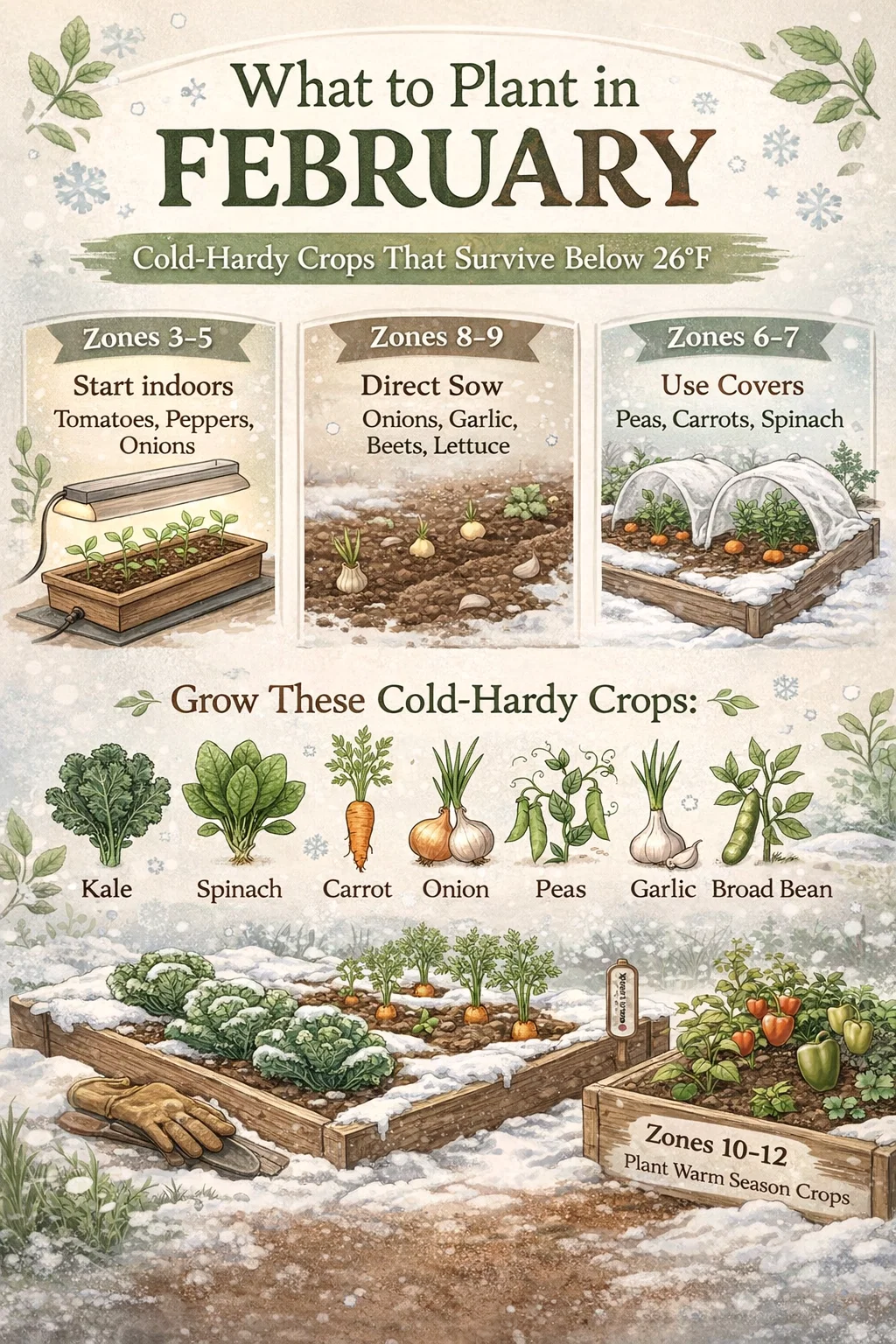
Before you pick up a trowel or a packet of seeds, you must know your hardiness zone. These zones, typically ranging from 3 to 12 in North America, are determined by the average annual minimum winter temperature. They serve as a roadmap for what will survive in your specific climate. In February, a gardener in Zone 4 is facing frozen ground and snow, while a gardener in Zone 10 might already be seeing the first blooms of spring. By aligning your planting schedule with these zones, you ensure that you are not fighting against nature, but working in harmony with it.
Cold Hardy Crops and the Magic of 26 Degrees
One of the most fascinating aspects of vegetable gardening is the resilience of cold hardy crops. Many beginners assume that any frost will kill a plant, but varieties like kale, spinach, and carrots can actually become sweeter after a light freeze. This happens because the plant converts starches into sugars to act as a natural antifreeze for its cells. The threshold of 26 degrees Fahrenheit is a vital number for winter gardeners. Crops that are rated as cold hardy can often survive down to this temperature without any protection, and even lower if they are properly established and mulched.
Zones 3 to 5: Starting Indoors for a Head Start
If you live in the northern reaches where the ground is still a solid block of ice, February is the time for indoor action. For Zones 3 through 5, your outdoor garden is still a dream, but your indoor seed starting station should be humming with life. This is the month to start seeds that require a long growing season and a slow start.
The Essentials for Indoor Starting
To succeed indoors, you need more than just a sunny windowsill. Professional results come from controlled environments. Consider using grow lights to prevent your seedlings from becoming leggy and weak as they reach for distant sunlight. Heat mats placed under your seed trays can also simulate the warm soil of spring, encouraging faster and more uniform germination. The primary crops to focus on in February for these zones include tomatoes, peppers, and onions. Onions, in particular, need a long time to develop before they are ready to be transplanted into the cool spring soil.
Zones 6 to 7: Gardening Under Cover
For those in the middle latitudes, February is a month of protection. You might see the occasional warm day that makes you want to plant everything, but the danger of a deep freeze still looms. This is where gardening under cover becomes your greatest tool. Using cold frames, hoop houses, or simple floating row covers can raise the ambient temperature around your plants by several degrees, which is often the difference between life and death for a young seedling.
Success with Low Tunnels and Cold Frames
Under cover, you can begin sowing cool weather favorites. Peas are exceptionally hardy and love the damp, cool conditions of February. Carrots can also be started under cover now. Since they are root vegetables, the soil protection provided by a cold frame keeps the ground workable even if the air temperature drops. Spinach is another superstar for this zone. It can germinate in soil as cool as 35 degrees, making it the perfect candidate for an early season salad garden.
Zones 8 to 9: The Window for Direct Sowing
In Zones 8 and 9, the soil is beginning to wake up. While you might still have a frost here and there, the ground is generally workable. This allows for direct sowing, which means planting the seeds directly into the garden beds rather than starting them in pots. Direct sowing is ideal for crops that do not like their roots disturbed, such as root vegetables and certain leafy greens.
What to Plant Directly in the Ground
February is the prime time for onions, garlic, beets, and lettuce in these zones. Onions and garlic are heavy feeders that appreciate the cool, moist start to the year to establish their root systems before the heat of summer arrives. Beets are wonderfully versatile, providing both earthy roots and nutritious greens. When planting lettuce, consider sowing small batches every two weeks. This succession planting ensures that you have a steady supply of fresh leaves rather than a massive harvest all at once that might go to seed when the first heat wave hits.
Zones 10 to 12: Embracing the Warm Season
For gardeners in the southernmost regions, February is essentially the start of the primary growing season. While the rest of the country is shivering, you are in the sweet spot where you can plant almost anything. This is the time to get your warm season crops into the ground so they can mature before the intense, scorching heat of mid summer becomes too stressful for the plants.
The Tropical Garden Palette
In these warm zones, you can move straight to tomatoes, peppers, eggplants, and even beans. Because the risk of frost is extremely low, these sun loving plants can thrive. However, even in paradise, you must be mindful of the sun. Providing a bit of shade for your leafy greens can help prevent them from wilting in the afternoon heat. This is also a great time to focus on soil health by adding compost, as the active biology in warm soil will quickly process nutrients for your hungry plants.
Detailed Guide to Cold Hardy Favorites
Regardless of your zone, there are certain vegetables that define the February garden. Let us take a closer look at why these specific plants are the heroes of the late winter season.
Kale and Spinach: The Nutritional Powerhouses
Kale is perhaps the toughest vegetable in the garden. It can often survive being buried under snow, emerging perfectly edible once the thaw begins. Spinach is similarly resilient and much more flavorful when grown in the cold compared to the grocery store varieties. Both of these greens are packed with vitamins and minerals, providing a much needed boost of fresh nutrition during a time of year when local produce is scarce.
Carrots and Beets: Hidden Treasures
Root crops are the secret gems of the February garden. Because they grow underground, they are naturally insulated from the biting wind. Carrots grown in cold soil are famously sweet because the plant stores sugar in the root to prevent it from freezing. Beets are equally hardy and offer a double harvest of greens and roots, making them an efficient use of garden space.
Onions, Garlic, and Leeks: The Foundation of Flavor
The allium family is essential for any kitchen garden. Planting onions and garlic in February allows them to take advantage of the spring rains. These plants are triggered by day length, so getting them in the ground early ensures they have enough green growth to support large bulb development once the days begin to lengthen in late spring.
Preparing Your Soil for February Planting
No matter what you are planting, the success of your garden depends on the quality of your soil. Winter can be hard on garden beds, often leading to compaction from heavy rains or snow. Before planting, gently aerate the soil with a broadfork or garden fork. Avoid turning the soil over completely, as this can disrupt the delicate ecosystem of microbes and earthworms that live just below the surface.
The Importance of Mulch
Mulch is your best friend in the February garden. A thick layer of straw, shredded leaves, or wood chips acts as a blanket for the soil. It regulates temperature, prevents the ground from heaving during freeze-thaw cycles, and keeps moisture in the soil. For cold hardy crops, mulching right up to the base of the plant can provide that extra bit of protection needed to survive a surprise cold snap.
Pest and Disease Management in the Cold
One of the great benefits of gardening in February is that many common pests are still dormant. You likely will not see many aphids or tomato hornworms this early. However, damp conditions can lead to fungal issues or slugs. Ensure that your plants have adequate spacing to allow for airflow, and keep an eye out for slug damage on tender young greens. Using organic snail and slug bait or simple beer traps can keep these pests in check without harming the environment.
Conclusion: The Reward of an Early Start
Starting your garden in February requires a bit of bravery and a lot of planning, but the rewards are well worth the effort. There is a unique sense of satisfaction that comes from harvesting fresh kale or crisp radishes while your neighbors are still waiting for the local nursery to open. By understanding your zone and choosing the right crops for your specific environment, you turn the shortest month of the year into a springboard for gardening success. Whether you are tending to tiny seedlings under grow lights or direct sowing seeds into the cool earth, you are participating in the timeless cycle of growth and renewal. Get outside, breathe in the crisp air, and start planting today. Your future self will thank you when the harvest begins.