7 Daily Habits to Stop Overthinking Calm Your Mind Naturally
Overthinking can quietly drain your energy, interrupt your focus, and make even simple decisions feel overwhelming. When your mind constantly replays conversations, worries about the future, or searches for answers that do not exist yet, creating intentional daily habits can help restore a sense of calm and clarity.
The good news is that a peaceful mind does not require completely eliminating thoughts. Instead, it comes from learning how to respond to your thoughts differently. Small lifestyle changes, mindful routines, and simple self-care practices can help reduce mental clutter and create more space for confidence, focus, and emotional balance.
Key Takeaways
- Simple morning habits can create a calmer mindset throughout the day.
- Writing thoughts down helps release mental pressure and organize emotions.
- Movement and mindful breaks support better emotional regulation.
- Reducing unnecessary decisions can lower daily mental stress.
- Learning to focus on what you can control helps break the overthinking cycle.
Understanding Why We Overthink
Overthinking often happens when the brain tries to protect us from uncertainty. It creates endless possibilities, analyzes every detail, and searches for ways to prevent mistakes. While reflection can be helpful, excessive thinking can leave you feeling mentally exhausted.
Common causes of overthinking include fear of the unknown, perfectionism, the need for control, and seeking approval from others. Many people experience repeating thoughts about past situations or future possibilities, even when those thoughts do not lead to practical solutions.
Important: The goal is not to control every thought that enters your mind. A calmer mindset comes from noticing thoughts without allowing them to control your emotions or actions.
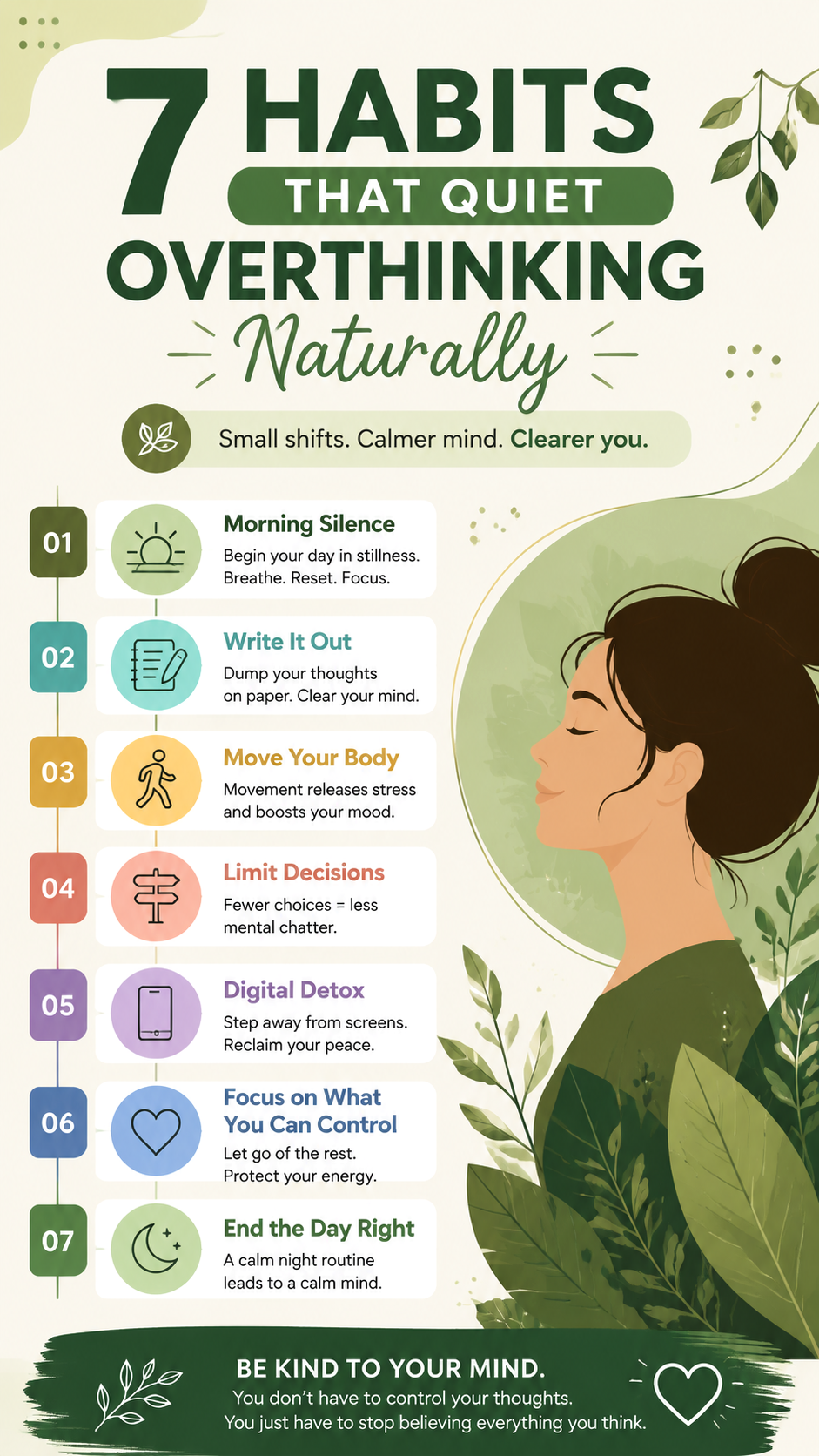
7 Daily Habits That Help Stop Overthinking Naturally
1. Start Your Day With Morning Silence
The first moments after waking can influence your entire day. Immediately checking notifications, messages, or social media can fill your mind with outside information before you have time to connect with yourself.
Creating a few minutes of morning silence gives your brain space to slow down. You can sit quietly, enjoy your coffee, practice deep breathing, or simply notice your surroundings. This small habit encourages a calmer and more intentional start.
Simple Morning Reset Ideas
- Spend five minutes without screens after waking.
- Take slow breaths and set a peaceful intention for the day.
- Notice your thoughts without judging them.
2. Write Your Thoughts Down
Journaling is one of the most effective ways to clear mental clutter. When thoughts stay inside your head, they often feel bigger and more complicated than they actually are. Writing them down creates distance and allows you to see situations more clearly.
You do not need a perfect journal routine. A few sentences about your worries, feelings, goals, or ideas can help your mind feel lighter.
Helpful Journaling Prompts
- What is currently taking up too much space in my mind?
- What can I do today to support myself?
- What thoughts can I let go of?
3. Move Your Body Every Day
Physical movement is not only beneficial for your body. It also helps your mind process stress and release built-up tension. A walk, stretching session, workout, or gentle movement routine can interrupt repetitive thought patterns.
When your attention shifts toward physical activity, your brain gets a break from constant analysis. Even a short daily walk can become a powerful mental reset.
4. Limit Unnecessary Decisions
Too many choices throughout the day can create decision fatigue. When your mind is already busy, small decisions can feel overwhelming and create more opportunities for overthinking.
Creating simple routines helps reduce mental noise. Preparing your day in advance, organizing your priorities, and keeping consistent habits allow your brain to save energy for what truly matters.
5. Practice a Digital Detox
Constant notifications, endless scrolling, and comparison on social platforms can increase stress and encourage overthinking. Your mind needs moments without constant input.
A digital detox does not mean completely avoiding technology. It means creating healthy boundaries. Try taking breaks from your phone during meals, before bed, or during quiet personal time.
Ways to Reduce Digital Overload
- Turn off unnecessary notifications.
- Create screen-free periods during your day.
- Replace scrolling time with relaxing activities.
6. Focus on What You Can Control
Many worries come from trying to solve situations that are outside your control. While planning and preparation are valuable, constantly thinking about uncertain outcomes can create unnecessary stress.
Learning to separate controllable actions from uncontrollable circumstances is a powerful mindset shift. Ask yourself: “Is there something I can do about this right now?” If the answer is yes, take action. If not, practice letting the thought pass.
Why This Matters
Your thoughts are powerful, but they are not always facts. Building awareness helps you create space between a thought and your reaction.
- Awareness reduces automatic worry patterns.
- Small habits create long-term emotional balance.
- Calm does not happen instantly, but it can be practiced daily.
7. Create a Peaceful Night Routine
The way you end your day can influence your thoughts before sleep. A busy mind often becomes louder at night when there are fewer distractions.
A calming evening routine signals to your brain that it is time to slow down. Reading, gentle stretching, gratitude journaling, or preparing for tomorrow can help create a smoother transition into rest.
How to Build a Calmer Mind Through Consistency
Changing your relationship with overthinking requires patience. These habits are not quick fixes, but daily practices that gradually train your mind to respond differently.
Start with one habit instead of trying to change everything at once. A few minutes of journaling, a short walk, or a quiet morning routine can become the foundation for greater emotional balance.
Important: Small shifts often create the biggest results. A calmer mind is built through repeated moments of awareness, kindness, and intentional choices.
At a Glance: Simple Ways to Reduce Overthinking
Quick Points
- Begin your day with calm and intention.
- Release thoughts through writing.
- Move your body to refresh your mind.
- Create boundaries with technology.
- Focus your energy on what you can control.
Conclusion: Create More Peace in Your Everyday Life
Overthinking may feel difficult to escape, but your daily habits can help you create a quieter and more balanced mind. By practicing mindfulness, simplifying your routines, and choosing healthier ways to handle stress, you can gradually reduce mental clutter.
You do not need to have complete control over every thought. The goal is to build trust in yourself, stay present, and create moments where your mind feels calm and supported.
A peaceful life begins with small choices repeated every day. Start with one habit, give yourself time, and remember that a calmer mind is something you can develop naturally.
Tags
Stop Overthinking
Mindfulness Habits
Mental Wellness
Self Care Routine
Stress Relief Tips
Calm Mind
Healthy Mindset