10 Brain Boosting Foods for Better Focus, Memory Brain Health
Supporting brain health starts with the everyday choices we make, especially the foods we include on our plates. A balanced diet filled with nutrient-rich ingredients can help nourish the brain, support mental clarity, and provide the energy needed for focus and productivity. From colorful berries to healthy fats, many whole foods contain important nutrients that play a role in maintaining cognitive wellness.
The right foods can become a simple part of a lifestyle focused on better memory, concentration, and overall well-being. This guide explores 10 brain boosting foods that are commonly recognized for their valuable nutrients and explains how they can fit into a healthy eating routine.
Key Takeaways
- Brain-friendly foods provide nutrients that support cognitive wellness.
- Antioxidant-rich fruits and vegetables help protect cells from oxidative stress.
- Healthy fats, including omega-3 sources, are important for brain function.
- A balanced diet can support focus, memory, and daily mental performance.
- Small food changes can create lasting healthy habits.
Why Brain Boosting Foods Matter
The brain requires a steady supply of nutrients to perform everyday tasks such as learning, remembering information, solving problems, and staying focused. While no single food can transform brain performance overnight, a consistent pattern of eating nutrient-dense foods can help support long-term brain wellness.
Foods rich in antioxidants, vitamins, minerals, healthy fats, and plant compounds can contribute to a balanced approach to cognitive health. Choosing a variety of colorful, whole foods allows the body to receive a wider range of nutrients that support overall wellness.
Important: Brain health is connected to many lifestyle factors, including sleep, movement, hydration, stress management, and nutrition. A healthy eating pattern works best when combined with other positive daily habits.
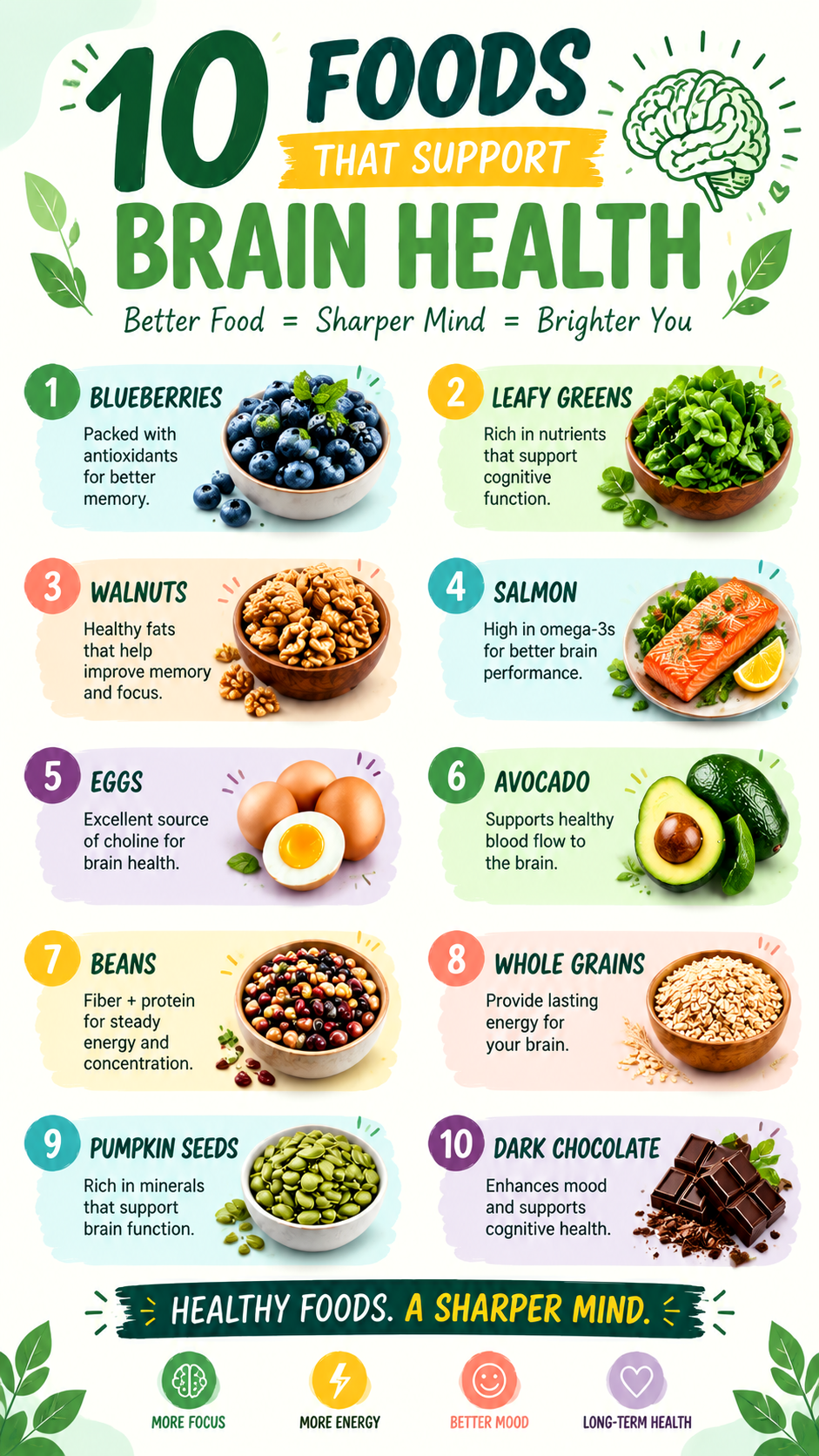
10 Foods That Support Focus, Memory, and Brain Health
1. Berries: Nature’s Antioxidant Powerhouse
Berries such as blueberries, strawberries, raspberries, and blackberries are popular choices for a brain-supporting diet. Their vibrant colors come from plant compounds that help protect cells from damage caused by oxidative stress.
Adding berries to breakfast bowls, smoothies, yogurt, or snacks is an easy way to include more antioxidant-rich foods in your routine. Their natural sweetness also makes them a satisfying alternative to highly processed desserts.
2. Leafy Greens for Essential Nutrients
Leafy green vegetables such as spinach, kale, and other greens are packed with important vitamins and minerals. They are a simple addition to meals and can support a balanced diet focused on overall wellness.
Try adding leafy greens to salads, soups, wraps, or smoothies. Creating variety with different vegetables helps make healthy eating more enjoyable and sustainable.
3. Walnuts: A Healthy Fat Choice
Walnuts are known for their healthy fats, plant compounds, and satisfying texture. They make a convenient snack and can easily be added to oatmeal, salads, or homemade energy bites.
Nuts provide a combination of nutrients that fit well into a balanced eating plan. A small serving can add flavor and nutrition without requiring complicated preparation.
4. Fatty Fish and Omega-3 Nutrients
Fatty fish such as salmon are well-known sources of omega-3 fatty acids. These healthy fats are important components of a diet designed to support brain and heart health.
Including fish in meals a few times throughout the week can be a flavorful way to add important nutrients. Baked, grilled, or roasted preparations keep meals simple and nutritious.
5. Eggs: A Source of Brain-Friendly Nutrients
Eggs are a versatile food that provides protein and nutrients often associated with brain function. They can be enjoyed in many ways, from simple breakfasts to healthy meal combinations.
Pairing eggs with vegetables or whole grains can create a balanced meal that supports steady energy throughout the day.
6. Avocado for Healthy Fats
Avocados contain healthy fats and are a popular addition to balanced diets. Their creamy texture makes them easy to use in salads, spreads, smoothies, and meals.
Healthy fats are important because they help create satisfying meals and support overall nutritional balance.
7. Beans for Long-Lasting Energy
Beans provide fiber, plant-based protein, and important nutrients. They are an affordable and flexible ingredient that can support meals designed for steady energy.
Add beans to soups, salads, grain bowls, or healthy recipes for a filling option that keeps meals nutritious and satisfying.
8. Whole Grains for Consistent Fuel
Whole grains provide complex carbohydrates that help supply energy throughout the day. Foods like oats, brown rice, and whole grain options can be part of a balanced eating pattern.
Choosing whole grains instead of highly refined options can help create more nutrient-rich meals.
9. Pumpkin Seeds: Small but Nutrient Rich
Pumpkin seeds are a convenient snack packed with minerals and plant-based nutrients. They can be sprinkled over salads, yogurt, oatmeal, or enjoyed on their own.
Their crunchy texture makes them an easy way to add variety to everyday meals.
10. Dark Chocolate for a Healthy Treat
Dark chocolate with a higher cocoa content can be enjoyed as an occasional treat. Cocoa contains natural compounds and antioxidants that make it a popular choice among wellness-focused foods.
Enjoying a small amount alongside a balanced diet allows you to appreciate its flavor while keeping your overall eating habits healthy.
How to Add More Brain Healthy Foods to Your Routine
Making healthier choices does not require completely changing your lifestyle. Small adjustments can make a noticeable difference over time.
- Add berries or nuts to your morning breakfast.
- Include a serving of vegetables with lunch and dinner.
- Replace processed snacks with nutrient-rich options.
- Experiment with new recipes using whole foods.
- Keep healthy snacks available for busy days.
Creating Balanced Meals
A simple way to build brain-supporting meals is to combine different food groups. Pair protein with healthy fats, add colorful vegetables, and choose quality carbohydrates for lasting energy.
For example, a meal with salmon, leafy greens, avocado, and whole grains combines several nutrient categories in one satisfying dish.
Expert Insight
Consistency matters more than perfection. A variety of nutrient-rich foods creates a stronger foundation for supporting energy, concentration, and overall wellness.
Simple Tips for Better Brain Nutrition
- Plan meals around whole, minimally processed ingredients.
- Drink enough water throughout the day.
- Combine different colors of fruits and vegetables.
- Enjoy treats mindfully as part of a balanced lifestyle.
At a Glance
- Berries add antioxidants to your diet.
- Healthy fats support balanced nutrition.
- Whole foods provide valuable nutrients.
- Small changes can create healthier habits.
Conclusion: Nourish Your Brain One Meal at a Time
Supporting brain health can begin with simple choices made every day. The foods you choose can help create a foundation for better nutrition, steady energy, and a healthier lifestyle.
By adding more brain boosting foods like berries, leafy greens, walnuts, fish, eggs, avocado, beans, whole grains, pumpkin seeds, and dark chocolate, you can enjoy delicious meals while caring for your overall wellness.
A balanced approach is the key. Focus on variety, enjoy your meals, and make small improvements that fit your routine. Your brain deserves nourishing choices every day.
Tags
Brain Health
Brain Boosting Foods
Healthy Eating
Memory Support
Focus Foods
Cognitive Wellness
Nutrition Tips