Productivity Systems That Work on Bad Days Flexible Habits for Consistency
Productivity is often presented as a perfect routine filled with early mornings, endless energy, and flawless consistency. But real life does not work that way. Some days feel focused and easy, while others bring stress, exhaustion, distractions, or unexpected challenges. The key to sustainable productivity is not creating a system that only works when everything goes right. It is building productivity systems that continue to support you even on your hardest days.
The most effective routines are flexible, forgiving, and realistic. They help you maintain momentum without creating unnecessary pressure. Instead of chasing perfection, you can create simple habits, minimum versions of tasks, and supportive structures that make progress possible even when motivation is low.
Key Takeaways
- Build flexible productivity habits that adapt to your energy levels.
- Create minimum versions of routines for difficult days.
- Focus on one important task instead of overwhelming to-do lists.
- Use anchor routines to create stability and reduce decision fatigue.
- Develop reset plans that help you return to your habits gently.
Why Traditional Productivity Systems Often Fail
Many productivity methods are designed around your most energetic moments. They assume you will always wake up motivated, complete every task, and have enough mental space to handle a full schedule. While these systems can feel exciting at first, they often collapse when life becomes demanding.
A system that depends entirely on motivation is fragile. When you experience a stressful week or a low-energy day, the routine disappears because it was never designed for those situations.
Important: A strong productivity system is not measured by how impressive it looks on your best days. It is measured by how well it supports you when your energy, focus, and motivation are limited.
The goal is not to lower your standards. The goal is to create a structure that keeps you moving forward while respecting your current capacity.
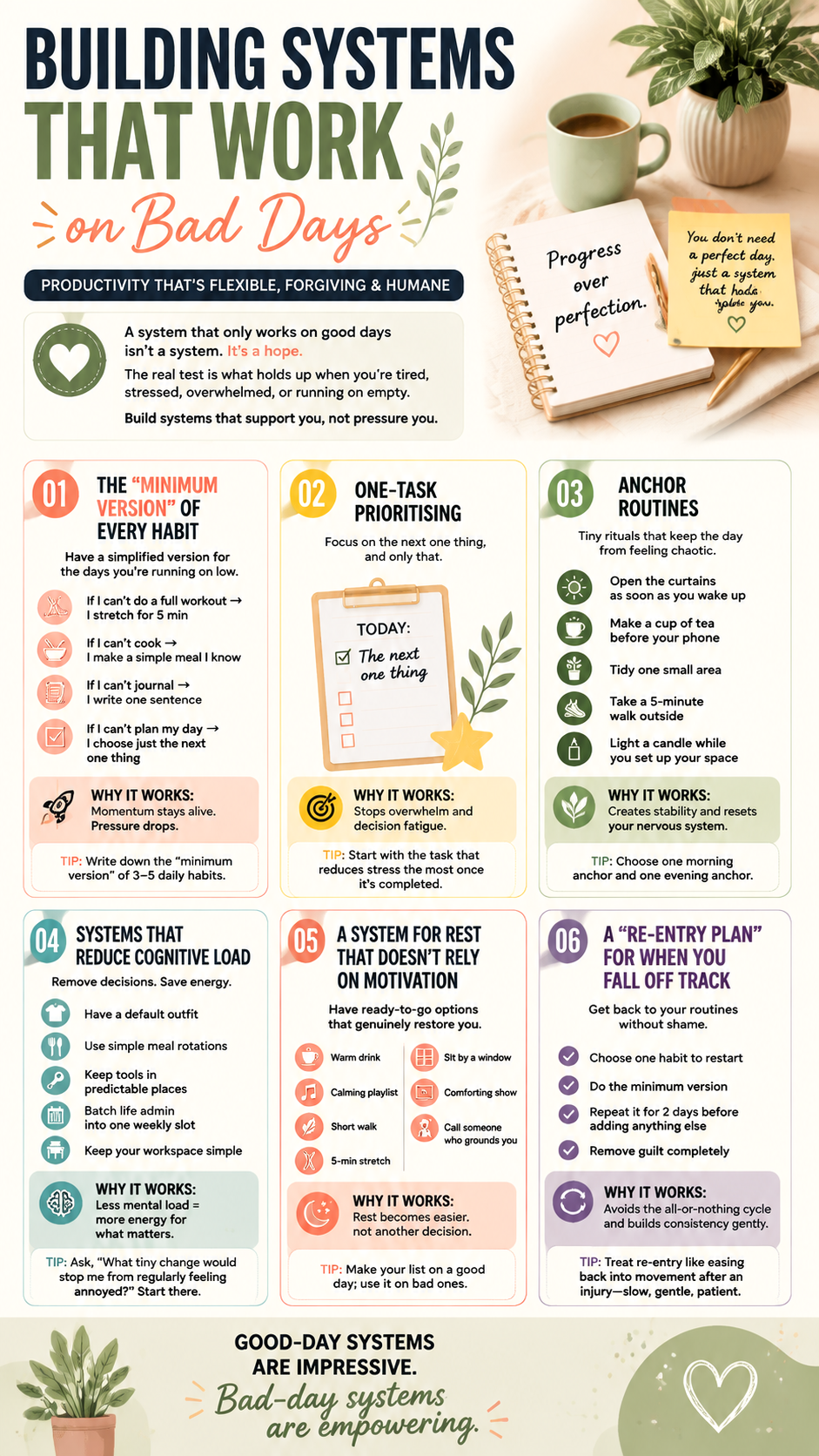
Build a Minimum Version of Every Important Habit
One of the most powerful ways to create resilient habits is to develop a minimum version of your daily routines. This means creating the smallest possible action that keeps the habit alive.
What Is a Minimum Version?
A minimum version is a simplified form of a habit that you can complete even when you are tired, busy, or overwhelmed. It removes the pressure of doing everything perfectly while protecting your consistency.
- Instead of a full workout, do five minutes of stretching.
- Instead of cooking a complicated meal, prepare a simple nourishing option.
- Instead of writing several journal pages, write one sentence.
- Instead of planning your entire week, choose your next important action.
This approach helps you avoid the all-or-nothing mindset. Small actions may seem insignificant, but they create continuity. Consistency is built through repeated effort, not occasional bursts of perfection.
Prioritize One Task Instead of Everything at Once
Overwhelm often comes from looking at everything that needs to be done at the same time. A long task list can create stress before you even begin.
A flexible productivity system focuses on identifying the next meaningful step. Instead of asking, “How can I finish everything today?” ask, “What is the one thing that would make today feel successful?”
The Power of Single-Task Prioritizing
Single-task prioritizing reduces decision fatigue and helps you direct your limited energy toward what matters most. It creates clarity and prevents you from spending your day constantly switching between unfinished tasks.
- Choose your most important task.
- Break it into the smallest possible action.
- Complete that step before adding more pressure.
- Celebrate progress instead of focusing only on completion.
Create Anchor Routines for Daily Stability
Anchor routines are small habits that create structure throughout your day. They act as reminders that help you reconnect with yourself when everything feels chaotic.
These routines do not need to be complicated. The most effective anchors are simple actions that naturally fit into your lifestyle.
Examples of Helpful Anchor Habits
- Opening the curtains after waking up.
- Making a warm drink before checking your phone.
- Tidying one small area of your space.
- Taking a short walk outside.
- Creating a calming evening routine.
Reduce Cognitive Load With Simple Systems
Your brain has limited energy for making decisions. When you constantly decide what to wear, what to eat, where to find your tools, or when to complete basic tasks, you use valuable mental energy before starting important work.
Ways to Make Daily Life Easier
- Create default outfits for busy mornings.
- Keep important tools in predictable places.
- Use simple meal rotations.
- Schedule similar tasks together.
- Keep your workspace organized and distraction-free.
These small systems create more space for creativity, focus, and meaningful work. Productivity is not only about doing more. It is also about removing unnecessary friction.
Build a Rest System That Supports Recovery
Rest is an important part of productivity, not the opposite of it. Many people struggle because they treat rest as something they earn only after completing everything.
A healthier approach is creating intentional rest options that help you recharge without guilt.
Ideas for Restorative Activities
- Listening to a calming playlist.
- Reading near a window.
- Taking a short walk.
- Enjoying a comforting drink.
- Calling someone who supports you.
When rest becomes part of your system, it stops feeling like a setback. Instead, it becomes a tool that helps you return with more energy.
Create a Re-Entry Plan for When You Fall Behind
Everyone loses momentum sometimes. The difference between sustainable productivity and burnout is knowing how to restart without shame.
A re-entry plan gives you a simple path back to your routines. Instead of trying to fix everything immediately, you focus on rebuilding one small habit at a time.
A Simple Restart Method
- Choose one habit to restart.
- Complete the minimum version.
- Repeat it for a few days.
- Add more only when it feels manageable.
Important: Returning gently is often more effective than trying to create a perfect comeback. Sustainable progress comes from patience, repetition, and realistic expectations.
At a Glance
- Design systems for real life, not perfect conditions.
- Keep habits alive with smaller actions.
- Reduce stress by simplifying decisions.
- Create routines that support both action and recovery.
Conclusion: Build Systems That Support You
The best productivity system is not the one that looks the most impressive. It is the one that helps you continue moving forward when life feels difficult.
By creating flexible habits, simple routines, and realistic expectations, you can build a productivity approach that works on both good days and bad days. Progress does not require constant motivation. It requires a system that meets you where you are.
Remember that productivity should make your life easier, not heavier. Build routines that support your energy, protect your focus, and help you create steady progress with more patience and balance.
Tags
Productivity Systems
Habit Building
Time Management
Daily Routines
Self Improvement
Mindful Productivity