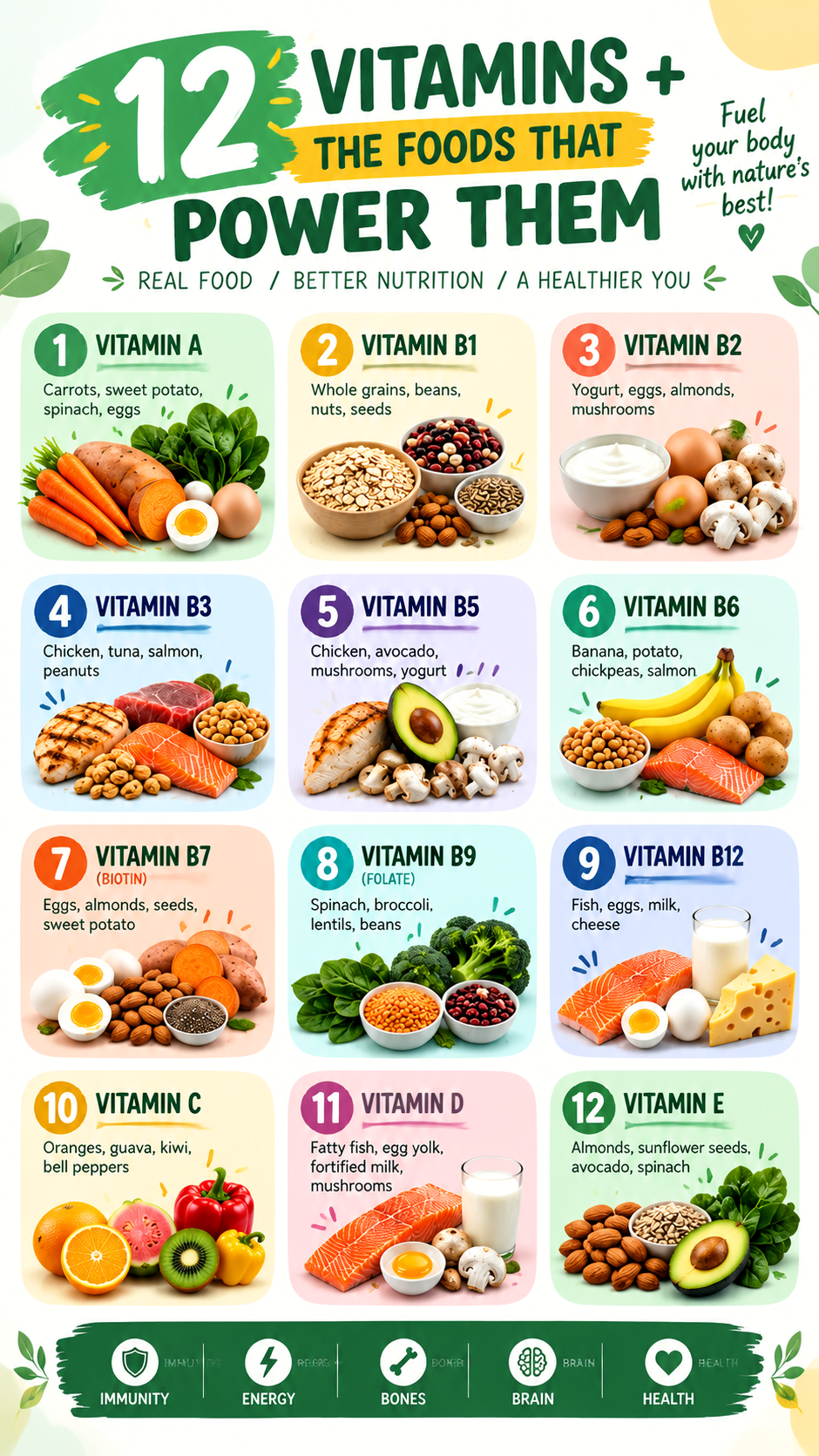
13 Essential Vitamins and the Best Foods to Get Them Vitamin-Rich Food Guide
Eating a balanced diet becomes much easier when you know which foods provide the vitamins your body needs. From colorful fruits and leafy greens to eggs, nuts, fish, and whole grains, everyday ingredients can help you build nutritious meals that support energy, immunity, healthy bones, and overall wellness. The best part is that you do not need an expensive shopping list or complicated recipes to enjoy a variety of vitamin-rich foods.
This simple guide explores 13 essential vitamins and the foods that naturally provide them. Whether you want to improve your grocery shopping habits, add more variety to your meals, or understand the nutritional value of familiar ingredients, these practical tips can help you make more informed food choices.
Key Takeaways
- Eat a variety of colorful fruits and vegetables to obtain different vitamins.
- Include whole grains, beans, nuts, seeds, eggs, and other nutrient-rich foods throughout the week.
- Vitamins A, D, E, and K are fat-soluble, while vitamin C and the B vitamins are water-soluble.
- Vitamin B12 is found naturally mainly in animal-derived foods and certain fortified products.
- Build balanced meals instead of relying on a single food or vitamin supplement.
- Use a vitamin-rich grocery list to make healthy eating more convenient and consistent.
Why Vitamins Matter for Everyday Health
Vitamins are essential micronutrients that help your body carry out many important functions. They contribute to normal growth, energy metabolism, immune function, vision, bone maintenance, and the health of your skin and nervous system. Although your body needs them in relatively small amounts, getting enough of each vitamin is an important part of a balanced diet.
Different vitamins perform different jobs, which is why eating a varied selection of foods is more useful than concentrating on just one nutrient. Carrots provide beta-carotene, which the body can convert into vitamin A. Citrus fruits supply vitamin C, while leafy greens contribute folate and vitamin K. Eggs, fish, dairy products, legumes, and whole grains offer other valuable nutrients.
Important: No single food provides every vitamin in the amounts your body needs. Aim for variety across your meals and throughout the week. A balanced eating pattern is generally more helpful than expecting one so-called superfood to meet all your nutritional needs.
13 Essential Vitamins and the Foods That Provide Them
The following list covers the 13 recognized vitamins, including the eight B vitamins. Each has a distinct role in the body and can be obtained through a combination of ordinary foods and, when necessary, appropriately fortified products or supplements.
1. Vitamin A: Carrots, Sweet Potatoes, and Spinach
Vitamin A supports normal vision, immune function, growth, and the maintenance of healthy skin and other tissues. It is particularly important for normal vision in dim light.
Good food sources include carrots, sweet potatoes, spinach, eggs, and other vegetables rich in carotenoids. Orange and dark green vegetables are especially useful choices because they supply beta-carotene, a compound your body can convert into vitamin A.
Easy Ways to Eat More Vitamin A
- Add grated carrots to salads, soups, or homemade sauces.
- Roast sweet potatoes as a colorful side dish.
- Blend spinach into omelets, pasta dishes, or smoothies.
Pairing vegetables that contain carotenoids with a little dietary fat, such as olive oil or avocado, can help your body absorb these fat-soluble compounds.
2. Vitamin B1: Whole Grains, Beans, Nuts, and Seeds
Vitamin B1, also called thiamin, helps your body convert carbohydrates into usable energy. It also supports normal nerve and muscle function.
Whole grains, beans, lentils, nuts, seeds, and pork are useful sources. Choosing whole-grain bread, oats, and brown rice can help increase your intake while adding fiber to your meals.
For an easy breakfast, prepare oatmeal with nuts and seeds. At lunch or dinner, include beans or lentils alongside whole grains for a satisfying, nutrient-rich combination.
3. Vitamin B2: Yogurt, Eggs, Almonds, and Mushrooms
Vitamin B2, known as riboflavin, helps the body release energy from food and supports normal cellular function. It also contributes to the maintenance of healthy skin and other tissues.
Milk, yogurt, eggs, almonds, mushrooms, and certain fortified grain products can provide riboflavin. Including a variety of these ingredients makes it easier to obtain the vitamin through everyday meals.
- Enjoy plain yogurt with fruit for breakfast or a snack.
- Add mushrooms to omelets, soups, and grain bowls.
- Keep a small portion of almonds available for convenient snacking.
4. Vitamin B3: Chicken, Tuna, Salmon, and Peanuts
Vitamin B3, or niacin, supports energy metabolism and helps maintain the normal function of the skin, digestive system, and nervous system.
Chicken, tuna, salmon, peanuts, and whole grains are useful sources. The body can also make some niacin from the amino acid tryptophan, which is present in protein-containing foods.
Try adding grilled chicken to a salad, serving salmon with vegetables, or spreading peanut butter on whole-grain toast. These simple combinations provide niacin along with other nutrients.
5. Vitamin B5: Chicken, Avocado, Mushrooms, and Yogurt
Vitamin B5, also called pantothenic acid, helps the body produce coenzyme A, a compound involved in processing fats, carbohydrates, and proteins. It also plays a role in producing certain hormones and other substances.
Pantothenic acid occurs in many foods, including chicken, mushrooms, avocados, yogurt, eggs, legumes, and whole grains. Because it is widely distributed in the food supply, a varied diet generally helps provide it.
Make a simple lunch bowl with chicken, avocado, leafy greens, and whole grains. For a meat-free option, use beans or lentils with mushrooms and vegetables.
6. Vitamin B6: Bananas, Potatoes, Chickpeas, and Salmon
Vitamin B6 is involved in protein metabolism, normal nervous system function, and the production of neurotransmitters. It also helps the body form hemoglobin, the protein in red blood cells that carries oxygen.
Bananas, potatoes, chickpeas, fish, poultry, and some fortified cereals provide vitamin B6. Adding chickpeas to salads or making a potato and vegetable side dish can help increase your intake without complicated meal preparation.
For a practical dinner, combine baked salmon with potatoes and steamed vegetables. Alternatively, prepare a chickpea salad with tomatoes, cucumber, herbs, and olive oil.
7. Vitamin B7: Eggs, Almonds, Seeds, and Sweet Potatoes
Vitamin B7, commonly called biotin, helps enzymes process fats, carbohydrates, and proteins. It is essential for normal metabolism, although severe biotin deficiency is uncommon in people who eat a varied diet.
Eggs, nuts, seeds, sweet potatoes, legumes, and some other foods provide biotin. Cooked eggs are a convenient option, and nuts or seeds can add both flavor and texture to oatmeal, salads, and yogurt bowls.
One useful food-safety detail is that raw egg whites contain avidin, a protein that can interfere with biotin absorption when consumed frequently in large amounts. Cooking egg whites reduces this effect.
8. Vitamin B9: Spinach, Broccoli, Lentils, and Beans
Vitamin B9 is known as folate when it occurs naturally in food. It is necessary for DNA synthesis, cell division, and the formation of red blood cells. Adequate folate is especially important before and during early pregnancy because it supports the developing baby’s neural tube.
Leafy greens, broccoli, lentils, beans, peas, and citrus fruits are helpful food sources. Many countries also require or permit folic acid to be added to selected grain products. Folic acid is the form commonly used in supplements and fortified foods.
Build folate-rich meals with lentil soup, spinach salads, bean stews, or broccoli served alongside whole grains. If pregnancy is possible or planned, ask a healthcare professional about recommended folic acid supplementation, as food alone may not provide the recommended preventive amount.
9. Vitamin B12: Fish, Eggs, Milk, and Cheese
Vitamin B12 supports normal nerve function, DNA production, and red blood cell formation. Unlike most other B vitamins, it is not naturally present in meaningful amounts in most unfortified plant foods.
Fish, shellfish, meat, eggs, milk, and cheese are common sources. Some plant-based milks, breakfast cereals, and nutritional yeast products are fortified with B12, but the amount depends on the product and serving size.
Important: People following vegan diets need a reliable source of vitamin B12, usually through fortified foods or an appropriate supplement. Older adults and people with certain digestive conditions or medications may also have difficulty absorbing enough B12. If you are concerned about deficiency, speak with a healthcare professional.
10. Vitamin C: Oranges, Guava, Kiwi, and Bell Peppers
Vitamin C is an antioxidant that supports normal immune function, collagen production, wound healing, and the absorption of non-heme iron from plant foods. It is especially easy to obtain by eating a variety of fruits and vegetables.
Oranges, guava, kiwi, strawberries, broccoli, and bell peppers are excellent choices. Red and yellow peppers can provide substantial amounts of vitamin C, making them useful additions to meals beyond the fruit bowl.
- Add orange segments or kiwi to breakfast.
- Include sliced bell peppers in salads, wraps, or stir-fries.
- Combine beans or lentils with vitamin C-rich vegetables to support iron absorption.
Vitamin C can be reduced by prolonged storage and cooking, so eating some fruits and vegetables raw or lightly cooked can help preserve it.
11. Vitamin D: Fatty Fish, Egg Yolks, and Fortified Milk
Vitamin D helps the body absorb calcium and phosphorus, supporting normal bone and muscle function. It also plays a role in immune function. Unlike most vitamins, the body can produce vitamin D in the skin when it is exposed to ultraviolet B radiation from sunlight.
Food sources include fatty fish such as salmon, egg yolks, and foods fortified with vitamin D, including certain types of milk and plant-based alternatives. Mushrooms exposed to ultraviolet light can also provide vitamin D, although their vitamin D content varies.
Good to know: Vitamin D can be difficult to obtain in sufficient amounts from food alone, depending on your diet, sun exposure, age, and other individual factors. Check food labels for fortification and ask a healthcare professional whether testing or supplementation is appropriate for you.
12. Vitamin E: Almonds, Sunflower Seeds, Avocado, and Spinach
Vitamin E is a fat-soluble antioxidant that helps protect cells from oxidative damage. It also contributes to normal immune function and helps maintain healthy body tissues.
Almonds, sunflower seeds, vegetable oils, avocado, and spinach are useful sources. Nuts and seeds are convenient options because they provide vitamin E alongside unsaturated fats and other nutrients.
Sprinkle sunflower seeds over a salad, add almonds to oatmeal, or combine avocado with whole-grain toast. These small changes can add nutritional variety without requiring a major change to your eating habits.
Although vitamin E supplements are available, high doses can increase the risk of bleeding, particularly when combined with certain medications. Food sources are generally the best starting point for meeting everyday nutritional needs.
13. Vitamin K: Spinach, Kale, Broccoli, and Cabbage
Vitamin K is essential for normal blood clotting and contributes to bone health. Leafy green vegetables are among its richest food sources, making them valuable ingredients in a balanced eating pattern.
Spinach, kale, broccoli, cabbage, and other green vegetables provide vitamin K. It is also found in certain vegetable oils and fermented foods.
Try adding spinach to eggs, roasting broccoli for dinner, or preparing a cabbage salad with a simple olive oil dressing. Rotating different green vegetables throughout the week helps provide a wider range of nutrients.
People taking warfarin, a medication that affects blood clotting, should keep their vitamin K intake relatively consistent and follow their healthcare professional’s advice. They generally do not need to avoid leafy greens entirely.
How to Build a Vitamin-Rich Grocery List
Knowing which foods contain vitamins is useful, but turning that knowledge into a practical shopping routine makes healthy eating easier. Rather than buying every ingredient on a long list, focus on a manageable selection that fits your budget, preferences, and usual meals.
Start With Colorful Fruits and Vegetables
Choose several colors each week. Carrots and sweet potatoes provide beta-carotene, leafy greens supply folate and vitamin K, and citrus fruits and bell peppers contribute vitamin C. Frozen produce can also be a practical choice, especially when fresh options are expensive or unavailable.
You do not need to buy exotic ingredients to improve the nutritional quality of your meals. Common produce such as spinach, cabbage, oranges, bananas, carrots, and broccoli can fit into many different dishes.
Include Protein-Rich Foods
Eggs, fish, chicken, dairy products, beans, lentils, and chickpeas provide protein and various vitamins. Choose a mixture of animal and plant protein sources according to your dietary preferences. If you eat mostly plant-based foods, pay particular attention to reliable sources of vitamin B12.
Keep Whole Grains, Nuts, and Seeds on Hand
Oats, whole-grain bread, brown rice, almonds, peanuts, and sunflower seeds are versatile pantry staples. They can provide B vitamins and other nutrients while making meals more satisfying.
Store nuts and seeds properly to preserve their quality, and choose unsalted options when you want to limit sodium. Since these foods can be energy-dense, portion sizes can help you enjoy them as part of a balanced diet.
A Simple Weekly Shopping Checklist
- Vegetables: Spinach, carrots, broccoli, bell peppers, sweet potatoes, and cabbage.
- Fruits: Oranges, bananas, kiwi, guava, and seasonal fruit.
- Protein: Eggs, fish, chicken, yogurt, beans, lentils, and chickpeas.
- Whole grains: Oats, brown rice, whole-grain bread, and fortified cereals where appropriate.
- Nuts and seeds: Almonds, peanuts, sunflower seeds, and chia seeds.
- Other useful foods: Avocado, mushrooms, and vitamin D-fortified milk or suitable alternatives.
Why This Matters
A good grocery list makes nutritious choices easier to repeat. Select a few ingredients you enjoy, then combine them in different ways throughout the week. For example, spinach can go into eggs, salads, and soups, while chickpeas can become a salad topping, a stew ingredient, or a quick roasted snack. Consistency and variety matter more than creating a perfect meal every day.
How to Preserve Vitamins When Preparing Food
The way you store and prepare ingredients can influence their nutrient content. You do not need special equipment or complicated cooking methods to make nutritious meals, but a few practical habits can help preserve certain vitamins.
Choose Suitable Cooking Methods
Water-soluble vitamins, particularly vitamin C and some B vitamins, can be lost through prolonged cooking or when cooking water is discarded. Steaming, microwaving, and brief cooking with a small amount of water can help preserve some of these nutrients.
Boiling is still a perfectly reasonable cooking method. Consider using the cooking liquid in soups or stews when appropriate, because some vitamins and minerals may move into the water.
Store Produce Properly
Refrigerate produce that requires cold storage and avoid keeping cut fruits and vegetables exposed for unnecessarily long periods. Buy quantities you can realistically use, and consider frozen vegetables when you want convenient ingredients that last longer.
Include Some Healthy Fats
Vitamins A, D, E, and K are fat-soluble. Including a moderate amount of fat in meals can help the body absorb these vitamins. Olive oil, nuts, seeds, and avocado are useful options, while eggs and fish provide a combination of vitamins, protein, and fats.
Pro Tip: Pair roasted carrots with olive oil, serve spinach with eggs, or add avocado to a salad. These combinations are simple ways to include healthy fats alongside foods containing fat-soluble vitamins.
Can You Get All 13 Vitamins From Food?
Many people can obtain most of their vitamins through a varied, balanced diet. However, individual needs differ according to age, pregnancy status, dietary pattern, medical conditions, medication use, and the body’s ability to absorb nutrients.
Vitamin B12 deserves special attention for people who avoid all animal-derived foods. Vitamin D may also require additional attention because relatively few foods naturally contain substantial amounts. People who are pregnant or planning pregnancy should discuss folic acid recommendations with a healthcare professional.
Other people may need individualized advice because of digestive disorders, certain medications, restricted diets, or confirmed nutrient deficiencies. A clinician can help determine whether dietary changes, laboratory testing, or supplementation is appropriate.
Food First, Supplements When Needed
Vitamin supplements can be useful in specific situations, but taking more is not automatically better. Some vitamins can cause harm when consumed in excessive amounts, particularly fat-soluble vitamins that can accumulate in the body. Supplements may also interact with medicines.
Check the label before combining multivitamins with individual vitamin products. If you suspect a deficiency or have a medical condition that affects nutrition, seek professional guidance rather than starting high-dose supplements on your own.
Simple Ways to Add More Vitamins to Your Daily Meals
Small changes are often easier to maintain than a complete diet overhaul. Use the following ideas to incorporate more vitamin-rich foods into your regular routine.
- At breakfast: Prepare oatmeal with almonds, enjoy yogurt with fruit, or make eggs with spinach.
- At lunch: Add colorful vegetables to sandwiches, prepare a chickpea salad, or include a serving of fruit.
- At dinner: Serve fish or beans with whole grains and two different vegetables.
- For snacks: Choose fruit, a small portion of nuts, or vegetables with hummus.
- During meal preparation: Wash and prepare suitable produce ahead of time to make healthy options more convenient.
- When shopping: Rotate fruits, vegetables, protein sources, and whole grains rather than buying exactly the same foods every week.
Remember that a healthy diet does not have to be expensive or complicated. Seasonal produce, dried beans, lentils, oats, eggs, and frozen vegetables can all be useful choices. The most effective plan is one that suits your budget, tastes, culture, and daily schedule.
Vitamin-Rich Foods at a Glance
Quick Points
- For vision and normal immune function: Include carrots, sweet potatoes, spinach, and other vitamin A sources.
- For energy metabolism: Choose whole grains, legumes, nuts, eggs, and protein-rich foods that supply B vitamins.
- For normal bone health: Include vitamin D sources and calcium-rich foods as part of a balanced diet.
- For collagen production and iron absorption: Eat vitamin C-rich fruits and vegetables, such as oranges, kiwi, and bell peppers.
- For blood clotting and normal tissue function: Add leafy greens and other vitamin K-rich vegetables to your meals.
Conclusion: Make Every Grocery Trip Count
Understanding the 13 essential vitamins and the foods that provide them can make everyday nutrition feel simpler and more manageable. From carrots and spinach to salmon, eggs, beans, almonds, and whole grains, many familiar ingredients contribute important nutrients that support normal body functions.
The key is to build variety into your meals. Choose colorful fruits and vegetables, include different protein sources, keep nutritious pantry staples on hand, and use cooking methods that suit the ingredients. Pay particular attention to nutrients such as vitamin B12, vitamin D, and folate when your dietary needs or circumstances make them especially important.
You do not need to change everything overnight. Start by adding one new vegetable, trying a different source of protein, or preparing a simple vitamin-rich meal this week. Keep this guide handy when planning your next grocery trip, and use it to inspire balanced meals that fit your lifestyle.
Ready to make healthier grocery choices? Save this vitamin-rich food guide for later, use the list to plan your next shopping trip, and keep discovering easy ways to bring more variety and nutrition to your table.
Tags
Vitamin-Rich Foods
Essential Vitamins
Healthy Eating
Nutrition Tips
Healthy Grocery List
Balanced Diet
Food Sources of Vitamins
Healthy Food Ideas