25 Best Natural Sources of Magnesium Foods for Sleep, Energy, Muscles Heart Health
Magnesium is an essential mineral that supports many of the body’s everyday functions, from normal muscle movement and nerve signaling to energy production and bone health. The good news is that you can find magnesium in a wide variety of delicious, everyday foods. Almonds, spinach, pumpkin seeds, oats, black beans, avocados, dark chocolate, and whole grains are just a few examples of natural magnesium sources that can help you build a balanced diet.
If you want to improve your eating habits, add more variety to your meals, or discover foods that support overall wellness, understanding which foods contain magnesium is a great place to start. Instead of relying on a single ingredient, you can enjoy a colorful combination of nuts, seeds, leafy greens, legumes, fruits, and whole grains throughout the week.
Key Takeaways
- Magnesium supports normal muscle and nerve function, energy production, and bone health.
- Pumpkin seeds, almonds, cashews, spinach, beans, and whole grains are useful dietary sources.
- Eating a variety of magnesium-rich foods helps you obtain other important nutrients, too.
- Simple additions, such as seeds in oatmeal or spinach in an omelet, can make meals more nutritious.
- Food-first habits are a practical starting point for supporting daily nutritional needs.
- Magnesium-rich foods contribute to wellness, but they are not guaranteed treatments for sleep problems, stress, or other health conditions.
Why Magnesium Is Important for Your Body
Magnesium is involved in hundreds of biochemical reactions in the human body. Although it does not always receive as much attention as vitamins such as vitamin C or minerals such as calcium, it plays an important role in maintaining normal body function.
Your body uses magnesium to support muscle contraction and relaxation, nerve communication, protein production, and the conversion of food into usable energy. It also contributes to normal blood glucose regulation, blood pressure regulation, and the maintenance of healthy bones.
Because magnesium participates in so many processes, getting enough through your diet is an important part of general nutritional health. However, more magnesium is not automatically better. The goal is to meet your body’s needs through a balanced eating pattern rather than focusing on excessive intake.
Magnesium and Energy Production
Feeling energetic depends on many factors, including sleep quality, hydration, overall food intake, physical activity, and health. Magnesium contributes to the processes that allow your cells to produce and use energy from carbohydrates, fats, and proteins.
Foods such as oats, brown rice, quinoa, beans, nuts, and seeds can provide magnesium alongside carbohydrates, protein, fiber, and other nutrients. Combining these ingredients in balanced meals can help you maintain a more varied and satisfying diet.
Magnesium for Muscles and Nerves
Magnesium helps regulate normal muscle and nerve function. It works alongside other electrolytes, including calcium and potassium, to support the body’s communication systems and muscle activity.
Beans, leafy greens, nuts, seeds, and whole grains are particularly useful ingredients to include in meals when you want a broad range of nutrients. If you exercise regularly, these foods can complement an eating plan that provides sufficient calories, protein, fluids, and other essential nutrients.
Magnesium and Heart Health
Magnesium contributes to normal heart rhythm, nerve function, and blood pressure regulation. Getting adequate magnesium is one component of a heart-conscious eating pattern, especially when combined with vegetables, fruits, legumes, whole grains, nuts, and other minimally processed foods.
No single food can guarantee a healthy heart. Your overall diet, activity level, sleep habits, smoking status, genetics, and medical history all matter. Think of magnesium-rich foods as part of a larger approach to long-term wellness.
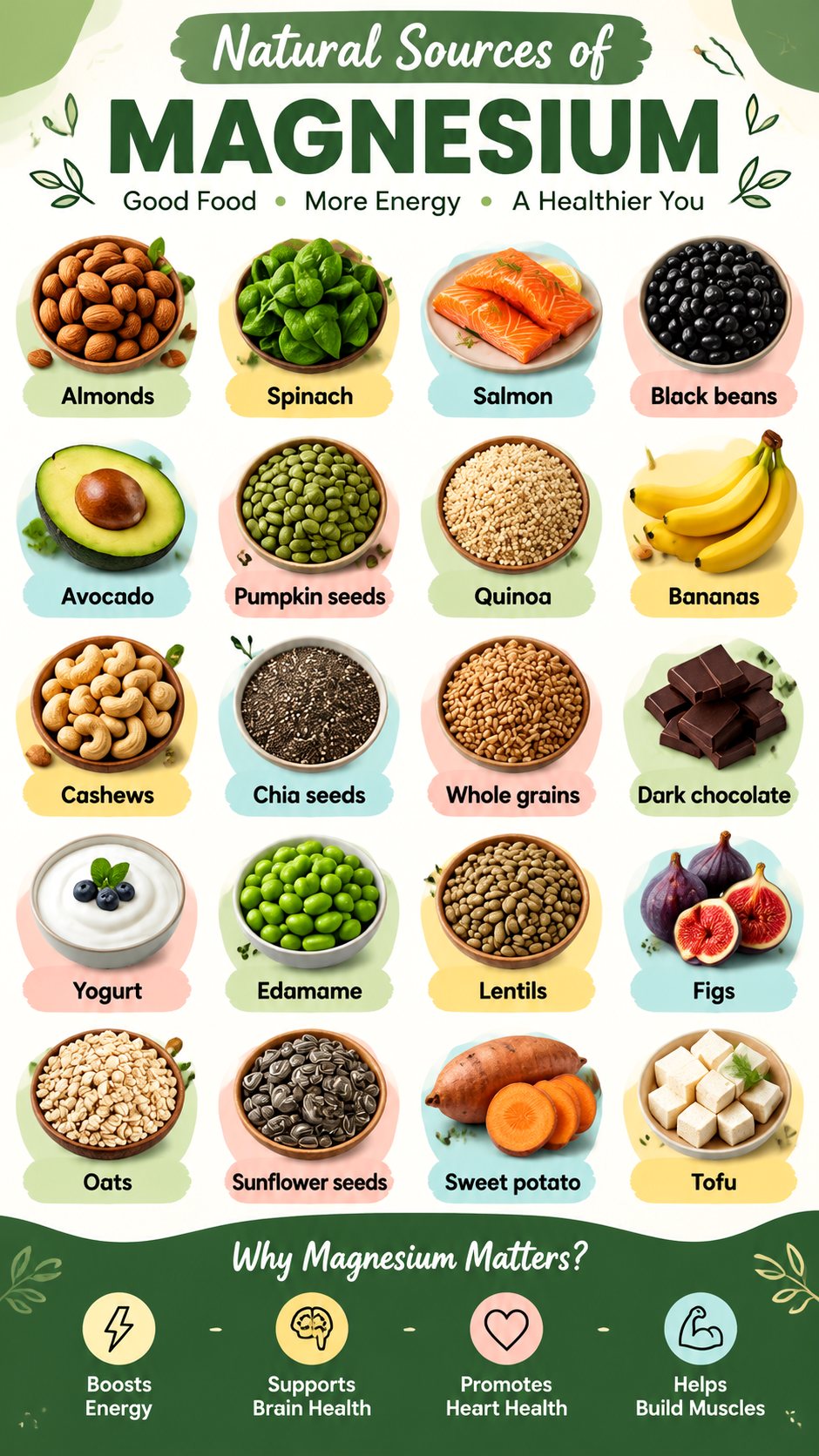
25 Natural Sources of Magnesium to Add to Your Diet
There is no need to depend on one particular food to get magnesium. The following ingredients offer different flavors, textures, and nutritional benefits, making it easier to create meals you genuinely enjoy.
1. Pumpkin Seeds
Pumpkin seeds are among the most magnesium-rich foods you can easily add to your routine. They also provide plant-based protein, healthy fats, and other minerals, making them a convenient choice for snacks and meal toppings.
Sprinkle pumpkin seeds over oatmeal, salads, roasted vegetables, or yogurt. You can also enjoy them as a snack or blend them into homemade trail mix. Choose unsalted varieties if you want to limit sodium intake.
2. Almonds
Almonds provide magnesium, vitamin E, fiber, protein, and unsaturated fats. Their combination of nutrients makes them a convenient option for people who want a satisfying snack between meals.
Keep a small portion in your bag, add chopped almonds to breakfast cereal, or use almond butter on whole-grain toast. Almonds are energy-dense, so a modest handful is usually a practical serving.
3. Cashews
Cashews offer magnesium, copper, zinc, and unsaturated fats. Their creamy texture makes them easy to incorporate into both sweet and savory dishes.
Add cashews to stir-fries, grain bowls, or homemade snack mixes. Soaked cashews can also be blended into creamy sauces and dressings. If you have a tree nut allergy, choose a suitable alternative instead.
4. Spinach
Spinach is a leafy green that supplies magnesium along with folate, vitamin K, and other beneficial nutrients. Cooked spinach is particularly concentrated by volume because it shrinks substantially during cooking.
Add fresh spinach to omelets, soups, pasta, or smoothies. You can also sauté it with garlic and olive oil for a quick side dish. Fresh and frozen spinach are both convenient options for everyday meals.
5. Dark Chocolate
Dark chocolate contains magnesium and cocoa-derived plant compounds. Its magnesium content varies according to the cocoa percentage and product formulation, so different bars can provide different amounts.
Enjoy a small piece after a meal, grate some over oatmeal, or combine dark chocolate with almonds for a simple snack. Check the nutrition label and choose a product with a cocoa percentage and sweetness level that suit your preferences.
Dark chocolate can fit into a balanced diet, but it should not replace more nutrient-dense staples such as beans, leafy greens, whole grains, and seeds.
6. Oats
Oats provide magnesium, complex carbohydrates, and soluble fiber, including beta-glucan. They make an affordable, versatile breakfast and can help create a meal that keeps you satisfied.
Prepare oatmeal with milk or a fortified alternative, then add banana slices, nuts, chia seeds, or berries. You can also use oats in homemade granola, overnight oats, and baked breakfast recipes.
7. Quinoa
Quinoa is a seed commonly prepared like a grain. It provides magnesium, fiber, and plant-based protein, making it a useful foundation for lunch and dinner.
Serve cooked quinoa with roasted vegetables, beans, herbs, and a source of protein. It also works well in chilled salads or as a substitute for rice in many dishes.
8. Brown Rice
Brown rice retains more of the grain’s outer layers than white rice, which generally means it provides more magnesium and fiber. It is an easy pantry staple for building balanced meals.
Pair brown rice with lentils, black beans, vegetables, tofu, fish, or chicken. Prepare a larger batch in advance and refrigerate it promptly for convenient meals throughout the week.
9. Black Beans
Black beans provide magnesium, plant-based protein, fiber, and folate. They are affordable, filling, and easy to use in a variety of cuisines.
Add them to burrito bowls, soups, salads, wraps, or homemade bean burgers. Canned black beans are especially convenient. Rinsing and draining them can help reduce some of their sodium content.
10. Lentils
Lentils are a valuable source of magnesium, protein, fiber, iron, and folate. They cook relatively quickly compared with many dried legumes and can be used in countless everyday recipes.
Prepare lentil soup, a vegetable stew, or a simple lentil salad with tomatoes, cucumber, and herbs. Combining lentils with whole grains creates a versatile, satisfying meal.
11. Chia Seeds
Chia seeds contain magnesium, fiber, plant-based omega-3 fatty acids, and other nutrients. When mixed with liquid, they absorb moisture and develop a gel-like texture.
Stir chia seeds into yogurt or oatmeal, blend them into smoothies, or prepare chia pudding with milk and fruit. Allow them to absorb enough liquid before eating rather than swallowing a large spoonful of dry seeds.
12. Flaxseeds
Flaxseeds provide magnesium, fiber, and alpha-linolenic acid, a plant-based omega-3 fatty acid. Ground flaxseeds are generally easier for the body to access nutritionally than whole seeds.
Add ground flaxseeds to oatmeal, smoothies, homemade muffins, or yogurt. Store them according to package instructions and keep ground flaxseed refrigerated when appropriate to help preserve freshness.
13. Sunflower Seeds
Sunflower seeds contain magnesium, vitamin E, and unsaturated fats. Their mild, nutty flavor makes them an easy addition to meals and snacks.
Sprinkle sunflower seeds over salads, grain bowls, or vegetable dishes. You can also add them to homemade granola or enjoy a small portion as a snack. Choose unsalted versions when limiting sodium.
14. Walnuts
Walnuts provide magnesium, fiber, and plant-based omega-3 fats. They have a rich flavor that works well in both sweet and savory recipes.
Add chopped walnuts to oatmeal, salads, or whole-grain toast. They also pair nicely with apples, berries, and plain yogurt for a simple snack or breakfast.
15. Peanut Butter
Peanut butter supplies magnesium, protein, and unsaturated fats. It is a convenient option for adding flavor and nutrients to snacks and quick meals.
Spread peanut butter on whole-grain toast, stir it into oatmeal, or blend it into a smoothie. When comparing products, look for options with simple ingredient lists and little or no added sugar or salt.
Peanuts are legumes rather than true tree nuts, but peanut allergies can be serious. Choose an alternative spread if peanuts are unsafe for you.
16. Avocados
Avocados provide magnesium, fiber, potassium, and monounsaturated fats. Their creamy texture makes them an easy way to add variety to meals.
Spread mashed avocado on whole-grain toast, add slices to salads, or serve it alongside eggs and vegetables. Avocado also works well in sandwiches, wraps, and grain bowls.
17. Bananas
Bananas are best known for their potassium content, but they also supply magnesium and carbohydrates. Their natural sweetness makes them useful in breakfast dishes and snacks.
Slice a banana over oatmeal, combine it with yogurt, or blend it with milk and peanut butter for a smoothie. Pairing fruit with nuts or yogurt adds protein and fat to make a more balanced snack.
18. Edamame
Edamame, or young soybeans, provide magnesium, plant-based protein, fiber, and other minerals. They can be served as a snack or incorporated into full meals.
Steam edamame and season it lightly, or add shelled beans to salads, stir-fries, noodle bowls, and rice dishes. Frozen edamame is a convenient option to keep on hand.
19. Tofu
Tofu is made from soybeans and provides protein along with varying amounts of magnesium. Its mineral content depends partly on how it is produced, so nutritional values can differ between products.
Add tofu to vegetable stir-fries, soups, curries, or grain bowls. Choose firm tofu for roasting and pan-frying, or silken tofu for smooth sauces and blended dishes.
20. Chickpeas
Chickpeas are another useful legume for obtaining magnesium, protein, fiber, and folate. They have a mild flavor that makes them suitable for many dishes.
Use chickpeas in hummus, salads, curries, roasted snacks, or vegetable stews. Pairing them with whole grains and vegetables creates a practical, budget-friendly meal.
21. Leafy Greens
Spinach is one example of a leafy green that contributes magnesium, but it is not the only option. Other greens, including Swiss chard and kale, can contribute to your overall nutrient intake.
Rotate different greens throughout the week. Use them in soups, salads, omelets, pasta, or sautéed side dishes. Variety helps keep meals interesting while providing a broader range of vitamins and minerals.
22. Sweet Potatoes
Sweet potatoes provide carbohydrates, fiber, potassium, and beta-carotene, which the body can convert into vitamin A. They also contribute some magnesium to your diet.
Bake or roast sweet potatoes and serve them with beans, leafy greens, fish, or tofu. For an easy lunch, fill a baked sweet potato with black beans, vegetables, and a spoonful of plain yogurt.
23. Yogurt
Yogurt is best known as a source of calcium and protein, but it can also contribute some magnesium. Its overall nutritional value depends on the type, serving size, and ingredients.
Choose plain yogurt and add fruit, oats, chia seeds, or chopped nuts. This simple combination can supply magnesium from several ingredients while providing protein and other nutrients.
24. Salmon and Mackerel
Fatty fish such as salmon and mackerel provide protein, vitamin B12, and beneficial omega-3 fats. They also contribute magnesium, although seeds, nuts, legumes, and some whole grains are often more concentrated sources.
Serve baked salmon with brown rice and vegetables, or add mackerel to a salad or whole-grain toast. If you eat fish regularly, vary your choices and follow local guidance on selecting fish with lower mercury levels.
25. Figs and Dates
Figs and dates provide carbohydrates, fiber, and a range of minerals. Their magnesium content varies by type and whether they are fresh or dried.
Enjoy dates with a few nuts, add chopped dried figs to oatmeal, or combine either fruit with plain yogurt. Because dried fruit is more concentrated in natural sugars and calories than fresh fruit by weight, a moderate portion is a sensible choice.
Why This Matters
The easiest way to increase dietary magnesium is to build meals around several complementary food groups. A bowl of oatmeal with almonds and chia seeds, for example, provides magnesium from multiple ingredients. A meal of lentils, brown rice, and spinach offers another combination. Small, repeatable choices are often more sustainable than trying to find one perfect superfood.
Which Magnesium-Rich Foods Are Best for Sleep?
Sleep is one of the themes often associated with magnesium-rich foods. Almonds, pumpkin seeds, oats, spinach, and other nutrient-dense ingredients can contribute to a balanced diet that supports general health. However, it is important to distinguish nutritional support from a proven treatment for insomnia.
Magnesium is involved in normal nerve function, and adequate intake is important for the body. Nevertheless, research has not established that eating a particular magnesium-rich food will reliably improve sleep for everyone. Results from studies of magnesium supplements and sleep have also been mixed.
If you want to build a sleep-friendly evening routine, consider a light, balanced snack if you are hungry, limit caffeine later in the day, keep a consistent bedtime, and make your sleeping environment comfortable.
Easy Evening Snack Ideas
- Plain yogurt with pumpkin seeds: Combines protein with magnesium-containing seeds.
- Oatmeal with almonds: Offers fiber, carbohydrates, and magnesium.
- Banana with peanut butter: Provides carbohydrates, fat, and some protein.
- A small serving of nuts: A convenient option when you want something simple.
Important: Persistent insomnia, severe fatigue, muscle weakness, or frequent cramps should not automatically be blamed on magnesium deficiency. These symptoms can have many causes. If they continue or interfere with daily life, speak with a qualified healthcare professional.
How Much Magnesium Do Adults Need?
Magnesium requirements vary according to age, sex, and life stage. The following United States dietary reference values provide a general guide for adults. Recommendations can differ slightly across countries.
- Adult men ages 19 to 30: 400 milligrams per day.
- Adult men ages 31 and older: 420 milligrams per day.
- Adult women ages 19 to 30: 310 milligrams per day.
- Adult women ages 31 and older: 320 milligrams per day.
Needs increase during pregnancy, and recommendations vary by age and circumstances. Children and teenagers also have different requirements. These figures refer to total daily magnesium from food and other sources, not a target that must come from a single meal.
It is useful to remember that food portions matter. A sprinkle of seeds contributes less magnesium than a larger serving, and different varieties of the same food may have different nutrient levels. You do not need to calculate every milligram to eat well. Focus on variety, appropriate portions, and consistency.
Signs You May Not Be Getting Enough Magnesium
Magnesium deficiency can occur when intake is consistently inadequate or when medical conditions and certain medications interfere with magnesium absorption or increase its loss. However, symptoms alone cannot confirm a deficiency.
Possible signs of significant magnesium deficiency include loss of appetite, nausea, fatigue, weakness, muscle cramps, and, in severe cases, abnormal heart rhythms or other serious complications. These symptoms are not specific to magnesium and can be associated with many other conditions.
Some people have a higher risk of magnesium deficiency, including those with certain gastrointestinal disorders, poorly controlled diabetes, alcohol dependence, or prolonged use of particular medications. A healthcare professional can assess individual risk and determine whether testing or treatment is appropriate.
Eating a varied diet with legumes, nuts, seeds, whole grains, and leafy greens is a useful foundation. If you suspect a deficiency, avoid self-diagnosing or taking high-dose supplements without professional guidance.
How to Add More Magnesium to Your Daily Meals
You do not need to completely change your diet to enjoy more magnesium-rich foods. A few practical adjustments can help you incorporate them into breakfast, lunch, dinner, and snacks.
Start with Breakfast
Breakfast is an easy place to include oats, nuts, seeds, and fruit. Prepare oatmeal with milk or a fortified alternative, then add banana slices, chia seeds, and almonds. If you prefer a savory breakfast, try eggs with spinach and whole-grain toast.
Build Balanced Lunches
Combine a whole grain, a legume or another protein source, and vegetables. Brown rice with black beans and spinach is one example. Quinoa with chickpeas, avocado, and leafy greens is another.
Preparing several ingredients ahead of time makes it easier to assemble meals on busy days. Cooked grains, washed greens, canned beans, and a container of seeds can become the foundation of several different lunches.
Make Dinner More Nutrient-Dense
Include beans, lentils, tofu, fish, or another protein source alongside vegetables and whole grains. Add pumpkin seeds or chopped nuts for extra texture, or serve roasted sweet potatoes with sautéed greens.
These combinations deliver more than magnesium alone. They can also supply protein, fiber, healthy fats, and a range of vitamins and minerals that work together in a balanced eating pattern.
Choose Smart Snacks
When hunger strikes between meals, try a handful of almonds, yogurt with seeds, hummus with vegetables, or fruit paired with peanut butter. These options can provide more nutritional variety than snacks made mostly from refined carbohydrates.
There is no need to avoid your favorite treats. Dark chocolate can fit into a balanced eating pattern, too. The goal is to make nutrient-rich foods regular choices while allowing room for flexibility and enjoyment.
A Simple One-Day Meal Plan Featuring Magnesium-Rich Foods
The following example shows how several natural magnesium sources can fit into an ordinary day. Portion sizes should reflect your appetite, activity level, health needs, and personal preferences.
Breakfast
Prepare oatmeal with milk or a suitable fortified alternative. Add banana slices, chia seeds, and a small handful of almonds. This breakfast combines carbohydrates, fiber, and several magnesium-containing ingredients.
Lunch
Make a quinoa bowl with black beans, spinach, avocado, tomatoes, and a simple olive oil and lemon dressing. This meal offers plant-based protein, fiber, healthy fats, and a variety of micronutrients.
Afternoon Snack
Enjoy plain yogurt topped with pumpkin seeds and a few berries. Alternatively, choose fruit with a small serving of nuts if you need something portable.
Dinner
Serve baked salmon or tofu with brown rice and sautéed leafy greens. Add lentils or another vegetable if you want a more substantial meal. This combination brings together protein, whole grains, and plant foods that contribute magnesium.
Optional Dessert
If you want something sweet, enjoy a small piece of dark chocolate or a few dates. Both can fit into an overall balanced diet without becoming the main focus of your magnesium intake.
Pro Tip: You do not have to eat every food on this list every day. Choose a few ingredients you enjoy, rotate your options throughout the week, and build a routine that suits your budget and lifestyle. Consistency matters more than chasing a perfect menu.
Can You Get Enough Magnesium from Food Alone?
Many people can meet their magnesium needs through a varied diet, especially when they regularly eat legumes, nuts, seeds, whole grains, and leafy vegetables. These foods also supply other nutrients, making them useful choices beyond their magnesium content.
However, dietary needs and health circumstances differ. Some people may need professional advice because of digestive conditions, medication use, restricted diets, or diagnosed deficiencies. Supplements can sometimes be appropriate, but they are not necessary for everyone.
Magnesium supplements may cause diarrhea, nausea, or abdominal discomfort, particularly at higher doses. Excessive magnesium from supplements or magnesium-containing medications can be dangerous, especially for people with impaired kidney function. Supplements can also interact with certain medications, including some antibiotics and medicines used to treat osteoporosis.
In the United States, the tolerable upper intake level for magnesium from supplements and medications is 350 milligrams per day for adults, unless a healthcare professional advises otherwise. This limit does not include magnesium naturally present in food. Other countries may use different guidance.
If you are considering a supplement, review your circumstances with a qualified healthcare professional or pharmacist. They can help determine whether one is necessary and whether it is safe alongside your existing medications.
Quick Points: Natural Sources of Magnesium at a Glance
Remember These Simple Tips
- Best seed choices: Pumpkin seeds, chia seeds, and flaxseeds.
- Convenient nut options: Almonds, cashews, and walnuts.
- Plant-based meal staples: Black beans, lentils, chickpeas, and edamame.
- Everyday grain choices: Oats, quinoa, and brown rice.
- Easy ways to begin: Add seeds to breakfast, include beans at lunch, and serve leafy greens with dinner.
Conclusion: Make Magnesium-Rich Foods Part of Your Routine
Adding natural sources of magnesium to your diet does not have to be complicated. Everyday foods such as pumpkin seeds, almonds, spinach, oats, black beans, quinoa, brown rice, avocado, and dark chocolate can help you create meals that are flavorful, varied, and nutritionally balanced.
Start with small changes that feel easy to maintain. Sprinkle seeds over breakfast, add beans to lunch, choose whole grains more often, or include leafy greens with dinner. As you build these habits, you will naturally discover more ways to enjoy magnesium-rich ingredients.
Remember that magnesium supports normal muscle and nerve function, energy production, and bone health, but no individual food guarantees better sleep, less stress, or improved heart health. A balanced diet works best alongside appropriate physical activity, adequate sleep, and personalized healthcare when needed.
The best approach is to enjoy a variety of nourishing foods rather than relying on one ingredient or supplement. Choose the options you love, keep your meals colorful, and make healthy eating a sustainable part of everyday life.
Tags
Magnesium-Rich Foods
Natural Magnesium Sources
Healthy Eating
Nutrition Tips
Balanced Diet
Mineral-Rich Foods
Everyday Wellness