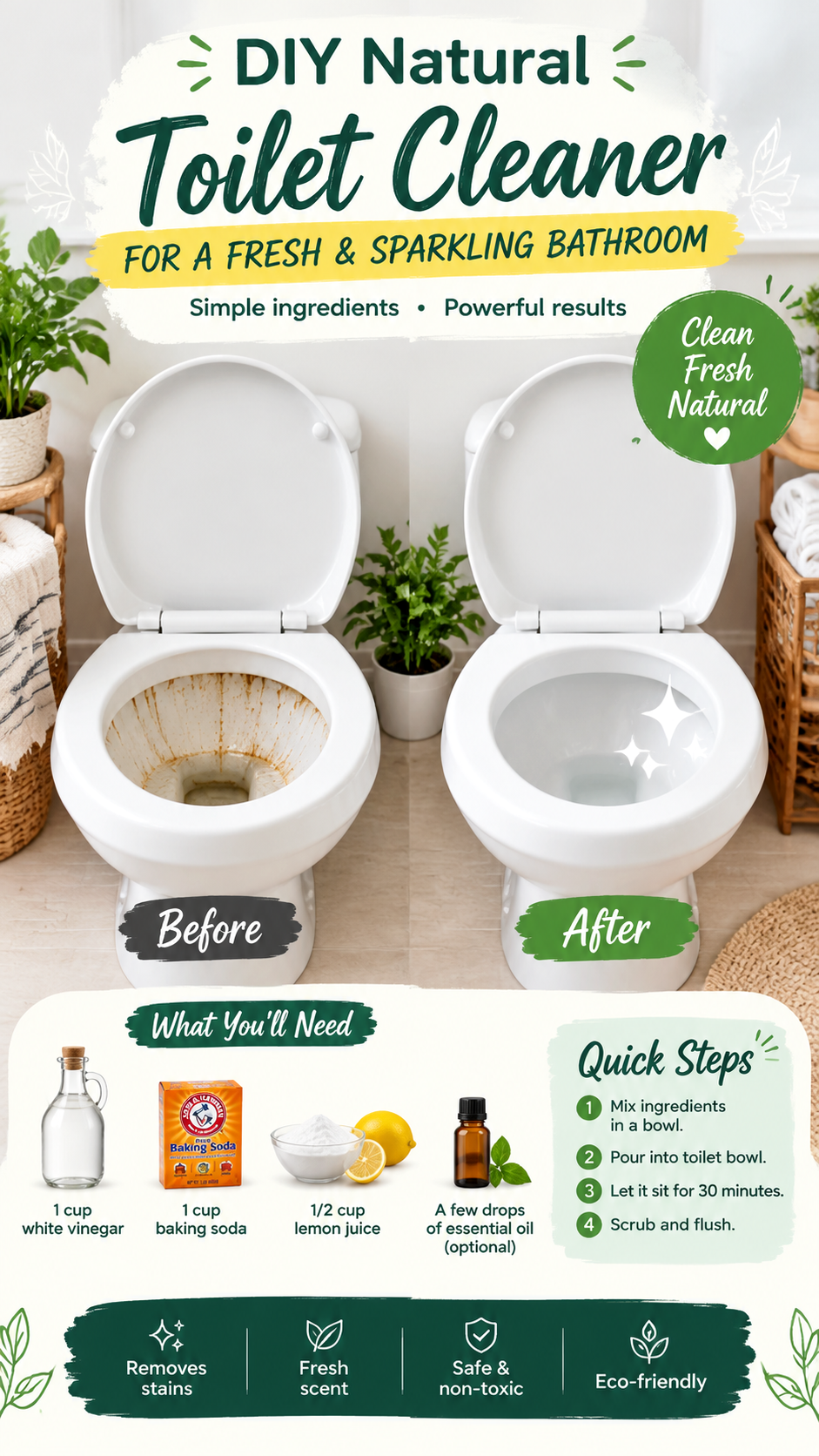
How to Remove Toilet Bowl Stains with Vinegar Baking Soda Before After
Stubborn toilet bowl stains can make even a freshly cleaned bathroom look dirty. Brown rings, yellow discoloration, and hard water marks often cling to the porcelain despite regular scrubbing. Fortunately, you may already have two useful household cleaning ingredients in your kitchen: white vinegar and baking soda. This simple cleaning combination is affordable, easy to try, and a popular option for refreshing a stained toilet bowl without relying on heavily scented cleaners.
When used correctly, vinegar and baking soda can help loosen certain deposits and make toilet cleaning less frustrating. The familiar fizzing reaction also makes this method satisfying to watch. However, results depend on the type of stain, the condition of the toilet, and how long the buildup has been present. Understanding what these ingredients can and cannot do will help you get better results while protecting your bathroom fixtures.
Key Takeaways
- White vinegar can help dissolve some mineral deposits and hard water stains.
- Baking soda provides mild abrasive action to help scrub away surface residue.
- Let the mixture sit before scrubbing to give it time to work on accessible deposits.
- Use a toilet brush rather than abrasive pads that may damage the porcelain finish.
- Severe mineral rings may require a dedicated toilet descaler or a repeat cleaning session.
- Never mix vinegar with bleach or other incompatible toilet cleaning products.
Why Use Vinegar and Baking Soda to Clean Toilet Bowl Stains?
Vinegar and baking soda are common household cleaning ingredients because they are inexpensive, widely available, and useful for different cleaning tasks. When combined in a toilet bowl, they create a visible fizz that can help loosen some surface residue. The two ingredients work in different ways, although the reaction itself is not a powerful all-purpose stain remover.
How White Vinegar Helps Remove Toilet Stains
White vinegar contains acetic acid, which can dissolve some mineral deposits left behind by hard water. These deposits may appear as chalky white marks, yellow rings, or brownish stains around the waterline. Their appearance varies depending on the minerals in the water and other substances that accumulate in the bowl.
Vinegar can help soften certain mineral deposits so they are easier to remove with a toilet brush. It is especially useful for light buildup that has not hardened into a thick, stubborn ring.
For best results, use ordinary white household vinegar and allow it to contact the stained area. If the stain sits above the waterline, you may need to apply vinegar directly to that area rather than simply pouring it into the bowl.
What Baking Soda Does in Toilet Cleaning
Baking soda, also known as sodium bicarbonate, is a mild alkaline powder that can provide gentle abrasive action when used with a brush or damp sponge on suitable surfaces. It helps loosen surface residue through mechanical scrubbing rather than acting as a strong mineral-dissolving chemical.
When sprinkled into the toilet bowl, baking soda can also help freshen the cleaning routine and make scrubbing feel more effective. Its mild texture is generally more suitable for routine cleaning than harsh scouring powders, although you should still avoid aggressive scrubbing that could damage a fixture’s finish.
What Happens When Vinegar and Baking Soda Mix?
When acidic vinegar meets alkaline baking soda, they react and release carbon dioxide gas, producing the familiar bubbling and fizzing effect. This reaction can help move loose particles and make it easier to distribute the mixture around the bowl.
However, the fizz does not automatically mean that the mixture is dissolving every stain. The acid and baking soda partially neutralize each other, so combining them does not create a supercharged cleaner. For mineral buildup, vinegar’s acidity is often the more important ingredient, while baking soda and brushing can assist with surface residue.
Important: The bubbling action is only one part of the process. For hard water rings, give the vinegar enough contact time and use gentle mechanical scrubbing. Thick mineral deposits may need a purpose-made toilet descaler rather than more baking soda.
What You Need to Clean a Stained Toilet Bowl
One advantage of this cleaning method is that it requires only a few basic supplies. Gather everything before you begin so you can complete the task without interruption.
- 1 cup of white vinegar: Helps loosen certain mineral deposits and waterline stains.
- 1 cup of baking soda: Provides mild abrasive assistance and creates a fizzing reaction when combined with vinegar.
- A toilet brush: Helps scrub the bowl, especially around the waterline and beneath the rim.
- Rubber gloves: Keep your hands protected while cleaning.
- A clean cloth: Useful for wiping the seat, lid, and exterior surfaces separately.
- Good ventilation: Open a window or use the bathroom exhaust fan when possible.
You do not need to purchase an expensive cleaning kit to try this method. Start with ordinary household ingredients, assess the results, and move to a more suitable product if the stains remain.
How to Clean Toilet Bowl Stains with Vinegar and Baking Soda
Follow these steps to clean a stained toilet bowl and improve its appearance. The method is best suited to light surface staining and some mineral buildup. Deep, old rings may need additional treatment.
Step 1: Prepare the Toilet Bowl
Start by flushing the toilet to remove loose debris. If the waterline covers the stain you want to treat, you can reduce the water level slightly by using the toilet brush to push water through the trap or by following your toilet manufacturer’s cleaning instructions. Lowering the water level is optional, but it can help cleaning ingredients reach some deposits directly.
Put on rubber gloves and make sure no bleach-based toilet cleaner or other incompatible chemical remains in the bowl. If you recently used a commercial cleaner, flush thoroughly and follow its label directions before introducing another product.
Inspect the stained areas so you can focus on the waterline, the lower bowl, and any visible marks beneath the rim.
Step 2: Add White Vinegar
Pour approximately one cup of white vinegar into the toilet bowl, aiming for the stained areas when possible. If brown or yellow marks sit above the waterline, use a small amount of vinegar on toilet paper or a suitable cloth to keep the affected area damp temporarily. Remove the paper before flushing, and never leave material where it could obstruct the toilet.
Allow the vinegar to sit for about 10 to 15 minutes initially. Light deposits may respond quickly, while more stubborn mineral buildup can need a longer contact period. Avoid leaving acidic products on delicate surfaces or following prolonged soaking practices that conflict with your toilet manufacturer’s recommendations.
Step 3: Add Baking Soda
Sprinkle approximately one cup of baking soda into the bowl. It will react with the vinegar, producing bubbles and foam. Add the powder gradually to help control the fizz and reduce splashing.
The mixture may move loose residue around the bowl, but it is important to remember that the bubbling action is not a substitute for brushing. Allow the reaction to settle before proceeding with the next step.
Step 4: Let the Mixture Sit
Leave the mixture in the bowl for approximately 15 to 30 minutes, provided this is compatible with your toilet’s care instructions. The 30-minute method shown in many household cleaning routines is a convenient starting point for light stains.
During this time, avoid adding other cleaning products. Let the fizzing finish naturally, and keep children and pets away from the bathroom while cleaning is underway.
Pro Tip: Contact time matters more than adding extra ingredients. For stains caused by hard water, keep the affected area in contact with white vinegar where practical, then brush gently. If the stain does not improve, identify the deposit before trying a stronger treatment.
Step 5: Scrub the Toilet Bowl
Use a toilet brush to scrub the bowl thoroughly. Pay particular attention to the waterline, the curve near the bottom, and the area beneath the rim, where mineral deposits and residue can accumulate.
Apply steady, moderate pressure rather than trying to scrape the stain away. Avoid steel wool, metal tools, and abrasive pads that could scratch or damage the porcelain surface. Scratches can make future cleaning more difficult by providing places for residue to collect.
If the stain begins to lighten, continue brushing until the loose residue is removed. If it remains unchanged, do not keep scrubbing aggressively. A different cleaning approach may be more effective.
Step 6: Flush and Inspect the Results
Flush the toilet to rinse away the mixture and loosened debris. Check the bowl in good lighting to see whether the stains have disappeared, faded, or remained in place.
Light discoloration may improve after one treatment, while heavier rings can remain visible. If the bowl looks cleaner but still has a thin mineral line, consider repeating the process once if the fixture’s care instructions permit it.
Finish by cleaning the seat, lid, flush handle, and exterior surfaces with an appropriate bathroom cleaner. Use a separate cloth for these areas rather than spreading toilet bowl residue around the bathroom.
Before and After: What Results Should You Expect?
A before-and-after comparison can help you judge whether a cleaning method is effective. In a stained toilet, the most obvious improvement may be the reduction of brown rings, yellow patches, and dull-looking mineral residue. A clean bowl should look more uniform, with fewer visible deposits around the waterline.
However, not every toilet stain responds in the same way. The ingredients, contact time, amount of buildup, and underlying cause all influence the final result.
Light Stains and Surface Residue
Light marks and loose residue are usually the easiest to improve with ordinary toilet cleaning and brushing. Vinegar may help loosen mineral traces, while baking soda can assist with gentle scrubbing. A single cleaning session may be enough to improve the bowl’s appearance.
Brown Rings and Hard Water Deposits
Brown rings near the waterline can be caused by mineral deposits, iron in the water, or a combination of residue and other staining substances. Vinegar may help with some mineral buildup, but it will not remove every type of discoloration.
If the ring remains after a careful cleaning, a toilet-safe product designed for mineral or rust stains may work better. Check the label to ensure the product is suitable for your toilet and follow its instructions exactly.
Deep, Stubborn Toilet Bowl Stains
Thick, hardened deposits often require a more targeted approach. Repeatedly adding baking soda may not make much difference if the main problem is a heavy layer of mineral scale. Excessive scrubbing is also unhelpful if it risks scratching the fixture.
For persistent buildup, consider a compatible toilet descaler or consult a plumbing professional if the deposit is unusually severe. If discoloration appears to be damage to the porcelain glaze rather than removable residue, cleaning may not restore the original finish.
Expert Insight
The best cleaning method depends on what caused the stain. Mineral scale often responds to an appropriate acidic cleaner, while ordinary surface grime may come away with brushing and routine cleaning. Identifying the likely cause helps you avoid wasting ingredients or damaging the bowl with unnecessary scrubbing.
How to Prevent Hard Water Stains from Returning
Once your toilet bowl looks cleaner, a few simple habits can help prevent new deposits from building up. Regular maintenance is often easier than trying to remove a thick ring after months of accumulation.
Clean the Bowl Regularly
Give the toilet bowl a routine cleaning at least weekly, adjusting the frequency to suit your household and water conditions. Brush around the waterline and beneath the rim, where deposits may develop unnoticed.
Use a toilet-safe cleaner for regular maintenance, and follow the product directions. Frequent light cleaning can help prevent ordinary residue from becoming a more difficult problem.
Address Mineral Buildup Early
If you notice a pale ring, rough patch, or recurring discoloration, address it before the deposit becomes thick. White vinegar can be a useful option for some light mineral stains, provided your toilet manufacturer’s guidance allows its use.
Homes with particularly hard water may develop deposits more quickly. If buildup repeatedly returns despite regular cleaning, a suitable water treatment solution or advice from a plumbing professional may help address the underlying issue.
Keep Your Toilet Brush Clean
A dirty toilet brush can transfer residue back into the bowl and create unpleasant odors. After cleaning, rinse the brush carefully, allow it to dry, and store it in a holder that does not trap standing water. Clean the holder regularly as well.
Replace a brush when its bristles become worn, damaged, or difficult to clean properly.
Keep the Bathroom Fresh
Clean the toilet seat, lid, flush handle, and surrounding surfaces regularly using products suitable for those materials. Wipe up splashes promptly, keep cleaning tools dry between uses, and maintain good ventilation to reduce lingering moisture and odors.
For a pleasant scent, use a bathroom air freshener or another product designed for that purpose. Adding essential oils directly to the toilet cleaning mixture is unnecessary and may introduce fragrance ingredients that irritate sensitive skin or airways.
Important Safety Tips for Natural Toilet Cleaning
Household ingredients can be useful, but natural does not automatically mean harmless. Use sensible precautions whenever cleaning a toilet, especially if other cleaning products have recently been used.
Never Mix Vinegar with Bleach
Safety warning: Never combine vinegar with chlorine bleach or a bleach-containing toilet cleaner. This combination can release toxic chlorine gas. Do not mix cleaning products unless their labels explicitly confirm that the combination is safe. If bleach or another chemical has been used in the toilet, follow its label directions and flush as instructed before switching products.
Also avoid mixing vinegar with other bathroom cleaners, descalers, or disinfectants unless the manufacturers specifically state that doing so is safe. Using one product at a time is the simplest way to reduce the risk of a hazardous reaction.
Protect Your Skin and Eyes
Wear household cleaning gloves and avoid splashing the mixture. Wash your hands after finishing, even if you wore gloves throughout the task. If a cleaning ingredient enters your eyes, rinse thoroughly with clean running water and seek medical guidance if irritation persists.
Use Gentle Cleaning Tools
Toilet porcelain is durable, but abrasive tools can still damage its surface or the finish of certain toilet components. Stick with a toilet brush and other tools approved by the manufacturer. Avoid metal scrapers, steel wool, and aggressive scouring pads.
Follow Manufacturer Instructions
Some toilet finishes, components, and specialized fixtures may have specific cleaning requirements. Check the care guidance for your toilet, particularly if it has a special coating or if you are considering a strong descaling product. If the manufacturer advises against acidic cleaners, choose an approved alternative.
Common Mistakes to Avoid When Cleaning Toilet Stains
A few small mistakes can make this cleaning method less effective or create unnecessary work. Keep these points in mind before your next bathroom cleaning session.
- Expecting instant results: Old mineral rings may not disappear in one treatment. Give the cleaner reasonable contact time and reassess the stain.
- Assuming more fizz means better cleaning: The visible reaction is not a reliable measure of stain removal. Contact time and appropriate scrubbing matter.
- Using too much force: Aggressive scrubbing can damage the finish without removing a deeply embedded deposit.
- Ignoring the cause of the stain: Rust, mineral scale, ordinary grime, and surface damage may require different solutions.
- Mixing cleaning chemicals: Combining household ingredients with bleach or commercial cleaners can create hazardous reactions.
- Skipping routine maintenance: Waiting until deposits become thick makes the job more difficult.
It is also worth remembering that baking soda and vinegar are not a substitute for a disinfectant when disinfection is necessary. If your goal includes sanitizing the toilet, choose a suitable toilet disinfectant and use it according to the label, without combining it with other products.
Frequently Asked Questions
Can vinegar and baking soda remove brown toilet stains?
They may help reduce some brown stains, especially when mineral deposits contribute to the discoloration. However, brown marks can also come from iron, other contaminants, or surface damage. If the stain persists, use a toilet-safe product formulated for the specific type of deposit.
How long should I leave vinegar and baking soda in the toilet?
For light stains, about 15 to 30 minutes is a practical starting point. More stubborn deposits may require a different product or approach. Always follow your toilet manufacturer’s care recommendations and the instructions on any commercial cleaner you use.
Can I use this method every week?
Routine toilet cleaning is a good habit, but you do not necessarily need vinegar and baking soda every week. A toilet-safe everyday cleaner and regular brushing may be sufficient. Use acidic cleaning ingredients only as needed and in accordance with your fixture’s care instructions.
Will baking soda alone remove hard water rings?
Baking soda may assist with scrubbing surface residue, but it is generally not the best choice for dissolving heavy mineral scale. An appropriate acidic cleaner is often more effective for that purpose. Select a product that is safe for your toilet and follow its label.
Is vinegar safe for every toilet?
Not necessarily. While ordinary white vinegar is commonly used for some household cleaning tasks, certain toilet finishes and components may have specific restrictions. Check the manufacturer’s recommendations before using acidic products, particularly for prolonged contact.
What if the toilet stain does not come off?
If the stain remains after careful cleaning, identify its likely cause before trying another treatment. Mineral scale may respond to a dedicated toilet descaler, while rust-colored marks may require a product designed for rust stains. If the porcelain surface is scratched or damaged, cleaning alone may not restore its appearance.
Quick Points: Clean Toilet Bowl Stains at a Glance
- Ingredients: Start with approximately one cup of white vinegar and one cup of baking soda.
- Contact time: Allow around 15 to 30 minutes for light staining, where appropriate.
- Scrubbing: Use a toilet brush and avoid abrasive metal tools.
- Persistent stains: Choose a toilet-safe cleaner that targets the specific deposit.
- Safety: Never mix vinegar with bleach or other incompatible cleaning products.
Conclusion: Enjoy a Cleaner Toilet with a Simple Routine
Cleaning toilet bowl stains with vinegar and baking soda is an accessible household method worth trying when light discoloration or mineral residue makes your bathroom look less than fresh. White vinegar can help loosen certain deposits, while baking soda and a toilet brush can assist with removing surface residue. With a little patience and the right technique, you may notice a meaningful improvement without purchasing an elaborate cleaning kit.
The key is to set realistic expectations. The fizzing reaction is satisfying, but it does not guarantee that every stain will disappear. Persistent brown rings, heavy hard water buildup, and rust marks may require a targeted toilet cleaner. Always prioritize safe product use, protect the porcelain finish, and never mix vinegar with bleach or incompatible chemicals.
Most importantly, make regular toilet maintenance part of your cleaning routine. Addressing deposits early, brushing the bowl consistently, and using products suited to the type of stain can help keep your bathroom looking cleaner for longer. Save this simple method for your next cleaning day and use it as a starting point for a fresher, more inviting bathroom.
Tags
Toilet Bowl Cleaning
Vinegar Cleaning
Baking Soda Cleaning
Hard Water Stains
Bathroom Cleaning Tips
Natural Cleaning Methods
Eco-Friendly Cleaning
Toilet Cleaning Hacks