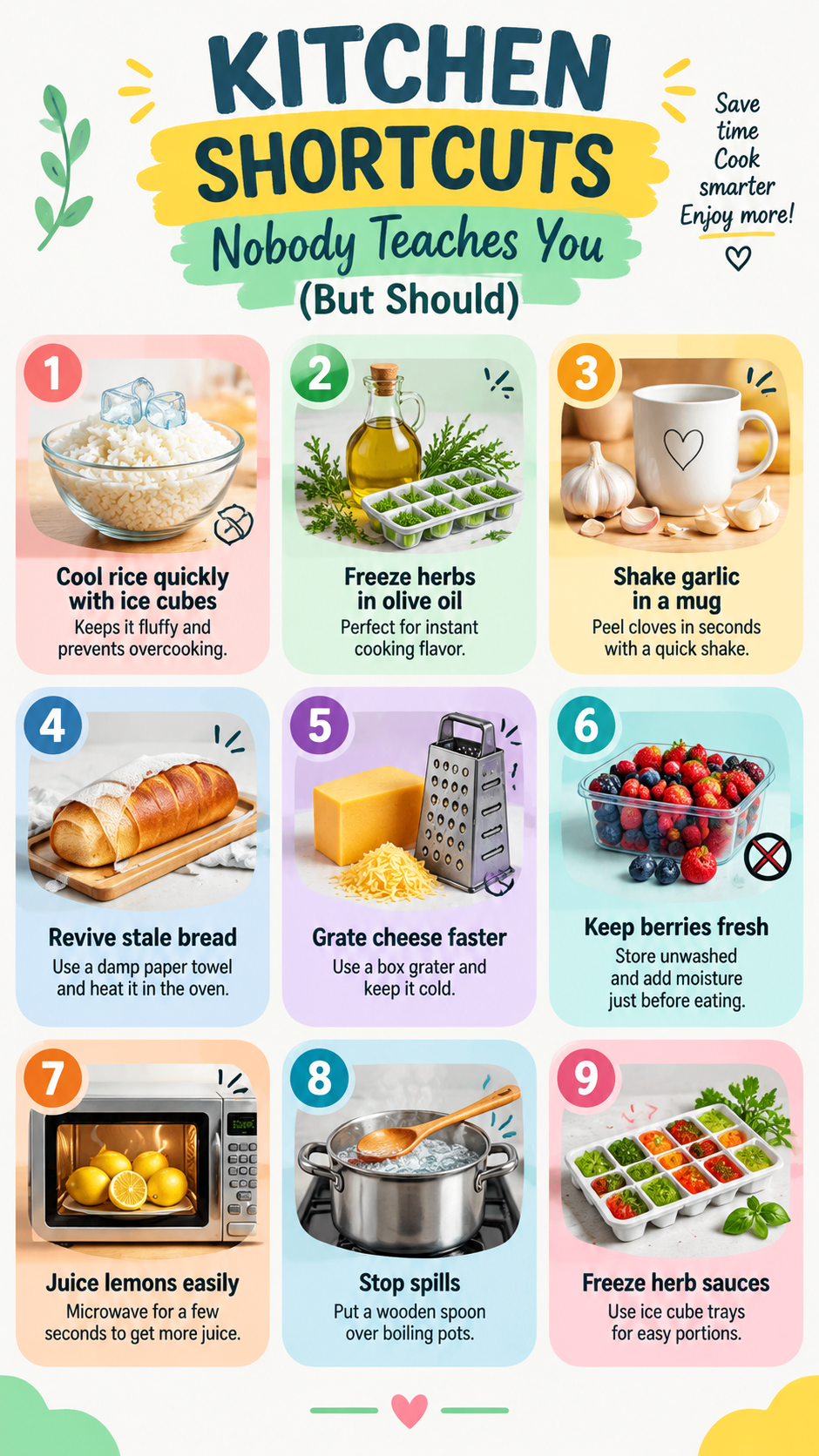
Kitchen Shortcuts 9 Clever Cooking Hacks and Kitchen Tips You Should Know
Want to make everyday cooking easier without spending extra money on fancy gadgets or complicated tools? A few clever kitchen shortcuts can save time, reduce food waste, and make meal preparation feel much less stressful. From refreshing leftover rice to keeping fresh berries in better condition, these simple kitchen hacks are practical tricks worth adding to your daily routine.
Whether you cook for a busy family, prepare quick lunches, or simply want a more organized kitchen, small changes can make a noticeable difference. The best part is that many of these cooking shortcuts use items you probably already have at home, including ice cube trays, paper towels, a wooden spoon, and a cheese grater.
Key Takeaways
- Refresh leftover rice with an ice cube and a covered microwave-safe container.
- Freeze herbs with olive oil for convenient portions of cooking flavor.
- Use a cheese grater to shred cold butter quickly for baking.
- Keep berries dry and unwashed until you are ready to eat them.
- Freeze leftover sauces in small portions to simplify future meals.
- Use practical food storage and reheating methods to reduce waste and save time.
1. Reheat Rice With an Ice Cube for Fluffy Results
Leftover rice can become dry, firm, and clumpy after spending time in the refrigerator. Instead of throwing it away or accepting a disappointing texture, try a simple reheating trick that adds moisture back to the grains.
Place your rice in a microwave-safe bowl, add an ice cube, and cover the bowl with a microwave-safe lid or plate that allows a little steam to escape. Heat the rice until it is thoroughly hot, stirring if needed. The ice helps create steam, which can soften the rice and improve its texture.
How to Use the Ice Cube Rice Trick
- Transfer refrigerated rice into a microwave-safe bowl.
- Place one ice cube on top of the rice.
- Cover the bowl with a microwave-safe lid or plate.
- Microwave in short intervals until the rice is steaming hot throughout.
- Remove any remaining ice, fluff the rice with a fork, and serve.
Important: Cooked rice requires careful storage because bacteria can survive cooking and multiply if rice is left at room temperature for too long. Refrigerate leftovers promptly in shallow containers, keep them cold, and reheat only the portion you need until steaming hot throughout. Do not rely on reheating to make improperly stored rice safe.
This kitchen shortcut works well for rice bowls, stir-fries, quick lunches, and meal-prep dinners. It is an easy way to make refrigerated rice more enjoyable without adding extra oil or water directly to the bowl.
2. Freeze Fresh Herbs in Olive Oil
Fresh herbs can bring wonderful flavor to everyday meals, but bunches of parsley, basil, cilantro, and rosemary often wilt before you have time to use them all. Freezing herbs in olive oil is a convenient kitchen hack that helps preserve their flavor for future cooking.
Instead of letting leftover herbs go to waste, turn them into ready-to-use cooking portions with an ordinary ice cube tray. This method is especially useful when you regularly cook soups, pasta dishes, roasted vegetables, and savory sauces.
How to Make Herb and Olive Oil Cubes
- Wash the herbs thoroughly and dry them well.
- Remove tough stems and chop the leaves into small pieces.
- Divide the chopped herbs among the compartments of a clean ice cube tray.
- Add enough olive oil to cover the herbs.
- Freeze until solid, then transfer the cubes to a labeled freezer-safe container or bag.
When preparing a meal, take out a cube and add it to a pan while cooking. The oil carries the herb flavor into the dish, making it easy to season vegetables, sautéed ingredients, and sauces.
Which Herbs Work Best?
- Rosemary: Great for roasted potatoes, vegetables, and savory dishes.
- Thyme: Useful in soups, stews, and pan sauces.
- Parsley: Adds a fresh herbal note to vegetables, grains, and sauces.
- Basil: Convenient for cooked tomato sauces and pasta dishes.
- Cilantro: Suitable for recipes where its flavor will be cooked into the dish.
Label the container with the herb name and freezing date so you can quickly identify each batch. Keep the cubes frozen and use them within a reasonable period for the best flavor. Since these portions contain oil, use them for cooking rather than as a substitute for fresh herbs in salads or other uncooked dishes.
3. Use a Mug to Help Peel Garlic
Peeling garlic can be one of the more tedious parts of preparing dinner, particularly when a recipe calls for several cloves. A quick shaking technique can loosen the papery skins and make the task easier.
Place separated garlic cloves inside a clean, sturdy container with a secure lid. A mug can work for a small quantity if you cover its opening firmly with a suitable lid or another secure container. Shake vigorously for several seconds, then check whether the skins have loosened.
Tips for Easier Garlic Peeling
- Separate the cloves before shaking them.
- Use a sturdy container with enough room for the cloves to move.
- Shake over a sink or counter to contain any loose skins.
- Remove stubborn skins by hand or trim the ends with a knife.
A sealed container is usually more practical than an open mug because the garlic needs room to move without escaping. Avoid shaking a fragile mug or using a container that could break under pressure.
This shortcut is useful when making marinades, pasta sauces, garlic butter, roasted vegetables, and homemade dressings. Once the cloves are peeled, mince them immediately or store them safely according to your recipe and food safety needs.
4. Revive Stale Bread With a Damp Paper Towel
Fresh bread can lose its soft texture surprisingly quickly, especially when exposed to air. If your loaf or bread rolls have become slightly dry, gentle reheating can help improve their texture without sending them straight to the trash.
One practical method is to wrap the bread loosely in a slightly damp paper towel and warm it in the microwave for a short time. Check it frequently because excessive moisture or heating can make the bread soggy or tough.
For a better crust, use the oven instead. Lightly moisten the outside of the loaf, place it in a suitable oven-safe dish or on a baking tray, and warm it in a preheated oven until the exterior feels refreshed. The exact time depends on the size and type of bread.
Choose the Right Method for Your Bread
- Microwave: Useful when you need to soften a small roll quickly.
- Oven: Better for refreshing a crusty loaf or several rolls.
- Toaster: A convenient option for individual slices that will be served with butter or toppings.
Pro Tip: Reheating improves the texture of bread that has become stale, but it does not make moldy bread safe to eat. If you see mold or notice unusual spoilage, discard the bread rather than trying to revive it.
For long-term storage, freeze bread you will not use within a few days. Slice a loaf before freezing if you want to remove only the number of slices you need. This simple habit can help reduce food waste and keep bread available for quick breakfasts and snacks.
5. Shred Cold Butter With a Cheese Grater
Cold butter is essential for many baking recipes, but it can be difficult to mix evenly into flour when it comes straight from the refrigerator. A cheese grater offers a simple solution by turning a firm block of butter into small shreds that are easier to distribute.
This technique is particularly useful for biscuits, scones, pastry dough, and crumb toppings. Small pieces of butter can be incorporated more evenly while helping the mixture retain the texture required by the recipe.
How to Grate Butter Without a Mess
- Chill the butter until it is firm but still easy to handle.
- Use the large holes of a clean box grater.
- Grate the butter onto a plate or directly over the dry ingredients.
- Work quickly so the shreds remain cool.
- Gently mix the butter into the flour mixture as directed by your recipe.
For easier handling, you can chill the grater briefly before use. Keep your fingers away from the sharp edges and stop grating when the remaining piece becomes too small to hold safely.
Why This Baking Shortcut Helps
Grated butter creates many small pieces instead of a few large chunks. That can make it easier to distribute cold fat throughout the dough without excessive handling. In recipes where distinct pieces of butter help create a flaky texture, work gently and avoid warming the mixture with your hands.
You can also use this technique when butter needs to be incorporated into a crumb topping or another mixture that benefits from evenly distributed pieces. Always follow the recipe’s instructions about butter temperature and mixing technique for the best results.
6. Store Berries Unwashed to Help Them Last Longer
Strawberries, blueberries, raspberries, and blackberries are delicious additions to breakfasts, smoothies, desserts, and snacks. However, fresh berries can deteriorate quickly when excess moisture remains on their surfaces or damaged fruit is stored with healthy berries.
A useful kitchen storage habit is to wait until you are ready to eat or prepare berries before washing them. Keeping them dry can help reduce moisture-related spoilage, although proper refrigeration and careful handling are equally important.
The Best Way to Store Fresh Berries
- Inspect the berries when you bring them home.
- Remove fruit that is moldy, leaking, or badly damaged.
- Keep the remaining berries dry and refrigerated.
- Use a clean container that allows some airflow and prevents crushing.
- Wash the berries under clean running water just before eating or using them.
Original packaging can be suitable if it provides drainage or ventilation and the berries are not crowded. If you transfer them to another container, line it with a clean, dry paper towel when helpful and replace it if it becomes damp.
Different berries have different storage needs. Delicate raspberries, for example, are easily crushed, while firmer blueberries may tolerate handling better. Check stored fruit regularly and remove spoiled berries promptly.
Why This Matters
Small food storage habits can help you get more value from your groceries and reduce unnecessary waste.
- Keep refrigerated berries dry until washing.
- Store fruit in a clean container without crushing it.
- Check for mold and soft spots before eating.
Remember that keeping berries unwashed does not mean skipping washing altogether. Rinse them thoroughly under running water before eating, and avoid using soap or household cleaning products on fresh produce.
7. Microwave Lemons for More Juice
Fresh lemon juice adds brightness to salad dressings, marinades, drinks, baked goods, and sauces. If your lemons feel firm and difficult to squeeze, a little preparation can help you extract more juice with less effort.
One simple trick is to microwave a whole lemon briefly before cutting and squeezing it. The gentle warmth can soften the fruit and make it easier to work with. The result depends on the lemon’s size, temperature, and freshness.
Step-by-Step Lemon Juicing Trick
- Wash the lemon under running water and dry it.
- Place the whole lemon on a microwave-safe plate.
- Warm it for about 10 to 15 seconds, then check its temperature and softness.
- Let it cool enough to handle comfortably.
- Roll it gently against the countertop, applying light pressure.
- Cut it in half and squeeze the juice into a bowl or citrus juicer.
Use short heating intervals rather than microwaving for a long time. A lemon can become very hot, and excessive heating may affect its texture or cause juice to leak.
Other Ways to Get More Lemon Juice
- Choose lemons that feel relatively heavy for their size.
- Roll the fruit gently on a firm surface before cutting.
- Use a handheld citrus squeezer for better leverage.
- Strain the juice if you want to remove seeds and excess pulp.
This quick cooking shortcut is particularly handy when you need fresh lemon juice for a recipe and do not want to waste any of the fruit.
8. Place a Wooden Spoon Across a Boiling Pot
Water boiling over the edge of a saucepan can create an annoying mess on the stovetop. A traditional kitchen trick involves placing a wooden spoon across the top of the pot to help reduce the chance of an immediate spill.
When starchy water bubbles up, the spoon may disrupt some of the bubbles when they touch it. However, this is not a reliable way to prevent boil-overs. A pot can still overflow, especially when it is too full or the heat is too high.
How to Reduce Boil-Overs More Reliably
- Choose a saucepan large enough to leave room for bubbling.
- Avoid filling the pot too close to the rim.
- Reduce the heat once the water reaches a boil.
- Stir pasta, rice, and other starchy foods when appropriate.
- Stay nearby and watch the pot, especially when cooking over high heat.
You can rest a clean, dry wooden spoon across the pot as an additional precaution, provided it is positioned securely and does not interfere with the lid or cooking process. Do not treat it as a substitute for monitoring the stove.
Wooden spoons can also absorb moisture and odors over time, so clean them properly after use and allow them to dry thoroughly. Replace utensils that become deeply cracked or difficult to clean.
9. Freeze Leftover Sauces in Ice Cube Trays
Have a small amount of tomato sauce, pesto, homemade stock, or another cooking sauce left over after dinner? Instead of leaving a nearly empty container in the refrigerator until it gets forgotten, freeze the leftovers in convenient portions.
Ice cube trays are useful because they divide sauces into small amounts that can be added directly to future meals. This method is especially helpful for busy home cooks who want to prepare flavorful dishes without starting every sauce from scratch.
How to Freeze Sauce Portions
- Allow freshly cooked sauce to cool promptly and safely.
- Pour it into a clean ice cube tray, leaving a little room for expansion.
- Cover the tray if possible and place it in the freezer.
- Once the portions are solid, transfer them to a labeled freezer-safe bag or container.
- Write the sauce name and freezing date on the label.
- Use the portions in suitable recipes and reheat them thoroughly.
Small frozen portions are convenient for quick soups, pasta dishes, stews, casseroles, and pan sauces. You can take out one or two cubes instead of defrosting an entire container.
What Can You Freeze in an Ice Cube Tray?
- Tomato sauce: Add portions to pasta or vegetable dishes.
- Pesto: Stir into pasta or use as a base for cooked sauces.
- Homemade stock: Add small portions to grains, soups, and pan sauces.
- Curry sauce: Use frozen portions to build a quick meal.
- Herb mixtures: Freeze chopped herbs with a suitable amount of oil or water.
Important: Freeze leftovers promptly in suitable containers rather than leaving them at room temperature for extended periods. Label frozen portions clearly, follow safe storage guidance for each ingredient, and thaw food in the refrigerator or reheat it safely. Do not assume that freezing makes spoiled food safe.
For easy portion control, choose a tray with compartments that match the amounts you commonly use. Silicone trays can make frozen portions easier to release, but any clean, freezer-safe tray will work.
How to Build a Smarter Kitchen Routine
These nine kitchen shortcuts are most useful when they become part of a simple routine. You do not need to try every trick at once. Start with the ones that solve your most common cooking frustrations, then add more as you discover what works for your household.
Prepare Ingredients Before You Need Them
When you have extra herbs, chop and freeze them before they wilt. When you open a jar of sauce, consider whether the remaining amount can be divided into freezer portions. If you regularly bake, keep a clean grater available for cold butter. Small preparations can save several minutes when you are already busy making dinner.
Use Food Storage Containers Strategically
Clear containers make it easier to see what you have available, while labels help prevent mystery leftovers from accumulating. Keep refrigerated foods organized so older items are easy to find and use first. Store raw and cooked foods separately, and follow appropriate refrigeration and freezing practices.
Choose Shortcuts That Match Your Cooking Style
If you make pasta several times a week, freezing sauce portions may be especially valuable. If you frequently bake, grating butter could become a favorite technique. If fresh produce often goes unused, improving berry storage and freezing herbs may have the biggest impact.
The goal is not to make every kitchen task complicated with extra steps. It is to identify small improvements that genuinely make cooking more convenient.
Quick Points: Kitchen Shortcuts at a Glance
Your Quick Kitchen Checklist
- Fluffier rice: Reheat with an ice cube in a covered microwave-safe bowl.
- Ready-to-use herbs: Freeze chopped herbs in olive oil portions.
- Fresh-tasting berries: Keep them dry and refrigerated until washing.
- Easier baking: Grate firm, cold butter into small pieces.
- More lemon juice: Warm a lemon briefly and roll it before squeezing.
- Less food waste: Freeze leftover sauces in labeled portions.
Conclusion: Make Everyday Cooking Easier With Simple Kitchen Hacks
Great cooking does not always require expensive equipment, elaborate recipes, or hours of preparation. Sometimes, the most useful improvements are the simplest ones: adding an ice cube when reheating rice, freezing herbs before they spoil, grating cold butter for baking, or saving leftover sauce for another meal.
These practical kitchen shortcuts can help you spend less time dealing with common frustrations and more time enjoying the food you prepare. They also encourage better organization and more thoughtful use of ingredients, which can make everyday meal preparation feel more manageable.
Start with two or three tips that fit your routine, experiment with the methods, and keep the ones that deliver the best results in your kitchen. With a little preparation and a few clever habits, you can make cooking easier, reduce avoidable food waste, and get more from the ingredients you already buy.
Save this collection of kitchen hacks for the next time you need a quick solution, and share your favorite cooking shortcuts with someone who loves making life in the kitchen a little easier.
Tags
Kitchen Shortcuts
Kitchen Hacks
Cooking Tips
Food Storage Tips
Food Waste Reduction
Meal Prep Ideas
Home Cooking
Kitchen Organization