20 Simple Habits to Feel Better in 30 Days Your Ultimate Self-Care Checklist
Feeling better does not always require a complete lifestyle makeover, an expensive wellness routine, or hours of free time. Sometimes, the most meaningful changes begin with small habits that make everyday life healthier, calmer, and more enjoyable. From getting enough sleep and spending time outdoors to eating nourishing foods and connecting with people you love, simple daily choices can help you build a stronger foundation for overall well-being.
If you want to feel better in 30 days, the secret is to focus on realistic actions you can repeat consistently. You do not need to master every habit at once. Instead, choose a few manageable changes, practice them regularly, and gradually create a routine that supports your physical health, emotional balance, and personal growth.
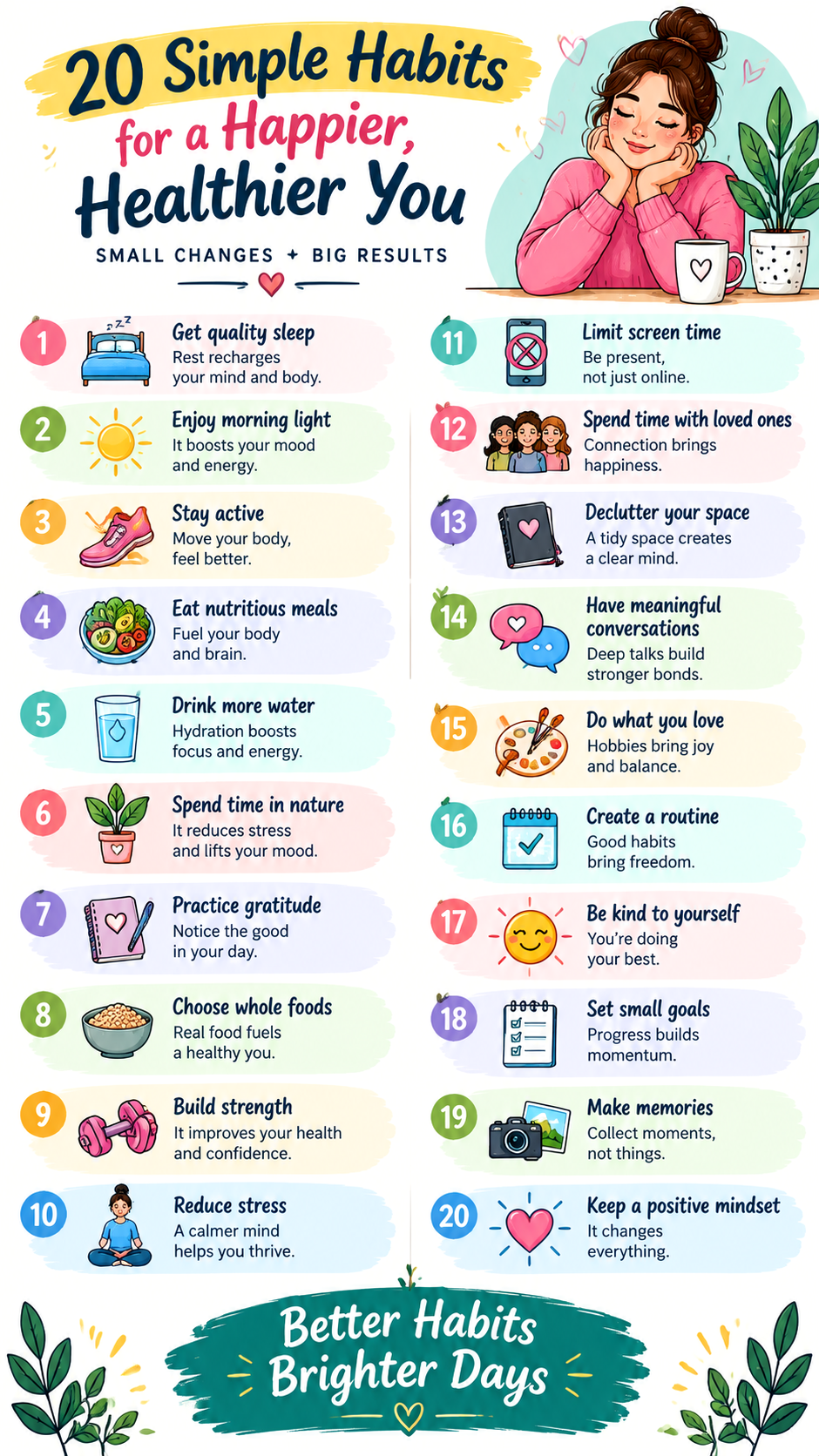
This guide explores 20 practical habits that can help you improve your daily routine over the next month. Each idea is designed to be approachable, flexible, and easy to adapt to your lifestyle, whether you are starting a self-care journey or simply looking for fresh inspiration.
Key Takeaways
- Start with small, achievable habits instead of changing your entire routine overnight.
- Prioritize sleep, movement, hydration, and balanced meals to support everyday well-being.
- Make room for sunlight, fresh air, meaningful relationships, and activities you enjoy.
- Reduce unnecessary screen time and create routines that help you relax.
- Track your progress and focus on consistency rather than perfection.
- Choose the habits that make you feel better and build on them over time.
How to Feel Better in 30 Days by Building Small Habits
A 30-day self-improvement challenge provides a useful structure for making everyday changes. Rather than waiting for motivation to appear, you can use the month to experiment with habits that support the life you want to create.
The goal is not to become a completely different person in four weeks. It is to discover which small actions help you feel more energized, organized, connected, and comfortable in your daily life.
Some habits may produce noticeable benefits quickly, while others require more time. Better sleep routines, regular movement, and nourishing meals can support your well-being, but meaningful progress depends on your circumstances, health, and consistency.
Important: You do not have to practice all 20 habits every day. Begin with two or three changes that fit your current routine. Once they feel manageable, add another habit. Sustainable progress is more valuable than an ambitious plan that leaves you overwhelmed.
1. Improve Your Sleep Schedule
Sleep affects how you feel, think, and function throughout the day. An inconsistent schedule can make it harder to wake up comfortably, concentrate on tasks, and maintain steady energy.
Start by choosing a realistic bedtime and wake-up time. Try to follow them consistently, including on weekends when possible. Create a relaxing evening routine that signals to your body that the day is coming to an end.
Simple Ways to Sleep Better
- Keep your bedroom comfortable, quiet, and dark.
- Reduce stimulating activities before bedtime.
- Limit caffeine later in the day if it affects your sleep.
- Give yourself enough time to rest rather than repeatedly sacrificing sleep for extra tasks.
For most adults, regularly getting at least seven hours of sleep is a useful general target. Your individual needs may vary, so pay attention to how rested you feel during the day.
2. Get Morning Sunlight
Spending a little time outside in the morning can help you establish a consistent daily rhythm. Natural light is an important signal for your body’s internal clock, which helps regulate the sleep-wake cycle.
Instead of checking your phone immediately after waking up, open the curtains, sit near a bright window, or step outdoors for a short walk. The ideal amount of outdoor light depends on weather, season, and individual circumstances, so treat 10 to 20 minutes as a flexible starting point rather than a strict rule.
Enjoy daylight safely, and avoid staring directly at the sun. If outdoor conditions are uncomfortable, find another practical way to make natural light part of your morning.
3. Make Walking Part of Your Daily Routine
Walking is one of the simplest ways to add movement to your day. You do not need a gym membership, special equipment, or an advanced fitness plan to get started.
Aim for a comfortable 20 to 30 minutes when your schedule allows, or divide that time into shorter walks. You could walk after lunch, take a stroll around your neighborhood, or use part of your commute as an opportunity to move.
If you are currently inactive, begin with a duration that feels manageable and increase it gradually. Walking with a friend or listening to enjoyable music can also make the experience more appealing.
4. Include Protein in Balanced Meals
Protein supports the maintenance and repair of body tissues and contributes to many essential functions. Including a protein source in your meals can also help make them satisfying.
There are plenty of options to suit different budgets, food preferences, and cultural traditions. Eggs, beans, lentils, tofu, fish, yogurt, paneer, and other dairy products can all contribute protein to a balanced diet.
Easy Protein-Rich Meal Ideas
- Breakfast: Eggs with whole-grain toast or yogurt with oats.
- Lunch: Lentil soup, chickpea salad, or a tofu bowl.
- Dinner: Beans with vegetables, fish with rice, or paneer with whole grains.
- Snacks: Yogurt, hummus, or a small serving of nuts.
Focus on variety and balance instead of trying to make every meal perfect. Your nutritional needs will depend on your activity level, age, and overall health.
5. Eat More Plant-Based Foods
Adding more fruits, vegetables, legumes, nuts, and seeds is a practical way to improve the variety of your meals. These foods provide different vitamins, minerals, fiber, and other beneficial nutrients.
You do not need to give up your favorite foods or follow a restrictive diet. Start by adding one extra serving of vegetables to lunch, including fruit with breakfast, or using beans and lentils in familiar recipes.
Colorful meals can make healthy eating more enjoyable. Combine leafy greens, tomatoes, carrots, berries, citrus fruits, and other seasonal produce to create meals with a variety of textures and flavors.
6. Drink Water Regularly
Staying hydrated supports normal body functions, including temperature regulation and digestion. Your hydration needs vary depending on physical activity, climate, diet, and individual health factors.
Keep a reusable water bottle nearby as a simple reminder to drink throughout the day. You can also get fluids from other beverages and water-rich foods, such as cucumbers, oranges, melons, and soups.
Make Hydration Easier
- Drink water when you wake up if you feel thirsty.
- Keep water accessible while working or studying.
- Drink more when exercise or hot weather increases your needs.
- Use thirst and other relevant health guidance to help manage your intake.
There is no single water target that suits everyone. If a healthcare professional has given you specific fluid instructions, follow that advice.
7. Choose Processed Foods More Mindfully
Convenience foods can fit into a balanced lifestyle, but meals built mainly around highly processed options may leave less room for foods rich in fiber and essential nutrients. A helpful goal is to prepare more meals using familiar, minimally processed ingredients when practical.
Try replacing one frequent convenience meal with a simple homemade alternative. A sandwich with vegetables, a bowl of beans and rice, or an omelet with whole-grain toast can be easy options.
You do not need to label foods as good or bad. Instead, consider how different choices fit your nutritional needs, preferences, budget, and schedule.
8. Increase Your Fiber Intake
Fiber supports digestive health and can help you feel satisfied after meals. It is found in foods such as whole grains, beans, lentils, fruits, vegetables, nuts, and seeds.
Start by making small substitutions. Choose oatmeal instead of a refined breakfast cereal, add beans to a soup, or enjoy fruit as part of a snack.
If you currently eat little fiber, increase your intake gradually and drink enough fluids. This can help your digestive system adjust more comfortably.
9. Add Strength Training to Your Week
Strength training helps build and maintain muscle, supports everyday physical function, and can contribute to stronger bones. It does not have to involve heavy weights or complicated gym equipment.
Depending on your fitness level, you could try bodyweight squats, wall push-ups, resistance bands, or light dumbbells. Begin with manageable sessions and focus on learning proper technique.
Aim for two or three weekly sessions if appropriate for your ability and schedule. Allow time for recovery between challenging workouts, and adjust your routine if you experience pain or unusual discomfort.
10. Stretch for a Few Minutes Every Day
Stretching can help you work on flexibility and make movement feel more comfortable. It can be especially useful if you spend long periods sitting at a desk or working in one position.
Set aside five to ten minutes for gentle stretches that suit your body. You might stretch your shoulders, calves, hips, and hamstrings or follow a short beginner-friendly mobility routine.
Move slowly, breathe normally, and avoid forcing your body into uncomfortable positions. Consistency matters more than achieving an impressive stretch.
11. Reduce Screen Time Throughout the Day
Phones, computers, and televisions can be useful, entertaining, and necessary for work. However, spending more time on screens than intended can interfere with other activities, including sleep, exercise, and face-to-face conversations.
Rather than trying to eliminate screens completely, identify the moments when you would benefit from a break. Put your phone away during meals, silence unnecessary notifications, or create a phone-free period before bedtime.
Create Simple Phone-Free Moments
- Keep your phone out of reach during the first part of your morning.
- Take short breaks from recreational scrolling.
- Spend time with friends without repeatedly checking notifications.
- Replace some evening screen time with reading, stretching, or another relaxing activity.
These small boundaries can help you use technology more intentionally without making it a source of guilt.
12. Spend More Time Outdoors
Fresh air and outdoor movement can offer a welcome change from indoor routines. A walk in a park, a few minutes in a garden, or a quiet break outside can create space to pause and notice your surroundings.
Combine outdoor time with another habit to make it easier to remember. For example, take a morning walk, eat lunch outdoors when practical, or enjoy a short stroll after work.
You do not need access to mountains or a large garden. A local park, courtyard, balcony, or tree-lined street can provide an opportunity to step away from your usual environment.
Pro Tip: Connect two habits whenever possible. Walk outside after breakfast, listen to an audiobook while doing household tasks, or stretch while waiting for your tea to brew. Pairing a new action with an established routine can make it easier to remember and repeat.
13. Declutter One Small Area Each Day
A cluttered space can make it harder to find what you need and may contribute to a feeling of visual overwhelm. You do not need to reorganize your entire home in a single weekend to make progress.
Choose one small area each day, such as a desk drawer, bedside table, kitchen counter, or section of a bookshelf. Set a timer for five to ten minutes and decide what to keep, put away, recycle, or donate.
Small improvements can gradually create a more functional environment without demanding too much time or energy.
A Simple Daily Decluttering Routine
- Choose one clearly defined area.
- Remove items that belong somewhere else.
- Put frequently used belongings in convenient places.
- Dispose of unwanted items responsibly.
- Stop when your timer ends and continue another day if needed.
14. Make Time for Meaningful Connections
Human connection is an important part of overall well-being. Meaningful conversations can help people feel supported, understood, and less alone during difficult periods.
Make a little room for the people who matter to you. Send a thoughtful message, call a family member, arrange a walk with a friend, or spend time talking without distractions.
Quality matters more than the number of interactions. A short, sincere conversation can be more meaningful than hours spent together while everyone is focused on a screen.
Remember that relationships require different levels of time and energy. Choose forms of connection that feel comfortable and respectful of your boundaries.
15. Make Time for Fun and Creative Hobbies
Personal growth is not only about productivity. Enjoyment, curiosity, and creativity deserve a place in your routine, even when life feels busy.
Think about activities you enjoy or have always wanted to try. You might paint, garden, bake, take photographs, read fiction, play an instrument, or learn a new skill.
Schedule a small amount of time for your hobby without turning it into another performance goal. The purpose is to enjoy the experience, not to become exceptionally good at it.
If you are unsure where to begin, choose something inexpensive and easy to access. A notebook, a library book, a few art supplies, or a simple recipe may be enough to get started.
16. Slow Down and Practice Mindful Eating
Meals can become rushed when you are working, scrolling, or managing several tasks at once. Slowing down occasionally can help you pay more attention to your food and recognize your hunger and fullness cues.
Try sitting down for meals when possible, putting away distracting screens, and taking time to notice the flavors and textures of what you are eating. Chew comfortably and give yourself permission to enjoy your food.
Mindful eating is not about following strict rules or judging every choice. It is an opportunity to make meals feel more intentional and to develop a more comfortable relationship with food.
17. Create a Relaxing Evening Routine
The way you spend the final part of your day can influence how easily you transition toward sleep. An evening routine provides a predictable opportunity to slow down and step away from unfinished tasks.
Choose a few relaxing activities that you genuinely enjoy. You could prepare for the next morning, take a warm shower, read a book, listen to gentle music, or spend a few minutes stretching.
A Simple 20-Minute Wind-Down Routine
- First five minutes: Tidy a small area and prepare anything you need for tomorrow.
- Next ten minutes: Read, stretch gently, or enjoy another calming activity.
- Final five minutes: Dim the lights, put away your phone, and settle into a comfortable environment.
Adjust the timing to suit your schedule. The most useful routine is one that feels calming rather than restrictive.
18. Finish One Task You Have Been Avoiding
Unfinished tasks can take up mental space, especially when they remain vague or seem more complicated than they really are. Completing one small task can help you regain a sense of direction and make the next step clearer.
Choose something specific, such as replying to an important email, scheduling an appointment, sorting a pile of paperwork, or returning an item to its proper place.
Break larger responsibilities into smaller actions. Instead of writing “organize the house” on your list, write “clear the kitchen counter” or “sort one drawer.” Specific tasks are easier to begin and easier to complete.
The Five-Minute Starting Method
When a task feels overwhelming, commit to working on it for just five minutes. Gather the materials, open the document, or complete the first small step. You can continue if you feel able, but even a brief start can make the task less intimidating.
Remember that not every unfinished task must be completed immediately. Some responsibilities can be postponed, simplified, delegated, or removed from your list entirely.
19. Plan Something to Look Forward To
Daily responsibilities can make life feel repetitive when every day revolves around work, chores, and obligations. Giving yourself something enjoyable to anticipate can add variety and help you make space for personal interests.
Your plans do not need to be expensive or elaborate. Arrange a picnic, visit a favorite café, try a new recipe, explore a nearby place, plan a movie night, or set aside time for photography.
You can also choose smaller highlights, such as reading a new book chapter, preparing a favorite breakfast, or calling someone you miss. The goal is to create moments that make your routine feel more personal and enjoyable.
Consider writing one small highlight on your calendar each week. Having a plan can encourage you to protect time for activities that might otherwise be pushed aside.
20. Keep the Five Habits That Help You Most
At the end of 30 days, take a moment to review what you have learned. Some habits may fit naturally into your life, while others may feel inconvenient or offer little noticeable benefit.
Instead of forcing yourself to maintain every change, identify the five habits that seem most useful, enjoyable, and realistic. These might include a consistent bedtime, daily walking, drinking water regularly, reading before bed, and making time for meaningful conversations.
Keep the habits that support your needs and adjust the ones that do not. Your routine should evolve with your circumstances rather than become a source of pressure.
Remember: Missing a day does not erase your progress. If you skip a walk, stay up late, or forget to follow your routine, simply return to your next manageable action. Long-term consistency is built by restarting, adapting, and continuing, not by being perfect.
How to Turn These 20 Habits Into a Realistic 30-Day Challenge
Knowing which habits can help is one thing. Fitting them into your actual life is another. A simple plan can help you get started without feeling that you must change everything immediately.
Days 1 to 7: Establish Your Foundation
Focus on basic routines that support everyday well-being. Choose a consistent sleep schedule, drink water regularly, spend some time outside, and add a short walk to your day if appropriate.
Keep your expectations modest. Your first week is about finding a starting point, noticing obstacles, and discovering what works with your existing commitments.
Days 8 to 14: Support Your Body
Build on your initial habits by paying attention to balanced meals, fiber, protein, gentle stretching, and movement. If you are ready and able, introduce a beginner-friendly strength-training session.
Prepare a few easy meals and identify convenient times for physical activity. Practical preparation can reduce the effort required to follow through.
Days 15 to 21: Improve Your Environment and Connections
Use this week to make your surroundings more comfortable and your daily experiences more meaningful. Declutter one small area, arrange a conversation with someone you care about, and make time for a hobby.
Experiment with phone-free meals and short periods away from screens. Notice whether these boundaries help you feel more present during the day.
Days 22 to 30: Refine Your Routine
During the final nine days, review your habits and decide which ones deserve a permanent place in your routine. Continue the actions that feel useful and modify those that are difficult to maintain.
Choose one task you have been avoiding, plan something enjoyable, and create an evening routine that helps you prepare for rest. At the end of the challenge, select your five favorite habits and decide how you will continue practicing them.
Why This Matters
A successful 30-day challenge is not a test of willpower. It is an opportunity to create a routine that fits your real life. By starting small, reviewing your progress, and adjusting your expectations, you can make healthy choices easier to repeat long after the month ends.
How to Stay Consistent When Motivation Fades
Motivation naturally changes from day to day. Some mornings you may feel excited about your new routine, while other days you may be tired, busy, or distracted. Building habits that work even when motivation is low can help you stay consistent.
Make Each Habit Easy to Start
Reduce the number of steps required to begin. Put your walking shoes near the door, keep a water bottle on your desk, or place a book beside your bed. Preparing your environment makes the desired action easier to remember.
Use a Simple Habit Tracker
A calendar or notebook can help you see which habits you are practicing. Mark each day you complete an action, but use the tracker as a source of information rather than a reason to criticize yourself.
Track a few habits at a time instead of creating a complicated system. A simple checkmark beside “walked today” or “read before bed” may be all you need.
Celebrate Small Wins
Recognize progress that might otherwise go unnoticed. Preparing a balanced lunch, completing a short walk, or putting your phone away before bed is worth acknowledging.
Celebrating progress helps you focus on what you are building rather than everything you have yet to accomplish. Choose simple rewards that support your well-being, such as relaxing with a book or spending time on a favorite hobby.
Adapt Habits to Difficult Days
Some days will be busier than others. If you cannot complete your usual 30-minute walk, a shorter stroll may be a reasonable alternative. If you do not have time to cook an elaborate meal, a simple combination of protein, vegetables, and grains can still work.
Flexibility helps you maintain a habit without expecting every day to look the same. Your routine should support your life, not make it more stressful.
Quick Points: Your 30-Day Feel-Better Checklist
At a Glance
- Prioritize a regular sleep schedule and a calming evening routine.
- Move your body regularly and spend time outdoors when possible.
- Build balanced meals around a variety of nourishing foods.
- Make room for hobbies, meaningful conversations, and screen-free moments.
- Choose five habits to maintain after your 30-day challenge.
Frequently Asked Questions About Building Healthy Habits
Can You Really Feel Better in 30 Days?
You may notice improvements in your daily routine, energy, or sense of organization within a month, especially when you choose habits that address your current needs. However, results vary from person to person. Thirty days is best viewed as a useful starting period rather than a guarantee of specific physical or emotional changes.
How Many New Habits Should You Start at Once?
Start with two or three habits that feel manageable. Once you can practice them consistently, consider adding another. Beginning with fewer habits helps you focus your attention and identify what makes your routine easier to maintain.
What If You Miss a Day?
Simply begin again with your next opportunity. Missing a day is a normal part of building new routines and does not mean you have failed. Think about what made the habit difficult and adjust the timing, duration, or preparation if necessary.
Do You Need to Follow All 20 Habits?
No. The list is designed to provide options, not rules. Choose the habits that fit your circumstances, abilities, and priorities. Someone who already walks regularly may benefit more from improving sleep, while another person may want to focus on meal planning or reducing evening screen time.
Can These Habits Replace Professional Support?
Healthy routines can support general well-being, but they are not a substitute for professional care when you need it. If persistent fatigue, sleep problems, low mood, pain, or other symptoms interfere with daily life, consider speaking with a qualified healthcare professional.
Conclusion: Small Steps Can Create Meaningful Change
Feeling better in 30 days starts with the choices you make in ordinary moments. Going to bed at a consistent time, taking a walk, eating a nourishing meal, drinking water, or spending time with someone you care about may seem simple, but these actions can help create a more supportive daily routine.
You do not need to transform every part of your life at once. Begin with the habits that feel most relevant, give yourself time to practice them, and adjust your approach as you learn what works. Progress may be gradual, and some days will be easier than others. That is completely normal.
Use the next 30 days as an opportunity to pay attention to your needs, create space for enjoyable experiences, and build routines that reflect your priorities. At the end of the month, keep the habits that help you feel more balanced and make them part of your everyday life.
Start today with one small step. Choose a habit you can practice in the next five minutes, make it easy to repeat tomorrow, and remember that you do not have to do everything perfectly to move forward. Small steps, practiced with patience, can help you create lasting positive change.
Tags
Self-Care Habits
30-Day Challenge
Healthy Lifestyle
Daily Wellness Routine
Personal Growth
Healthy Habits
Mindful Living
Self-Improvement