Low-Purine Protein Food List Printable PDF Best Low Purine Protein Choices Guide
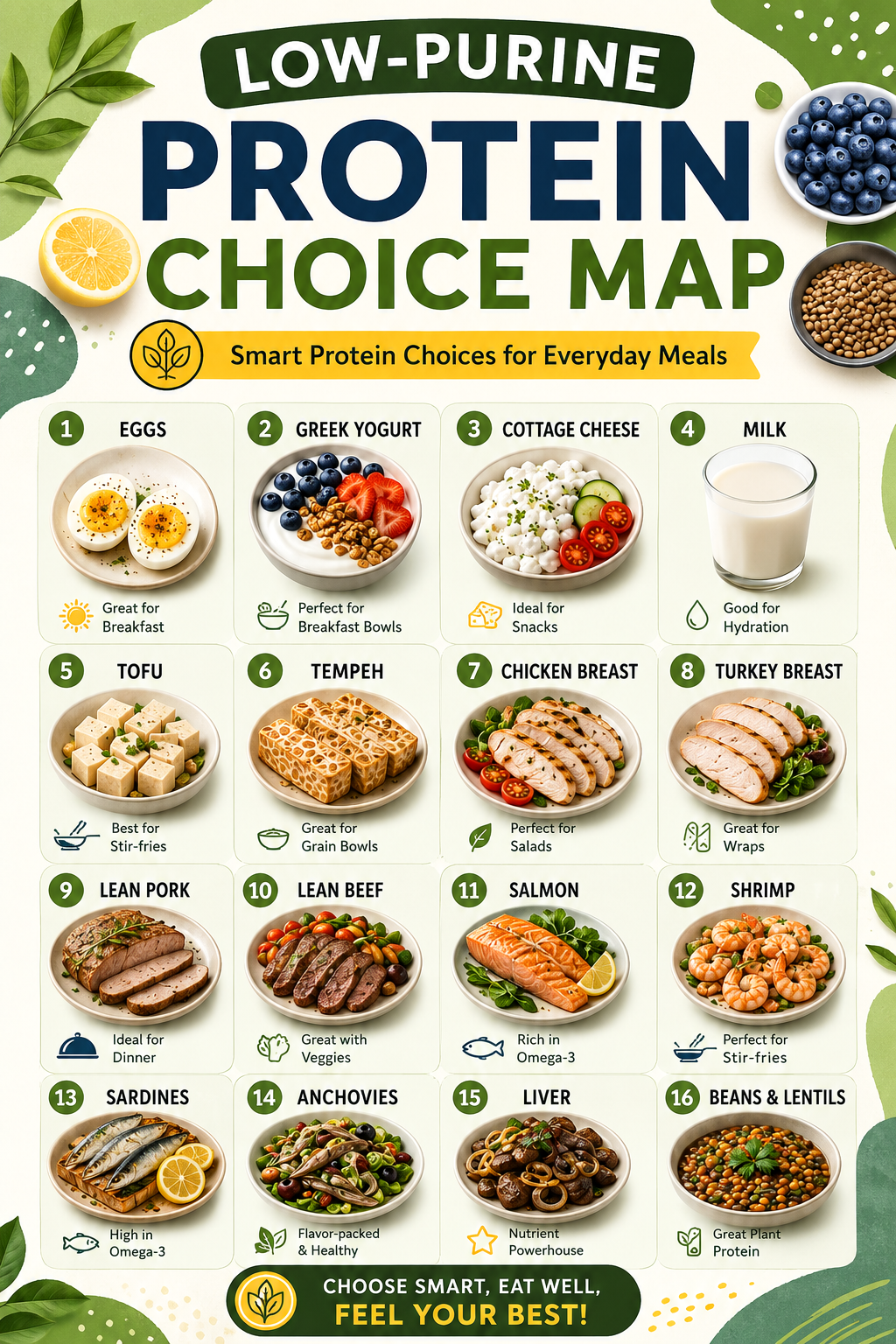
Choosing the right protein sources can make everyday meal planning much easier, especially for people looking to follow a lower-purine eating pattern. Whether your goal is supporting overall wellness, creating balanced meals, or simply understanding how different protein foods compare, having a simple reference chart can save time and remove guesswork. A low-purine protein choice map offers a practical way to compare common foods, helping you build satisfying breakfasts, lunches, dinners, and snacks while keeping your nutrition goals in mind.
Key Takeaways
- Understand which protein foods are generally lower, moderate, or higher in purines.
- Build balanced meals using a variety of protein sources.
- Learn how dairy, eggs, plant proteins, poultry, seafood, and meats compare.
- Use a printable food guide for grocery shopping and meal preparation.
- Remember that preparation methods and portion sizes also play an important role.
Understanding Low-Purine Protein Choices
Protein is one of the most important nutrients in a healthy diet. It supports muscles, helps repair tissues, contributes to satiety, and plays a role in many essential body functions. However, not all protein sources contain the same amount of purines.
Purines are naturally occurring compounds found in many foods. As the body breaks them down, they produce uric acid. While purines are a normal part of nutrition, many people prefer to monitor their intake and choose foods that fit their dietary goals.
Important: A low-purine eating pattern is about overall balance rather than eliminating entire food groups. A wide variety of nutritious protein options remain available, making it possible to enjoy satisfying meals without sacrificing variety.
Why a Protein Choice Map Is So Helpful
A visual food guide organizes information into an easy-to-understand format. Instead of researching individual ingredients every time you plan a meal, you can quickly compare common foods and make informed decisions.
Many printable food reference charts divide protein foods into categories such as generally lower, moderate, and higher purine options. This makes grocery shopping, meal planning, and recipe selection much more convenient.
- Quick comparison of common protein foods.
- Helpful for beginners learning about nutrition.
- Useful during weekly meal preparation.
- Easy to keep in the kitchen for daily reference.
Generally Lower Purine Protein Sources
Eggs
Eggs are a versatile complete protein that fits into many breakfast, lunch, and dinner recipes. They pair well with vegetables, whole grains, and healthy fats for balanced meals.
Greek Yogurt
Greek yogurt provides protein with a creamy texture that works well in breakfast bowls, smoothies, parfaits, and healthy snacks. Adding berries, nuts, or seeds creates an easy, nutrient-rich meal.
Cottage Cheese
Cottage cheese is another dairy option that offers flexibility. Enjoy it with fresh fruit, vegetables, herbs, or whole grain toast for a quick meal or snack.
Milk
Milk contributes protein while also providing calcium and other nutrients. It can be enjoyed on its own or added to smoothies, oatmeal, and recipes.
Plant-Based Proteins
Foods like tofu and tempeh provide excellent plant-based protein options. They easily absorb seasonings and work beautifully in stir fries, grain bowls, salads, wraps, and many vegetarian recipes.
Expert Insight
Including several different protein sources throughout the week can help create more balanced meals while keeping your menu interesting. Rotating dairy, eggs, poultry, seafood, legumes, and plant-based proteins also introduces a wider variety of nutrients.
Moderate Purine Protein Foods
Many everyday proteins fall into a moderate category. These foods can often be included as part of a balanced eating pattern depending on individual dietary needs and personal guidance.
Chicken Breast
Chicken breast remains one of the most popular lean protein choices. It works well in salads, wraps, sandwiches, soups, and sheet-pan dinners.
Turkey Breast
Turkey is another lean option suitable for sandwiches, salads, grain bowls, and meal prep recipes.
Lean Pork and Lean Beef
Choosing lean cuts allows these proteins to fit into balanced meals alongside vegetables and whole grains. Roasting, grilling, or baking can help create satisfying dinners.
Salmon
Salmon provides high-quality protein along with beneficial fats. It pairs nicely with roasted vegetables, rice, quinoa, or leafy salads.
Shrimp
Shrimp cooks quickly and works well in stir fries, pasta dishes, salads, tacos, and rice bowls.
Beans and Lentils
Beans and lentils offer plant protein together with fiber. They can be added to soups, stews, salads, curries, and grain bowls for filling meals.
Pro Tip: Rather than relying on a single protein source every day, combine different options throughout the week. Variety keeps meals enjoyable while supporting a more balanced nutritional intake.
Higher Purine Protein Foods
Some protein-rich foods naturally contain more purines than others. Organ meats and certain fish varieties are common examples frequently listed in higher-purine categories.
Sardines
Sardines are nutrient-dense and rich in healthy fats but are commonly recognized as a higher-purine seafood option.
Anchovies
Anchovies add bold flavor to many dishes but are another seafood choice often grouped among higher-purine foods.
Liver and Other Organ Meats
Organ meats provide concentrated nutrients but are generally categorized as higher in purines compared to many other protein sources.
Building Balanced Meals
A practical approach focuses on combining protein with vegetables, whole grains, healthy fats, and plenty of colorful produce. Meal planning becomes much easier when using a simple food reference chart.
Breakfast Ideas
- Greek yogurt with berries and oats.
- Boiled or scrambled eggs with whole grain toast.
- Cottage cheese with fruit.
- Smoothie made with milk and fresh fruit.
Lunch Ideas
- Chicken salad with mixed greens.
- Tofu stir fry with vegetables.
- Turkey wrap with fresh vegetables.
- Lentil soup with whole grain bread.
Dinner Ideas
- Grilled salmon with roasted vegetables.
- Lean pork with sweet potatoes.
- Tempeh grain bowl.
- Shrimp vegetable stir fry.
Meal Planning Tips
- Create a weekly menu before grocery shopping.
- Choose a variety of protein sources.
- Include vegetables at every meal.
- Prepare ingredients in advance for busy weekdays.
- Keep a printable food guide nearby for quick reference.
Important: Food categories provide general guidance, but individual nutritional needs can vary. Portion size, cooking methods, and personal recommendations should always be considered when planning meals.
At a Glance
- Focus on balanced meals instead of single foods.
- Mix animal and plant-based protein sources.
- Use printable charts for faster meal planning.
- Choose plenty of vegetables alongside protein.
- Keep variety at the center of your weekly menu.
Conclusion
A low-purine protein choice map is a valuable resource for anyone who wants to make smarter food decisions with confidence. By organizing common protein foods into easy-to-understand categories, it becomes much simpler to plan balanced meals, prepare grocery lists, and create a varied weekly menu. Whether you enjoy dairy, eggs, poultry, seafood, lean meats, or plant-based proteins, there are plenty of nutritious options available. Keeping a printable reference nearby can simplify everyday decisions and help make healthy eating feel more organized, practical, and enjoyable.
Tags
Low Purine Diet Protein Guide Healthy Meal Planning Printable Food Chart Nutrition Reference Healthy Eating Meal Prep Protein Foods