Vitamin B Benefits Energy Boosting Foods, Deficiency Signs Health Guide
Vitamin B is one of the most important groups of nutrients for supporting everyday energy, metabolism, brain function, and overall wellness. These essential vitamins work together to help the body convert food into fuel, maintain healthy cells, support the nervous system, and keep many natural processes running smoothly. Understanding the different types of Vitamin B and where to find them can help you make more informed choices about your daily nutrition.
From Vitamin B12 and B6 to B1, B2, B3, and B9, each member of the Vitamin B family has a unique role. A balanced diet that includes nutrient-rich foods can help provide the body with these important vitamins while supporting a healthy lifestyle.
Key Takeaways
- Vitamin B nutrients help support energy production and metabolism.
- Different B vitamins contribute to brain health, blood cell formation, and cell function.
- Foods like fish, meat, eggs, leafy greens, nuts, and vegetables provide natural sources of Vitamin B.
- Low intake of certain B vitamins may affect energy levels and overall wellbeing.
- A varied, balanced diet is one of the best ways to support healthy nutrient intake.
What Are B Vitamins and Why Are They Important?
B vitamins are a group of water-soluble vitamins that play essential roles throughout the body. Unlike fat-soluble vitamins that can be stored for longer periods, many B vitamins need to be regularly replenished through food choices. They are involved in turning carbohydrates, fats, and proteins into energy, making them especially important for people who want to maintain an active and balanced lifestyle.
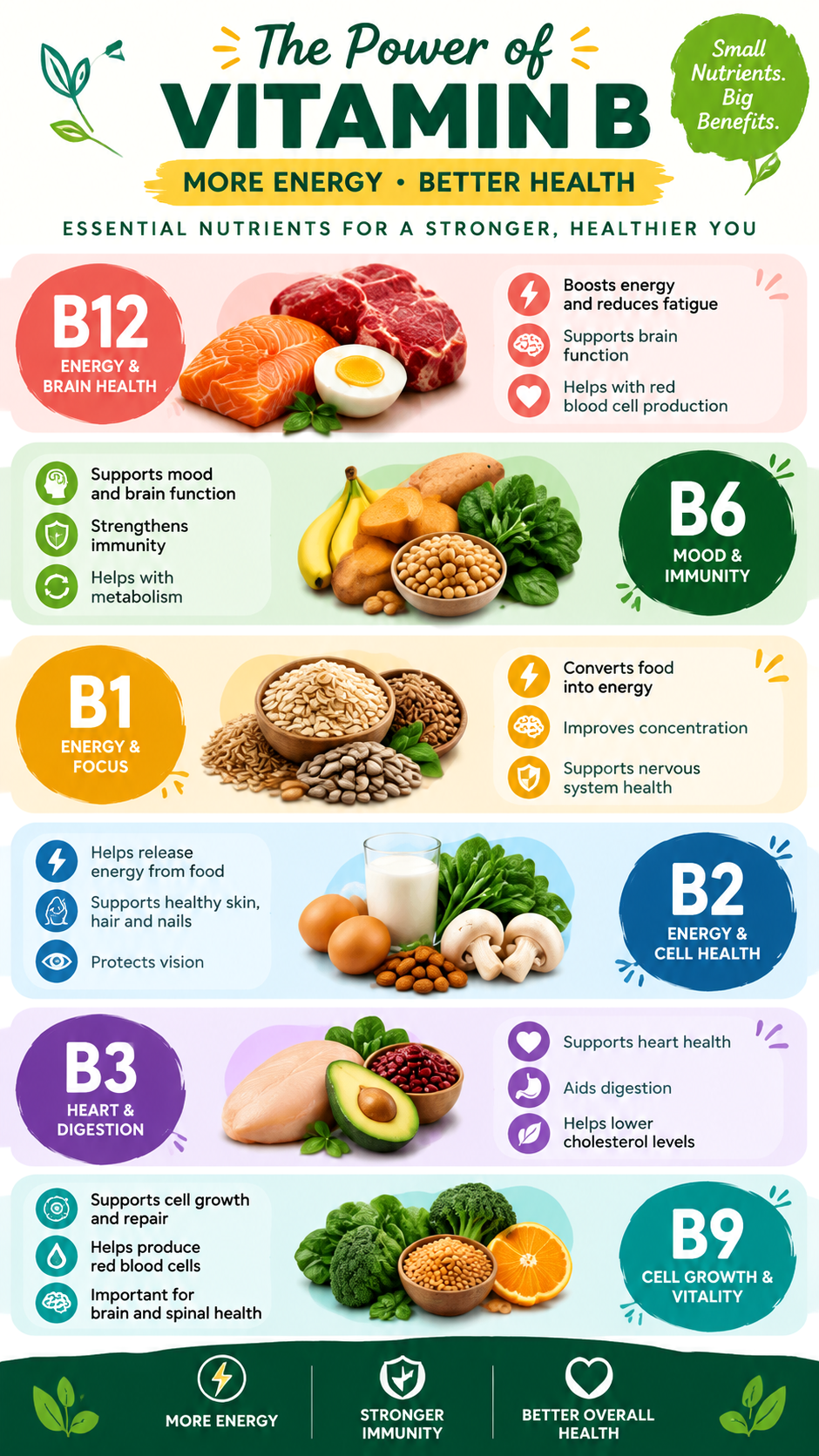
The Vitamin B family includes several different nutrients, including B1 (thiamine), B2 (riboflavin), B3 (niacin), B6, B9 (folate), and B12. Although they share a similar name, each vitamin supports different functions.
Important: Vitamin B does not work as a single nutrient. The different B vitamins support each other, which is why eating a wide variety of nutrient-rich foods is an important part of maintaining overall wellness.
Vitamin B12: Supporting Energy, Blood Cells, and Brain Health
Vitamin B12 is one of the most recognized B vitamins because of its connection to energy metabolism and healthy nervous system function. The body uses B12 to help create red blood cells and support normal cell processes.
Common Food Sources of Vitamin B12
Vitamin B12 is naturally found in many animal-based foods. Common sources include:
- Fish and seafood
- Meat and poultry
- Eggs
- Nutritional yeast products
People who follow certain dietary patterns may need to pay extra attention to their B12 intake because natural food sources are more limited in some diets.
Vitamin B6: A Nutrient for Metabolism and Brain Function
Vitamin B6 helps the body process proteins, carbohydrates, and fats. It is also involved in many processes connected with normal brain function and immune system support.
Foods Rich in Vitamin B6
Good sources of Vitamin B6 include:
- Seafood
- Starchy vegetables
- Non-citrus fruits
- Meat and poultry
Including a variety of colorful fruits and vegetables alongside protein-rich foods can help create a balanced approach to getting important nutrients.
Vitamin B1 and B2: Helping Convert Food Into Energy
Vitamin B1, also called thiamine, plays an important role in helping the body break down nutrients and support normal energy production. It is often associated with carbohydrate metabolism and healthy cell function.
Vitamin B2, also known as riboflavin, contributes to energy production and helps the body process fats and proteins. It is also commonly found in a variety of everyday foods.
Natural Sources of B1 and B2
- Meat and poultry
- Dairy products
- Eggs
- Green vegetables
- Mushrooms
- Nuts and seeds
Vitamin B3: Supporting Metabolism and Wellness
Vitamin B3, also called niacin, is another essential nutrient involved in converting food into usable energy. It also plays a role in maintaining normal body functions and supporting healthy cells.
Foods that naturally provide Vitamin B3 include chicken, beef, seafood, nuts, and many fortified products. Including protein sources and whole foods in meals can help support consistent nutrient intake.
Vitamin B9 Folate: Important for Cells and DNA
Vitamin B9, commonly known as folate, is essential for normal cell growth and development. It helps the body create and maintain cells and supports important processes involving DNA.
Foods Containing Folate
- Dark green leafy vegetables
- Fruits
- Nuts
- Beans and legumes
- Yeast products
A colorful plate filled with vegetables, fruits, and whole foods can naturally increase folate intake while adding many other beneficial nutrients.
Signs That Your Diet May Need More Vitamin B Foods
The body relies on many nutrients working together, and low intake of certain vitamins may affect how you feel. Common signs associated with inadequate nutrition can include tiredness, changes in energy levels, and other general wellness concerns.
However, these signs can have many possible causes. A balanced diet, healthy habits, and professional guidance when needed are important parts of understanding your individual nutritional needs.
Simple Ways to Add More Vitamin B Foods
- Add leafy green vegetables to salads, soups, and meals.
- Include protein-rich foods such as fish, eggs, poultry, or legumes.
- Choose a variety of fruits and vegetables throughout the week.
- Mix different whole foods to create balanced meals.
Why This Matters
Small daily nutrition choices can have a meaningful impact. Choosing a range of foods rich in Vitamin B helps provide the nutrients your body uses for energy, metabolism, and everyday functions.
- Focus on food variety rather than one single nutrient.
- Build meals around naturally nutrient-rich ingredients.
- Keep healthy habits consistent over time.
At a Glance: Vitamin B Essentials
- Vitamin B12 supports blood cells and nervous system health.
- Vitamin B6 helps with metabolism and brain-related functions.
- Vitamin B1 and B2 contribute to energy production.
- Vitamin B3 supports normal nutrient processing.
- Vitamin B9 helps with cell formation and development.
Conclusion: Fuel Your Body With Vitamin B Rich Foods
Vitamin B nutrients are essential pieces of a healthy lifestyle. From supporting energy production to helping maintain important body functions, these vitamins show why a balanced diet matters every day.
The best approach is simple: enjoy a variety of whole foods, include different sources of nutrients, and create meals that support your personal wellness goals. Small choices made consistently can help you build healthier habits and feel your best.
Whether you are learning about nutrition, planning healthier meals, or looking for natural ways to support your energy, understanding Vitamin B is a valuable step toward better everyday wellness.
Tags
Vitamin B
Nutrition Tips
Healthy Eating
Energy Boost Foods
Wellness Guide
Natural Foods