Vitamin B1 Rich Foods Top Foods High in Thiamine for Energy Health
Vitamin B1, also known as thiamine, is an essential nutrient that plays an important role in helping your body convert food into usable energy. Including foods that are rich in vitamin B1 in your daily meals can support normal energy metabolism, healthy nerve function, and overall wellness. From seeds and grains to legumes and protein-rich foods, many simple ingredients can help you increase your thiamine intake naturally.
This guide explores the best vitamin B1 rich foods, why thiamine matters, and how you can add these nutrient-packed options to a balanced diet. Whether you are planning healthier meals, improving your nutrition knowledge, or simply looking for energy-supporting foods, these choices offer practical and delicious options.
Key Takeaways
- Vitamin B1 helps your body turn carbohydrates into energy.
- Seeds, grains, legumes, and certain proteins are natural sources of thiamine.
- Whole foods can support a balanced diet rich in essential nutrients.
- Adding variety to meals helps provide a wider range of vitamins and minerals.
- Simple ingredient swaps can make it easier to include more vitamin B1 foods.
What Is Vitamin B1 and Why Is It Important?
Vitamin B1, or thiamine, is one of the B vitamins that helps support important functions throughout the body. It is especially known for its role in energy production because it helps transform carbohydrates from food into energy that cells can use.
Thiamine also contributes to normal nervous system function and helps the body maintain healthy cellular processes. Since the body does not store large amounts of vitamin B1, consuming foods that naturally contain this nutrient is an important part of maintaining adequate intake.
Important: A balanced eating pattern that includes whole grains, seeds, legumes, and nutrient-rich foods can help provide a steady supply of essential vitamins like vitamin B1.
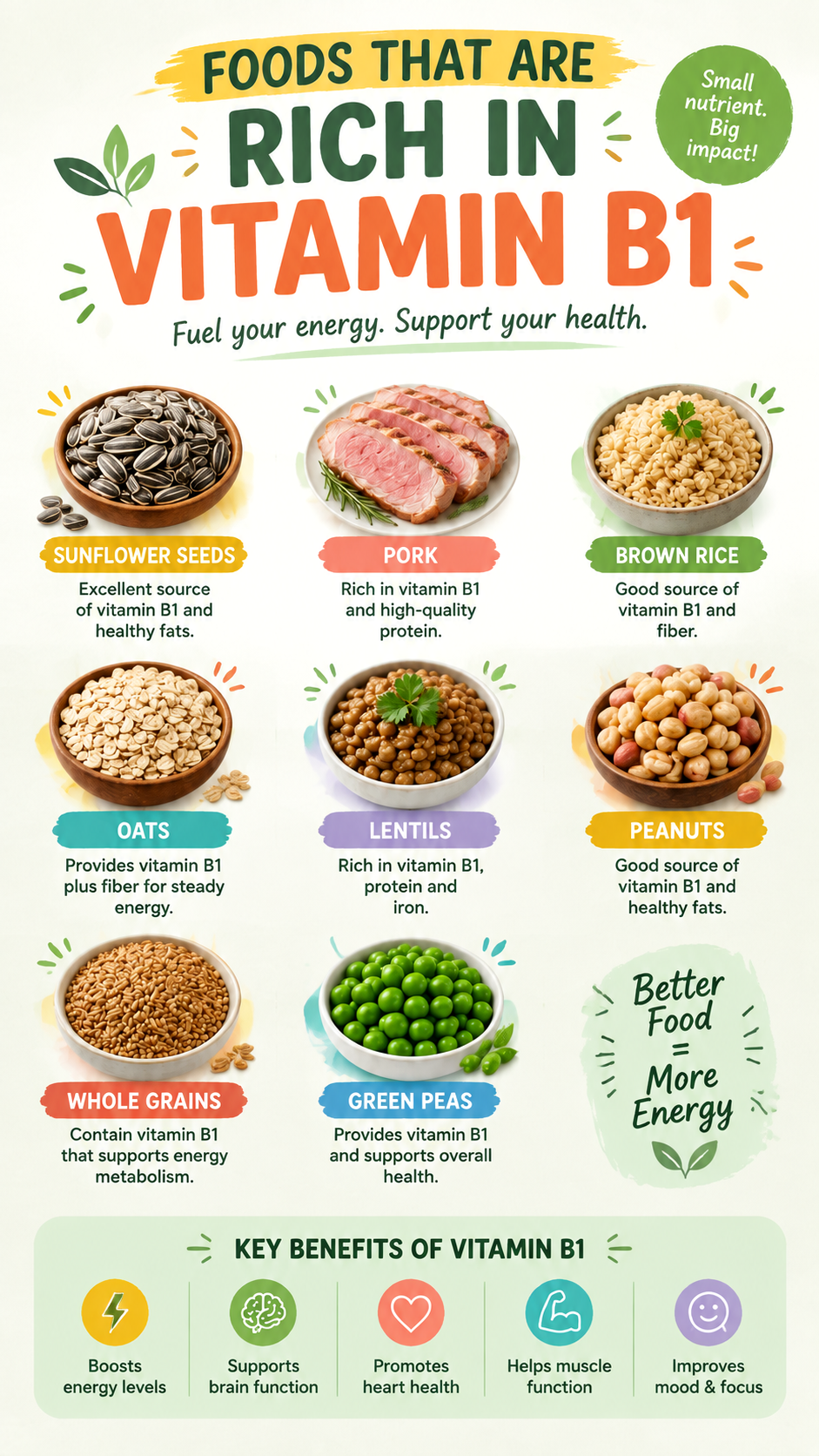
Top Foods That Are Rich in Vitamin B1
1. Sunflower Seeds
Sunflower seeds are a convenient and nutrient-dense food that can easily be added to many meals. They are recognized as a good source of vitamin B1 and also provide healthy fats and other valuable nutrients.
You can enjoy sunflower seeds as a snack, sprinkle them over salads, mix them into oatmeal, or add them to homemade energy bites. Their crunchy texture makes them a simple way to enhance everyday meals.
2. Pork
Pork is one of the well-known animal-based sources of vitamin B1. It provides thiamine along with high-quality protein, making it a popular choice for balanced meals.
Adding lean pork options alongside vegetables and whole grains can create a meal that includes a variety of important nutrients. Cooking methods such as grilling, baking, or roasting can help create flavorful and nutritious dishes.
3. Brown Rice
Brown rice is a whole grain that contains vitamin B1 as well as fiber. Compared with refined grains, whole grains keep more of their natural nutrients because they contain the outer layers of the grain.
Brown rice works well as a base for healthy bowls, stir-fries, and side dishes. Pairing it with vegetables and protein can create a satisfying and nutrient-balanced meal.
4. Oats
Oats are a popular breakfast food that provides fiber and important nutrients, including vitamin B1. They are versatile and can be prepared in many ways, from warm oatmeal to overnight oats.
Adding fruits, nuts, or seeds to oats can increase flavor and create a more complete breakfast that supports a healthy lifestyle.
5. Lentils
Lentils are a plant-based food that offers vitamin B1 along with protein and fiber. They are an excellent choice for people who enjoy vegetarian meals or want to include more plant foods in their diet.
Lentils can be used in soups, salads, curries, and grain bowls. Their mild flavor allows them to blend well with many herbs, spices, and vegetables.
6. Peanuts
Peanuts provide vitamin B1 along with healthy fats and plant-based nutrients. They make an easy snack and can also be included in recipes such as sauces, smoothies, and homemade trail mixes.
Choosing simple peanut options without excessive added ingredients can be a practical way to enjoy their nutritional benefits.
7. Whole Grains
Whole grains are valuable sources of many nutrients, including vitamin B1. Foods such as whole grain breads, cereals, and grain-based dishes can help increase thiamine intake while also providing fiber.
Replacing some refined grain products with whole grain alternatives is a simple change that can improve the overall nutritional quality of meals.
8. Green Peas
Green peas are a colorful vegetable that provides vitamin B1 along with other nutrients. They are easy to include in everyday cooking and work well in soups, rice dishes, salads, and vegetable mixes.
Their natural sweetness and bright color make them a simple addition to meals for both flavor and nutrition.
How to Add More Vitamin B1 Foods to Your Meals
Increasing your intake of thiamine-rich foods does not require complicated recipes. Small changes to your daily meals can make a difference.
- Add sunflower seeds or peanuts to yogurt, oatmeal, or salads.
- Choose brown rice or other whole grains as a side dish.
- Include lentils or green peas in soups and vegetable-based meals.
- Enjoy oats as a simple breakfast option.
- Build meals around a variety of nutrient-rich ingredients.
Creating Balanced Meals With Thiamine Sources
A balanced meal usually combines several food groups. Pairing vitamin B1 rich foods with vegetables, proteins, and healthy fats can create meals that are both satisfying and nutritious.
For example, a bowl with brown rice, lentils, green peas, and seeds can provide a mix of textures and nutrients. A breakfast of oats topped with peanuts or sunflower seeds can also be a simple way to start the day with nutrient-rich ingredients.
Why This Matters
Vitamin B1 rich foods are easy to find and can fit into many eating styles. Choosing a variety of whole foods helps support overall nutrition while keeping meals interesting.
Signs You May Need More Nutrient Variety
Eating a wide range of foods helps your body receive different vitamins and minerals. Instead of focusing on one single nutrient, aim for a diverse diet that includes grains, legumes, seeds, vegetables, fruits, and quality protein sources.
Simple habits such as planning balanced meals, trying new ingredients, and choosing minimally processed foods can make healthy eating easier to maintain.
At a Glance: Vitamin B1 Food Ideas
Quick Points
- Sunflower seeds offer a convenient thiamine-rich snack option.
- Whole grains and brown rice provide nutrient-packed meal foundations.
- Lentils and peas add plant-based vitamin B1 sources.
- Oats make an easy breakfast choice with added nutritional value.
Conclusion: Make Vitamin B1 Rich Foods Part of Your Routine
Foods that are rich in vitamin B1 can be simple, affordable, and delicious additions to everyday meals. From crunchy seeds and hearty grains to legumes and protein sources, there are many ways to enjoy thiamine-containing foods while creating a balanced eating pattern.
By including a variety of vitamin B1 rich foods regularly, you can support your body’s nutritional needs and make your meals more diverse. Start with small additions, explore new recipes, and enjoy the benefits of building healthier food habits one meal at a time.
Tags
Vitamin B1 Foods
Thiamine Rich Foods
Healthy Eating
Nutrition Tips
Whole Foods
Energy Supporting Foods