10 High Fiber Foods for Better Digestion a Healthy Gut
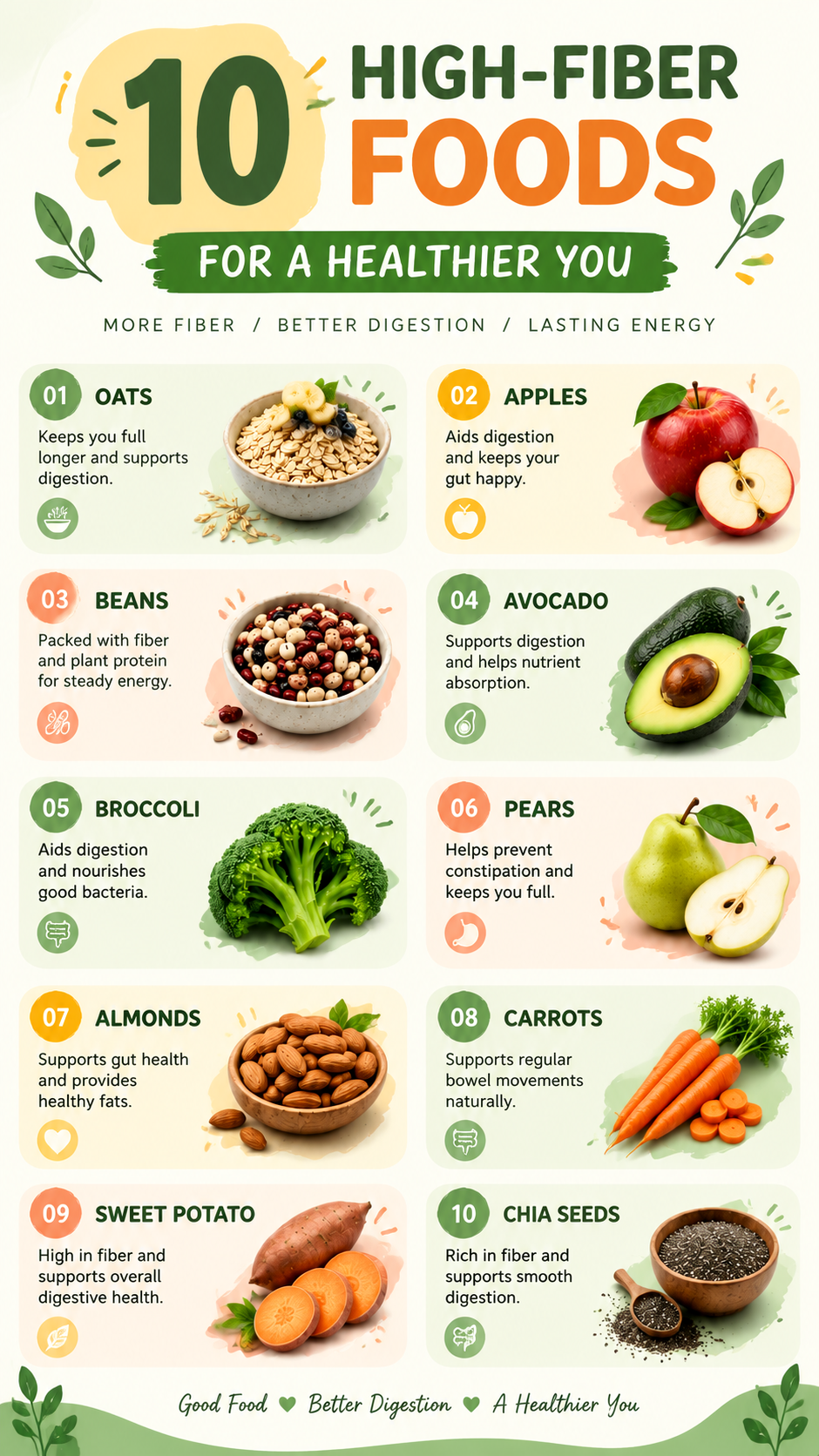
Adding more fiber-rich foods to your daily meals is one of the simplest ways to support a balanced lifestyle and promote better digestion. A healthy gut starts with the foods you choose, and naturally high fiber options like oats, apples, beans, avocado, broccoli, pears, almonds, carrots, sweet potatoes, and chia seeds can make a meaningful difference in your everyday nutrition.
Fiber is an essential part of a well-rounded diet because it helps support regular digestion, contributes to feelings of fullness, and encourages healthier eating habits. Whether you are looking to improve your digestive routine, build more balanced meals, or simply include more whole foods in your diet, these high fiber foods are easy additions to your kitchen.
Key Takeaways
- High fiber foods can support smoother digestion and regular bowel habits.
- Whole foods like fruits, vegetables, grains, nuts, and seeds are excellent fiber sources.
- Adding fiber gradually can help your body adjust comfortably.
- A variety of fiber-rich foods helps create a more balanced diet.
- Simple food swaps can make increasing daily fiber easier.
Why Fiber Matters for Digestive Health
Dietary fiber is a type of carbohydrate found naturally in plant-based foods. Unlike other carbohydrates, fiber is not fully broken down by the body. Instead, it moves through the digestive system and plays an important role in maintaining healthy digestion.
There are two main types of dietary fiber. Soluble fiber absorbs water and forms a gel-like texture, while insoluble fiber adds bulk to food as it moves through the digestive tract. Both types contribute to a healthy digestive routine and can be found in many everyday foods.
Important: Increasing fiber intake is most effective when combined with enough fluids and a varied diet. Small, consistent changes often make it easier to enjoy the benefits of fiber without discomfort.
10 High Fiber Foods to Add to Your Meals
1. Oats: A Simple Breakfast Fiber Choice
Oats are a popular high fiber food that can be enjoyed in many ways. A warm bowl of oatmeal, overnight oats, or homemade oat-based snacks can provide a satisfying start to the day.
Oats contain soluble fiber and pair well with fruits, nuts, and seeds for a more nutrient-rich meal. Adding toppings like apples, almonds, or chia seeds can increase both flavor and fiber content.
2. Apples: A Convenient Fiber-Rich Fruit
Apples are an easy snack option that naturally fits into many eating routines. Enjoying apples with the skin provides additional fiber and makes them a refreshing choice throughout the day.
They can be eaten alone, sliced into oatmeal, blended into smoothies, or paired with nut butter for a balanced snack idea.
3. Beans: A Plant-Based Fiber Powerhouse
Beans are one of the most versatile foods for increasing fiber intake. From soups and salads to wraps and main dishes, beans add texture, flavor, and nutritional value.
Black beans, kidney beans, chickpeas, and other varieties can easily become part of healthy meals throughout the week.
4. Avocado: Healthy Fats Plus Fiber
Avocado is known for its creamy texture and nutrient profile. It offers fiber along with healthy fats, making it a satisfying addition to meals.
Add avocado to salads, toast, bowls, or sandwiches for an easy way to bring more variety to your diet.
5. Broccoli: A Vegetable Full of Fiber
Broccoli is a nutrient-rich vegetable that works well in many recipes. Roasted, steamed, or added to stir-fries, it is an easy way to include more vegetables in your meals.
Its combination of fiber and plant nutrients makes it a valuable choice for anyone focusing on better digestive wellness.
6. Pears: A Sweet Way to Increase Fiber
Pears offer a naturally sweet flavor while providing fiber. They make a convenient snack and can also be added to salads, breakfast bowls, or healthy desserts.
7. Almonds: A Crunchy Fiber-Rich Snack
Almonds are a practical snack option that provides fiber along with satisfying texture. A small portion can be added to yogurt, oatmeal, or enjoyed on its own.
Choosing whole nuts instead of highly processed snacks can be a simple step toward more balanced eating habits.
8. Carrots: An Easy Everyday Vegetable
Carrots are a convenient vegetable that can be enjoyed raw, cooked, or added to a variety of dishes. Their natural crunch makes them a great snack option between meals.
9. Sweet Potatoes: Comfort Food with Fiber
Sweet potatoes are a satisfying addition to balanced meals. They can be baked, roasted, mashed, or used as a base for nourishing recipes.
Their natural sweetness makes them a favorite choice for creating meals that feel comforting while still including beneficial nutrients.
10. Chia Seeds: Small Seeds with Big Benefits
Chia seeds are a simple ingredient that can quickly increase the fiber content of meals. They can be mixed into smoothies, yogurt, oatmeal, or used to create chia puddings.
Because they absorb liquid and create a unique texture, chia seeds are a popular choice for healthy recipes.
How to Add More Fiber to Your Daily Routine
Increasing your fiber intake can be simple when you focus on small adjustments. Instead of making major changes overnight, try adding fiber-rich ingredients to familiar meals.
- Replace refined grains with whole grain options when possible.
- Add fruit to breakfast or snacks for a natural fiber boost.
- Include vegetables in lunch and dinner meals.
- Keep nuts or seeds available for convenient snacks.
- Experiment with different beans and legumes in recipes.
Common Mistakes When Increasing Fiber
While fiber is an important part of a healthy diet, adding too much too quickly may not feel comfortable for everyone. Gradual changes allow your body to adapt.
Another important factor is hydration. Since fiber works together with water in the digestive process, drinking enough fluids can help support a comfortable experience.
At a Glance
Quick Points
- Choose a variety of plant-based fiber sources.
- Build meals around whole foods.
- Add fiber gradually for better comfort.
- Combine fiber-rich foods with balanced nutrition.
Conclusion: Make Fiber a Daily Habit
High fiber foods can be simple, delicious, and easy to include in everyday meals. From colorful fruits and vegetables to grains, legumes, nuts, and seeds, there are many ways to support better digestion through natural food choices.
Creating a healthier gut-friendly routine is about consistency rather than perfection. Start with small additions, explore new recipes, and enjoy the variety that fiber-rich foods bring to your plate.
With options like oats, apples, beans, avocado, broccoli, pears, almonds, carrots, sweet potatoes, and chia seeds, improving your daily fiber intake can become an enjoyable part of a balanced lifestyle.
Tags
High Fiber Foods
Healthy Digestion
Gut Health
Fiber Rich Foods
Healthy Eating
Digestive Wellness