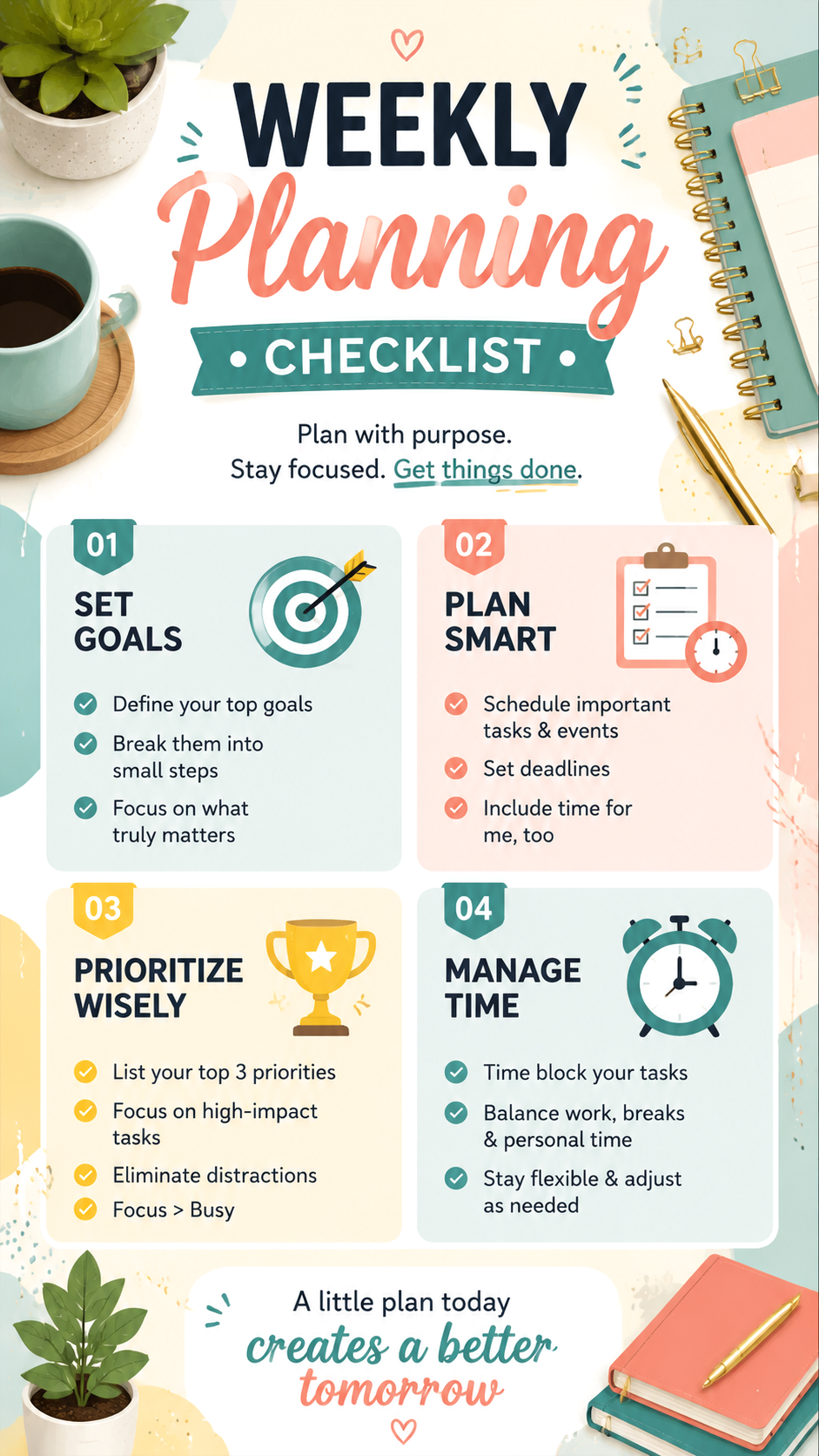
Weekly Planning Checklist Aesthetic Routine Goal Setting Guide
Creating a weekly planning routine is one of the simplest ways to bring more structure, focus, and balance into everyday life. A thoughtful weekly planner helps transform scattered tasks into a clear roadmap, making it easier to prioritize goals, manage time, and create space for the things that matter most.
The modern approach to weekly planning is not just about filling in a calendar. It is about designing a routine that supports productivity while leaving room for rest, personal growth, and flexibility. With the right weekly planning checklist, you can organize appointments, track important tasks, set realistic goals, and build habits that move you forward.
Key Takeaways
- A weekly planner creates clarity and reduces daily overwhelm.
- Goal setting helps turn big ideas into manageable actions.
- Prioritizing tasks keeps your energy focused on what matters.
- Time blocking creates a balanced and intentional schedule.
- Aesthetic planning can make organization more enjoyable and motivating.
Why Weekly Planning Creates a More Productive Lifestyle
Many people begin each week with a long list of responsibilities but no clear system for handling them. This often leads to rushed decisions, missed priorities, and unnecessary stress. Weekly planning provides a moment to step back, review what needs attention, and intentionally organize your time.
A weekly planning checklist works as a personal guide. Instead of reacting to every request or distraction, you can decide ahead of time where your focus should go. Whether you are managing work projects, studying, building healthy routines, or simply trying to stay organized, a structured plan helps create direction.
Important: Effective planning is not about creating a perfect schedule. It is about creating a realistic system that helps you make consistent progress while protecting your time and energy.
The Essential Parts of a Weekly Planning Checklist
A well-designed weekly planner usually includes several important sections. Each part has a specific purpose and helps you create a complete picture of your upcoming week.
1. Set Clear Weekly Goals
Goal setting is the foundation of effective weekly planning. Before adding appointments or tasks, take time to identify what you want to accomplish. Your goals should be specific enough to guide your actions but flexible enough to adapt when unexpected changes happen.
Instead of writing a large goal like “finish everything,” break it into smaller steps. For example, you might choose to complete a specific project section, study a certain topic, improve a daily habit, or dedicate time to personal development.
Simple Goal Planning Tips
- Choose three main goals for the week.
- Break larger goals into smaller actions.
- Make goals measurable and realistic.
- Review progress at the end of the week.
2. Organize Appointments and Important Events
A weekly schedule becomes easier to manage when all important dates are visible in one place. Add meetings, classes, personal appointments, deadlines, and events before planning smaller tasks.
This simple step prevents overbooking and allows you to see where your available time exists. A planner that includes both responsibilities and personal commitments creates a more balanced approach to time management.
3. Prioritize What Matters Most
Not every task deserves the same amount of attention. One of the biggest benefits of weekly planning is learning how to separate important tasks from distractions.
Create a short list of your top priorities and focus your energy there first. When your most meaningful work receives attention early, you create momentum and reduce last-minute pressure.
How to Use Time Blocking for Better Focus
Time blocking is a popular productivity method that involves assigning specific periods of time to certain activities. Instead of simply writing tasks on a list, you create dedicated spaces in your schedule for completing them.
For example, a weekly planner might include blocks for focused work, learning, exercise, meal preparation, relaxation, and personal projects. This approach encourages intentional use of time and helps prevent important tasks from being forgotten.
Building a Balanced Weekly Routine
A productive routine should include more than work and responsibilities. A successful weekly schedule also makes room for rest, hobbies, relationships, and self-care.
Balance does not mean every day looks identical. Some days may require deeper focus, while others may need more flexibility. The goal is to create a routine that supports your lifestyle instead of creating additional pressure.
Expert Insight
- Plan your most important tasks during your highest-energy hours.
- Leave extra space for unexpected changes.
- Include breaks to maintain focus and motivation.
Creating an Aesthetic Weekly Planner You Enjoy Using
An aesthetic planner is more than a decorative tool. A visually pleasing layout can make planning feel more enjoyable and encourage consistency. Many people enjoy using soft colors, clean layouts, simple icons, and organized sections because these details make the planning process feel more personal.
You can customize your weekly planning system with elements that match your style. Add habit trackers, motivational notes, priority sections, meal planning areas, or reflection prompts to create a planner that works specifically for your needs.
Ideas for a Personalized Planning Routine
- Use color categories for different areas of life.
- Add encouraging reminders throughout your planner.
- Create a weekly reflection section.
- Track habits that support your goals.
Common Weekly Planning Mistakes to Avoid
Even a great planning system can become stressful if it is not used correctly. Avoiding common mistakes can help you create a routine that feels sustainable.
Avoid Overloading Your Schedule
Writing down too many tasks can make your week feel impossible before it begins. Focus on realistic priorities and remember that progress is more valuable than perfection.
Avoid Ignoring Personal Time
A complete weekly plan includes time for yourself. Rest and recovery are important parts of maintaining productivity and motivation.
At a Glance
- Start with weekly goals.
- Schedule important commitments.
- Choose your top priorities.
- Use time blocks for focus.
- Keep your routine flexible.
Final Thoughts on Building Your Perfect Weekly Planning Routine
A weekly planning checklist is a powerful tool for creating more clarity, confidence, and control over your time. By combining goal setting, priority management, scheduling, and intentional routines, you can create a system that helps you move forward one step at a time.
The best planner is not the one that looks perfect. It is the one you actually use. Whether you prefer a digital planner or a beautiful notebook layout, the most important thing is creating a weekly habit that supports your goals and lifestyle.
Start small, stay consistent, and allow your planning routine to grow with you. A thoughtful plan today can create a more organized and productive tomorrow.
Tags
Weekly Planning
Planning Checklist
Goal Setting
Productivity Routine
Time Management
Aesthetic Planner