6 Easy Ways to Cook Eggs Sunny Side Up, Over Easy, Hard Boiled Scrambled Eggs
Eggs are one of the most versatile ingredients you can keep in your kitchen. They are quick to prepare, easy to customize, and delicious at breakfast, brunch, or even a simple dinner. With just a few eggs, a little oil or butter, and the right cooking technique, you can create several different meals to suit your taste. Whether you love a golden, runny yolk or prefer your eggs fully cooked, learning how to cook eggs in different ways makes everyday meals more enjoyable.
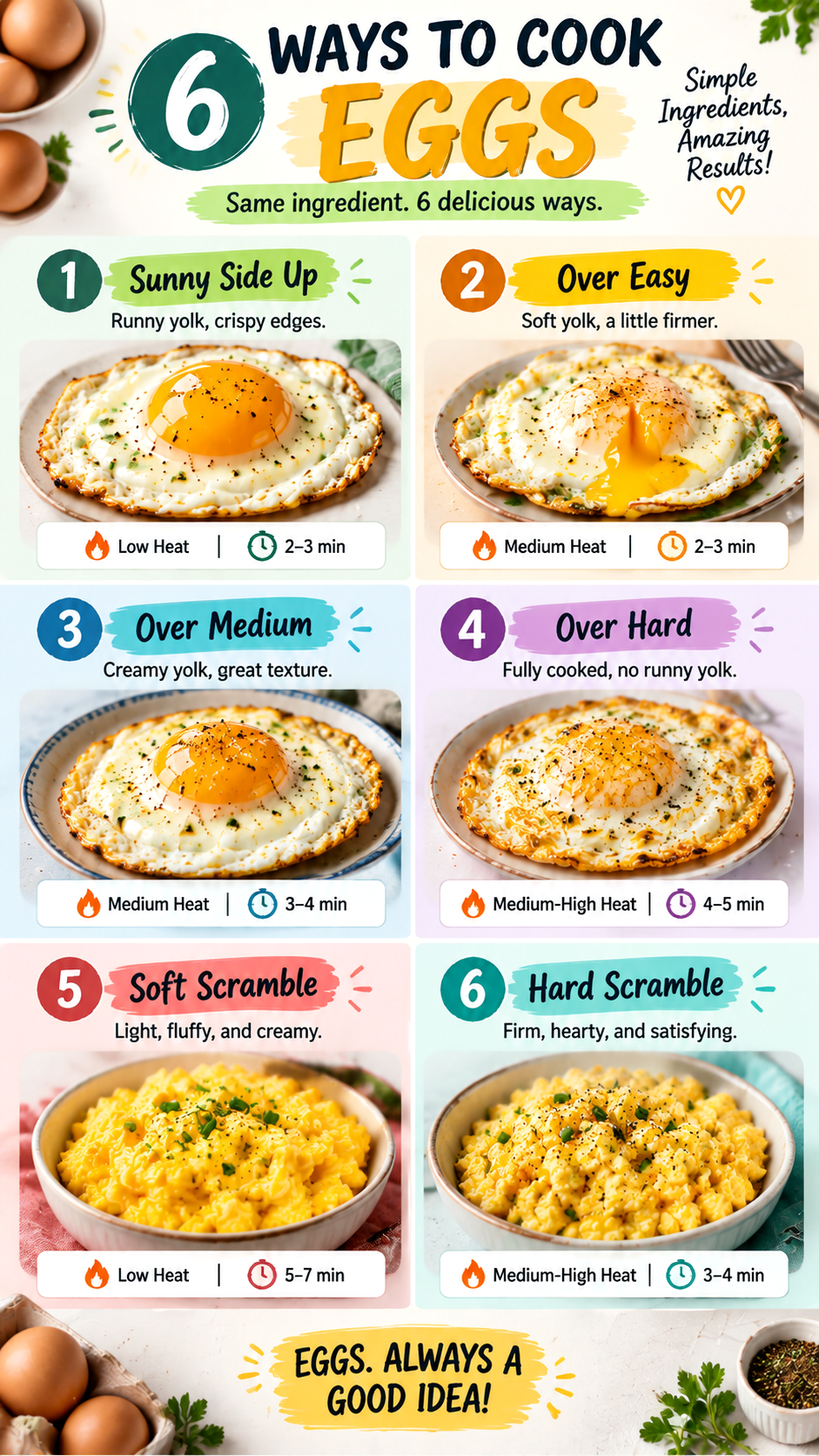
From sunny side up and over easy to over medium, over hard, soft scrambled, and hard scrambled eggs, each method offers a different texture and flavor. The secret is knowing how much heat to use, when to flip, and how long to cook the eggs. Once you understand these simple techniques, you can prepare your favorite style with confidence and get consistent results in your own kitchen.
Key Takeaways
- Learn six easy ways to cook eggs, including four fried egg styles and two scrambled egg variations.
- Control the heat to achieve crispy edges, tender whites, creamy curds, or firm yolks.
- Use a nonstick skillet and a little butter or oil to make cooking and cleanup easier.
- Adjust cooking times according to your pan, burner, egg size, and preferred texture.
- Pair cooked eggs with toast, vegetables, avocado, or fresh herbs for a satisfying meal.
- Cook eggs thoroughly when food safety is a priority, especially when serving young children, older adults, pregnant people, or anyone with a weakened immune system.
1. Sunny Side Up Eggs: Golden Yolks and Tender Whites
Sunny side up eggs are a breakfast classic for anyone who enjoys a bright, golden yolk that stays runny. The egg cooks on one side without being flipped, allowing the yolk to remain visible while the whites gradually turn opaque. This method is simple, attractive, and ideal for serving over toast or alongside your favorite breakfast foods.
How to Make Sunny Side Up Eggs
Ingredients
- 1 or 2 large eggs
- 1 teaspoon butter or cooking oil
- Salt and black pepper, to taste
- Optional fresh parsley or chives for garnish
Cooking Instructions
- Place a nonstick skillet over low to medium-low heat and add the butter or oil.
- Crack the egg into a small bowl first, then gently slide it into the skillet.
- Allow the egg to cook without flipping it. The whites should gradually become opaque while the yolk remains soft.
- If the top of the white is taking too long to set, cover the pan briefly with a lid to trap gentle heat.
- Remove the egg when it reaches your preferred consistency. Season with salt and black pepper before serving.
Estimated cooking time: About 2 to 4 minutes, depending on the heat and desired doneness. The exact timing may vary, so watch the whites rather than relying on the clock alone.
Pro Tip: Keep the heat gentle for tender whites and a delicate yolk. If the edges brown too quickly while the center remains translucent, reduce the heat. For better food safety, cook until the whites and yolk are firm, or use pasteurized eggs if you plan to serve them undercooked.
Best Ways to Serve Sunny Side Up Eggs
Serve sunny side up eggs on buttered toast, with roasted tomatoes, or over a bowl of seasoned rice. The runny yolk creates a rich sauce that brings simple ingredients together. A sprinkle of fresh herbs and black pepper adds color and flavor without making the dish complicated.
2. Over Easy Eggs: A Soft Yolk With a Quick Flip
Over easy eggs are similar to sunny side up eggs, but they are flipped briefly during cooking. This gives the top of the egg a short turn in the pan while keeping the yolk soft and runny. If you enjoy dipping toast into a golden yolk but prefer the surface of the egg to be lightly cooked, over easy eggs are an excellent choice.
How to Cook Over Easy Eggs
- Heat a small amount of butter or oil in a nonstick skillet over medium-low heat.
- Crack the egg into the pan and cook until the whites are mostly set and the edges release easily.
- Slide a thin spatula underneath the egg, supporting the white and yolk as much as possible.
- Gently flip the egg and cook the second side for approximately 15 to 30 seconds.
- Transfer to a plate and season with salt and pepper.
Estimated cooking time: Approximately 2 to 3 minutes total, including the brief flip, depending on the pan and heat.
The key to over easy eggs is a gentle flip. Allowing the whites to set before turning makes the egg easier to handle and reduces the risk of breaking the yolk. A flexible, thin spatula can make this step much simpler, especially if you are new to cooking fried eggs.
What Makes Over Easy Eggs Different?
The main difference is the cooking method. Sunny side up eggs stay in one position, while over easy eggs are turned briefly. The second side receives just enough heat to cook the surface, leaving the yolk soft when cooked to the traditional style.
Over easy eggs are delicious on English muffins, breakfast sandwiches, avocado toast, or alongside crispy potatoes. If you prefer a completely set yolk, continue cooking the egg longer rather than stopping at the over easy stage.
3. Over Medium Eggs: A Slightly Thicker, Jammy Yolk
Over medium eggs offer a middle ground between a runny yolk and a fully cooked center. They are flipped like over easy eggs but spend a little longer in the pan. The result is a yolk that is thicker and partially set, often with a soft, jammy texture that works beautifully in breakfast bowls and sandwiches.
Step-by-Step Instructions
- Warm a nonstick skillet over medium-low to medium heat and add butter or oil.
- Crack the egg into the skillet and allow the whites to cook until mostly set.
- Carefully slide a spatula under the egg and flip it without pressing down on the yolk.
- Cook the second side for approximately 1 to 2 minutes, adjusting the time to your preferred texture.
- Season and serve immediately.
Estimated cooking time: Around 3 to 4 minutes total, including the flip. Use the appearance and firmness of the egg to judge doneness because pan temperatures vary.
How to Get the Perfect Jammy Center
For a softer center, keep the heat moderate and avoid pressing the egg with your spatula. Pressing can break the yolk and force it to spread across the pan. For a firmer center, extend the cooking time slightly and check the egg before removing it.
Over medium eggs are especially good on burgers, grain bowls, breakfast hash, and toast topped with sautéed spinach. Their yolks provide richness without being as runny as those of over easy eggs.
Why Cooking Time Matters
Small changes in cooking time can make a noticeable difference in egg texture. Over easy eggs receive only a brief cook on the second side, while over medium eggs cook longer to develop a thicker center.
- Use consistent heat to prevent the bottom from overcooking.
- Flip only when the whites are stable enough to support the egg.
- For food safety, cook eggs until both the white and yolk are firm, especially for people at higher risk of foodborne illness.
4. Over Hard Eggs: Fully Cooked Yolks
Over hard eggs are the right option for anyone who prefers a firm yolk with no runny center. They are cooked on both sides for longer than over easy or over medium eggs. This style is practical for breakfast sandwiches, packed lunches, and meals where a firm egg is easier to handle.
How to Make Over Hard Eggs
- Heat a nonstick skillet over medium-low to medium heat and add a small amount of butter or oil.
- Crack the egg into the skillet and cook until the white begins to set.
- Flip the egg carefully with a spatula.
- Continue cooking until the yolk is fully set. If necessary, lower the heat and cook for another minute or two.
- Check that the white and yolk are firm before removing the egg from the pan.
Estimated cooking time: About 4 to 6 minutes, depending on the egg size, heat, and desired firmness.
Tips for Firm, Delicious Fried Eggs
Over hard eggs can become dry or rubbery if cooked over excessively high heat. Moderate heat gives the center time to cook before the outside becomes too dark. If you like a broken yolk, you can gently pierce it after flipping so it spreads into a thinner layer and cooks more quickly.
Serve over hard eggs with whole-grain toast, breakfast potatoes, sautéed vegetables, or inside a breakfast sandwich. Their firm texture also makes them convenient when you want an egg that will not release a runny yolk onto other ingredients.
5. Soft Scrambled Eggs: Creamy, Tender, and Fluffy
Soft scrambled eggs are a favorite for anyone who loves a creamy breakfast. Instead of cooking as a single piece, the eggs are gently stirred as they set, creating tender curds. The goal is a moist, delicate texture rather than large, dry pieces.
Low heat is especially helpful for this method because eggs cook quickly and can become firm before you realize it. With a little patience and regular stirring, you can make soft scrambled eggs that feel rich and satisfying with very few ingredients.
Ingredients for Soft Scrambled Eggs
- 2 large eggs
- 1 teaspoon butter
- A small pinch of salt
- Black pepper, chives, or parsley, as desired
- Optional: a small splash of milk or cream
How to Make Creamy Scrambled Eggs
- Crack the eggs into a bowl and whisk until the yolks and whites are evenly combined.
- Melt the butter in a nonstick skillet over low heat.
- Pour in the eggs and wait a few seconds for the edges to begin setting.
- Use a silicone spatula to gently sweep the eggs from the edges toward the center.
- Continue stirring slowly, allowing soft curds to form without letting the eggs brown too much.
- Remove the pan from the heat when the eggs are almost set but still look slightly moist. Residual heat will continue cooking them.
- Season and serve immediately.
Estimated cooking time: Approximately 5 to 7 minutes over low heat, although smaller portions may cook faster.
Pro Tip: Take soft scrambled eggs off the heat just before they reach your ideal texture. The warmth of the pan continues to cook them for a short time. For the best balance of creaminess and food safety, keep stirring gently until the eggs are fully cooked but still tender.
How to Customize Soft Scrambled Eggs
Soft scrambled eggs are easy to personalize. Stir in finely chopped chives, parsley, or a little grated cheese near the end of cooking. For a heartier breakfast, serve them with sautéed mushrooms, spinach, or sliced tomatoes.
If you want especially tender curds, avoid rushing the process by turning up the heat. A few extra minutes over low heat usually produce a better texture than a fast, high-heat scramble.
6. Hard Scrambled Eggs: Firm Curds for a Hearty Breakfast
Hard scrambled eggs are cooked until they are fully set, creating firmer curds that hold their shape on the plate. They are a good option if you prefer a more substantial texture or want scrambled eggs that are easy to combine with breakfast potatoes, vegetables, or a breakfast wrap.
Although the name suggests using high heat, medium heat is often easier to control. Extremely high heat can make the eggs dry, tough, or unevenly cooked. The aim is a fully set scramble with tender curds rather than a browned, rubbery mixture.
How to Cook Hard Scrambled Eggs
- Crack 2 eggs into a bowl and whisk until combined.
- Heat a nonstick skillet over medium heat and melt a small amount of butter or add cooking oil.
- Pour the eggs into the pan and allow the bottom to begin setting.
- Use a spatula to break the eggs into curds, stirring and folding as they cook.
- Continue cooking until there are no visibly wet or liquid areas and the eggs are fully set.
- Season with salt and pepper, then add chopped herbs if desired.
Estimated cooking time: Approximately 3 to 5 minutes, depending on the pan, burner, and number of eggs.
What Is the Difference Between Soft and Hard Scrambled Eggs?
The biggest differences are heat management, cooking time, and final texture. Soft scrambled eggs are stirred gently over low heat and removed when tender and just set. Hard scrambled eggs cook until fully firm, with more defined curds and little remaining moisture.
Both styles can be delicious. Choose soft scrambled eggs when you want a delicate, creamy breakfast, or hard scrambled eggs when you prefer a firmer texture for wraps, meal plates, and breakfast burritos.
How to Choose the Best Cooking Method for Your Eggs
With six easy ways to cook eggs, the best method depends on the texture you enjoy and how you plan to serve them. Fried eggs keep their shape, while scrambled eggs create soft or firm curds. The cooking method also affects how the yolk feels and how easily the eggs combine with other foods.
- For a visible, runny yolk: Choose sunny side up eggs.
- For a lightly cooked top and runny center: Try over easy eggs.
- For a thicker, jammy center: Cook over medium eggs.
- For a fully set yolk: Make over hard eggs.
- For tender, creamy curds: Choose soft scrambled eggs.
- For firm, fully cooked curds: Make hard scrambled eggs.
These descriptions refer to traditional cooking styles and preferred textures. For food safety, cook eggs until the whites and yolks are firm, or scrambled eggs until they are fully set. Pasteurized eggs are another option for recipes that call for undercooked or raw eggs.
Essential Tips for Cooking Perfect Eggs Every Time
Even simple egg recipes benefit from a few basic techniques. You do not need special equipment or complicated ingredients, but using the right pan, managing the heat, and paying attention to texture can make a noticeable difference.
1. Use a Nonstick Skillet
A good nonstick skillet helps fried eggs release easily and makes scrambling less frustrating. A well-seasoned cast-iron skillet can also work, provided it is properly heated and lightly greased. Choose a pan that comfortably holds the number of eggs you are cooking.
2. Control the Heat
Eggs cook quickly, so high heat is not always the fastest route to a good result. Low to medium-low heat gives the whites time to set without making the edges too crisp. For scrambled eggs, gentle heat allows you to build tender curds and avoid drying them out.
3. Crack Eggs Into a Separate Bowl
Cracking eggs into a small bowl before adding them to the pan makes it easier to remove any shell fragments. It also helps you place the egg gently into the skillet, which is particularly useful when making sunny side up or over easy eggs.
4. Use Butter or Oil Wisely
A small amount of butter adds flavor, while cooking oil helps prevent sticking. Spread the fat across the pan before adding the eggs. Too much fat is unnecessary, but too little may cause sticking, especially if the pan is not nonstick.
5. Season at the Right Time
Salt and black pepper are simple seasonings that complement nearly every egg style. You can season fried eggs shortly before serving and add herbs at the end of cooking. For scrambled eggs, whisking in a little salt before cooking is also a convenient option.
6. Pay Attention to Carryover Cooking
Eggs continue to cook briefly after they leave the heat. This is especially important for scrambled eggs, which can become dry if left in a hot pan after they are ready. Transfer them to a plate promptly and serve while they are fresh.
Common Egg-Cooking Mistakes to Avoid
Learning how to cook eggs is easier when you know which common mistakes to watch for. A few small adjustments can help you achieve a more consistent texture and make your breakfast preparation smoother.
- Using excessive heat: High heat can brown the outside before the inside cooks properly. Reduce the temperature if the eggs sizzle aggressively or darken too quickly.
- Flipping too early: Fried eggs may tear if the whites have not set enough. Wait until the egg releases more easily from the pan before flipping.
- Pressing down on fried eggs: Pressing can break the yolk and squeeze moisture from the whites. Let the egg cook naturally instead.
- Overcooking scrambled eggs: Scrambled eggs become dry when left over the heat too long. Remove them as soon as they reach the desired texture while ensuring they are fully cooked.
- Using a cold or poorly prepared pan: Add the butter or oil to a properly warmed pan so the eggs cook more evenly and are less likely to stick.
- Ignoring food safety: Avoid serving eggs with raw or undercooked whites or yolks to people at higher risk of foodborne illness. Cook eggs thoroughly and refrigerate leftovers promptly.
Easy Ways to Serve Eggs for Breakfast and Beyond
Once you have mastered your favorite egg-cooking method, it is easy to turn a basic ingredient into a complete meal. You can keep breakfast simple or add a few fresh ingredients to create different flavors throughout the week.
Eggs and Toast
Toast is a natural partner for fried and scrambled eggs. Use sourdough, whole-grain bread, an English muffin, or your favorite loaf. A runny yolk pairs especially well with crisp toast, while scrambled eggs make a soft, satisfying topping.
Eggs With Vegetables
Add sautéed spinach, mushrooms, peppers, onions, or tomatoes to your breakfast plate. You can serve the vegetables alongside fried eggs or fold them into scrambled eggs near the end of cooking. Fresh herbs add color and a light, fresh flavor.
Breakfast Sandwiches and Wraps
Over hard eggs and hard scrambled eggs work especially well in sandwiches and wraps because their firmer texture is easier to manage. Add cheese, leafy greens, tomato, or avocado for a quick breakfast that can be adapted to your preferences.
Simple Egg Breakfast Bowls
Place your favorite cooked eggs over rice, roasted potatoes, or another grain. Add vegetables, herbs, and a flavorful sauce for a flexible meal. Over medium eggs provide a rich center, while scrambled eggs distribute easily throughout the bowl.
Egg Cooking Methods at a Glance
- Sunny side up: Cook on one side, keeping the yolk visible.
- Over easy: Flip briefly for a lightly cooked top and soft center.
- Over medium: Flip and cook longer for a thicker yolk.
- Over hard: Cook both sides until the yolk is firm.
- Soft scramble: Stir gently over low heat for tender curds.
- Hard scramble: Continue cooking until the curds are fully set.
Frequently Asked Questions About Cooking Eggs
What Is the Easiest Way to Cook Eggs?
Sunny side up eggs and scrambled eggs are both beginner-friendly. Sunny side up eggs require little handling, while scrambled eggs are easy to adjust as they cook. A nonstick pan, moderate heat, and a little butter or oil help make either method straightforward.
How Long Should I Cook Fried Eggs?
Cooking time depends on the style and your preferred doneness. Sunny side up eggs may take about 2 to 4 minutes, over easy eggs around 2 to 3 minutes, over medium eggs around 3 to 4 minutes, and over hard eggs around 4 to 6 minutes. These are estimates rather than guarantees. Always check the actual doneness, and cook until the white and yolk are firm when food safety is a priority.
Should I Use High or Low Heat for Scrambled Eggs?
Low heat is best for soft scrambled eggs because it gives you more control over the texture. Medium heat can work well for firmer scrambled eggs, but very high heat can cause them to cook unevenly and become tough. Stir regularly and remove the eggs once they are fully cooked.
Can I Make Eggs Without Butter?
Yes. Cooking oil works well for both fried and scrambled eggs. Choose an oil suitable for the cooking temperature and use enough to lightly coat the pan. A reliable nonstick skillet can also help reduce the amount of fat needed.
How Can I Stop Eggs From Sticking to the Pan?
Use a nonstick or well-seasoned skillet, warm it appropriately, and add a little butter or oil before the eggs. Avoid trying to flip fried eggs before the whites have set enough to release from the surface. For scrambled eggs, a silicone spatula helps you move the curds gently across the pan.
Conclusion: Find Your Favorite Way to Cook Eggs
Learning six ways to cook eggs is a simple kitchen skill that can make breakfast more interesting and everyday meals easier. Sunny side up eggs offer a classic golden yolk, over easy eggs bring a quick flip and soft center, over medium eggs provide a thicker texture, and over hard eggs are fully cooked. If you prefer scrambled eggs, soft scrambles deliver tender curds, while hard scrambles offer a firmer finish.
The best results come from choosing the right heat, watching the texture, and adjusting the cooking time to suit your preferences. Start with the method that sounds most appealing, then experiment with seasonings, herbs, vegetables, and your favorite breakfast sides.
Keep these six egg cooking methods handy for busy mornings, relaxed weekend brunches, and quick meals throughout the week. With a few simple ingredients and a little practice, you can turn ordinary eggs into a breakfast that feels just right. Save this guide for later and try a different egg style the next time you cook!
Tags
How to Cook Eggs
Egg Cooking Methods
Sunny Side Up Eggs
Over Easy Eggs
Scrambled Eggs
Easy Breakfast Ideas
Egg Recipes
Breakfast Cooking Tips