Oven Rack Positions Guide Best Rack for Baking, Roasting, Pizza Broiling
Choosing the right oven rack position can make a noticeable difference in how your food bakes, roasts, browns, and crisps. Even when you follow a recipe perfectly, placing a dish too high or too low in the oven can affect its texture and final appearance. The good news is that understanding oven rack positions is simple once you know how heat moves through your oven and which foods benefit from different levels.
Whether you are baking a fluffy cake, roasting vegetables, preparing homemade pizza, or melting cheese over a casserole, the right rack placement helps you get more consistent results. This practical guide explains when to use the top, middle, and bottom oven racks, how to adjust your placement for different recipes, and which common mistakes to avoid.
Key Takeaways
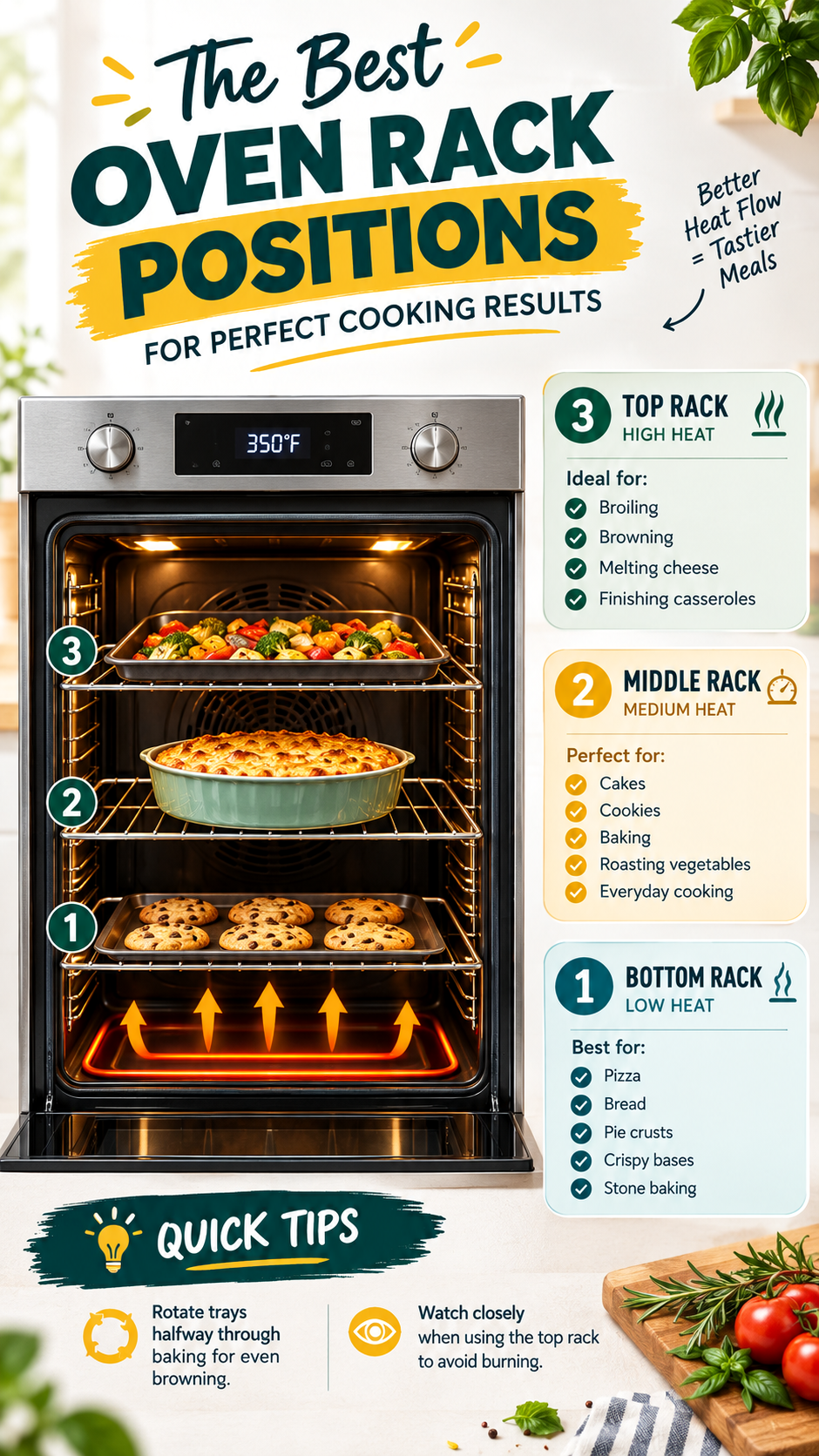
- The top oven rack is useful for broiling, browning, melting cheese, and finishing casseroles.
- The middle oven rack is the best starting point for cakes, cookies, everyday baking, and most roasting recipes.
- The bottom oven rack helps foods such as pizza and bread develop a well-browned base.
- Rack placement affects how strongly food receives heat from the top and bottom heating elements.
- Rotating trays when appropriate can improve even browning, especially when your oven has hot spots.
- Always consider your recipe, oven type, and food thickness before changing rack positions.
Understanding the Three Main Oven Rack Positions
Most conventional ovens offer several rack levels, allowing you to position food closer to the top heating element, in the center of the cooking chamber, or nearer the bottom. Each position has advantages, and learning when to use them makes everyday cooking easier.
Although the exact temperature distribution depends on your oven, the basic principles are useful for most home kitchens.
Top Rack: Best for Broiling and Browning
The top oven rack places food closer to the upper heating element. This position is especially helpful when you want a golden surface, melted cheese, or a crisp finish without cooking the entire dish for much longer.
Foods that benefit from the top rack include:
- Cheese-topped casseroles that need a browned finish.
- Open-faced sandwiches and dishes with melted cheese.
- Foods that require broiling, when the recipe recommends it.
- Vegetables or other dishes that need a little extra surface color at the end of cooking.
- Prepared meals that need a golden, lightly crisp topping.
However, the top rack is not automatically the best place for every dish that needs browning. Strong radiant heat can darken the surface quickly while the inside remains undercooked.
Pro Tip: When broiling, follow your recipe’s recommended rack distance and watch the food closely. Cheese, breadcrumbs, and sugary glazes can brown or burn in a short time.
Middle Rack: Best for Even Baking
The middle rack is the most versatile oven rack position for everyday cooking. It generally provides a useful balance between the heat coming from above and below, making it a reliable choice for recipes that need steady, even cooking.
Use the middle rack as your starting point for:
- Cakes, cupcakes, and muffins.
- Cookies and many other baked treats.
- Roasted vegetables and everyday roasting recipes.
- Lasagna and casseroles that need to cook throughout.
- Meatloaf, baked pasta, and similar family meals.
For many cake recipes, the middle rack helps the batter cook evenly without exposing the top or bottom to excessive heat. Cookies can also benefit from this position, although the number of trays, baking sheet material, and oven characteristics affect the final result.
If a recipe does not specify a rack position, the middle rack is usually the best place to begin. You can adjust it later if your results consistently show that the bottom browns too quickly or the top needs more color.
Bottom Rack: Best for Crispy Bases
The bottom oven rack places food closer to the lower heating element. Depending on your oven, this position can encourage stronger heating underneath the dish, helping the base become crisp and well browned.
The bottom rack is often useful for:
- Pizza that needs a crisp, golden crust.
- Bread and certain rolls that benefit from a well-baked base.
- Pie crusts that need additional browning underneath.
- Pastries that tend to have pale or soft bottoms.
- Recipes baked on a suitable preheated tray or baking surface.
Pizza is a particularly good example. A well-browned top does not always mean the bottom crust is ready. Moving the pizza lower in the oven may help the base cook more effectively, especially when the recipe and oven setup support that adjustment.
Still, avoid placing every dish on the lowest rack. Food positioned too close to a strong lower heating element can develop a burnt bottom before the center finishes cooking.
Which Oven Rack Position Is Best for Each Food?
The ideal oven rack position depends on what you are preparing and the result you want. Some recipes need balanced heat, while others benefit from more intense heat from one direction.
Best Rack Position for Cakes
For most cakes, start with the middle rack. This placement helps the cake bake evenly while reducing the chance of the top or bottom browning too quickly.
Place the cake pan in the center of the rack, leaving space around it so hot air can circulate. If you are baking multiple cakes, check your oven manual and recipe recommendations because using several levels at once can change the airflow and baking time.
A cake that develops a dark bottom while the center remains wet may be receiving too much heat from below. Try moving it one level higher during a future bake, while keeping the temperature and pan size consistent.
Best Rack Position for Cookies
The middle rack is a dependable choice for many cookie recipes because it provides balanced exposure to the oven’s heat. However, the right placement also depends on whether you prefer soft centers, crisp edges, or evenly golden bottoms.
For consistent results, bake one tray at a time when possible. If you use multiple trays, follow the recipe’s instructions for rotating or switching their positions. Some ovens circulate heat more evenly than others, so you may need to experiment with your specific appliance.
Best Rack Position for Pizza
For a pizza with a crisp bottom, try the lower-middle or bottom rack, depending on your oven and baking surface. The closer position to the lower heating element can help the crust brown, particularly when the oven is fully preheated.
If you use a pizza stone or baking steel, follow its manufacturer’s directions and allow sufficient preheating time. A properly heated baking surface helps transfer heat to the dough and can improve crust texture.
When the bottom is crisp but the cheese needs more color, you can move the pizza higher for a brief finish. Watch it closely, and use oven mitts when repositioning a hot tray or stone.
Best Rack Position for Bread
Bread often bakes well on the middle rack, but a lower position may help when the bottom crust needs more color. The best choice depends on the loaf size, pan, dough type, and oven instructions.
For large loaves, make sure there is enough clearance above the dough so it can expand without coming too close to the upper heating element. If the crust darkens too early, check whether the recipe recommends lowering the temperature or adjusting the rack.
Best Rack Position for Roasted Vegetables
The middle rack is a practical starting point for roasting vegetables because it usually provides a good balance of heat. Spread the vegetables in a single layer on a suitable baking sheet, leaving space between pieces where possible.
If the vegetables are cooked through but need additional browning, a short move toward the upper rack may help. If their undersides are pale or soft, adjust the rack lower next time and check that the pan is not overcrowded.
Best Rack Position for Casseroles
Most casseroles cook well on the middle rack because their ingredients need time to heat through. If you want a golden cheese topping or a crisp breadcrumb layer, finish the dish on the upper rack when appropriate.
For a deep casserole, make sure the center reaches a safe temperature before focusing on surface browning. If the topping darkens before the middle is hot, move the dish lower or loosely cover it with oven-safe foil if the recipe allows.
Why This Matters
Rack position is a tool for controlling how your food receives heat, not a substitute for the correct cooking temperature or time. If a dish is browning unevenly, consider the rack level, pan placement, airflow, and whether your oven has hot spots before making several changes at once.
How to Choose the Right Rack for Better Baking Results
Knowing the general rules is a great start, but a few practical habits can make your oven rack placement more effective.
1. Preheat the Oven Properly
Give your oven enough time to reach the temperature specified in the recipe. The display may indicate that preheating is complete before every part of the oven has stabilized, so follow your appliance’s instructions and allow additional time when needed.
This is especially important for bread and pizza, where a properly heated oven or baking surface can influence the texture of the crust.
2. Leave Space Around Your Pans
Hot air needs room to move around the food. Avoid pushing baking trays tightly against the oven walls, and do not crowd several pans together when even cooking is important.
Good spacing can help reduce uneven browning and prevent one pan from interfering with the airflow around another.
3. Understand Your Oven Type
Conventional ovens and convection ovens distribute heat differently. A conventional oven typically relies on heating elements, while a convection oven uses a fan to circulate hot air.
Because convection can improve air movement, rack placement and cooking times may differ from conventional recipes. Follow your oven manual and the recipe’s convection instructions rather than assuming that the same rack position will produce identical results in every appliance.
4. Rotate Trays When Needed
Some ovens have warmer areas toward the back, front, or sides. If you notice uneven browning, rotating a tray halfway through baking can help distribute the results more evenly.
However, not every recipe benefits from opening the oven door. Delicate cakes and soufflés may be affected by sudden temperature changes, so follow the recipe’s guidance before rotating or repositioning them.
5. Check the Food, Not Just the Clock
Recipe times are useful estimates, but ovens, pans, ingredient temperatures, and portion sizes vary. Check for the visual and physical signs of doneness specified by the recipe.
For meat, poultry, and other foods that require temperature control, use a food thermometer and follow recognized food-safety guidance rather than relying on browning alone.
Common Oven Rack Placement Mistakes to Avoid
Even experienced home cooks sometimes struggle with uneven baking. Fortunately, a few small adjustments can solve many common problems.
Placing Everything on the Top Rack
The top rack is useful for finishing dishes, but it may expose food to intense upper heat. Cakes can brown too quickly, cheese can burn, and thick dishes may need more time in the center. Use the top rack when the recipe calls for it or when you deliberately want additional surface browning.
Using the Bottom Rack for Every Baking Recipe
A lower position can help brown crusts, but it is not ideal for every baked good. Cookies, cakes, and delicate pastries may develop overly dark bottoms if they sit too close to a strong lower heating element.
Overcrowding the Oven
Filling every rack can restrict airflow and make cooking less predictable. If possible, bake items in batches when consistency matters. If multiple racks are necessary, use recipes designed for that setup and check the food carefully.
Ignoring Recipe Instructions
General rack placement guidelines are helpful, but the recipe should come first. A recipe may specify a particular rack level because the pan size, thickness of the food, or desired texture depends on it.
Important: If your recipe recommends a specific rack position, start there. Change the placement only when you have a clear reason, such as a consistently pale crust, an overly dark bottom, or uneven browning in your oven.
Can You Bake on Multiple Oven Racks at Once?
Yes, many recipes can be prepared on multiple oven racks, but the results depend on your oven, the food, and the available space. Using several racks can save time when baking cookies or preparing large quantities of vegetables, but it may also change how heat circulates.
For the best results, follow these guidelines:
- Leave sufficient space between trays to support airflow.
- Use rack positions recommended by the recipe or oven manufacturer.
- Check whether the recipe calls for switching tray positions during cooking.
- Avoid opening the oven door unnecessarily, especially when baking delicate foods.
- Expect that cooking time or browning may vary when you add more trays.
When consistency is more important than speed, baking one tray at a time may be the better option. Once you understand how your oven behaves, you can decide which recipes work well across multiple racks.
How to Fix Common Baking Problems with Rack Placement
If your recipes are not turning out as expected, the rack position is one of several factors worth checking. Use these simple adjustments as a starting point.
- Dark bottom, pale top: Try moving the food one level higher next time, provided the recipe allows it.
- Pale bottom, browned top: Consider a lower rack position or a suitable preheated baking surface.
- Top browns too quickly: Move the food lower or reduce the exposure to upper heat according to the recipe.
- Unevenly browned cookies: Check tray spacing, rack level, and whether your oven has hot spots.
- Soft pizza crust: Check that the oven and baking surface are fully preheated, and consider a lower rack position.
- Casserole topping burns before the center is hot: Move the dish away from the upper element and follow safe cooking guidance.
Make one adjustment at a time whenever possible. This helps you identify what actually improves the result instead of changing the temperature, rack position, and cooking time all at once.
Quick Points: Oven Rack Positions at a Glance
- Top rack: Broiling, melting cheese, and finishing browned toppings.
- Middle rack: Cakes, cookies, casseroles, and everyday roasting.
- Bottom rack: Pizza crusts, bread bases, and selected pastry recipes.
- For even baking: Preheat the oven and leave space around pans.
- For better browning: Rotate trays when appropriate and monitor food closely.
Conclusion: Get Better Results by Choosing the Right Oven Rack
Understanding oven rack positions is a simple way to improve your everyday cooking. The top rack helps with broiling and browning, the middle rack provides a reliable starting point for most baking and roasting, and the bottom rack can help create crisp pizza crusts, bread bases, and other well-browned bottoms.
Remember that every oven behaves a little differently. Your recipe, cookware, airflow, and desired texture all play a role in choosing the best rack placement. Start with the recommended position, watch how your food cooks, and make small adjustments when necessary.
With a little practice, you will know when to move a dish higher for a golden finish, lower it for a crisp base, or keep it in the middle for balanced baking. Save this oven rack positions guide for your next batch of cookies, homemade pizza, roasted vegetables, or family casserole, and make your time in the kitchen more predictable and enjoyable.
Tags
Oven Rack Positions
Baking Tips
Oven Rack Placement
Pizza Baking
Roasting Tips
Broiling Guide
Kitchen Hacks
Home Cooking