Best High Fiber Foods for Better Digestion and Gut Health Naturally
Fiber is one of the most important nutrients for supporting a healthy digestive system, maintaining steady energy levels, and creating balanced meals. Many everyday foods naturally contain impressive amounts of dietary fiber, making it easier to improve your nutrition without relying on complicated plans. From tiny chia seeds to hearty beans and fresh vegetables, fiber-rich foods offer simple ways to nourish your body while enjoying delicious ingredients.
The best high-fiber foods often come from plants, including seeds, legumes, fruits, and vegetables. Adding a variety of these foods to your meals can support better digestion, help you feel satisfied after eating, and encourage a more nutrient-dense lifestyle.
Key Takeaways
- Fiber-rich foods support healthy digestion and regularity.
- Seeds, legumes, and vegetables are excellent natural fiber sources.
- Adding fiber gradually can help your body adjust comfortably.
- A balanced combination of foods provides different types of fiber.
- Simple ingredient swaps can increase your daily fiber intake.
Why Fiber-Rich Foods Matter for Your Health
Dietary fiber is a type of carbohydrate found naturally in plant foods. Unlike other carbohydrates, fiber is not fully broken down by the digestive system. Instead, it moves through the body while helping support important digestive processes.
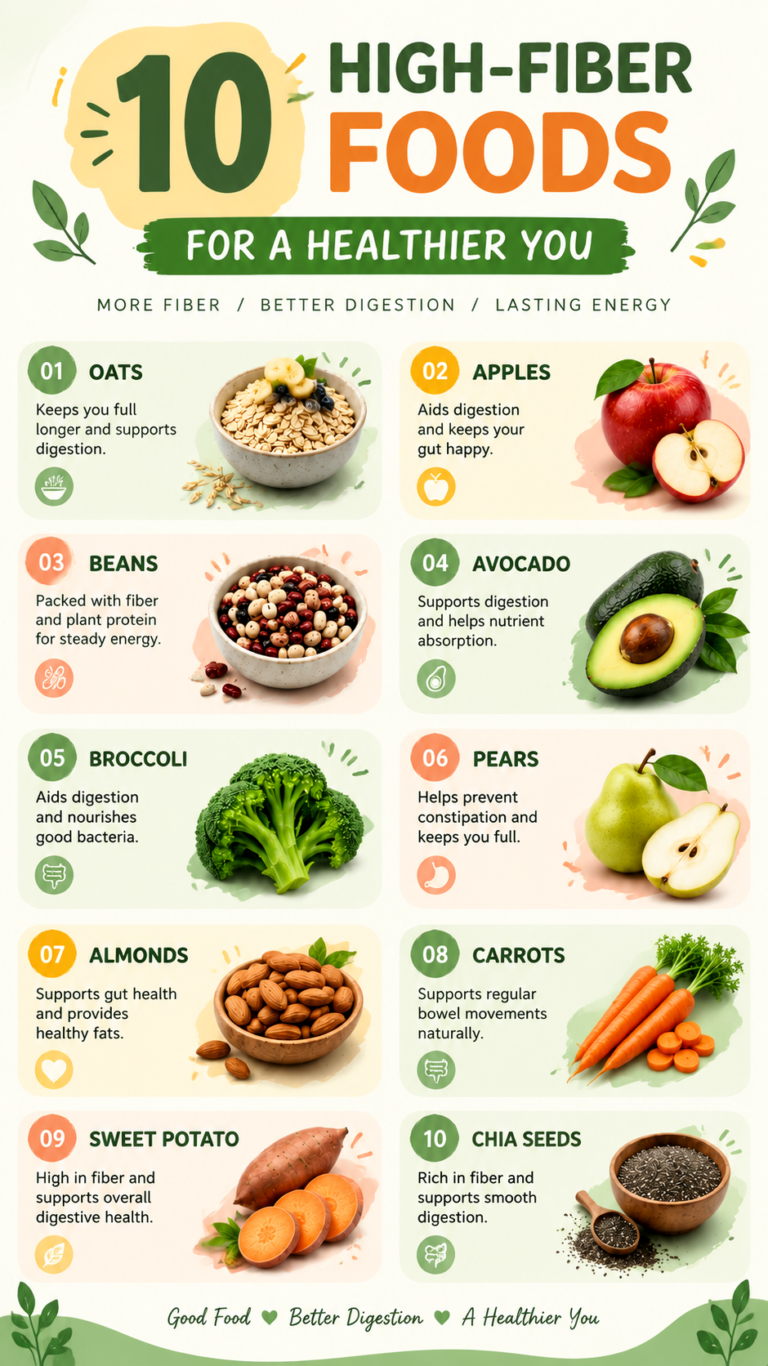
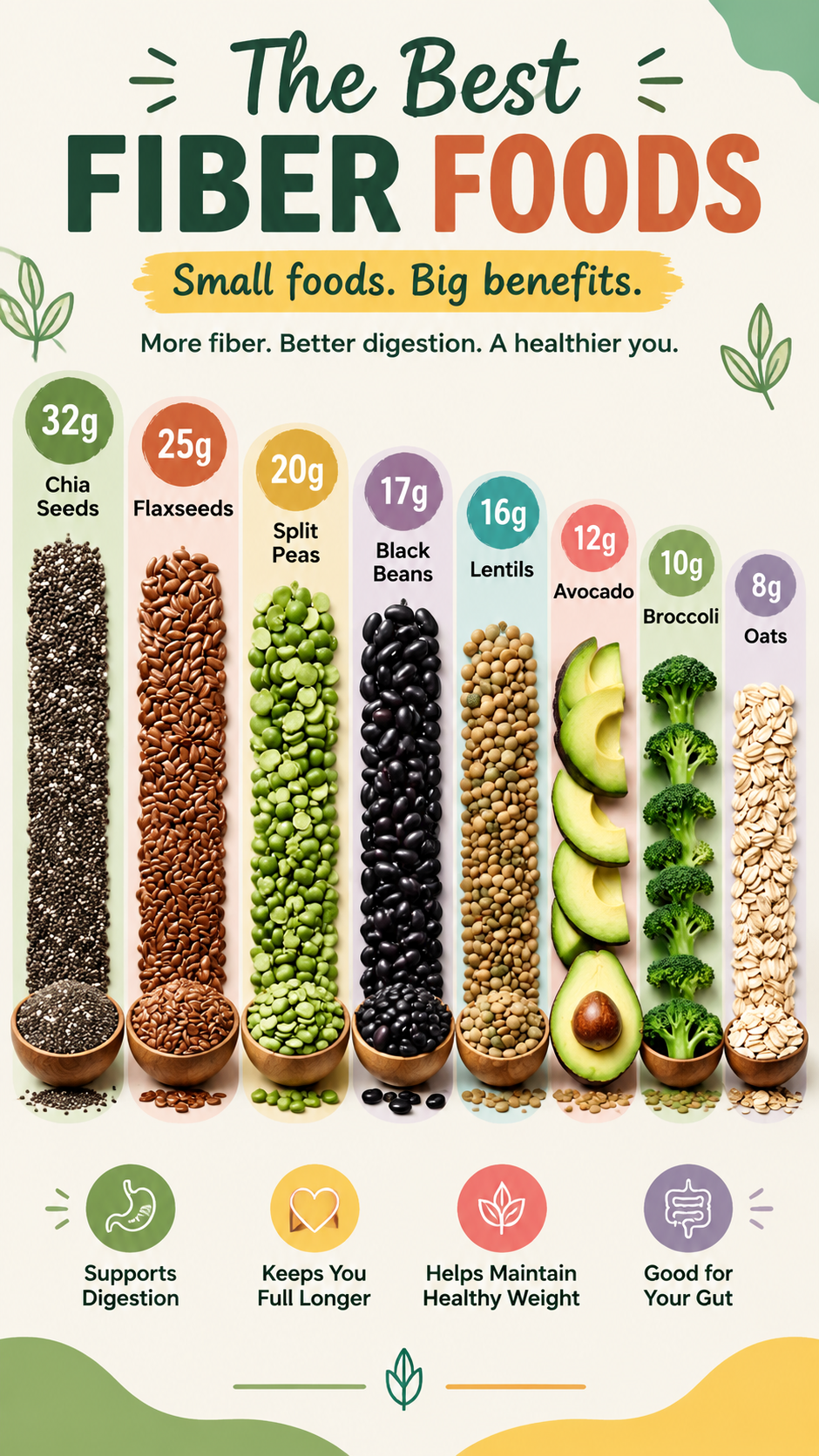
Eating enough fiber is associated with a more balanced diet because many high-fiber foods also provide vitamins, minerals, antioxidants, and plant-based nutrients. Foods like lentils, black beans, broccoli, avocado, and seeds can add texture, flavor, and nutritional value to everyday meals.
Important: A fiber-focused eating pattern works best when it includes a wide variety of whole foods. Different sources of fiber provide different benefits, so combining seeds, legumes, vegetables, and other plant foods creates a more balanced approach.
The Best High-Fiber Foods to Add to Your Diet
Chia Seeds: A Small Food with Big Fiber Benefits
Chia seeds are one of the most concentrated sources of fiber shown in this collection. These tiny seeds are easy to add to smoothies, yogurt, oatmeal, and homemade snacks. Their mild flavor makes them a flexible ingredient for many recipes.
Because chia seeds absorb liquid and develop a soft texture, they can create satisfying meals and snacks. They are also commonly used in overnight oats, chia puddings, and healthy breakfast recipes.
Flaxseeds: A Simple Way to Boost Fiber Intake
Flaxseeds are another nutrient-rich seed that can easily fit into a daily routine. Ground flaxseeds are often added to baked goods, smoothies, cereals, and grain bowls.
Including flaxseeds in meals can be a convenient way to increase plant-based nutrients while adding a slightly nutty flavor. They pair well with fruits, oats, and other wholesome ingredients.
Split Peas and Lentils: Fiber-Packed Plant Proteins
Legumes such as split peas and lentils are popular choices for people looking to eat more fiber. They are versatile ingredients that work well in soups, stews, salads, and plant-based meals.
Lentils and split peas are especially useful because they provide a combination of fiber and plant-based protein. Their hearty texture can make meals more filling while keeping ingredients simple.
Black Beans: A Classic Fiber-Rich Staple
Black beans are a popular addition to many cuisines around the world. They can be used in tacos, salads, bowls, soups, and countless other recipes.
Their rich texture and satisfying taste make them an easy option for increasing fiber in meals. Combining beans with vegetables and whole grains can create balanced and flavorful dishes.
Avocado: Creamy Nutrition from a Whole Food
Avocado provides fiber along with a creamy texture that works well in many healthy recipes. It can be enjoyed on toast, in salads, blended into sauces, or paired with vegetables.
Its versatility makes avocado a favorite ingredient for people who want nutritious foods that also add flavor and variety to meals.
Broccoli: A Vegetable Full of Goodness
Broccoli is a simple vegetable that can contribute to daily fiber intake. It can be roasted, steamed, added to stir-fries, or included in salads.
Adding colorful vegetables like broccoli helps create meals that are naturally rich in nutrients and plant compounds.
Seeds and Nuts: Easy Additions for Everyday Meals
Seeds such as pumpkin seeds can add crunch and nutrition to many dishes. Sprinkling seeds over salads, yogurt, or breakfast bowls is an easy habit that can improve the overall quality of a meal.
How to Add More Fiber to Your Daily Meals
Increasing fiber does not require completely changing your diet. Small adjustments can make a noticeable difference over time. Try adding one new fiber-rich ingredient to meals you already enjoy.
Breakfast Ideas
- Add chia seeds or ground flaxseeds to oatmeal or smoothies.
- Include fruit and whole-grain ingredients for extra fiber.
- Choose meals that combine protein, fiber, and healthy fats.
Lunch and Dinner Ideas
- Add lentils or beans to soups, salads, and grain bowls.
- Include vegetables like broccoli as a regular side dish.
- Use avocado as a topping for extra flavor and texture.
Understanding Different Types of Fiber
Fiber is often discussed as one category, but there are different types that behave differently in the body. Soluble fiber can absorb water and create a gel-like texture, while insoluble fiber adds bulk and supports normal movement through the digestive system.
A variety of fiber sources from different plant foods helps create a balanced approach. Seeds, legumes, fruits, and vegetables each contribute unique qualities to your diet.
Building a Fiber-Friendly Lifestyle
A healthy approach to fiber is about consistency rather than perfection. Choosing whole foods more often, experimenting with new recipes, and creating meals around natural ingredients can make healthy eating enjoyable.
Quick Note: The foods highlighted here are simple examples of plant-based ingredients that can support a nutritious eating pattern. The best choices are the ones you enjoy and can include regularly.
At a Glance
- Choose a variety of high-fiber plant foods.
- Add seeds and legumes to everyday recipes.
- Enjoy vegetables regularly for balanced nutrition.
- Increase fiber gradually for comfort.
Final Thoughts on High-Fiber Foods
Fiber-rich foods are simple, natural, and accessible ingredients that can make a meaningful difference in your everyday meals. From chia seeds and flaxseeds to lentils, beans, avocado, and broccoli, these foods provide delicious ways to support a balanced diet.
Creating a fiber-friendly meal plan does not have to be complicated. Start with small changes, explore new recipes, and enjoy the variety that whole plant foods bring to your table. A colorful plate filled with nutritious ingredients can be both satisfying and beneficial for your overall wellness.
Tags
High Fiber Foods
Gut Health
Healthy Eating
Fiber Rich Foods
Plant Based Nutrition
Healthy Recipes